Sunlight and Soil Foundations for Cleome Spider Flower Care
Picture this: you walk into your garden in mid-July, and a cluster of tall, airy stems rises above your petunias and marigolds, each stem topped with a globe of pink or white blossoms. Hummingbirds dart between the flowers while butterflies drift lazily by. That is the magic of cleome, a plant that delivers vertical drama with almost no fuss. Its common name, spider flower, comes from the long, spidery stamens that extend from each bloom. Getting the basics right from the start makes all the difference in how these plants perform.
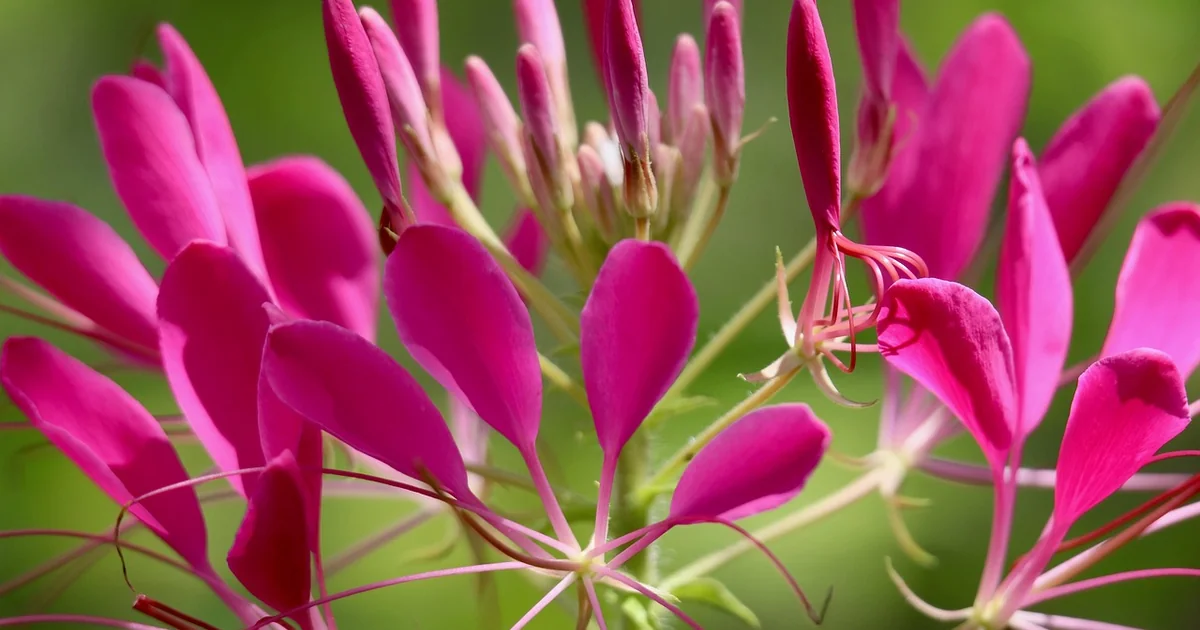
Cleome spider flower care begins with choosing the right spot. These annuals, native to South America, thrive in conditions that mimic their warm, sunny homeland. They do not ask for much, but they do insist on two things: light and drainage. When you provide these, the plants reward you with months of color and a steady parade of pollinators.
1. Plant in Full Sun for Sturdy Growth and Abundant Blooms
Sunlight is the single most important factor in cleome spider flower care. These plants need at least six to eight hours of direct sun each day. In full sun, the stems grow strong and upright, reaching three to four feet tall without any need for staking. The flower clusters become dense and plentiful, drawing hummingbirds and hummingbird moths from dawn until dusk.
When cleomes do not get enough light, the results are predictable and frustrating. The stems stretch toward the sun, becoming thin and weak. They flop over under their own weight. The number of flower clusters drops sharply, and the plant looks scraggly instead of spectacular. If you have a spot that gets afternoon shade in a hot climate, a few hours of shade may be acceptable, but morning shade with strong afternoon sun works better than the reverse. The ideal daytime temperature for cleome sits between 75 and 80 degrees Fahrenheit, with nighttime temperatures around 60 to 65 degrees. Full sun helps maintain that warmth and encourages steady growth.
One scenario many gardeners encounter: they plant cleome in a bed that receives only four hours of direct sun because a nearby tree casts afternoon shade. The plants grow tall quickly but then topple sideways, and the bloom count is disappointing. The fix is simple: move them to a sunnier location next season or trim back the tree canopy. Cleome spider flower care really does revolve around that one nonnegotiable requirement.
2. Choose Well-Drained Soil with a Neutral to Slightly Acidic pH
Cleomes are not fussy eaters, but they hate wet feet. Average garden soil works well as long as it drains freely. Rich, well-drained loam is ideal, but sandy or sandy-loam soils also support healthy growth. The pH range should be acidic to neutral, roughly 6.0 to 7.0. Most garden soils fall within this range naturally, so you likely do not need to amend the pH unless a soil test reveals a problem.
A common mistake is planting cleome in heavy clay soil that stays soggy after rain. In those conditions, the roots may rot, and the plants become stunted or die. If your garden has clay soil, consider raising the bed or mixing in compost and coarse sand to improve drainage. A three-inch layer of organic mulch on top of the soil also helps regulate moisture levels around the roots. That mulch layer is one of the simplest tools in cleome spider flower care because it reduces evaporation and keeps the root zone cool during hot spells.
If you are growing cleome in a container, use a standard potting mix designed for flowers and vegetables. Compact varieties like those in the Sparkler series perform especially well in pots because they stay bushier and do not get as tall. Combine potted cleome with a mounding flower like vincas and a trailing flower like petunias for a full, layered container that looks professionally designed.
Water, Temperature, and Maintenance Tips for Cleome Spider Flower Care
3. Water Deeply but Infrequently Once Plants Are Established
After a few weeks in the ground, cleome develops a surprising resilience to dry conditions. Once established, these plants are genuinely drought-tolerant, which makes them a smart choice for gardeners who want to conserve water. You do not need to water them every day, and overwatering can actually cause more harm than underwatering.
The best approach is to water deeply once or twice a week during the first month after planting. This encourages the roots to grow deep into the soil. After that, let the top inch or two of soil dry out before watering again. If you have applied a three-inch layer of organic mulch, the soil stays moist longer, so you can stretch the intervals even further. In many climates, natural rainfall is sufficient after the plants are well-rooted, except during prolonged dry spells.
One practical scenario: a gardener waters cleome lightly every evening because the top of the soil looks dry. The shallow roots stay near the surface, and when a hot, dry week arrives, the plants wilt rapidly. Switching to deep, infrequent watering solves that problem. The roots grow downward, accessing moisture deeper in the soil, and the plants sail through dry periods with ease. This simple shift in watering habit is a cornerstone of effective cleome spider flower care.
4. Keep Temperatures Warm and Protect from Frost at All Costs
Cleome originates from warm regions of South America, so it has zero tolerance for frost. Even a light frost damages the foliage and kills the plant. The ideal temperature range for these annuals is 75 to 80 degrees Fahrenheit during the day and 60 to 65 degrees at night. They thrive in the heat of summer and keep blooming right up to the first autumn frost.
If you live in a region with a short growing season, start seeds indoors about four to six weeks before the last frost date. Use a seed-starting mix and place the tray in a warm spot where the soil temperature stays around 70 to 75 degrees. Transplant the seedlings outdoors only after all danger of frost has passed and nighttime temperatures stay reliably above 60 degrees. This timing ensures that the plants do not suffer a shock that stunts their growth.
In warmer climates, you can direct-sow seeds outdoors in spring when the soil warms up. The seeds need light to germinate, so simply scatter them on the soil surface and press them down gently. Do not cover them with soil. Seedlings appear after about ten days if the soil temperature is right. Some gardeners sow seeds in autumn for spring germination, a strategy that works well in mild-winter areas. Understanding this temperature sensitivity is a key part of cleome spider flower care because it affects when you plant and how long the plants last.
5. Skip the Fertilizer and Let Mulch Do the Heavy Lifting
This tip surprises many gardeners, but it is true: cleome does not need fertilizer. If you start with good, well-drained soil and a layer of organic mulch, the plants get all the nutrients they need. Adding extra fertilizer, especially one high in nitrogen, encourages leafy growth at the expense of flowers. The plants become tall and lush but produce fewer of those signature spider-like blooms.
Instead of reaching for a fertilizer bottle, focus on the mulch. A three-inch layer of shredded bark, straw, or composted leaves conserves moisture, moderates soil temperature, and slowly releases nutrients as it breaks down. That slow release is exactly what cleome needs. It supports steady growth throughout the season without causing a sudden flush of foliage.
There is an exception to this rule. If your soil is extremely poor, such as sandy, nutrient-depleted soil in a new development, you can mix in a small amount of balanced, slow-release fertilizer at planting time. Even then, use about half the recommended amount. Over-fertilizing is a much more common problem than under-fertilizing. In most gardens, mulch alone produces the strongest plants with the most flowers. This minimalist approach to nutrition is one of the most appealing aspects of cleome spider flower care for gardeners who want low-maintenance beauty.
Propagation, Pruning, and Cultivar Choices
6. Start Seeds Directly in Warm Soil for Fast, Reliable Germination
Cleome is one of the easiest annuals to grow from seed. You do not need a greenhouse or special equipment. The seeds require light to germinate, so do not bury them. Simply scatter them on the surface of prepared garden soil after the last frost date, when the soil temperature has reached 70 to 75 degrees Fahrenheit. Press them into the soil lightly to make good contact, but leave them exposed to light. Water gently, and within ten days you will see tiny seedlings emerging.
You may also enjoy reading: 7 Easy Ways to Turn Patio Into Outside Living Room.
One common challenge is uneven germination caused by fluctuating soil temperatures. If you plant too early, when the soil is still cool, some seeds may rot while others wait for warmth. The solution is to wait until the soil has warmed consistently. You can speed up the process by covering the seeded area with a clear plastic sheet for a week or two, which traps heat and raises soil temperature. Remove the plastic as soon as seedlings appear to prevent overheating.
If you allow the plants to self-seed, thin the newly emerging seedlings the following spring to at least 18 inches apart. Crowded plants compete for light and nutrients, which reduces flower production and increases the risk of mildew. Thinning may feel wasteful, but it is one of the most important steps in cleome spider flower care for maximizing bloom. The remaining plants will grow stronger, branch better, and produce far more flowers than a crowded patch ever could.
For gardeners who prefer a head start, you can sow seeds indoors in small pots four to six weeks before the last frost. Use a seed-starting mix, keep the soil evenly moist, and place the pots in a warm, bright spot. Transplant the seedlings outdoors once the soil has warmed and all frost danger has passed. Whether you direct-sow or start indoors, the process is straightforward and satisfying. Within a few weeks, you will have sturdy young plants ready to fill your garden with color.
7. Select the Right Cultivar for Your Garden Space and Style
With more than 100 species and numerous cultivars, choosing the right cleome for your garden matters. Different varieties offer different heights, colors, and growth habits. Matching the cultivar to your specific conditions and goals makes cleome spider flower care even easier because the plant is already suited to its spot.
For a classic tall statement at the back of a border, try the cultivar ‘Helen Campbell’. It produces pure white flowers, reaches three to four feet tall, and requires very little care. The white blooms glow in evening light and pair beautifully with dark-leaved plants like coleus or purple fountain grass. If you prefer fragrance, ‘Rose Queen’ is a good option. It comes in shades of purple, white, cherry, and rose, and the flowers have a light, pleasant scent. Be mindful of the small spines at the base of each leaf on this variety, which can catch on clothing or skin during handling.
For compact spaces or container growing, ‘Linde Armstrong’ is a standout. It stays between 12 and 18 inches tall, is sterile, and has no thorns. The blooms come in pink, rose, and mauve. Because it is sterile, it does not produce seeds, which means no unwanted self-seeding and a longer bloom period since the plant puts energy into flowers rather than seed production. The Sparkler series is another excellent choice for containers. These hybrid plants have a bushy, compact form with white or pink flowers. They fit nicely into pots without overwhelming the arrangement.
The Spirit series offers a middle ground. These plants reach two to four feet tall with better branching than older varieties, which gives them a fuller appearance. They do have thorns and sticky foliage, so handle them with gloves. Blooms come in white, pink, and lavender. These work well in mixed borders where their height adds structure without blocking views of plants behind them.
A practical tip for selection: if you garden in a windy area, choose shorter varieties like ‘Linde Armstrong’ or the Sparkler series. Taller varieties may need staking in exposed locations, even with full sun. Compact cultivars handle wind much better and still provide plenty of flower power. Knowing which cultivar fits your garden conditions is a smart step in cleome spider flower care that saves you time and prevents disappointment.
Another consideration is color coordination. Cleome flowers are available primarily in white, pink, purple, lavender, rose, and cherry. These shades blend well with most summer-blooming annuals and perennials. White cleomes stand out against dark backgrounds and reflect moonlight beautifully. Pink and purple varieties create a soft, romantic look when paired with silver-leaved plants like dusty miller or lavender. For a bold, tropical feel, combine pink cleomes with orange zinnias or yellow marigolds.
Beyond aesthetics, think about pollinator appeal. All cleome varieties attract hummingbirds, butterflies, and hummingbird moths, but certain colors may draw specific visitors. Hummingbirds are drawn to pink and red tones, while butterflies visit a broad range of colors. If you want to maximize wildlife activity in your garden, plant several cleome cultivars in a drift or mass planting. The concentrated blooms create a reliable food source that keeps pollinators returning all season long.
Once you have selected your cultivars and planted them with care, the remaining maintenance is minimal. Snip off dead leaves or damaged stems as needed during the growing season. If a plant looks spindly before planting, trim it back by half to encourage bushier growth. Deadhead spent flowers regularly to promote continuous blooming and prevent the plant from putting energy into seed production. This simple practice keeps the flower show going from early summer right up to the first frost.
Cleome spider flower care rewards you generously for small efforts. The plants grow quickly, bloom profusely, and ask for little in return. They tolerate drought, resist most pests and diseases, and provide architectural height that few other annuals can match. Whether you plant a single drift of white ‘Helen Campbell’ or a colorful mix of Spirit series cultivars, cleome brings a sense of wild, effortless beauty to any sunny garden. Give them sun, good drainage, and a little space, and they will reward you with a season of grace and color that keeps the garden buzzing with life.