May catches magnolias at a moment of transition. The blooms are finishing or already gone, new leaf growth is pushing hard, and the tree is actively channeling energy into the season ahead. Solid magnolia care May practices pay off through the whole growing season, helping to ensure abundant flowers next year. A few of these tasks only make sense right now, while others that get skipped tend to show up as problems later.
1. Assess the Tree After Blooming
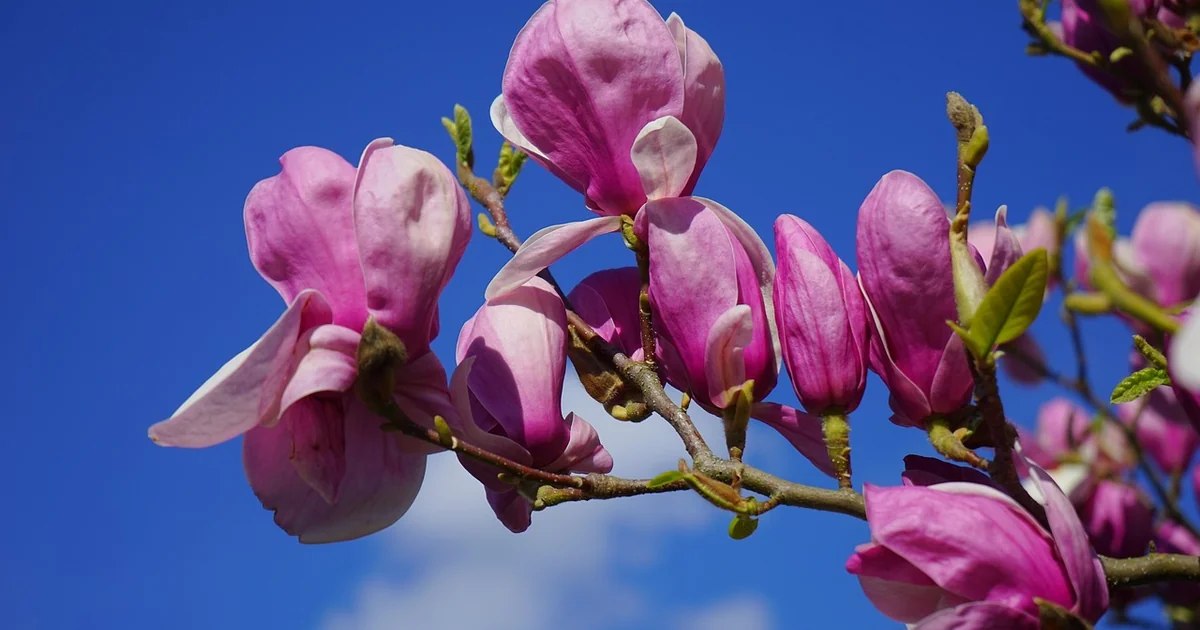
With the flowers down, May is the perfect moment to actually look at your magnolia. Browning debris still clinging to branches is easy to spot now. So are crossing limbs that were hidden under the blooms, or sections of canopy that seem thinner than last year. Jotting a few notes or snapping a photo takes about two minutes, and it is a lot easier to act on something later when you have a record of what it looked like.
Magnolias do not announce problems early, and they recover slowly. May is therefore a useful checkpoint. Yellowing magnolia leaves spread across the whole canopy usually indicates a systemic soil or nutrition issue. Dieback on specific branches is something different — more likely physical damage, a localized fungal problem, or a pest situation that has been going on longer than it looks. Early detection gives you the best chance to address issues before they escalate.
2. Feed with a Balanced Slow-Release Fertilizer
Magnolias are light feeders compared to many ornamental trees, but they are not zero-feeders. In May the tree is actively putting on new leaves and building the bud structures that become next year’s flowers. This means a balanced slow-release fertilizer applied now actually gets used rather than sitting in the soil waiting. Spread granular fertilizer evenly under the canopy out to the drip line and keep it away from the trunk.
The key is to avoid quick-release nitrogen fertilizers. They push a flush of soft growth that does not harden well and tends to attract pests. For most magnolias, use a product with an NPK ratio around 10-10-10 or 12-6-6. Most established magnolias only need one application in May. Trees in their first few seasons may benefit from a second light feed around midsummer.
3. Refresh the Mulch Layer
Magnolias have shallow, fleshy roots that run close to the surface. They do not go deep, which makes them sensitive to what happens at ground level. A mulch layer applied in May slows moisture loss as temperatures start climbing and keeps the root zone from baking in the kind of heat that builds through a full summer. Two to three inches (5 to 8 centimeters) of organic mulch under the canopy makes a real difference by midsummer, and it cuts down on weed competition while it is at it.
Shredded bark or wood chip mulch works well. Pull it back a few inches from the trunk — mulch sitting against the base holds moisture against the bark and invites rot over time. Extending the ring out toward the drip line matters more than many people bother with, since the feeder roots are operating out there, not right next to the trunk. A tight ring around the base is better than nothing, but it misses most of where it would actually help.
4. Water Young or Recently Planted Trees
Established magnolias handle dry spells reasonably well once their root systems are mature. However, trees planted within the last two or three years are still building that depth. May can be deceptive — there is often enough spring rain that watering feels unnecessary, but a young magnolia putting on its first flush of new growth is pulling a fair amount of moisture. Checking the soil a few inches down is a more reliable read than going by surface appearance.
When watering is needed, slow and deep is the approach that actually builds the root system rather than just wetting the surface. Roots go where moisture is; frequent shallow watering keeps them near the top where heat and drought do the most damage later in summer. Container-grown magnolias are a different situation — they dry out considerably faster and need checking more often once May temperatures start moving. Aim for about one inch of water per week if rainfall is inadequate.
5. Prune Lightly Only — Save Big Cuts for Later
May is the wrong time to prune magnolias heavily. Heavy pruning removes significant canopy area and stresses the tree during a period of active growth. If you see a broken branch or a small twig that is clearly dead, a light tidying is fine. Use clean, sharp pruning tools and make cuts just above a growth node. Anything removing a meaningful portion of the canopy is better saved for late summer or early fall, after the tree has finished its main growth push.
You may also enjoy reading: 7 Proven Ways to Keep Deer from Eating Hostas.
Pruning in May can also remove flower buds that have already formed for next year. Magnolias set their buds in summer for the following spring. Cutting back now means sacrificing potential blooms next season. If you want to shape the tree or remove large limbs, wait until July or August when the tree is dormant in terms of flower development and less vulnerable to bleeding sap.
6. Monitor for Pests and Diseases
Magnolias are generally resilient, but they are not immune to problems. In May, keep an eye out for scale insects, which appear as small bumps on stems and leaves. They can cause yellowing and sooty mold growth. Also watch for magnolia leaf spots, a fungal issue that shows up as dark, discolored areas on foliage. These problems often develop when conditions are warm and humid.
If you notice dieback on specific branches, check for signs of canker — sunken, discolored bark near the junction. This fungal issue can slowly girdle the branch and kill it. The best defense is proper magnolia care May timing: ensure good air circulation by not planting too close to structures, and avoid overhead watering that keeps leaves wet for long periods. Remove and dispose of affected branches promptly, sanitizing your tools between cuts.
7. Plan Ahead for Next Year’s Blooms
What you do in May directly impacts next year’s flower display. Magnolias begin forming flower buds in mid- to late summer, so the energy they store now is what they will draw on for spring blooms. Ensure the tree has consistent moisture without waterlogging, and avoid letting it compete with heavy weeds or grass over its root zone. A 2- to 3-inch layer of organic mulch helps regulate soil temperature and moisture.
Consider doing a soil test if you have not done one recently. Magnolias prefer slightly acidic soil with a pH between 5.5 and 6.5. If your soil is alkaline, you might see chlorosis — yellowing leaves with green veins. In that case, an amendment like elemental sulfur or iron chelate can help. Fertilizer applications in May support bud development, so do not skip this step. Mark your calendar for a midsummer check if your tree is young.
Magnolia care May is about seizing the moment while the tree is most responsive. By taking these seven steps — assessing after bloom, feeding appropriately, refreshing mulch, watering young trees, pruning lightly, monitoring for pests, and planning for next year — you set your magnolia up for a season of strong growth and a spectacular bloom display next spring.