Those pincher bugs you dread are actually helpful decomposers — until they invade your home. Earwigs, often called pincher bugs, are one of the most misunderstood insects crawling around your garden. With over 1,500 species found worldwide and more than 20 species residing in the United States, they are incredibly common. Their menacing appearance, complete with curved forceps at the rear, has fueled urban legends for centuries. The truth, however, is far less terrifying and much more practical.
While earwigs play a beneficial role outdoors by breaking down dead leaves and mulch, they become unwelcome guests the moment they slip inside your home. They damage plants, leave behind tiny droppings, and signal that your living space has a moisture problem. If you are searching for effective ways to get rid of earwigs and keep them from coming back, you have come to the right place. This guide will walk you through seven tried-and-true strategies to reclaim your space.
Why Are Earwigs in My House?
Understanding why earwigs enter your home is the first step to stopping them. These nocturnal bugs primarily live in moist, outdoor areas. During the day, they hide under rocks, logs, and thick layers of mulch. At night, they come out to feed on decaying organic matter.
Two main factors draw them indoors: light and moisture. Like many insects, earwigs are attracted to the glow of porch lights and windows. They will congregate on decks on summer evenings. If your windows or doors are not properly sealed, they will slip right inside. The stronger pull, however, is dampness. Earwigs require high humidity to survive. A leaky pipe in the bathroom, a damp basement, or a humid crawl space acts like a five-star resort for them.
Spotting an earwig indoors is a strong indicator that you have an underlying moisture issue. They are not just random wanderers; they are looking for a comfortable, wet home. Fixing the dampness is often the only long-term solution you need to implement. Their presence is a red flag that demands your attention.
Do Earwigs Really Crawl into Ears?
This is the most persistent and frightening myth about these insects. The name “earwig” itself originally comes from an Old English phrase that translates loosely to “ear insect,” which has terrified people for generations. The idea that they burrow into human ears to lay eggs or eat brains is completely false.
Earwigs do not burrow into ears or lay eggs in humans. The urban legend likely started because of their menacing pincers and their tendency to hide in dark, tight spaces. While an ear canal is technically a dark, tight space, it offers no food source or suitable environment for an earwig. They are far more interested in your garden debris and damp leaf piles than your head. Rest assured, the worst thing they will do is give you a minor pinch if you accidentally corner one.
What Damage Can Earwigs Cause?
While they are harmless to human anatomy, earwigs can wreak havoc on your plants. They are natural decomposers, but they also have a taste for living vegetation. They gnaw through tender buds, seedlings, and soft foliage. If you have a vegetable garden, you might find irregular holes in your lettuce, basil, or beans.
One of the most significant agricultural impacts comes from their love of corn. Earwigs climb the stalks and chew through the corn silks, which can hinder pollination and reduce the overall crop yield. Indoors, they will target your houseplants. The damage looks similar to slug damage: ragged edges and irregular holes in the leaves. More importantly, their presence indoors signals that excess moisture is present, which can lead to mold or other pest problems down the line. They are a symptom of a larger household issue.
What Are the Signs of an Infestation?
Finding a single earwig in your sink or on the wall does not mean your house is infested. They are wanderers and often get lost. A true infestation has several distinct and verifiable signs that you can look for.
Multiple sightings during the day: Since earwigs are nocturnal, seeing them crawling around in broad daylight suggests their hiding spots are overcrowded and they are desperate for space. Funky odors: Some earwig species release a foul-smelling liquid as a defense mechanism. If you notice a musty, unpleasant smell in corners or damp areas, earwigs might be the source. Damaged houseplants: Look for irregular holes and ragged edges on the leaves of your indoor plants. Tiny black droppings: These pellets are about the size of ground pepper or coffee grounds. You will find them near baseboards, under pots, or in dark corners. If you check these boxes, it is time to take decisive action.
How Can I Get Rid of Them Naturally?
This section forms the core of your action plan. Chemical insecticides can work quickly, but natural methods are often safer for your family, pets, and the surrounding ecosystem. Here are seven effective tips to get rid of earwigs permanently.
Tip 1: Eliminate Excess Moisture
This is the single most important tip. Earwigs have a high humidity requirement and cannot survive long in dry environments. Use a dehumidifier in your basement, bathroom, and attic. Fix any leaky pipes under sinks. Ensure your gutters are clean and your downspouts direct water away from the foundation. By drying out their favorite hiding spots, you make your home completely unlivable for them.
Tip 2: Vacuum Them Up
This is the quickest way to remove visible earwigs from your living space. Use a vacuum cleaner with a hose attachment to suck up any you see along baseboards, in corners, or on walls. The immediate physical removal provides instant relief. Once you are done, remove the vacuum bag or empty the canister into a bucket of soapy water. This step ensures they do not crawl back out of the machine.
Tip 3: Set Up Homemade Traps
Simple traps are surprisingly effective at reducing the population. Roll up a damp newspaper or a piece of cardboard and place it in areas where you have seen earwigs. Leave it overnight. In the morning, the earwigs will have crawled inside seeking the dark moisture. Shake the roll into a trash bag and discard it. For a more potent trap, pour a mixture of soy sauce and vegetable oil into a shallow container. The soy sauce attracts them powerfully, and the oil traps them so they cannot escape.
You may also enjoy reading: 13 Patio Décor Ideas Interior Designers Swear By.
Tip 4: Apply Diatomaceous Earth
Food-grade diatomaceous earth (DE) is a natural powder made from fossilized algae. It works mechanically rather than chemically. To an earwig, the powder is a collection of microscopic sharp edges that cut through their exoskeleton, causing them to dehydrate and die. Sprinkle a thin layer of DE along baseboards, window sills, and behind appliances. It must remain dry to be effective, so avoid applying it in very humid areas like directly inside a shower.
Tip 5: Use Natural Repellents
Certain strong scents naturally repel earwigs. Neem oil is a fantastic natural insecticide that disrupts feeding and molting. Mix a few drops with water and spray it on your houseplants. You can also sprinkle ground cinnamon powder along entry points or use a spray made from rosemary essential oil and water. These scents create a sensory barrier that earwigs are reluctant to cross.
Tip 6: Seal Entry Points
Prevention is the best long-term cure. Walk around the outside of your home and seal any cracks or gaps. Use caulk to fill holes around windows, doors, and where pipes enter the house. Install weather stripping under doors to create a tight seal. Make sure your window screens are free of tears. By physically blocking their path, you stop the invasion before it ever starts.
Tip 7: Modify Your Outdoor Lighting and Landscape
Since earwigs are attracted to light, consider swapping your outdoor white bulbs for yellow “bug” lights or warm LED bulbs. These are far less attractive to insects. You can also move lights further away from the doors so the insects gather away from the house. Outside, create a dry barrier. Move mulch, leaf litter, and rock piles several feet away from the foundation. A strip of bare, dry soil or gravel right next to the house discourages earwigs from making the journey indoors.
Are Earwigs Harmful to Humans or Pets?
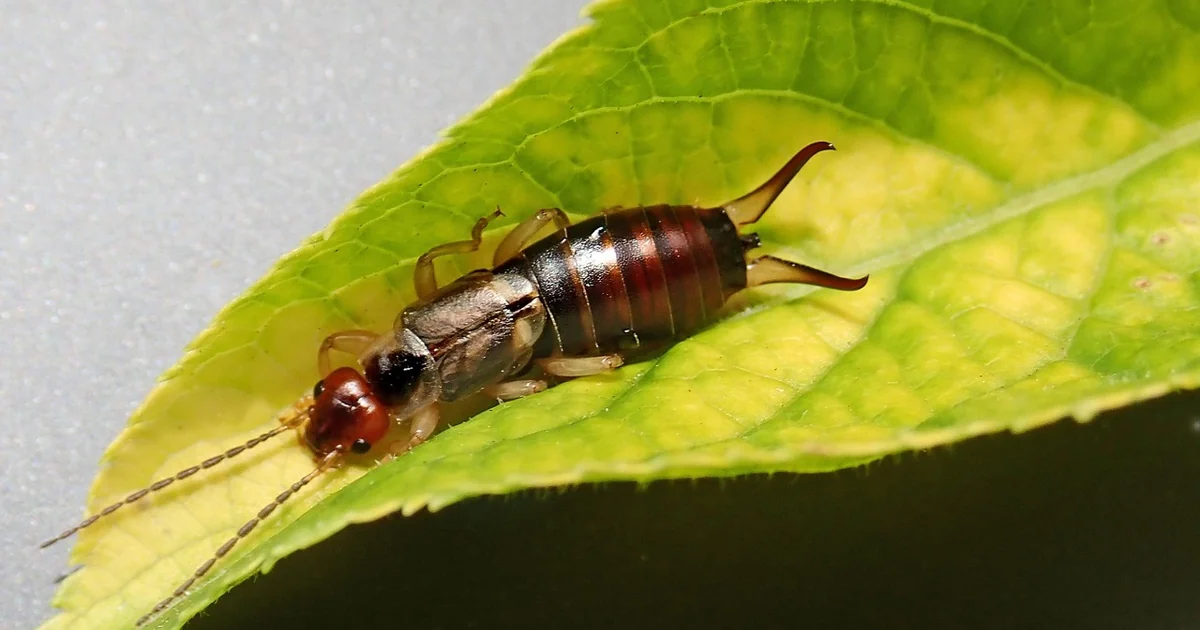
It is easy to feel alarmed by an earwig. Their elongated, flattened bodies are under an inch long, and their color ranges from tan to black. Those curved pincers at the rear look intimidating, especially on the larger males. However, their appearance is worse than their bite.
Despite their scary look, they are generally harmless to humans and pets. They are not venomous and do not sting. Their pincers are used for defense and mating displays. If an earwig pinches you, it might be startling, but it rarely breaks the skin. For pets, eating an earwig might cause a little drooling or an upset stomach, but it is not toxic. In fact, outside your home, they play a beneficial role as decomposers, recycling nutrients back into the soil.
Frequently Asked Questions
What is the most effective natural trap for earwigs?
The soy sauce and oil trap is widely considered the most effective homemade solution. The soy sauce releases a powerful scent that attracts earwigs from a distance, while the oily film traps them so they cannot climb out. Place shallow dishes of this mixture in dark corners of your basement or near garden beds for best results.
Will earwigs damage the structure of my home?
No, earwigs do not cause structural damage to your home. They will not chew through wood, drywall, or wiring like termites or carpenter ants do. Their damage is limited to plants, both indoors and outdoors. However, their presence often indicates a moisture problem, which could lead to wood rot or mold if you leave it unaddressed.
Does cinnamon really repel earwigs effectively?
Yes, cinnamon is a known and effective natural repellent for earwigs. The strong scent is overwhelming to their sensory receptors. Simply sprinkle ground cinnamon in areas where you have seen them, such as along baseboards, in windowsills, or on the topsoil of your potted plants. It creates a natural barrier they are reluctant to cross without using harsh chemicals.