
How to Make Your Patio Feel Like an Extension of Your Home
You open the patio door, step outside with your coffee, and suddenly the room you carefully put together ends. The sofa inside has warm wood and soft, earthy colors; the patio has a mismatched collection of whatever survived last summer. It is a familiar decorating problem, and it does not require a renovation to solve.
The simplest way to make a patio feel cohesive with your indoor style is to repeat a few recognizable cues: one or two colors, a related material or finish, and the same feeling you want in the adjoining room. Then arrange outdoor furniture for the way you actually live. A woven chair can echo an indoor basket; a dark metal table can pick up the hardware on your doors. The pieces need to speak the same visual language, not come from the same set.
Start at the threshold and look in both directions. What do you see from the sofa when the door is open? What do you see inside while sitting outside? Those two views will guide the decisions below, whether you have a covered porch, a narrow apartment balcony, or a backyard patio that has room for dinner with friends.
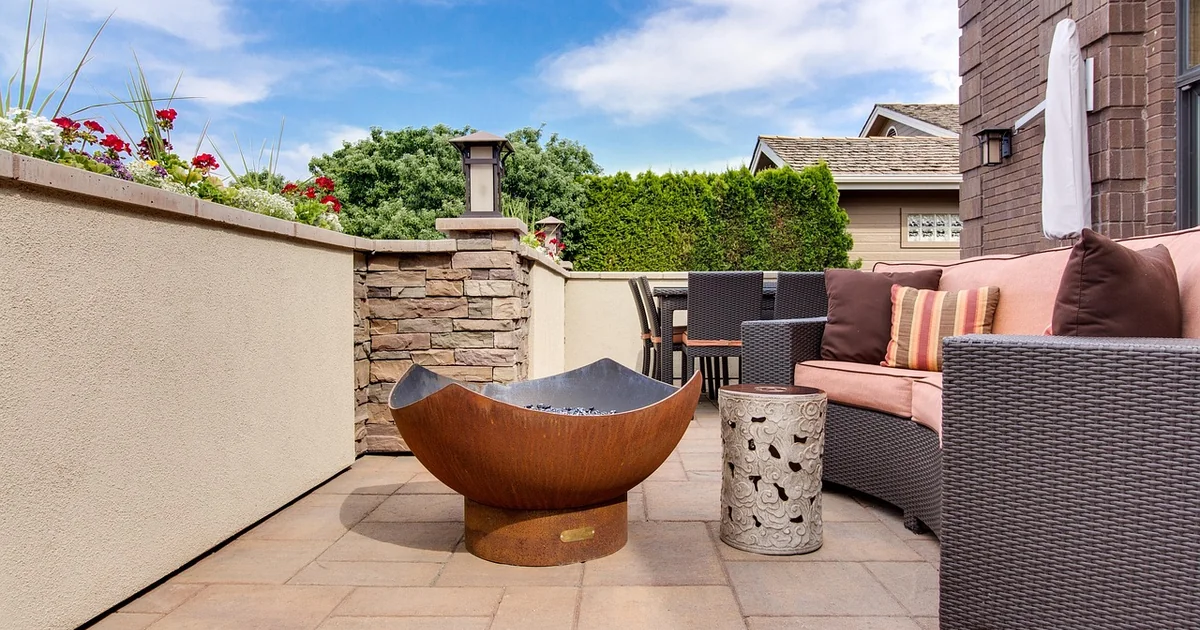
Begin With What Is Already Working Indoors
Before shopping for patio decor, take a quick inventory of the room closest to the door. Write down its dominant neutral, its most noticeable accent color, and two materials that keep showing up. Perhaps the living room has cream upholstery, black metal lamps, oak furniture, and faded blue pillows. That gives you a useful outdoor palette: cream or sand cushions, a black frame or planter, a weather-appropriate wood tone, and a small dose of blue.
You are looking for repetition, not a literal copy. Indoor oak does not mean every outdoor surface must be oak. A teak bench, wood-look dining table, or tan woven chair can carry the same warmth. An indigo patterned outdoor cushion can relate to a blue rug inside without matching its print. If your dining room already feels colorful, let the patio take its calmer supporting colors and repeat just one vivid accent.
Pay attention to the view through the doorway. A plant, chair, or outdoor rug placed where you can see it from inside becomes part of the indoor room’s composition. Conversely, the furniture nearest the door should leave a comfortable route outside. There is little value in a beautiful arrangement that makes carrying a tray to the table awkward.
Use a small palette as your starting point
Choose a main neutral, a secondary material or finish, and an accent color. For example, a living room with off-white walls, walnut furniture, and olive textiles might lead to oatmeal outdoor cushions, warm brown wood, and two olive planters. You can still bring in terracotta flowers or a patterned pillow later. This starting palette simply gives every new item a reason to belong.
If you rent or have a tight budget, repeat portable details instead of changing doors, flooring, or built-in features. A pair of cushions, a planter, and a table lamp can create a clear connection through an ordinary sliding door. Folding glass walls are dramatic, but visual continuity works without them.
Choose Furniture Around the Activity, Then Mix Materials
A patio feels more welcoming when its layout supports a specific moment. Do you eat outside most evenings, stretch out with a book, or gather friends for conversation? Pick the anchor piece for that activity first. A dining table determines where chairs and task lighting go; a sofa or two lounge chairs establish a conversation area. This keeps you from buying attractive extras that leave the main purpose unsolved.
Matching furniture is an option if you love its simplicity, but you do not need to buy a whole set. A wood table with metal chairs can look intentional if the chair finish repeats in a lantern or door frame. A woven loveseat can sit beside a ceramic side table when their colors share a warm undertone. The useful question is, what detail ties these pieces together? It might be silhouette, color, finish, or the rhythm of two rounded forms.
Mix two or three textures with different jobs. A sturdy frame provides structure; woven surfaces soften it; a stone or ceramic piece adds weight. Too many unrelated finishes in a small space can look busy, so repeat one material at least twice. For instance, pair a dark metal dining base with dark metal sconces, then contrast both with a woven shade and leafy plants.
Give each seat a practical role
Swivel chairs make sense for a patio that faces both a garden and a conversation area: guests can turn without shifting furniture. They also need clearance to rotate, so measure their full swing before placing them against a wall or crowded table. In a compact space, stationary chairs with slimmer arms may leave more room to walk.
Think about comfort beyond the product photo. Can you pull out a dining chair without stepping into a planter? Is there a reachable place to set down a drink? Will afternoon sun make one seat unpleasant? Move chairs into position and spend a few minutes there before buying accessories. The best styling will grow from a layout you want to use.
Make Existing Furniture Look Intentional Again
An old metal chair with an elegant shape can be a stronger starting point than a new, generic set. Check it first for structural rust, unstable joints, sharp edges, or broken welds. Surface wear can often be addressed; serious damage needs repair or replacement before the piece is put back into use.
For a durable change of color, ask a local powder-coating shop whether the frame can be stripped, prepared, and finished for outdoor exposure. Powder coating uses applied powder that is cured onto a suitable surface. The preparation and coating choice matter as much as the color; the Powder Coating Institute’s guidance notes the importance of pretreatment and of choosing coatings appropriate for UV exposure. Get a quote before assuming refinishing will cost less than replacement, particularly for a large or heavily corroded piece.
If the frames are sound but cushions look tired, consider new covers or cushions in outdoor-rated fabric. A contrast welt—the narrow fabric-covered cord along a seam—can make plain cushions feel more tailored. A navy edge on pale blue, or a brown edge on cream, repeats color without adding another large patterned surface. Custom sewing may cost more than ready-made replacements, so use it where the existing furniture fits well and has a shape you want to keep.
Pick Fabrics for Your Weather and Your Habits
Outdoor cushions live with sun, pollen, spills, and sometimes sudden rain. Look at the fabric, the cushion insert, the care instructions, and how quickly you can bring everything under cover. A pretty upholstery swatch alone will not tell you whether the full cushion is designed to be left in your particular conditions.
Solution-dyed acrylic is one established outdoor upholstery option. Its color is introduced as the fiber is made rather than only printed on the surface. Sunbrella explains how its solution-dyed acrylic is made and describes its resistance to fading and moisture. That does not make every cushion waterproof or immune to mildew: dirt and prolonged dampness still need attention, and different brands use different constructions. Read the specific item’s care information instead of treating a fabric name as a guarantee.
Florals can be lovely outside when you let them play a supporting role. Try a floral lumbar cushion with solid seat cushions, or a patterned tablecloth that picks up the color of nearby flowers. For a quieter room, repeat one shade from your interior textiles in a subtle stripe. A removable cover is especially useful when you want to refresh the palette without storing multiple sets of bulky cushions.
Outdoor velvet can add softness and depth to a covered sitting area, provided the product is actually labeled for outdoor use. Check its exposure and cleaning instructions; a lush-looking fabric is no reason to leave a cushion in standing water. Store soft furnishings dry when the patio is out of season. If you have children, pets, or frequent meals outdoors, prioritize cleanability over a delicate texture.
Layer pillows with a little restraint
Begin with the cushions needed for comfort, then add a small mix of shapes: perhaps one lumbar pillow on each lounge chair and one patterned pillow on the sofa. Leave enough space to sit down without moving a pile of decor. On a narrow bench, one long lumbar pillow may be more useful than several squares.
For a neutral patio, try repeating an interior accent in two places: a rust-colored pillow and a glazed planter, or a blue stripe and a blue pot. That small echo makes the color feel deliberate. Seasonal changes can be as simple as switching two covers and moving one planter, rather than buying a whole new outdoor look.
Use Wood, Greenery, and Texture to Bridge the Threshold
Wood often creates an easy connection between a room and a garden. Teak is a common choice for outdoor furniture and can weather to a silvery tone when left untreated. Whether that look feels right depends on the home: a warm indoor wood palette may call for maintenance to keep a similar tone, while a cool gray interior might work beautifully with weathered wood. Follow the furniture maker’s cleaning and care instructions, and decide whether you are comfortable with its changing appearance before buying.
You do not need a row of large pots to make a patio feel green. Place one substantial container where it creates a focal point from the door, then add a lower pot near the seating area. This gives the eye different heights while preserving room to move. Choose plants for the amount of sun, wind, and water they will actually receive; a shaded covered porch and a west-facing concrete patio are very different growing spaces.
Drainage matters as much as styling. The University of Minnesota Extension’s container gardening advice recommends drainage and notes that containers may dry out faster than garden beds. Protect vulnerable decking or flooring from pooled water with suitable saucers or pot feet, empty collected water as needed, and avoid assuming a decorative basket alone can safely hold a watered plant.
Related reading: How Long Potatoes Take to Grow and What Slows Them.
Give the Patio Its Own Lighting Plan
Outdoor lighting should help you see a meal, find a path, and enjoy the atmosphere after dark. Those jobs rarely fall to a single fixture. Think in layers: a light near the door for movement, a focused source at the table, and softer light around the seating. Check how the patio looks from the house at night, too. A gentle glow can extend the view beyond the windows.
A pendant over a covered dining table can visually define that area, while sconces beside a door repeat the symmetry of an indoor room. Pick fixtures specifically suitable for their exposure and follow the manufacturer’s installation instructions. A fixture under a protected roof and one directly exposed to rain may need different ratings. For permanent wiring, use a qualified electrician; UL’s overview of outdoor lighting evaluation describes the relevance of wet-location requirements.
No outlet? A rechargeable, cordless table lamp can bring light exactly where dinner happens. Compare the lamp’s outdoor-use rating, charging method, stated run time, and ease of carrying it indoors. Zafferano is one example of the cordless lamp style mentioned in the original advice, but the useful feature is portability, not a particular brand. Place the lamp where people can see their plates without staring into a bright bulb.
Candlelight can add warmth in a sheltered hurricane lantern, but wind, dry leaves, pets, and cushions make open flames a poor fit for some patios. The National Fire Protection Association advises keeping candles away from combustible items and never leaving them burning unattended. Rechargeable or battery-operated candles can create a similar effect where flames are impractical.
Adapt the Plan to the Size and Exposure of Your Space
For a small patio or balcony
Choose one purpose and do it well. A compact bistro table can make a lovely breakfast spot, while a slim bench may be better if you want somewhere to read. Furniture with visible legs keeps more floor in sight; wall-mounted pieces or a railing planter may free the ground, if your building allows them. Check your lease or building rules before mounting anything or adding heavy containers.
Use a few larger accents instead of many small objects. One appropriately sized outdoor rug can define the seating area, provided it does not bunch under chairs or obstruct the door. Make sure the material can dry and that water will not be trapped against the floor. Mirrors are sometimes suggested for small patios, but glare, breakage, and mounting can make them less useful than a simple light-colored wall or a thoughtfully placed plant.
For a large patio with several zones
Let each area do a job while repeating the same design cues. Dining might have a wood table and dark metal chairs; lounging might repeat the dark frame in a side table and the wood tone in a planter. They will read as parts of one space even with different furniture. Leave clear paths between zones, especially from the house to the grill or garden gate.
If the patio feels scattered, an outdoor rug or a cluster of planters can help define an area, but make sure each element can tolerate the conditions there. Full sun, winter storage, wind, and regular hose-downs all affect whether an accessory is practical. Measure the usable area with chairs pulled out before you decide a second seating group will fit.
For uncovered, rainy, or very sunny spaces
Start with exposure, not a mood board. An uncovered deck calls for different cushions and lighting than a screened porch. Check manufacturer guidance on furniture finishes, fabric, and fixtures; plan dry storage for cushions you cannot leave out. In intense afternoon sun, shade and a seat you can actually use are more valuable than extra decorative layers. An umbrella or other shade feature should be chosen and secured for its specific location and wind conditions.
It can help to style the patio in phases. Set out the furniture and live with the layout for a week. Add lighting next if you regularly use the space at dusk. Only then choose pillows and pots. This prevents purchases based on a photograph that does not match your climate, schedule, or doorway.
A Simple Weekend Plan for a More Cohesive Patio
- Stand at the open door. Notice the indoor colors and materials you see, then identify the first outdoor object your eye lands on. Make that view feel intentional.
- Choose the patio’s main job. Arrange existing furniture around dining, lounging, or conversation. Walk the routes you use while carrying food or watering plants.
- Repeat three cues. Bring across one neutral, one accent color, and one finish or texture from inside. Use pieces you own before shopping.
- Fix the weakest practical point. It may be an uncomfortable chair, a missing side table, poor evening light, or nowhere to store cushions. Solve that before adding decorative extras.
- Add one living or soft element. A climate-suited container plant, washable pillow, or outdoor rug can soften the hard edges without overwhelming the space.
Once those pieces are in place, sit outside at the time you most want to use the patio. If it feels comfortable and the colors look connected to the room behind you, the design is doing its job. The final touch may be a lamp or a favorite plant; it does not have to be another furniture set.