Afrohemian Decor: Your Complete Guide to Vibrant, Soulful Spaces
A calm, practical guide to blending African-inspired heritage with bohemian warmth—without making your home feel “overdone.”
What does your home feel like when bold African pattern meets relaxed bohemian layering—and everything still looks intentional?
Afrohemian decor brings together two powerful energies: African-inspired craft, texture, and pattern, plus the cozy, collected spirit of bohemian style.
The result is a space that feels warm, story-rich, and personal.
This style works in real homes because it does not demand perfection.
It rewards thoughtful layering, natural materials, and pieces that carry meaning—rather than fast, matching “sets.”
This guide shows how to build afrohemian rooms step by step, from color and textiles to furniture placement, wall art, lighting, and plants—plus budget-friendly ways to get the look.
What’s New in Afrohemian Decor (2026 Trends That Actually Help)
Afrohemian style stays timeless because it is rooted in craft, texture, and story.
Still, a few shifts can make your home feel more current without chasing short-lived “internet rooms.”
- Meaningful minimalism: Fewer decor items, but each one feels intentional (a carved stool, a woven basket wall, a handmade bowl).
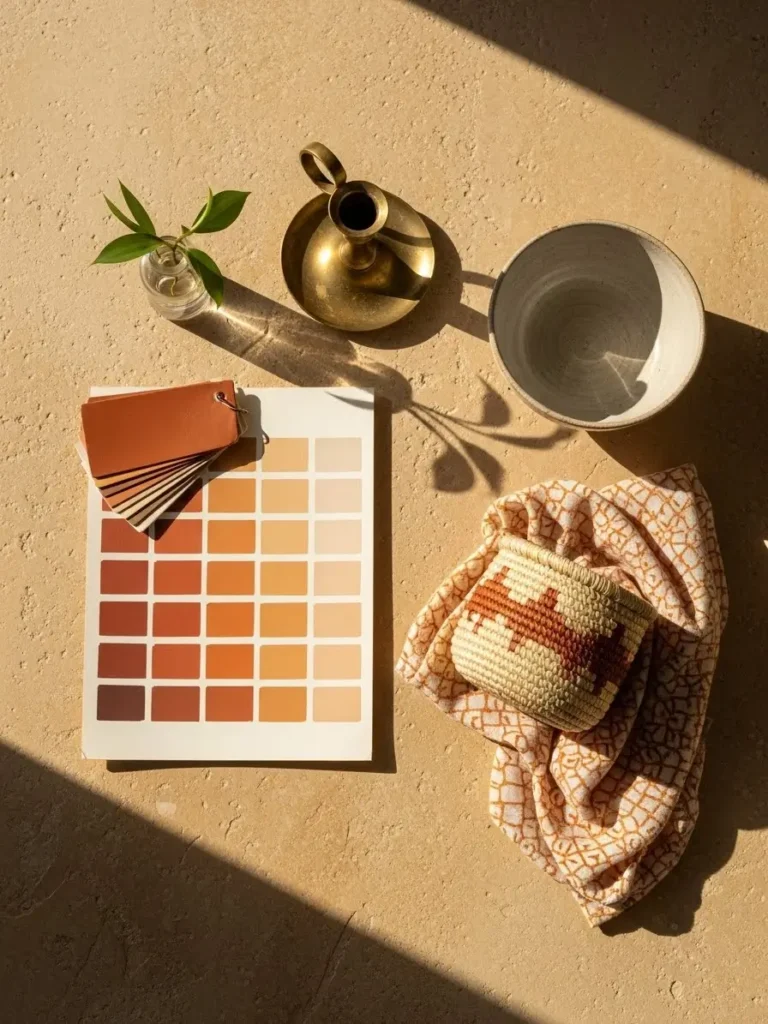
- Warmer neutrals: Clay, sand, terracotta, and deep brown are replacing cooler gray rooms.
- Calmer pattern mixing: One hero print plus supporting textures often looks better than many loud patterns competing.
- Layered lighting matters more: Softer corners and warm bulbs can change the whole mood of a room.
- Better sourcing habits: More people ask “Who made this?” and choose artisan-made or fair-trade options when possible.
New vs old approach: Old advice says “buy a matching set.”
New advice says “collect slowly and build a story.”
What item could become the first chapter of your room?
Quick update: Basket walls are still popular, but spacing looks cleaner now.
More negative space often makes each piece feel more special.
If you built a basket wall, would you prefer a tight cluster or an airy layout?
Common headline myth: “Afrohemian means maximalism everywhere.”
A better rule is “texture everywhere, bold pattern in a few places.”
Where would you place your hero pattern—pillows, a rug, or wall art?
Discussion question: Which shift feels easiest to try this month—warmer neutrals, calmer pattern mixing, or better lighting?
Understanding Afrohemian Design
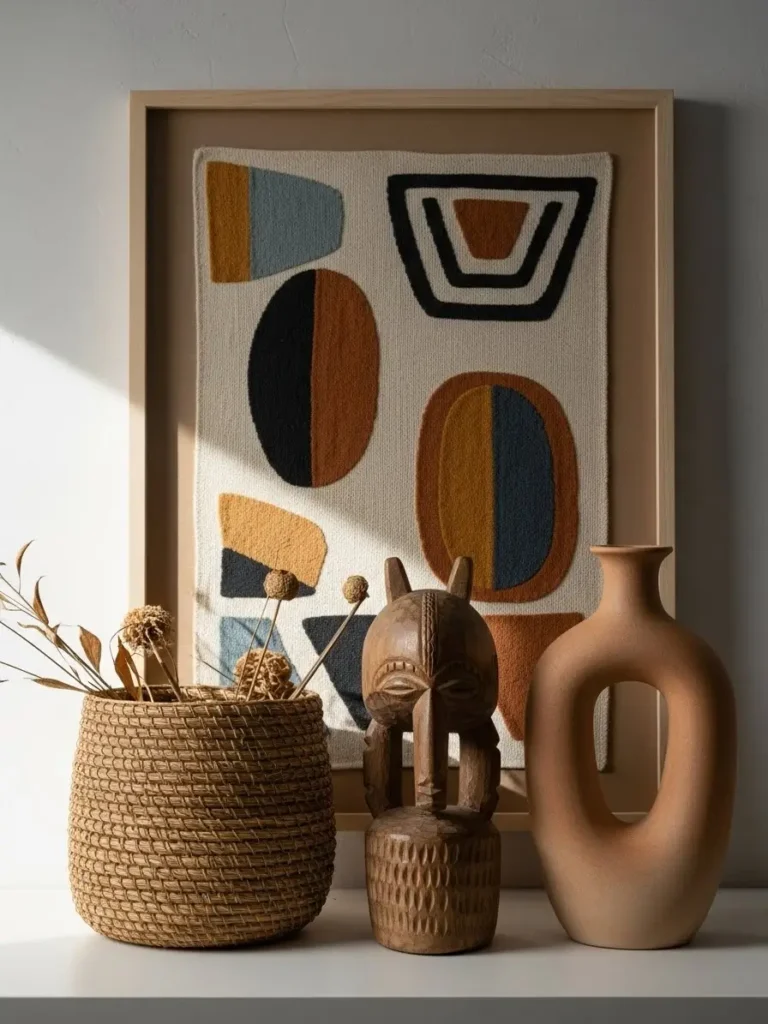
Afrohemian decor is more than a look. It is a design approach that centers African-inspired craft and pattern while keeping the home relaxed, layered, and lived-in.
Think of it as “heritage + comfort,” with room for personal expression.
Most afrohemian spaces share a few core ingredients:
natural materials, bold textiles, handcrafted pieces, and a balance between grounded neutrals and energetic accents.
The bohemian side brings softness and layering, while the African-inspired side brings strong pattern, story, and craft.
What makes it feel authentic?
- Texture first: wood grain, woven fibers, carved details, and matte ceramics.
- Pattern with purpose: one or two statement textiles can anchor a whole room.
- Collected, not copy-pasted: pieces that feel found over time, not bought in one click.
- Respectful sourcing: when possible, buy from makers, cooperatives, or ethical shops.
Quick reflection: Which side pulls you more—bold pattern and color, or calm neutrals with deep texture?
Discussion question: What is one object in your home that already feels “afrohemian” (even if you never called it that)?
Creating Your Color Palette
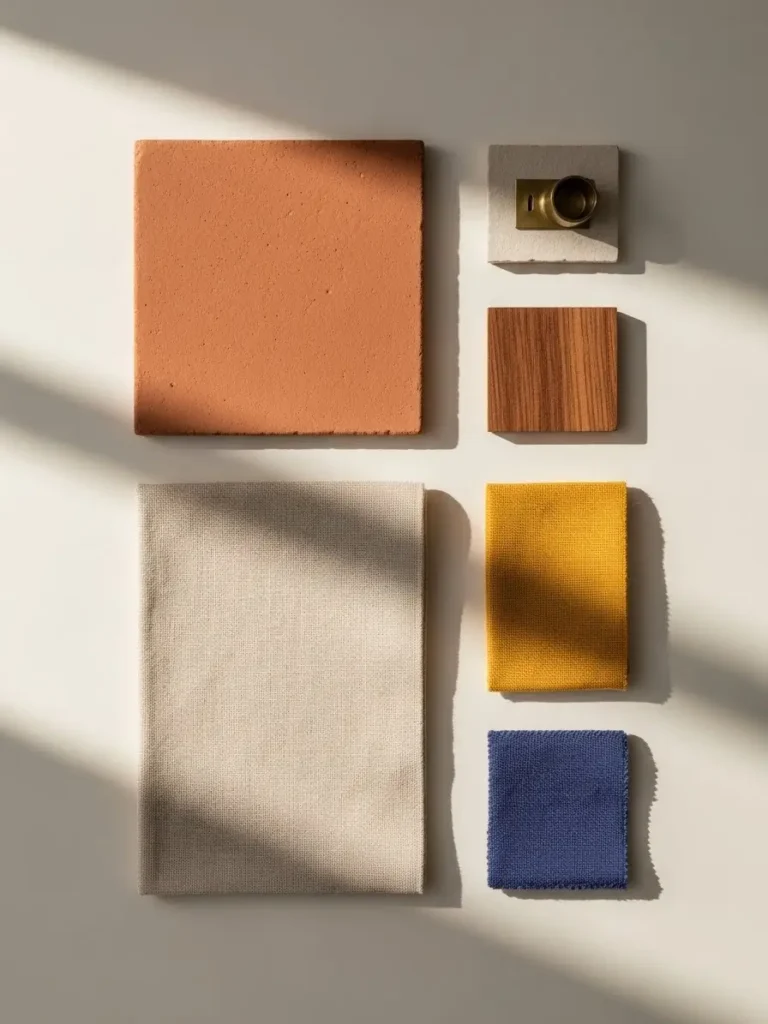
Color sets the mood in afrohemian decor.
The easiest way to keep the look warm (not chaotic) is to start with earthy base tones, then add bold color in controlled doses.
Start with earthy bases
- Sand, warm beige, and cream for a calm background.
- Clay and terracotta for warmth and depth.
- Deep brown and cocoa tones for grounded richness.
Add bold accents (pick 1–2 main ones)
- Burnt orange or rust for energy.
- Golden yellow or mustard for warmth.
- Deep green for an earthy, natural look.
- Indigo or deep blue for contrast and calm.
- Deep red for drama (best in small doses).
A simple balance rule
Try a 60–30–10 approach: 60% neutral base, 30% secondary color (often wood + textiles), 10% bold accents.
This keeps the room vibrant without feeling busy.
Afrohemian Color Combinations:
- ✓Terracotta + cream + burnt orange accents
- ✓Deep brown + mustard + warm woven textures
- ✓Sand neutrals + indigo + black-and-cream graphic print
- ✓Clay tones + brass accents + forest green plants
- ✓Warm beige + rust + layered patterns in the same family
Discussion question: Would you rather start with a warm neutral wall color, or keep walls neutral and bring color through textiles?
Essential Textiles and Fabrics
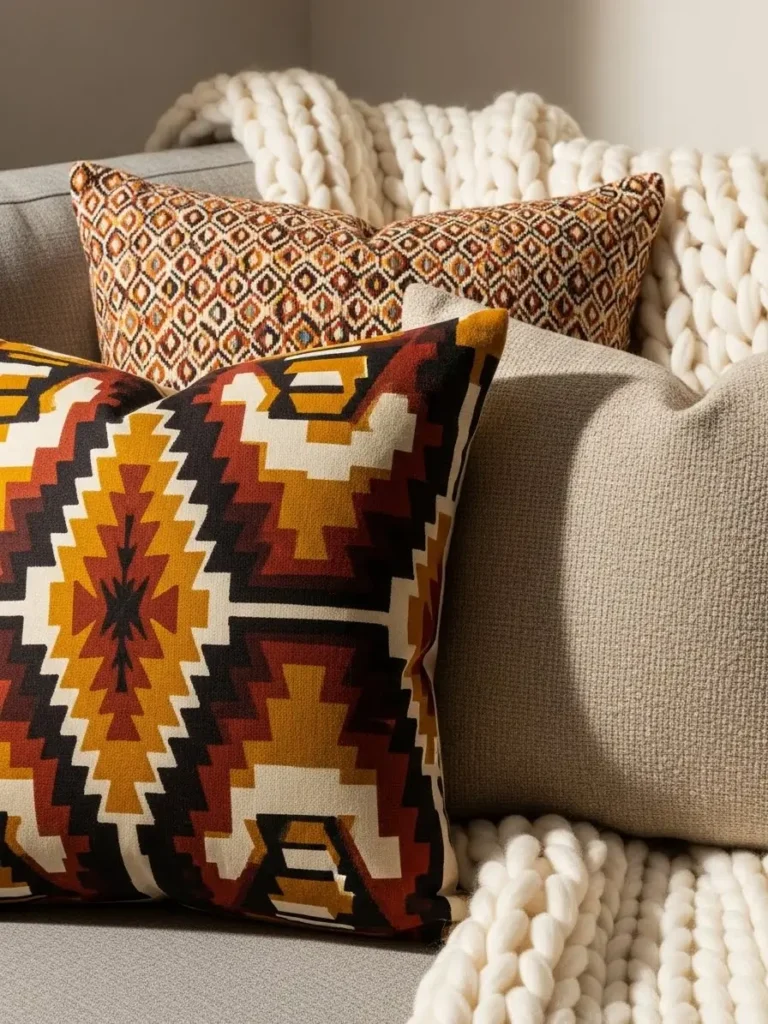
Textiles are the fastest way to make a room feel afrohemian.
They add culture, comfort, and layering all at once.
Textiles that work especially well
- Mud cloth-inspired prints: Great for pillows, throws, and wall hangings.
- Kente-inspired patterns: Strong color and stripe energy for runners or framed fabric.
- Wax print / Ankara-inspired patterns: Bold, playful prints that feel alive.
- Kuba-inspired geometrics: Rich, detailed patterns that add depth without neon color.
- Natural fibers: jute, sisal, raffia, seagrass for rugs and baskets.
How to layer patterns without stress
- Pick one “hero print” (largest, boldest pattern).
- Add one supporting pattern that shares at least one color.
- Finish with solids and texture (linen, chunky knit, woven neutrals).
If mixing patterns feels scary, start small.
Two pillows and one throw can shift the whole vibe without committing to new curtains or a big rug.
Quick reflection: Which feels easier: mixing patterns on pillows, or keeping pillows simple and using one bold rug?
Discussion question: What is your comfort level with bold prints—“a little,” “a lot,” or “not yet”?
Furniture Selection and Placement
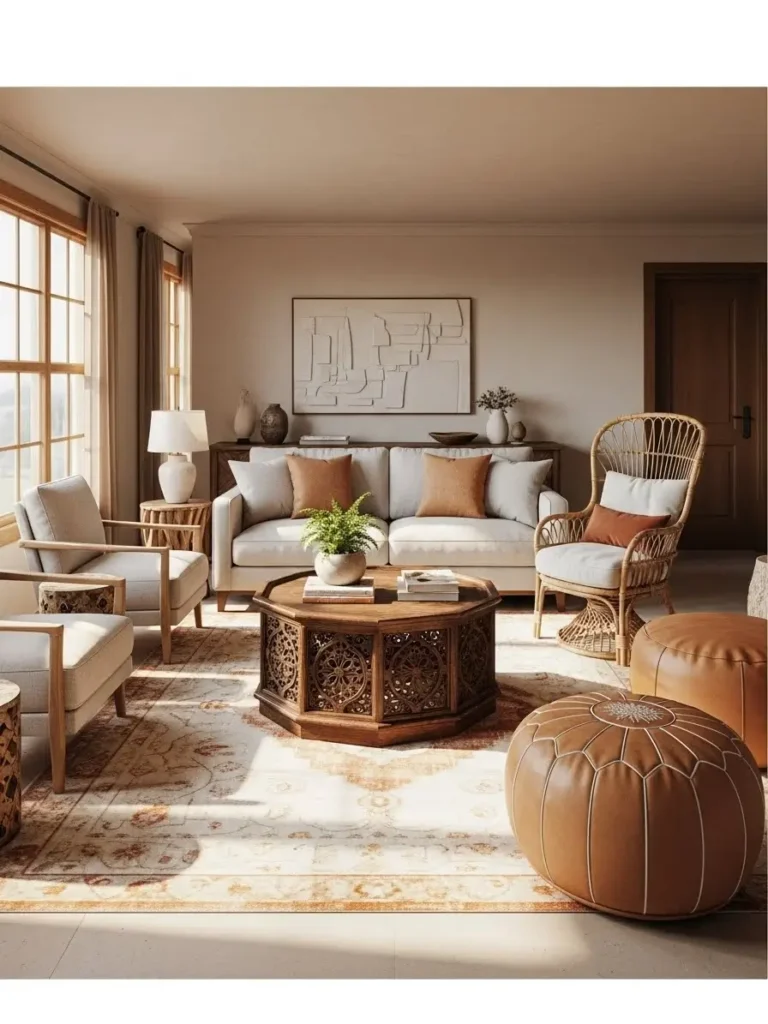
Afrohemian furniture looks best when the room has one or two strong anchors.
Then everything else supports those anchors with texture and comfort.
Best “anchor” pieces
- A carved wood coffee table or side table.
- A rattan headboard or woven accent chair.
- A low platform bed for a grounded, relaxed bedroom feel.
- A leather pouf for casual seating and warmth.
Placement that makes rooms feel intentional
- Pull seating in: A small conversation zone feels more soulful than furniture pushed to walls.
- Use “soft edges”: poufs, floor cushions, and throws reduce the “showroom” feeling.
- Repeat materials: if you have rattan in one corner, echo it with a basket or woven tray elsewhere.
Discussion question: If you could upgrade one furniture item first, would it be your coffee table, your seating, or your bed setup?
Wall Art and Decorative Elements
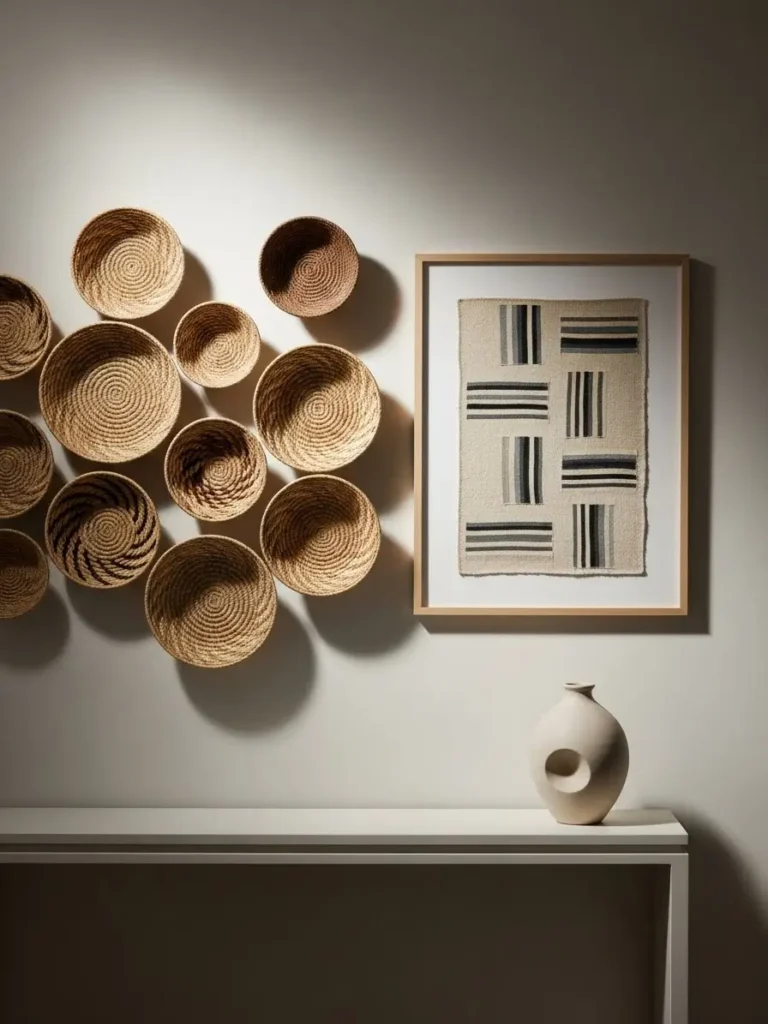
Walls are where afrohemian decor becomes storytelling.
The goal is not to fill every inch, but to curate pieces that feel meaningful and balanced.
Great wall ideas (mix 2–3, not all)
- Basket wall: mix sizes, keep spacing clean, and let the wall breathe.
- Framed textile: turn a beautiful fabric into art with a simple frame.
- Mask-inspired statement piece: choose thoughtfully and display with respect.
- Contemporary African-inspired prints: modern color and shape can balance traditional pattern.
- Carved mirror: adds light and doubles as art.
A quick gallery wall formula
- Choose one “hero” piece (largest).
- Add 2–4 supporting pieces (smaller).
- Repeat a material (wood frames, brass accents, or black frames).
- Keep at least one open space so it feels curated, not crowded.
Discussion question: Do you prefer one large statement piece, or a gallery wall that grows over time?
Lighting That Sets the Mood
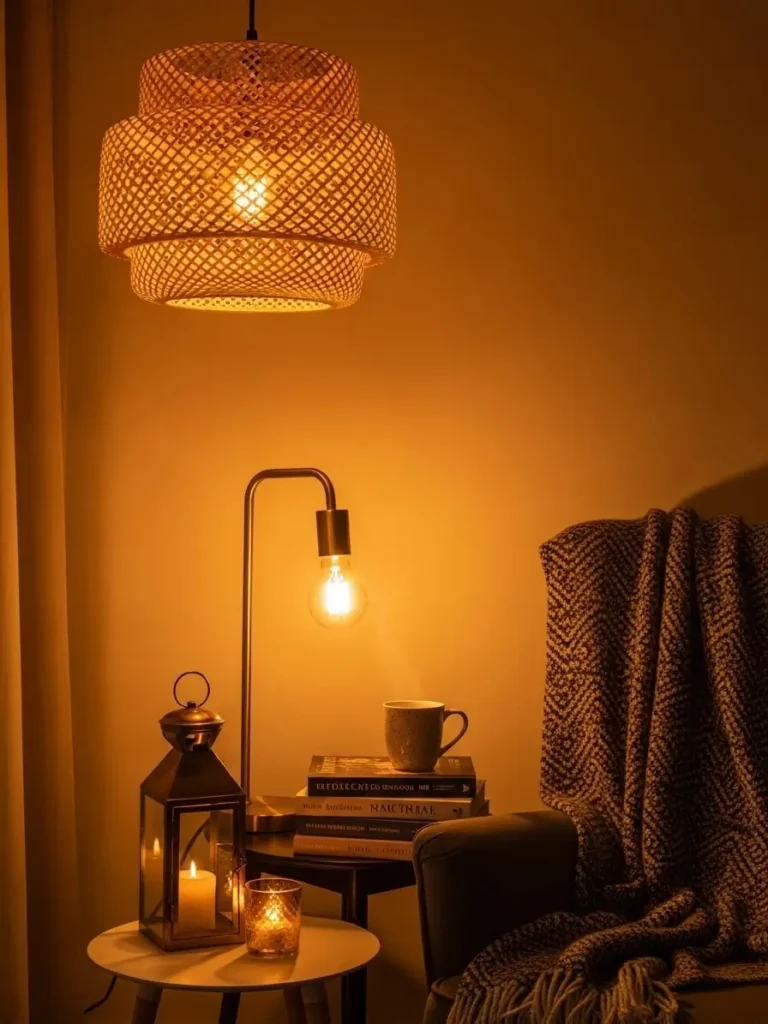
Lighting is the quiet difference between “nice decor” and “a room that feels like a vibe.”
Afrohemian style benefits from warm, layered light.
Layer your light sources
- Overhead: a woven pendant or warm fixture for general light.
- Mid-level: table lamps for softness and mood.
- Low-level: floor lamps or lantern-style lights for cozy corners.
- Accent: candles (real or LED) for warmth and glow.
A simple upgrade: switch to warm-toned bulbs and add one lamp to a dark corner.
That one change can make textures and colors feel richer.
Quick reflection: Which room in your home feels “flat” at night because the lighting is too harsh or too dim?
Discussion question: Would you rather add one statement pendant, or add two smaller lamps for layered light?
Related Post: 11 Kitchen Trends: Where Tech Meets Timeless Design
Bringing Nature Indoors
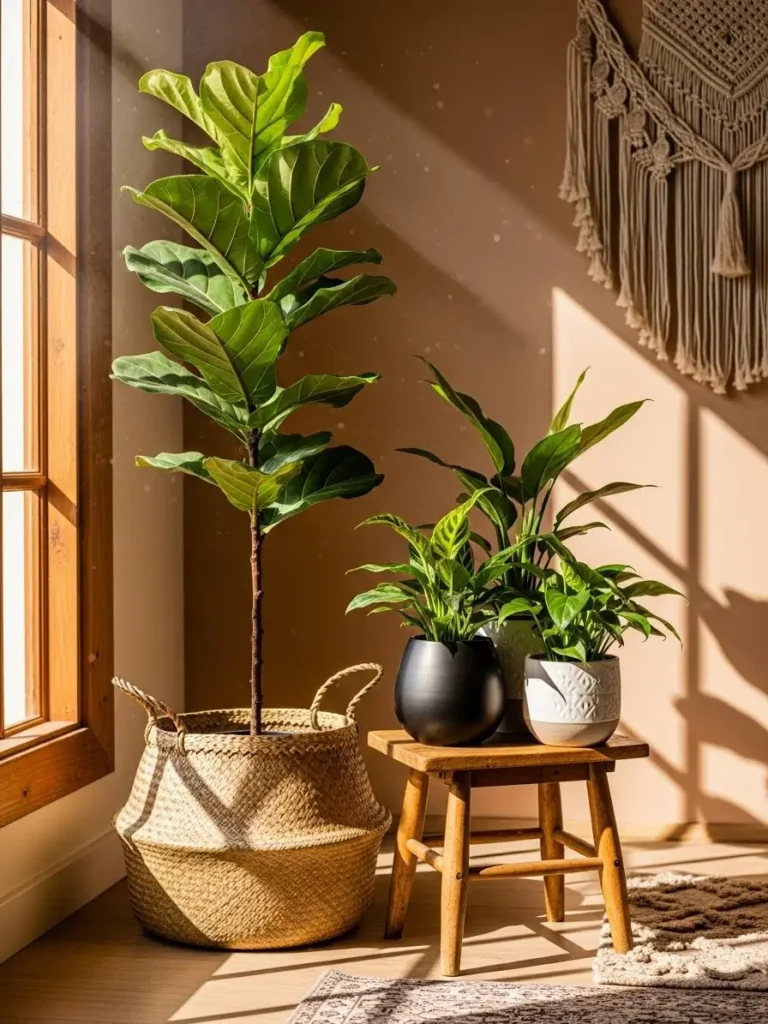
Plants and natural elements complete afrohemian rooms.
They soften bold patterns and add a living, grounded feel.
Easy plant styling that always works
- Place one tall statement plant in an empty corner.
- Group 2–3 plants at different heights on a shelf or sideboard.
- Use woven baskets as planters for texture (place a tray inside to protect floors).
- Add a hanging plant to pull the eye upward and add softness.
Natural decor that feels intentional
- Wood bowls, carved trays, and matte ceramics.
- Woven storage baskets that are both useful and beautiful.
- Dried grasses for height and softness (especially in neutral rooms).
Discussion question: Would you rather style with lots of plants, or a few plants plus more woven texture?
Room-by-Room Application
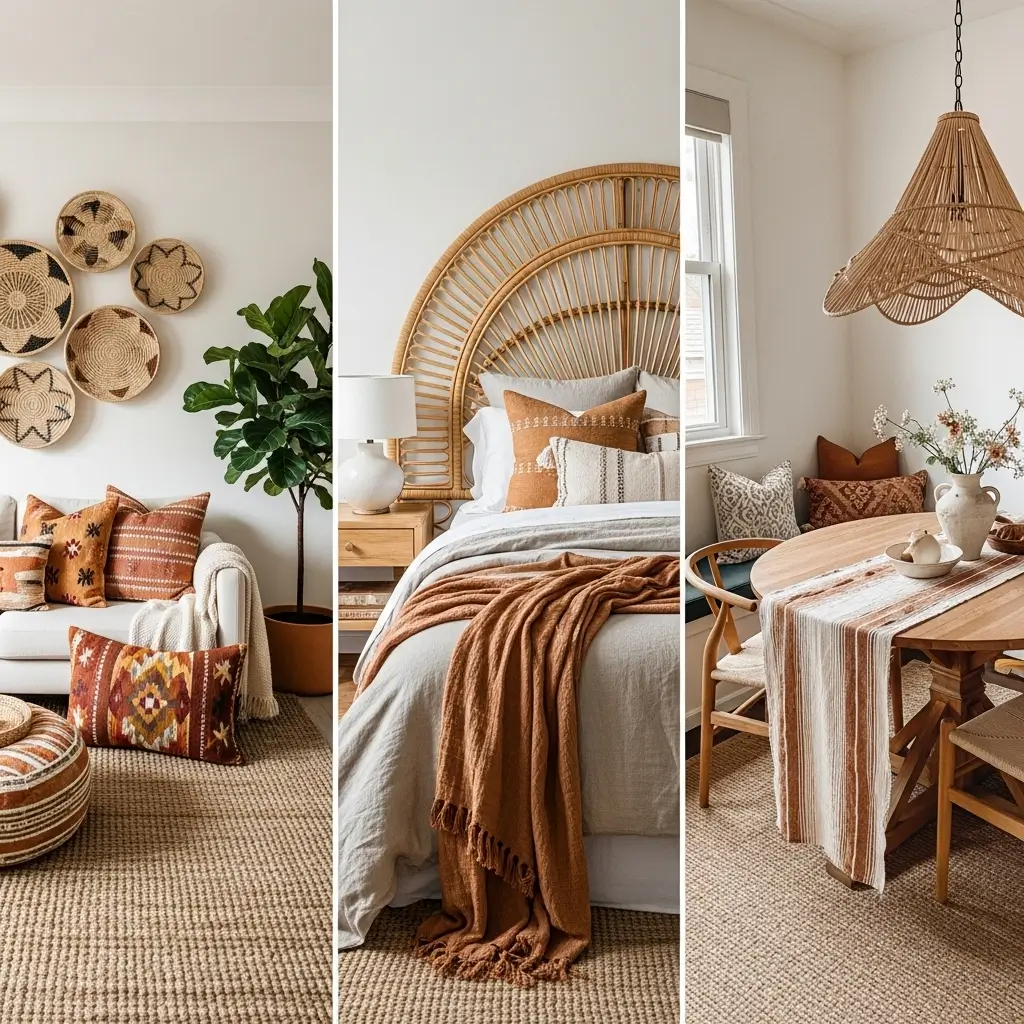
The easiest way to build afrohemian style is to repeat a few “signature moves” across rooms:
warm neutrals, natural materials, one hero textile, and layered lighting.
Living Room
- Start with a neutral sofa so your textiles can shine.
- Layer pillows: one hero print, one supporting pattern, one solid texture.
- Add a jute rug, then a smaller patterned rug on top if you want more character.
- Use a carved wood table or woven chair as your “anchor” piece.
Living room question: What would make your living room feel warmer—textiles, lighting, or wall art?
Bedroom
- Use a low bed or a woven headboard for a grounded look.
- Layer bedding with a textured throw and a hero-pattern pillow set.
- Keep lighting soft: bedside lamps beat a harsh ceiling light.
- Add one calm wall statement (textile, baskets, or framed print).
Bedroom question: Do you want your bedroom to feel bold and energized, or soft and sanctuary-like?
Dining Area
- Mix seating styles for an eclectic look (even two chair styles can work).
- Use a runner with color and pattern to set the tone.
- Add one statement pendant or lantern-style light overhead.
- Style a sideboard with baskets, ceramics, and one plant.
Dining question: Would you rather invest in the table, the lighting, or the textiles first?
Bathroom (Simple Touches)
- Use woven baskets for storage (towels, paper, toiletries).
- Add one plant that likes humidity.
- Bring in texture with a patterned mat or neutral woven mat.
- Hang one small piece of art or a carved-look mirror frame.
Bathroom question: What small upgrade would make your bathroom feel more like a styled space?
Budget-Friendly Styling Tips
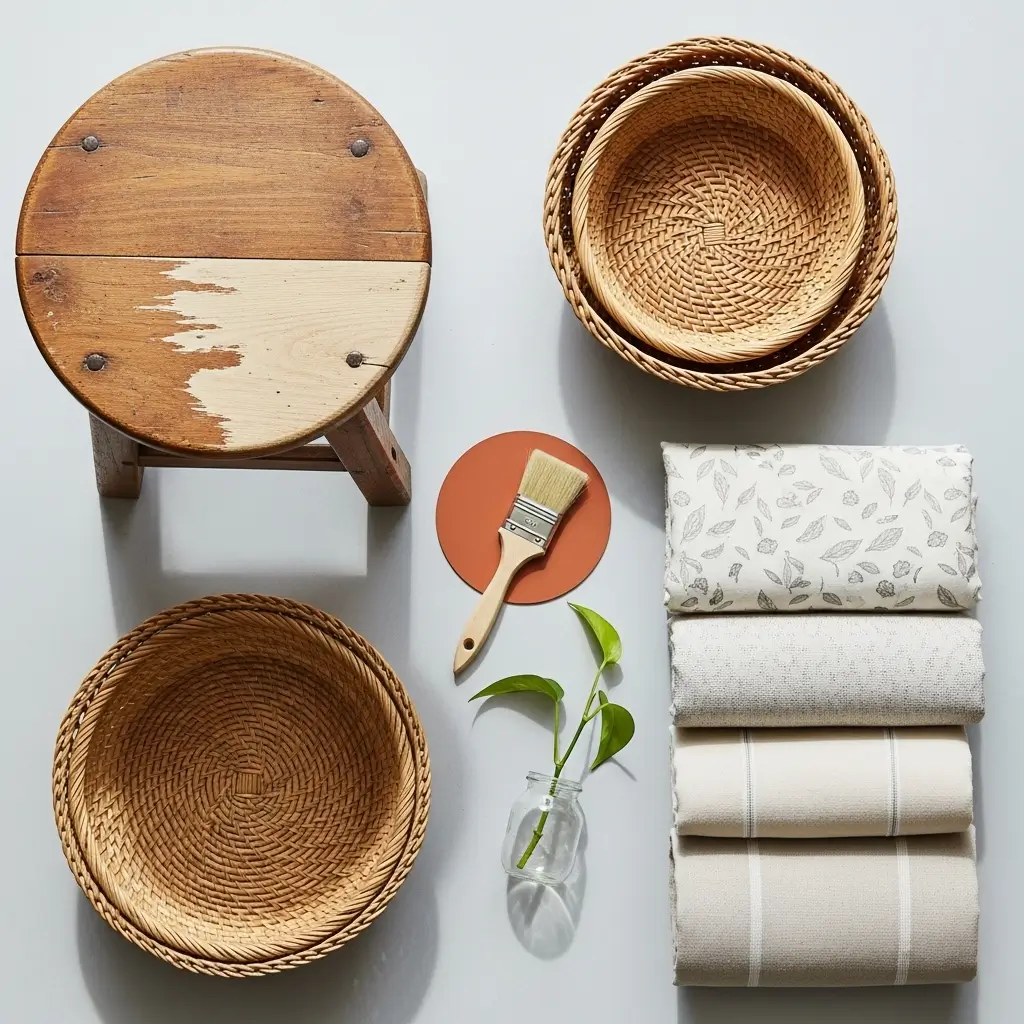
Afrohemian style does not require a huge budget.
The key is to spend on one or two anchors and fill the rest with smart texture and DIY-friendly upgrades.
Where to spend (highest impact)
- A rug (or layered rugs) that sets the room’s tone.
- One anchor furniture piece (carved wood table, woven chair, or headboard).
- Lighting (even one extra lamp can change the feel).
Where to save (still looks great)
- DIY pillow covers using bold fabric.
- Thrifted wood furniture refinished in warm tones.
- Basket walls using affordable woven baskets (styled with spacing).
- Framed fabric scraps as wall art.
- Plants propagated from cuttings over time.
Discussion question: If you had $100 to improve one room, would you put it into pillows, a rug, a lamp, or wall art?
Key Takeaways:
- ✓Afrohemian decor works best when you start with warm neutrals and build up texture, then add bold pattern in a few places.
- ✓One or two anchor pieces (a carved table, woven chair, or headboard) can define the entire room.
- ✓Pattern mixing feels easier when you pick one hero print and support it with solids and woven textures.
- ✓Layered lighting (not one harsh overhead) makes afrohemian spaces feel cozy and intentional.
- ✓You can build the look on a budget by using textiles, thrifted wood, baskets, and plants—then upgrading slowly.
Frequently Asked Questions
What makes afrohemian decor different from regular bohemian style?
Afrohemian decor is more focused. It intentionally highlights African-inspired pattern, craft, and cultural influence inside the relaxed bohemian layering approach.
Regular bohemian style can pull from many global influences at once, while afrohemian styling usually feels more grounded and specific.
Where can I find afrohemian textiles and decor that feel authentic?
Look for artisan-made items, cooperatives, fair-trade retailers, and shops that credit makers and materials clearly.
If you shop online, read descriptions carefully and avoid listings that feel vague, mass-produced, or copied.
Can afrohemian decor work in a modern or minimalist home?
Yes. Keep your modern base (clean lines, fewer objects), then add afrohemian warmth through one statement textile, one carved or woven anchor piece,
and layered lighting. The contrast can look sharp and intentional.
How do I avoid cultural appropriation while decorating?
Lead with respect and education. Learn what a piece represents, avoid treating sacred objects as casual decor, and support makers when possible.
Appreciation looks like credit, care, and ethical sourcing—not copying culture as a costume.
What are the best plants for afrohemian interiors?
Choose plants that match your light and lifestyle. Many people love snake plants, pothos, rubber plants, and bird of paradise for the bold leaf shapes.
Put them in woven baskets or matte ceramics to keep the look cohesive.
How do I mix patterns without making the room feel messy?
Keep one hero print, one supporting pattern, and then use solids plus texture to calm the room.
When in doubt, reduce the number of patterns and increase natural texture instead.
Final Thoughts
Afrohemian decor looks best when it grows over time.
Start with a warm base, add natural texture, choose one bold textile you truly love, and build your room around a few meaningful pieces.
Then refine the lighting and spacing so everything feels calm and intentional.
Which room are you styling first—and what’s the one “anchor” piece you want it built around?
Share your thoughts and experiences in the comments below—I’d love to hear your perspective!