10 Beginner Garden Layouts for Yards, Patios, and Balconies
The best beginner garden layout is one that matches your available sunlight, space, water access, and maintenance time. Before buying plants, observe the site for a full day, measure the usable area, and decide whether you want food, flowers, outdoor living space, or a combination of all three.

You do not need to redesign your entire property at once. Choose one manageable layout, leave enough room to reach every plant, and expand after learning how the space behaves through a growing season.
What to Check Before Choosing a Garden Layout
Start by drawing a simple overhead plan. Mark doors, paths, fences, outdoor faucets, existing trees, and areas where water collects. Then record how many hours of direct sunlight each potential planting area receives.
- Full sun: At least six hours of direct sunlight, with eight hours often preferable for fruiting vegetables such as tomatoes, peppers, and eggplants.
- Partial shade: Roughly three to six hours of direct sun. Leafy vegetables and many ornamental plants can perform well here.
- Deep shade: Very little direct sunlight. Use shade-adapted foliage plants rather than sun-loving vegetables or flowers.
Also consider drainage. A site that remains waterlogged after rain will need improvement, a different plant selection, or raised planting areas. Keep frequently harvested crops close to the house and place beds near a practical water source.
1. Square-Foot Vegetable Garden
A square-foot layout divides a compact bed into one-foot sections. Each square holds a different crop, with the number of plants determined by that crop’s mature size. Small crops may fit several plants in a square, while tomatoes, cabbage, and other large plants need considerably more room.
A four-by-four-foot bed is a convenient starting size because you can reach the center from either side without stepping on the soil. Place tall plants and trellises where they will not shade shorter crops—usually along the north side in the Northern Hemisphere.
Why it works for beginners
- The grid makes planting and record-keeping easier.
- Different vegetables can grow in one compact bed.
- Defined paths prevent soil compaction around roots.
- Empty squares can be replanted as crops are harvested.
Do not treat online spacing charts as universal rules. Check the seed packet because spacing varies by crop and cultivar. Penn State Extension provides a useful example of the one-foot grid method in a raised vegetable bed.
2. Simple Raised-Bed Layout
Raised beds are useful when the native soil is compacted, poorly drained, rocky, or difficult to work. They let you create a suitable growing mix without replacing soil across the entire yard. Defined edges also make paths and planting areas easy to distinguish.
A practical layout uses beds no wider than four feet when they can be approached from both sides. Make them narrower if they sit against a wall or fence. Leave comfortable paths for carrying tools, using a wheelbarrow, or moving between beds after rain.
Raised beds do not automatically eliminate weeds or maintenance. Windblown seeds can still germinate, and elevated soil may dry faster during hot weather. Before building, review guidance on raised-bed placement, construction, soil, and watering.
A manageable first setup
- One bed for salad greens and root crops
- One bed for tomatoes, peppers, or beans
- A narrow pollinator strip beside the beds
- Mulched paths that remain usable in wet weather
3. Small-Space Succession Garden
Succession planting allows the same area to produce more than one crop during the growing season. You might harvest spring radishes or peas and then use the open space for beans, basil, or another crop suited to warmer conditions. In climates with a long autumn, fast-growing greens may provide a final harvest.
Timing must reflect your local frost dates and the number of days each variety needs to mature. Avoid assuming that any crop can follow another immediately. Long-season vegetables such as tomatoes and winter squash may occupy their space for most of the season.
Keep a simple calendar showing sowing, transplanting, and expected harvest dates. The University of Minnesota explains how succession planting can extend harvests and use limited space efficiently.
4. Lawn-and-Border Backyard Layout
If you want both recreation space and planting space, retain an open central lawn or seating area and concentrate plants around the perimeter. This creates a clear, usable center while trees, shrubs, perennials, and ground covers soften the property’s boundaries.
Begin with the permanent structure rather than filling the border with impulse purchases. Position appropriately sized trees and shrubs first, then add perennials and seasonal flowers. Use repeating plants or colors to make a large border feel connected.
Make the border easier to maintain
- Use broad, gentle curves that a mower can follow.
- Choose plants suited to the existing soil and light.
- Group plants with similar watering needs.
- Leave enough room for shrubs to reach their mature width.
- Apply mulch while keeping it away from trunks and stems.
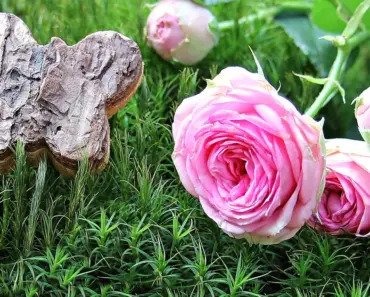
5. Compact Formal Rose Garden
A formal rose layout uses symmetry, repeated planting, defined edges, and a central path or focal point. You can create the effect in a small area with two matching beds on either side of a gravel, brick, or stepping-stone path.
Roses generally need good air circulation, appropriate sunlight, and soil that drains well. Instead of crowding plants for an instantly full appearance, follow the mature spacing listed for each cultivar. Locally recommended, disease-resistant roses can reduce—but not eliminate—the need for monitoring and care.
Keep the structure simple for your first garden. A pair of rectangular beds and one clearly defined path are easier to install and maintain than an elaborate geometric design. Before planting a hedge border, check its mature dimensions so it does not compete with the roses or narrow the walkway.
6. Modern Repetition Garden
A modern garden relies on strong shapes, a restrained plant palette, and repetition. Rather than buying many unrelated plants, choose a small group with contrasting forms: an upright grass, a rounded shrub, a spreading ground cover, and one seasonal flowering plant.
Arrange them in repeated groups along a straight path, patio, or fence. Green, white, silver, and one accent color can produce a calm appearance without making the design feel empty.
Minimalist does not always mean maintenance-free. Clipped shrubs need pruning, gravel can collect weeds, and repeating one vulnerable plant can make pests or disease more noticeable. Select resilient species for your climate and allow each plant enough space to mature naturally.
7. Vertical Garden for a Balcony or Narrow Patio
A vertical layout uses walls, fences, railings, shelves, trellises, or freestanding frames to create planting space without occupying much floor area. It works well for herbs, strawberries, compact flowers, leafy greens, and climbing vegetables.
Place the heaviest containers near the bottom and confirm that walls, railings, and brackets can carry the weight of wet potting mix. Avoid blocking shared walkways or attaching heavy planters to structures not designed to support them.
Plan for water and shade
Upper containers may dry quickly and can cast shade over lower plants. Arrange sun-loving plants near the top and shade-tolerant choices below when appropriate. Use saucers or a controlled drip system where runoff could reach neighbors, furniture, or pedestrians.
Check vertical containers frequently during hot or windy weather. Small and hanging containers can lose moisture much faster than garden soil.
8. Container Herb Garden
A collection of pots near the kitchen is one of the most achievable beginner garden layouts. Separate containers let you manage herbs with different moisture preferences rather than forcing all of them into the same soil conditions.
Most culinary herbs need well-drained soil, and many grow best with at least six hours of direct sunlight. Mint is especially useful in its own pot because it spreads vigorously. Rosemary, thyme, basil, parsley, chives, and cilantro can be arranged according to their light and seasonal needs.
Terra-cotta pots look attractive and their drainage suits many herbs, but porous clay loses moisture faster than glazed ceramic or plastic. Every container should have a drainage hole, and the pot must be large enough for the plant’s mature root system. Illinois Extension explains how container material affects watering and maintenance.
9. Mixed Herb, Vegetable, and Flower Garden
Mixing edible and ornamental plants can make a small bed productive and visually appealing. Flowers may provide nectar and pollen for visiting insects, while crops with different heights and root systems can use space efficiently.
Arrange tall vegetables where they will not shade sun-loving herbs. Keep frequently harvested plants near the path and leave enough airflow around crops prone to fungal disease. Useful combinations might include lettuce beneath an open trellis, compact herbs along the edge, and regionally appropriate flowers at intervals through the bed.
Be careful with sweeping companion-planting claims. Marigolds and other flowers do not repel every garden pest, and results depend on the plant, insect, and planting arrangement. Use mixed planting as one part of garden management, not as a substitute for crop inspection or proper care. The University of Minnesota offers a research-based overview of companion planting in home gardens.
10. Layered Shade Garden
A shaded corner can become a foliage-focused garden instead of an unsuccessful vegetable plot. Build the layout in layers: low ground covers near the path, rounded plants such as hostas through the middle, and taller ferns or other upright shade plants toward the back.
Choose plants for both light and moisture conditions. Shade beneath a mature tree can be dry because roots compete for water, while a low area beside a building may remain damp. Not every fern or hosta performs under the same conditions.
Repeat leaf colors and textures to keep the design cohesive. Broad hosta leaves contrast well with delicate fern fronds and narrow sedges. Hostas may attract slugs, deer, or other browsing animals in some areas, so locally adapted alternatives may be more practical where those problems are common.
How to Choose the Right Layout
| Situation | Suitable starting layout | Main consideration |
|---|---|---|
| Small sunny yard | Square-foot or raised-bed garden | Crop spacing and regular watering |
| Balcony or patio | Vertical or container herb garden | Weight, drainage, and fast-drying pots |
| Large family yard | Open lawn with planted borders | Mature plant size and easy circulation |
| Sunny ornamental space | Formal rose or modern repetition garden | Plant health and ongoing pruning |
| Shaded corner | Layered foliage garden | Soil moisture and shade intensity |
| Small food-growing area | Succession or mixed garden | Planting dates and compatible space needs |
Common Beginner Layout Mistakes
- Making beds too wide: You should be able to reach plants without stepping on cultivated soil.
- Ignoring mature size: Small nursery plants may become large shrubs or spreading perennials.
- Blocking sunlight: Tall crops, walls, and trellises can shade nearby plants.
- Forgetting access: Leave room to water, weed, harvest, prune, and move equipment.
- Starting too large: One well-maintained bed is more rewarding than several neglected areas.
- Mixing incompatible water needs: Group plants that prefer similar moisture conditions.
- Planting before checking drainage: Observe where water collects after rain.
Frequently Asked Questions
What is the easiest garden layout for a complete beginner?
A small raised bed or container garden is often the easiest place to start because its boundaries are clear and the soil is easier to manage. Choose a size you can water and inspect regularly rather than maximizing the number of plants.
How much sunlight does a vegetable garden need?
Many productive vegetables need at least six hours of direct sunlight, while tomatoes, peppers, and eggplants generally perform best with six to eight hours. Leaf lettuce, radishes, scallions, and some leafy greens can tolerate less sun, although growth may be slower.
Can several layouts be combined in one yard?
Yes. You might use raised beds in the sunniest area, install herbs near the kitchen, grow vines against a fence, and create a shade garden beneath trees. Connecting the areas with repeated materials, colors, or plants will make the overall design feel intentional.
Should paths be included in the plan?
Yes. Paths are essential working space, not wasted space. They allow you to reach plants without compacting the soil and make watering, harvesting, and maintenance safer. Design them before installing beds or buying plants.
When should the garden be expanded?
Use the first growing season to learn how quickly the soil dries, where shade moves, which plants thrive, and how much maintenance fits your schedule. Expand only when the original area remains manageable. A garden that grows gradually is usually easier to maintain and refine.