

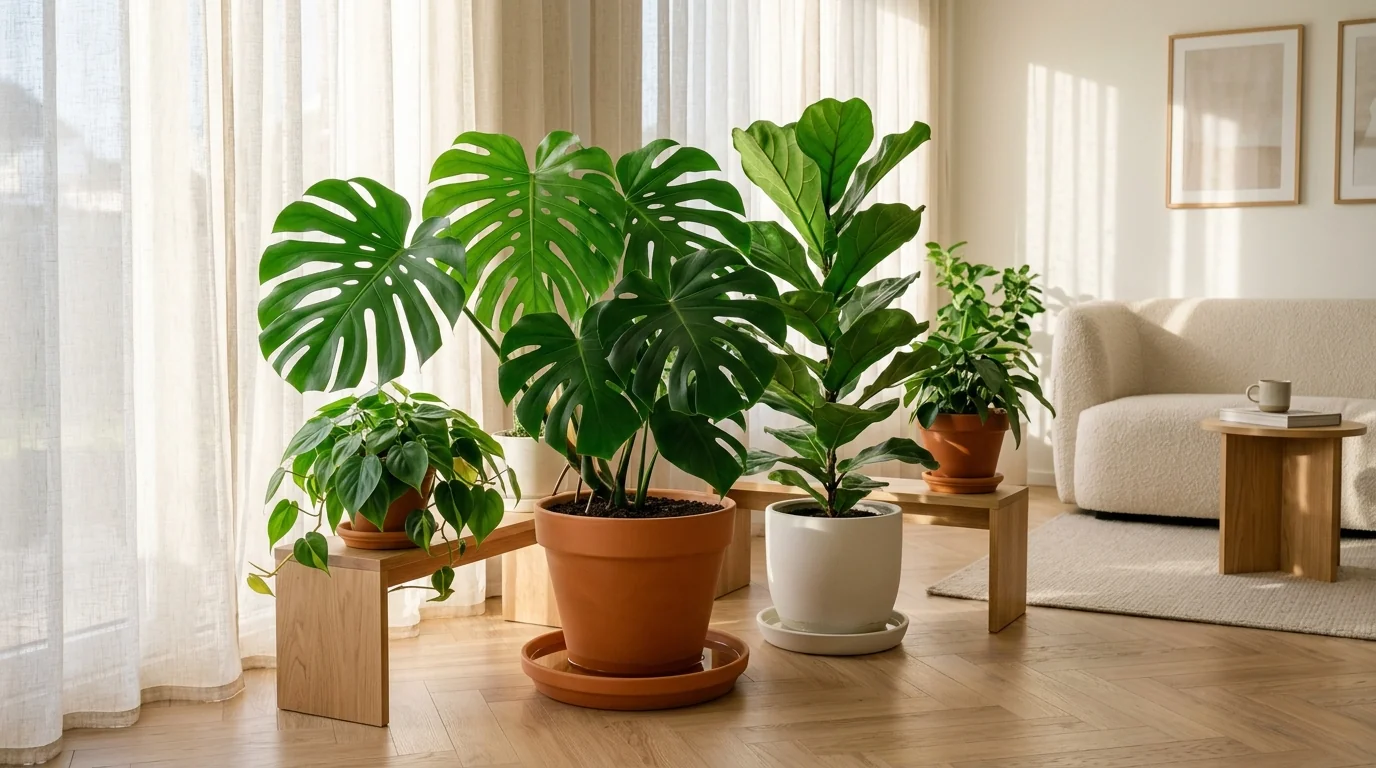
You glance over at your prized fiddle leaf fig or fenestrated Monstera deliciosa, admiring the unfurling new growth, when a minuscule, erratic black speck zigzags past your face. You swat at the air in frustration. Two days later, there are five of them hovering around your coffee cup. By the end of the week, a hovering cloud of tiny black flies billows up from your planter every time you brush past the foliage.
Your immediate instinct is to wage chemical warfare. You drench the soil with diluted neem oil, spray soapy dishwater across the leaves, or sprinkle cinnamon across the dirt. Yet within days, the swarm returns with greater intensity. You wonder if your home is cursed or if you purchased an infested specimen.
The truth is far more mechanical: you are inadvertently operating a high-efficiency insect nursery inside your living room. Standard commercial potting soils, composed primarily of dense sphagnum peat moss, combined with conventional top-watering habits, create the exact biological parameters required for sciarid flies—commonly known as fungus gnats (Bradysia spp.)—to thrive in perpetuity. Breaking this cycle requires understanding the entomological reproductive timeline and shifting from surface saturation to the physics of capillary sub-irrigation.
The Entomology of the Sciarid Fly: The 17-Day Reproductive Clock
To eliminate fungus gnats permanently, you must first understand the creature you are fighting. The adult gnats you see buzzing lazily around your television screen or resting on your window glass are not feeding on your plants; they lack functional mouthparts and survive for only five to seven days with a single biological objective: reproduction.
During her brief adult lifespan, a single female fungus gnat mates and deposits between 100 and 300 microscopic eggs. However, she does not lay these eggs indiscriminately across the plant. An adult sciarid fly requires two non-negotiable physical conditions for oviposition:
- Dark, porous organic substrate: Decaying plant matter where emerging larvae can feed.
- Continuous high surface humidity: Moisture levels above 70% in the top 0.5 to 1.5 inches of the soil profile. If soil moisture in this boundary layer drops below 25%, the delicate chorion membranes of the eggs desorb water and collapse, rendering them 100% non-viable.
“An adult fungus gnat cannot penetrate hard or dry crusts. Every single egg is deposited exclusively within the damp, spongy top inch of your pot. When you pour water from a watering can onto the surface of the soil, you are refreshing the nursery substrate they need to hatch.”
The Larval Subsurface Assault: Root Hair Grazing and Hypoxia
Within four to six days of egg deposition, the eggs hatch into translucent, legless larvae with shiny black head capsules, measuring roughly 5 to 6 millimeters in length. This larval stage is where true horticultural devastation occurs.
Under natural forest conditions, fungus gnat larvae are essential decomposers; they consume decaying leaf litter and fungal mycelium. But inside a confined indoor container, the micro-ecosystem is closed. As the larval population multiplies, they rapidly consume the available surface fungi and organic detritus. Driven by starvation, hundreds of ravenous larvae migrate downward into the rhizosphere.
The Microscopic Root Damage Vector
The larvae begin grazing aggressively on the microscopic root hairs—the delicate, single-cell epidermal extensions responsible for absorbing water, dissolved nitrogen, phosphorus, and trace minerals. As these root hairs are severed, your plant loses its physiological turgor pressure. Leaves turn chlorotic (yellow), growth stalls, and the edges of tropical aroid foliage begin to brown and crisp, mimicking symptoms of dehydration.
Distressed homeowners see the drooping, yellowing leaves and assume the plant needs more water. They grab a watering can and pour another liter of water onto the topsoil. This fatal feedback loop drowns the remaining damaged roots in standing moisture, creating anaerobic root hypoxia and opening weeping root lesions to opportunistic fungal water molds like Pythium and Phytophthora (root rot).
Why Commercial Bagged Potting Mix Is an Engineered Trap
Why do modern houseplants seem dramatically more prone to gnat infestations than outdoor gardens? The culprit is the modern potting medium: milled sphagnum peat moss and fine coconut coir dust.
Unlike mineral garden soil, milled peat moss has immense water-holding capacity, absorbing up to twenty times its dry weight in water. Furthermore, peat is composed of ultra-fine, spongy particles with high specific surface area. When top-watered, these fine particles compact into a dense, soggy sponge that stays saturated at the surface for seven to ten days. At room temperatures between 68°F and 74°F, this warm, damp peat creates a tropical fermentation chamber that generates a continuous plume of carbon dioxide and fungal spores—an irresistible chemical beacon for adult gnats seeking egg-laying sites.
The Physics of Capillary Sub-Irrigation: Reversing the Moisture Gradient
You cannot solve a soil physics problem with topical pesticides. The only permanent, non-toxic, and scientifically foolproof method to eradicate fungus gnats is to reverse the soil’s moisture gradient through capillary sub-irrigation (bottom-watering).
Capillary action is governed by the principles of surface tension and cohesive-adhesive forces. Soil is filled with millions of microscopic interconnected air channels known as capillary pores. When a container with drainage holes is set into a reservoir of water, the adhesive attraction between the water molecules and the mineral/organic surfaces of the substrate draws the liquid upward against gravity (capillary rise).
The Inverted Moisture Dynamic
When you water a plant from below, physics creates a radical vertical moisture gradient that solves your pest problem naturally:
- The Deep Root Zone (Bottom 4–8 inches): The soil particles absorb water until capillary saturation is achieved, delivering deep hydration and dissolved nutrients directly to the active root mass.
- The Capillary Equilibrium Ceiling: Because capillary lift naturally decelerates as hydrostatic head pressure balances adhesive forces, the moisture ascent halts approximately 1.5 to 2 inches below the surface of the container.
- The Desertified Top Stratum (Top 0–2 inches): Exposed to ambient room airflow, the top two inches of the potting mix remain bone dry, loose, and completely desiccated.
When an adult female fungus gnat lands on a sub-irrigated plant, she encounters an arid mineral desert. There is zero surface moisture to keep her eggs alive, and zero surface fungal mycelium for larvae to feed upon. Unable to oviposit, the reproductive chain is shattered within a single generation.
The 14-Day Eradication Protocol: Step-by-Step Restoration
If your home is currently besieged by an active gnat infestation, follow this clinical 14-day protocol to collapse the colony without toxic aerosols:
Step 1: The Initial Soil Desiccation
Immediately halt all top-watering. Allow your container to dry out until the top two to three inches feel completely dry and dusty to the touch. Most robust indoor plants (Monstera, Snake Plants, ZZ Plants, Pothos, Ficus) can easily tolerate temporary surface dryness because their deep roots remain hydrated.
Step 2: The Physical Quartz Sand Barrier
Pour a clean, uniform 0.5-inch layer of coarse horticultural quartz sand (or food-grade diatomaceous earth) across the entire top surface of the potting mix. Quartz sand particles are dense, sharp, and non-absorbent. They do not hold moisture, drying within minutes of exposure to air. Any adult gnat attempting to burrow into the soil to lay eggs is physically blocked, and any mature larva attempting to emerge from the pupal stage has its soft exoskeleton lacerated by the microscopic quartz edges.
Step 3: Bottom-Watering Execution
Every 10 to 14 days (or when the deep root zone requires moisture):
- Place your plant’s plastic nursery pot or unglazed terracotta pot into a basin or wide saucer filled with 1 to 1.5 inches of room-temperature, filtered water.
- Allow the plant to sit undisturbed for exactly 30 to 45 minutes. Watch the capillary action pull the water level down.
- Insert your finger through the drainage holes or use a digital moisture meter to verify that the root zone has absorbed adequate moisture.
- Lift the pot from the basin and allow all excess water to drain freely for 10 minutes before returning it to its decorative planter. Never allow the pot to sit permanently in a standing puddle of water, which induces root rot.
Step 4: Biological Larval Neutralization with BTI
To eliminate larvae already living deep in the soil, incorporate Bacillus thuringiensis israelensis (BTI)—a naturally occurring bacterium that produces crystal proteins (delta-endotoxins). When gnat larvae ingest BTI, the alkaline pH of their digestive tract activates the toxin, destroying their gut lining within 24 hours. BTI is completely non-toxic to humans, pets, earthworms, and plants.
Soak BTI granules (sold commercially as Mosquito Bits) in your bottom-watering water for 30 minutes, strain the granules out, and use the microbe-infused water for your sub-irrigation soak. The capillary action draws the beneficial bacteria directly into the root zone where the larvae reside.
📥 Free Download: Sub-Irrigation & Fungus Gnat Eradication Blueprint
Botanical soil physics: sciarid fly reproduction cycles, capillary moisture rise stratification, BTI biological treatments, and aroid chunky substrate formulas.
Designing an Anti-Pest Soil Architecture: The Aroid Chunky Mix
Long-term plant health requires moving away from suffocating, peat-heavy supermarket potting soils. To prevent future pest outbreaks and provide superior root oxygenation, repot your tropical houseplants into an airy, coarse substrate engineered for rapid drainage:
- 40% Coarse Coconut Coir Chips: Provides expansive surface area and long-lasting fibrous structure without breaking down into anaerobic sludge.
- 30% Horticultural Pumice or Coarse Perlite (#3): Non-porous volcanic minerals that maintain permanent macropore spaces for root gas exchange.
- 20% Coarse Pine Bark or Orchid Bark: Simulates the natural epiphytic tree-bark canopy where Monsteras and Philodendrons originate.
- 10% Screened Worm Castings: Delivers slow-release organic micronutrients and beneficial mycorrhizae that actively suppress pathogenic soil fungi.
This coarse, chunky matrix cannot support fungus gnat larvae because it contains no stagnant, soggy peat dust. Water glides effortlessly through the pores, leaving the substrate rich in oxygen and naturally pest-resistant.
Cultivate Thriving Greenery in Restorative Peace
Your home should be an oasis of architectural greenery and biophilic calm, not an indoor insect combat zone. By recognizing that fungus gnats are merely biological indicators of surface over-saturation, you reclaim control over your environment.
Through the simple, elegant physics of capillary sub-irrigation, you supply your houseplants with the deep, nourishing hydration their root systems crave—while transforming the soil surface into an uninhabitable boundary that banishes gnats from your living spaces forever.