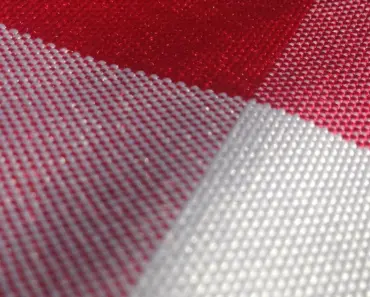
If you have spent any time following modern skincare or haircare routines, you have almost certainly encountered the gospel of the microfiber towel. Marketed as the ultimate gentle upgrade from traditional cotton terrycloth, microfiber wraps, turbans, and facial cleansing cloths promise to dry your hair in half the time without frizz and leave your facial skin polished to a radiant glow.
Yet dermatologists and trichologists are increasingly witnessing a puzzling clinical trend: patients presenting with persistent facial redness, stinging sensations when applying basic moisturizers, damaged skin lipid barriers, and mysterious mid-shaft hair breakage—all while diligently following a “gentle” microfiber routine.
The problem is not that microfiber fails to absorb water; it absorbs water with extraordinary speed. The hidden problem lies in the microscopic geometry of the fiber itself. Understanding how synthetic split fibers interact with your skin’s protective stratum corneum and delicate wet hair cuticles reveals why this miracle fabric may be silently compromising your natural lipid barriers, and how simple adjustments in technique and fiber selection can restore your skin and hair to health.

The Microscopic Anatomy of Split Synthetic Fibers
To understand why microfiber can act like an invisible abrasive on human tissue, you have to examine how it is manufactured. Microfiber is not a natural agricultural fiber like cotton, linen, or bamboo. It is a synthetic composite made from a blend of polyester (which provides structural durability) and polyamide, commonly known as nylon (which provides density and wicking power).
During the manufacturing process, these synthetic filament threads are exposed to intense chemical baths or high-pressure mechanical treatments that split each individual filament into multiple microscopic strands. When viewed under an electron microscope, an unsplit fiber looks like a smooth, round cylinder. A split microfiber, by contrast, resembles a multi-pointed star or a collection of jagged wedges separated by deep open grooves.
This star-shaped cross-section creates an immense surface area—roughly four times greater than a comparable cotton fiber. When water touches the fabric, capillary action pulls moisture rapidly into those microscopic channels. However, those same star-shaped wedges act as millions of microscopic hooks. In industrial cleaning applications, this design is prized because split microfiber grabs dust, grease, and bacteria from countertop surfaces without needing harsh detergents. But when you drag those same microscopic hooks across living human skin and delicate wet hair, the mechanical dynamics become destructive.
What Happens to Your Skin Barrier: The Stratum Corneum Under Friction
The outermost layer of your skin, the stratum corneum, is often described in dermatology as a “brick-and-mortar” structure. The “bricks” are corneocytes (flattened, protein-rich skin cells), and the “mortar” is a continuous intercellular lipid matrix composed of ceramides, cholesterol, and free fatty acids. This microscopic shield has one primary evolutionary mandate: keeping vital moisture inside your body while preventing environmental pathogens and irritants from penetrating.
When you wash your face with warm water and cleanser, that lipid matrix temporarily softens. If you follow your wash by wiping or buffing your face with a split-fiber microfiber cloth, those microscopic wedge-shaped hooks latch onto the softened lipid matrix. Instead of merely absorbing surface droplets of water, the fabric acts as an aggressive physical exfoliant, mechanically shearing away intercellular ceramides and stripping the skin’s protective acid mantle.
Dermatologists measure this damage through transepidermal water loss (TEWL)—the rate at which water evaporates from inside the body through the epidermis into the atmosphere. Clinical studies demonstrate that aggressive towel friction causes immediate spikes in TEWL, triggering the classic symptoms of an impaired skin barrier:
- Stinging and Burning: Gentle, alcohol-free moisturizers or serums that previously caused no discomfort suddenly sting upon application because micro-fissures in the barrier allow ingredients to reach raw nerve endings.
- Persistent Facial Flushing: The underlying microcapillaries dilate in response to chronic friction, leaving cheeks and the perimeter of the nose chronically pink or reactive.
- Compensatory Oil Rebound: Deprived of its natural lipid seal, the skin responds in panic by hyper-producing sebum, resulting in an oily sheen paired with dry, flaky surface patches.
- Aggravation of Inflammatory Conditions: For individuals with mild rosacea, eczema, or sensitive skin, the micro-shearing action of synthetic fibers can trigger acute flare-ups.
The Trichology Dilemma: Why Wet Hair Is Uniquely Vulnerable
The marketing surrounding microfiber hair wraps argues that faster drying prevents water damage. While prolonged water saturation does swell the hair shaft (a phenomenon known as hygral fatigue), wrapping or rubbing wet hair with high-friction synthetic fibers introduces a different, equally serious mechanical threat.
When your hair is dry, its outer protective layer—the cuticle—resembles tightly closed shingles on a roof. But when hair becomes saturated with water, temporary hydrogen bonds within the cortex break, and the hair shaft swells. The cuticle shingles lift outward, exposing the delicate inner cortex. In this state, hair is capable of stretching up to 30 percent beyond its normal length, making it extraordinarily fragile.
If you twist wet hair into a tight microfiber turban or vigorously rub your roots to speed up drying, the tiny wedge-shaped hooks of the split fibers catch on the lifted cuticle edges. As the heavy turban pulls backward against your scalp, it creates continuous tensile shear. The cuticles snag, chip, and tear away, leaving behind rough, frayed hair shafts that tangle easily, lose their natural light reflectivity (shine), and snap under minimal brushing pressure.
The Dermatologist’s Pat-Dry Protocol: Four Rules for Healthy Skin
Protecting your skin barrier does not mean abandoning good hygiene. It requires shifting from a culture of aggressive wiping to a gentle, respectful drying ritual:
1. Master the Static Press (Never Wipe)
Dermatologists universally advise against dragging any fabric across facial skin. Instead of rubbing, take a soft, clean towel, hold it flat against both hands, and gently press it against your face for three seconds. Let the natural capillary action of the fibers absorb surface water droplets without lateral movement. Release, reposition, and press again.
2. The 90-Percent Moisture Rule
Never dry your face to complete, squeaky dryness. Leave your skin approximately 10 percent damp. The moisture remaining on the surface acts as an essential water reservoir. When you apply your hydrating toners, hyaluronic acid serums, or moisturizers directly onto damp skin, the humectants bind to those water molecules, locking deep hydration into the stratum corneum.
3. Choose Long-Staple Natural Cellulose
If synthetic microfiber causes irritation, switch your facial towels to 100% long-staple organic Turkish or Egyptian cotton, or pure untreated bamboo linen. Natural cotton fibers have rounded microscopic walls that lack the sharp wedge profile of split synthetics. They absorb water generously while rolling smoothly across sensitive skin tissue without gripping lipids.
4. Enforce Strict Linen Rotation
Damp bathroom towels are ideal breeding grounds for bacteria and fungal spores. Never use the same towel you used on your body or hands to dry your freshly cleansed face. Keep a stack of small, dedicated organic cotton face cloths on your vanity, and use a fresh cloth every one to two days to prevent bacterial reinoculation.
Smart Hair Drying: Protecting Cuticles Without Frizz
To dry your hair quickly without mechanical friction, adopt these trichologist-approved practices:
- Use Unsplit Smooth Textiles: If you love hair wraps, ensure the material is made from smooth, unsplit modal, pure organic cotton jersey (like an old, soft cotton t-shirt), or 100% natural mulberry silk. Silk and jersey cotton have flat surface weaves that glide over lifted cuticles without catching.
- Squeeze, Don’t Twist: Gently cup sections of hair between folds of fabric and squeeze upward toward the scalp to express excess water. Never wring hair like a dishcloth.
- Loosen the Wrap Tension: If you twist hair into a topknot or turban, keep the wrap loose and comfortable. Excessive traction along the front hairline puts stress on hair follicles, contributing to traction thinning around the temples.
📥 Free Download: The Microfiber vs. Organic Fiber Safety Guide
Dermatological fiber comparisons, lipid barrier friction scales, and the 3-step pat-dry protocol.
When Microfiber Actually Shines
Microfiber is not inherently evil; it is simply an industrial tool that has been misapplied to delicate human biology. Microfiber is unmatched for household dusting, cleaning windows without streaks, polishing glass shower doors, and detailing vehicle paintwork. Its microscopic hooks trap grime and grease on non-porous surfaces with unmatched efficiency.
Save your microfiber towels for your home’s countertops, mirrors, and appliances. For your face, your skin barrier, and your hair, choose natural, breathable, long-staple organic fibers that protect your natural biology—letting your skin stay calm, hydrated, and genuinely healthy.