10 Round Glasses Trends Defining 2026—and How to Choose the Right Pair
Round glasses remain one of 2026’s most adaptable eyewear choices. This year’s strongest designs combine familiar circular lenses with lighter metals, translucent acetate, richer colors, mixed materials, and softly geometric edges. The result feels expressive without looking like a costume.
The most important consideration, however, is not whether a frame is fashionable or supposedly perfect for your face shape. A good pair must fit your nose, temples, prescription, and daily routine. Use these trends as inspiration, then let comfort and optical requirements guide your final decision.
Why Round Glasses Continue to Feel Relevant
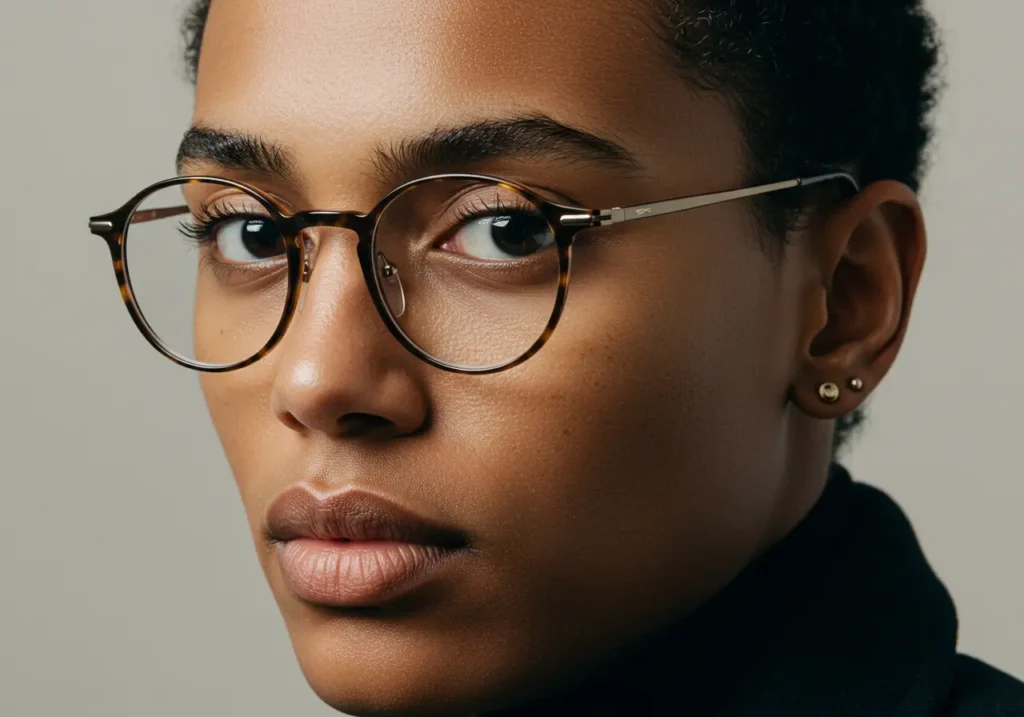
Round frames have appeared repeatedly in art, music, academia, and fashion. Their staying power comes from their simplicity: designers can change the material, rim thickness, bridge, color, and lens proportions without losing the recognizable circular silhouette.
Current eyewear collections are moving in two directions at once. One favors substantial acetate, oversized proportions, and saturated color. The other embraces delicate titanium, barely visible rims, and restrained finishes. Round glasses work naturally in both categories.
Quick answer: The freshest round glasses feature refined oversized proportions, thin metal, transparent or softly tinted acetate, keyhole and double bridges, earthy colors, and geometric variations such as hexagonal or flattened-round lenses.
What to Check Before Choosing a Trend
Material and Weight
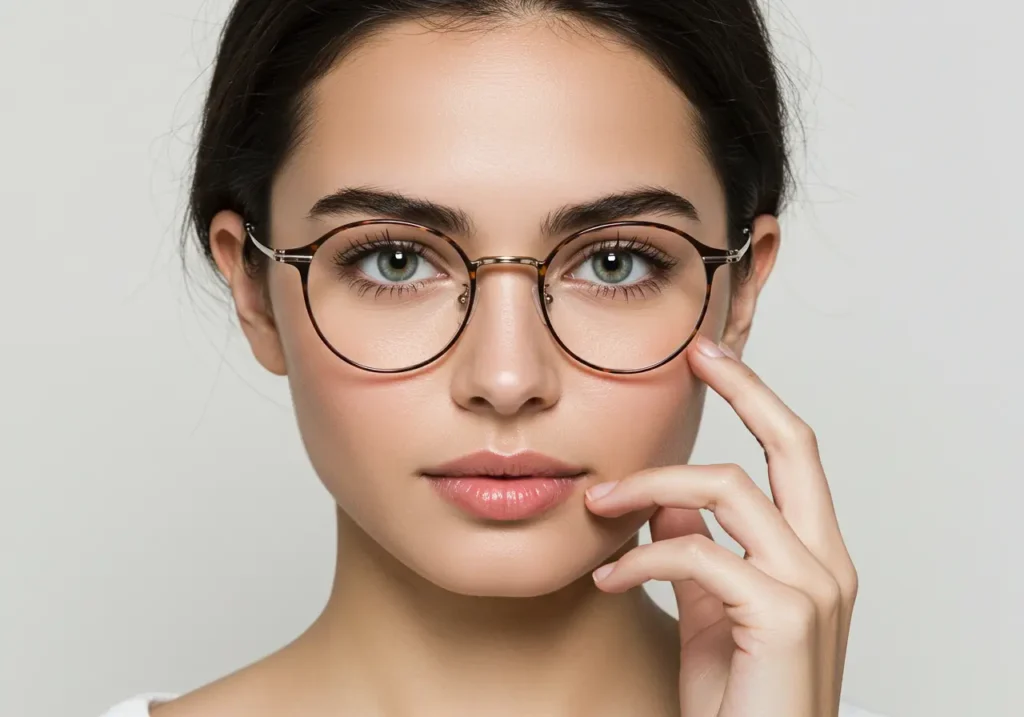
- Acetate: Offers rich colors, patterns, and substantial rims. Quality, flexibility, and finish can vary considerably between manufacturers.
- Stainless steel: Produces slim, relatively durable frames at many price levels.
- Titanium: Is valued for its low weight and corrosion resistance. People with known metal sensitivities should confirm the complete frame composition because hinges, screws, and decorative parts may use other metals.
- Combination construction: Uses both metal and acetate to balance color, structure, and visual weight.
When comparing frames, hold each pair by the bridge and notice whether one side feels heavier. Poor weight distribution can cause slipping or pressure even when the total frame weight seems low.
Frame Measurements and Proportion

The numbers printed inside a temple usually identify lens width, bridge width, and temple length in millimeters. Compare them with a pair you already find comfortable, but remember that two frames with similar measurements can fit differently because of their shape and bridge construction.
- The bridge should sit securely without pinching or continually sliding.
- Your eyes should be positioned appropriately within the lenses.
- The temples should not press into the sides of your head.
- The lower rims should not rest on your cheeks or lift when you smile.
- The frame should remain stable when you look down or move your head.
Oversized round frames require extra care. A larger lens can add weight and may produce thicker lens edges with some prescriptions. Ask an optician whether the frame’s size, material, and shape are suitable before ordering.
Color, Transparency, and Pattern

Black and tortoiseshell remain dependable, but translucent gray, amber, blush, olive, burgundy, and deep blue offer an easy way to make round glasses feel more current. Semi-transparent colors are particularly wearable because they add definition without creating the visual weight of an opaque rim.
Try frames in both natural and artificial light. Consider how the color works with your hair, clothing, jewelry, and preferred makeup rather than relying only on warm-or-cool complexion rules.
Bridge Shape and Nose Fit

- Keyhole bridge: Creates a vintage-inspired opening above the nose and changes where the frame makes contact.
- Saddle bridge: Distributes contact across a broader area when properly fitted.
- Adjustable nose pads: Allow an optician to modify frame height, angle, and position.
- Double bridge: Adds a second bar above the main bridge for a more architectural appearance.
- Low-bridge fit: May help when standard frames slide, touch the cheeks, or sit too close to the eyelashes.
A bridge style is not automatically comfortable simply because of its name. Nose shape, bridge width, frame weight, pad placement, and lens thickness all affect the fit.
10 Round Glasses Trends to Know in 2026
1. Refined Oversized Metal Rounds

Large circular lenses paired with narrow metal rims create presence without the heaviness of chunky acetate. The current interpretation is more controlled than exaggerated: balanced lens depth, finer temples, and restrained gold, silver, bronze, or matte finishes.
The Ralph by Ralph Lauren RA6050 round prescription eyewear frame is one example to compare if you like a slim, full-rim metal design. Depending on the selected version, this model is commonly offered with a 51 mm or 53 mm lens width, a 17 mm bridge, and 140 mm temples. Confirm the exact color and measurements on the listing before purchasing.
For a larger designer interpretation, the Gucci GG0297OK round metal eyeglasses use a 52 mm lens width and a wider 21 mm bridge. That difference matters: even when two frames share a round shape, their bridge width and overall proportions can produce very different fits.
2. Transparent and Tinted Crystal Acetate

Completely clear frames are evolving into translucent smoke, champagne, blush, sage, and amber. These subtle tints preserve the light appearance of crystal acetate while adding warmth and personality.
Transparent frames can reveal hinges and metal cores, so inspect the construction closely. Those visible components become part of the design rather than disappearing behind opaque material.
3. Thick Acetate with Softer Proportions

Bold acetate rounds still deliver one of the clearest eyewear statements, but newer versions often soften the perfect circle or reduce unnecessary bulk around the bridge. This makes the style easier to wear while retaining its graphic impact.
The Tory Burch Eleanor Phantos eyeglasses offer a rounded phantos shape rather than a perfect circle. The model is made with a substantial acetate front and features the brand’s Double T hinge detail. Its listed measurements are 51 mm for the lens width, 18 mm for the bridge, and 140 mm for the temples, although availability and colors can change.
4. Mixed Metal-and-Acetate Frames

Combination frames use contrasting materials to create depth. You might see an acetate brow detail with a slim metal lower rim, a metal front with colored acetate temples, or a lightweight bridge set between substantial circular rims.
The Swarovski SK2019 round prescription eyewear frame is worth comparing if you want a full-rim designer style that blends decorative character with a rounded or oval silhouette. Colors and specifications may vary by listing, so check the model code, size, and seller information carefully.
5. Fashion Tints and Orange Lenses
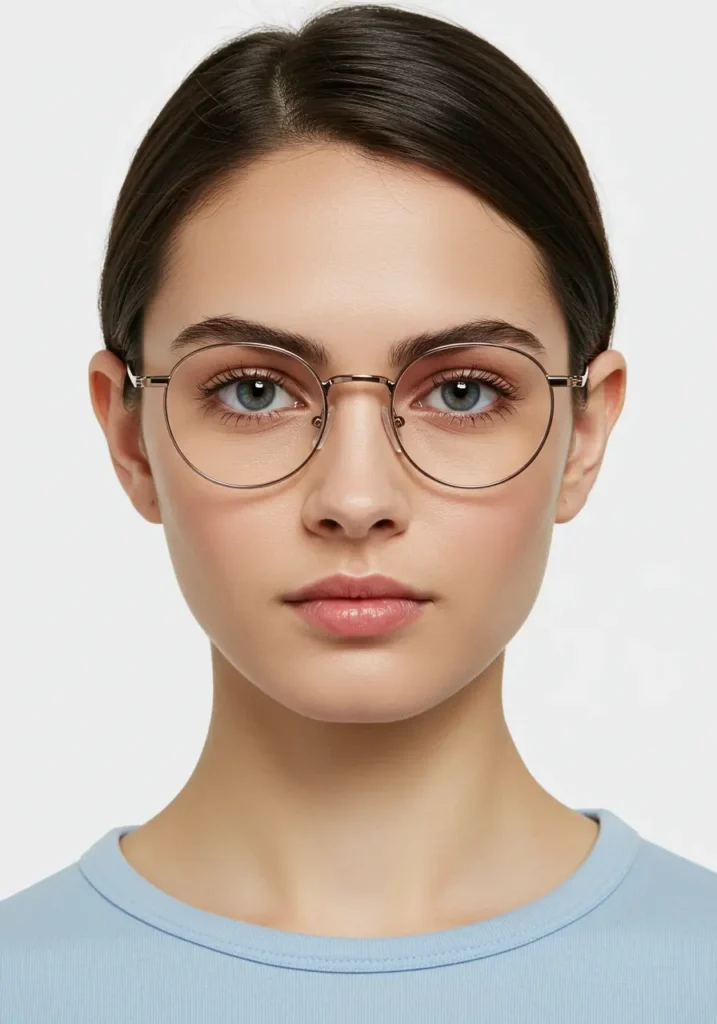
Light amber, gray, rose, and blue tints give round glasses a distinctly retro mood. Before choosing a tint, tell your optician where you plan to wear it. A fashionable indoor tint, a sunglass lens, and a lens intended for driving have different performance requirements.
The orange blue-light-blocking acetate glasses are marketed as filtering 99.5% of blue light and as suitable for evening screen use. Treat that percentage and any sleep, eye-strain, or migraine language as manufacturer claims rather than guaranteed medical outcomes. Review the stated filtering range, lens transmission data, return policy, and fit before buying.
Evidence does not support treating ordinary blue-light-filtering glasses as a universal remedy for digital eye strain. Screen discomfort can also result from dry eyes, reduced blinking, glare, an outdated prescription, or prolonged close work. People experiencing migraines, persistent eye pain, light sensitivity, or sleep problems should seek appropriate professional advice instead of relying solely on tinted glasses.
6. Small Gold-Tone Retro Rounds

Compact metal circles remain a distinctive alternative to oversized eyewear. Newer designs refine the idea with slimmer bridges, muted finishes, and more comfortable adjustable nose pads.
Small frames should still provide an appropriate optical zone for your prescription. Progressive and multifocal lenses may require sufficient lens height, so confirm compatibility rather than selecting a frame solely for its vintage proportions.
7. Keyhole-Bridge Round Frames
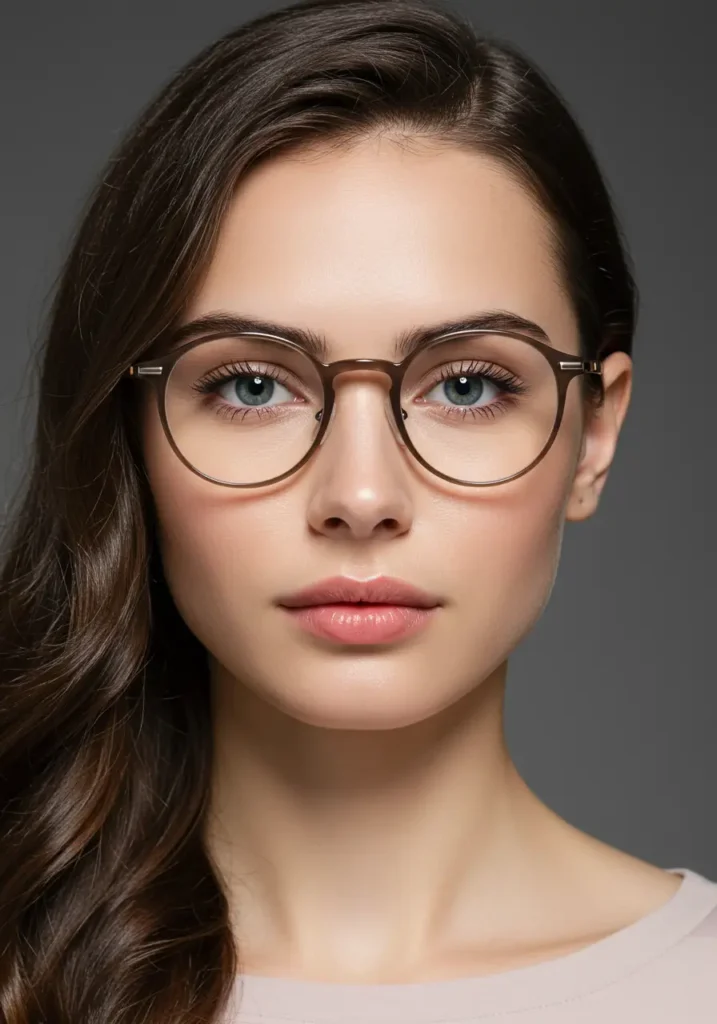
A keyhole bridge gives a simple circular front an identifiable vintage detail. In translucent acetate, the outline appears light and contemporary; in tortoiseshell or black, it produces a stronger heritage look.
The Ray-Ban RX7075 round prescription eyeglass frame provides a wearable example of this retro-modern direction. Versions are commonly listed with a 49 mm lens width and 20 mm bridge, but color, material description, and included lenses can differ between sellers. Verify the product code and measurements before ordering.
8. Earthy and Mineral-Toned Acetate

Olive, rust, cognac, clay, sand, smoky gray, and warm tortoiseshell provide color without the intensity of neon or primary shades. Layered and marbled acetate makes these tones more dimensional by changing slightly as light passes through the frame.
If you want a versatile alternative to black, start with deep olive, amber, or translucent brown. They remain neutral enough for daily wear while making the circular shape more visible.
9. Double-Bridge Round Glasses
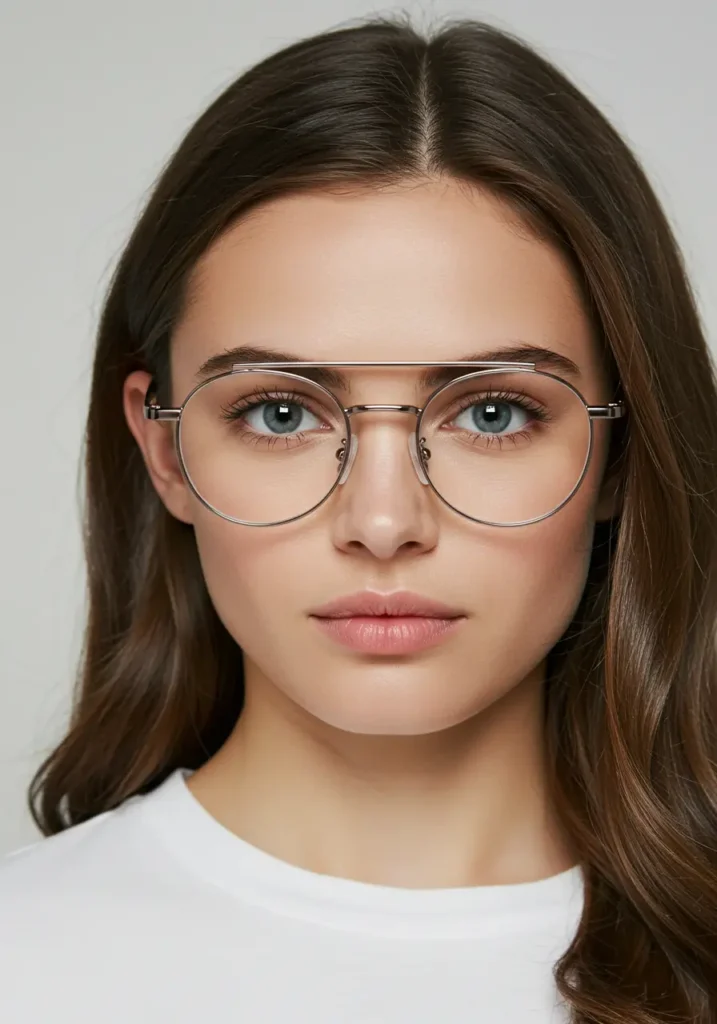
A double bridge introduces horizontal structure to an otherwise curved frame. Slim metal versions feel technical and refined, while thicker mixed-material designs make a stronger fashion statement.
The upper bar should sit comfortably between the brows without appearing crowded. This is one style for which an in-person comparison is especially valuable, because a small change in bridge height can noticeably alter the frame’s expression.
10. Hexagonal, Octagonal, and Flattened-Round Frames
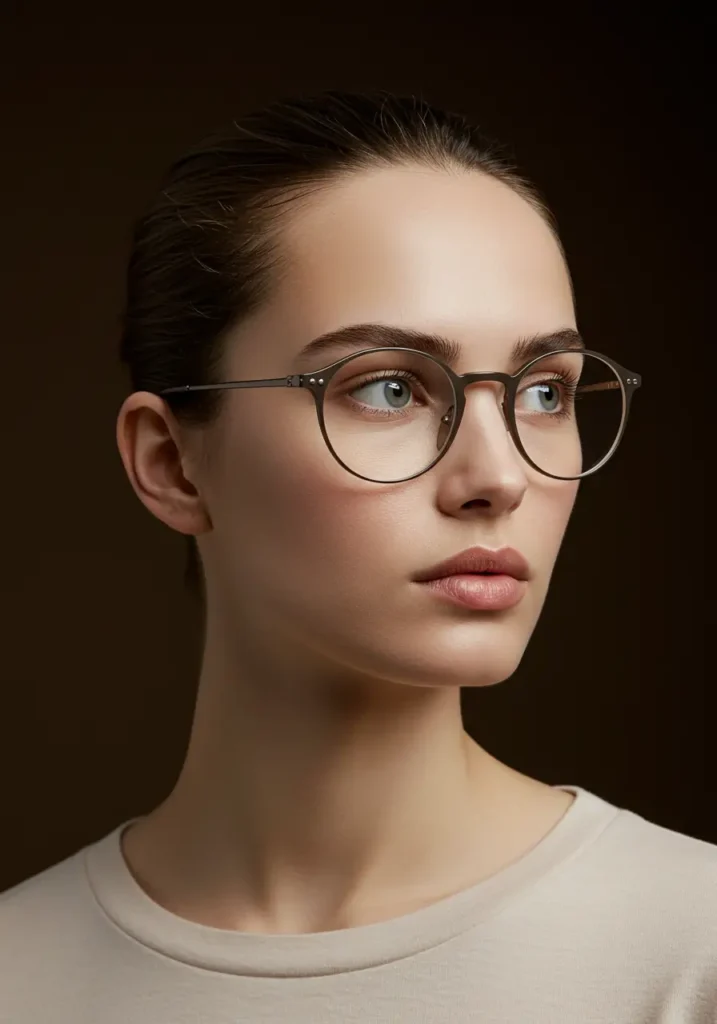
Soft hexagons, octagons, and circles with a flattened top offer the character of round glasses with added definition. Thin metal highlights the geometry delicately, while acetate makes every angle more pronounced.
If you prefer a more structured alternative to a perfect circle, compare the Oakley OX5067-0251 Black Overlord 51 mm eyeglasses. This model is generally identified as a 51 mm metal or titanium optical frame with a more angular profile, so it belongs on the shortlist for readers who like round-frame lightness but want stronger lines. Check the exact size and condition because availability may come from third-party sellers.
Round Eyeglass Frames Worth Comparing
The following options cover different interpretations of the round and phantos trend. These links lead to product listings, and availability, pricing, colors, seller identity, included lenses, and measurements may change.
| Frame | Style Direction | Important Check |
|---|---|---|
| Ralph by Ralph Lauren RA6050 | Slim round metal | Confirm whether the listing is the 51 mm or 53 mm version |
| Gucci GG0297OK | Large round metal | Its 21 mm bridge may fit differently from narrower models |
| Tory Burch Eleanor Phantos | Bold rounded acetate | Verify color and whether lenses are demonstration lenses |
| Swarovski SK2019 | Designer round or oval full rim | Match the color code and frame size to the listing |
| Ray-Ban RX7075 | Compact retro round | Confirm material, color, and the commonly listed 49–20 sizing |
| Oakley OX5067-0251 Overlord | Angular metal alternative | Review seller, condition, and the listed 51 mm size |
| Orange blue-light-blocking glasses | Orange-tinted acetate | Do not assume advertised health benefits are guaranteed |
Shopping note: Many frames are delivered with clear demonstration lenses rather than prescription lenses. Before ordering, determine who will fit your prescription, whether the frame is compatible with it, and whether your local optical shop will accept an externally purchased frame.
How to Choose Round Glasses for Your Face
Face-shape advice can provide a starting point, but it is not a rulebook. Most faces combine several characteristics, and hairstyle, brow shape, frame scale, bridge placement, and personal style can matter as much as the general outline of your face.
Square or Angular Features

Curved rims can create an appealing contrast with a defined jaw or angular forehead. Mid-sized metal rounds feel light, while thicker acetate creates a more deliberate statement. You can also choose softened geometric frames if a perfect circle feels too severe.
Oval Features
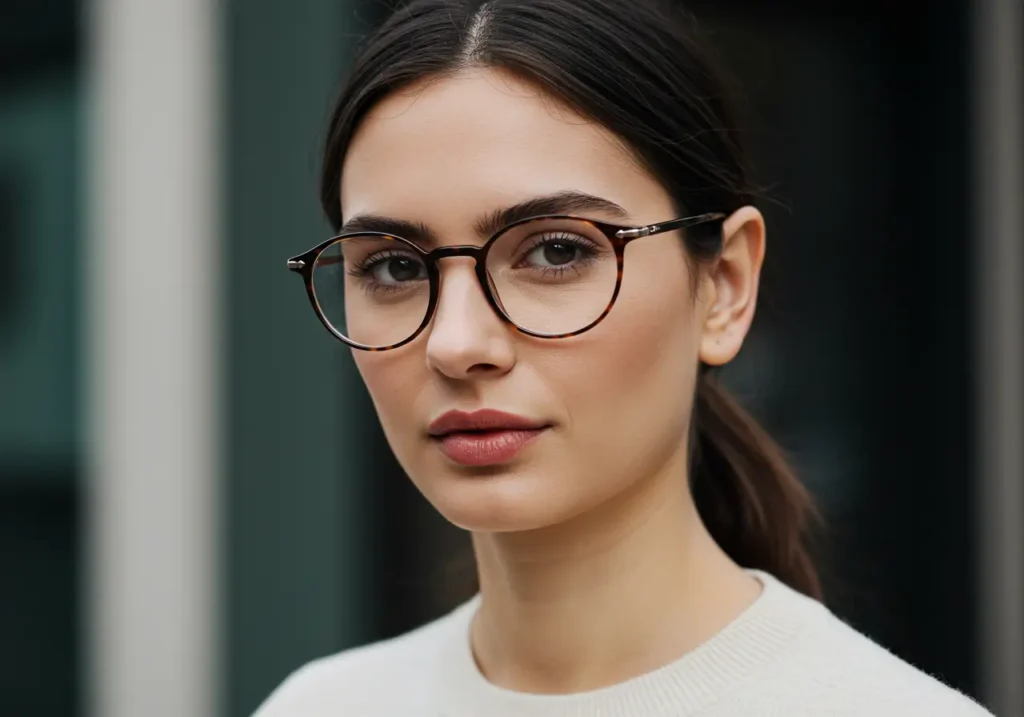
Oval faces can experiment with many round-frame proportions. Instead of concentrating on shape rules, compare how different lens sizes relate to your brows, cheekbones, and overall head width. Avoid a frame that is so narrow that the temples flare outward.
Round Features
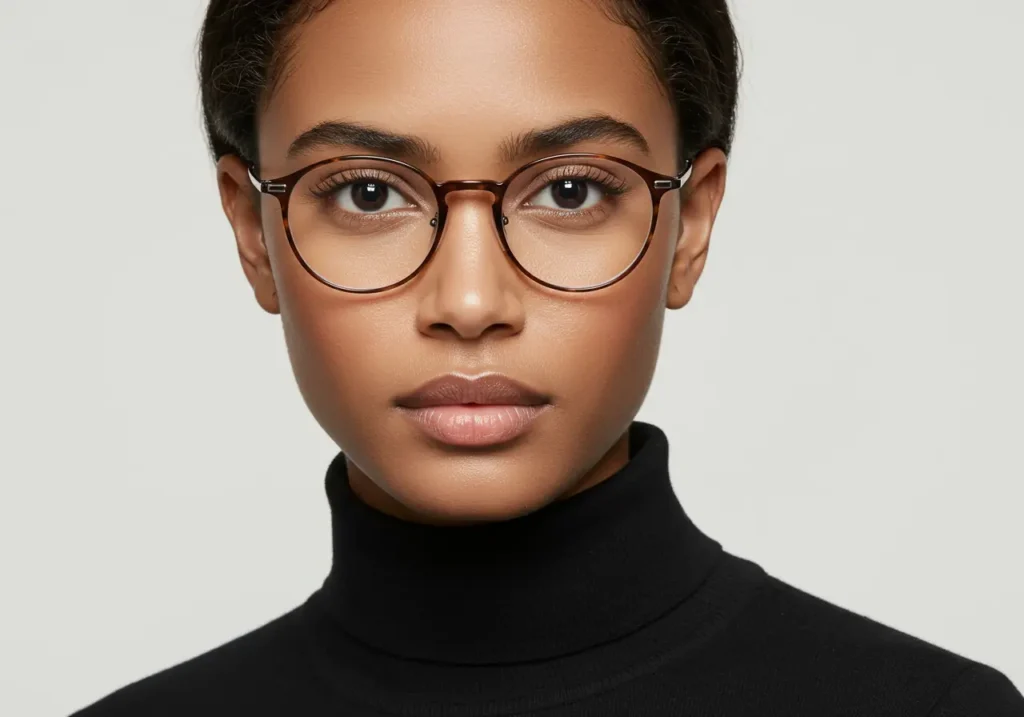
You can wear round glasses with a round face if you enjoy the harmonious effect. For more contrast, try a flattened browline, angular bridge, soft hexagon, or a lens that is slightly wider than it is tall. A defined color or mixed-material brow detail can also add structure.
Heart-Shaped Features

Light metal rims and translucent acetate can complement a broader forehead without adding excessive weight to the upper face. Frames with balanced temples and a comfortable bridge are generally more important than choosing a supposedly ideal circle size.
Fit Matters More Than Face Shape
A properly fitted frame should distribute its weight comfortably, remain stable, and position the lenses correctly for your prescription. Look for these signs during a fitting:
- Your pupils sit in an appropriate area of each lens.
- The bridge rests securely without pinching or leaving persistent marks.
- The temples follow the sides of your head without bowing outward or squeezing.
- Your eyelashes do not brush the lenses.
- The frame does not touch your cheeks during normal facial movement.
- The glasses stay reasonably level and do not repeatedly slide.
Pupillary distance and fitting height are optical measurements, not styling details. They are especially important for stronger prescriptions, progressive lenses, and some specialty lens designs. An optician can also identify whether adjustable pads, low-bridge construction, or a different temple length would improve comfort.
How Your Prescription Affects Frame Choice
| Lens Need | What to Discuss with Your Optician |
|---|---|
| Strong nearsighted prescription | Lens diameter, edge thickness, frame size, lens material, and how fully the rim conceals the edge |
| Strong farsighted prescription | Center thickness, magnification, frame size, lens weight, and aspheric options |
| Progressive lenses | Minimum fitting height, pupil position, usable reading area, and frame stability |
| High astigmatism correction | Accurate measurements, stable frame alignment, and resistance to rotation or slipping |
| Daily screen use | Current prescription, working distance, glare control, breaks, lighting, and task-specific lenses when appropriate |
Buying Round Glasses Without Overspending
Price alone does not establish quality. Compare what is included and how easily the glasses can be serviced.
- Frame construction: Inspect hinges, screws, rim joins, surface finish, and temple alignment.
- Lens quote: Ask whether the price includes coatings, thinner materials, tinting, or progressive designs.
- Adjustment policy: Confirm whether fitting and later adjustments are included.
- Warranty: Check coverage for manufacturing defects, coatings, and accidental damage.
- Return terms: This is particularly important when ordering prescription eyewear online.
- Seller identity: For designer frames, review seller information, model numbers, packaging, and authenticity policies.
- Replacement parts: Ask whether nose pads, screws, and temples can be repaired or replaced.
Buying an inexpensive frame to experiment with a dramatic color can make sense. For the pair you wear every day, prioritize accurate lenses, dependable construction, and access to professional adjustments.
Also Read: Glasses Inspiration: 15 Trending Frames for Spring 2025
How to Clean and Protect Round Glasses
Wash Away Dust Before Wiping
Rinse the lenses with lukewarm water when possible. Apply a small amount of lotion-free dish soap if permitted by your lens provider, gently wash both sides, rinse thoroughly, and dry with a clean microfiber cloth. Follow any special instructions supplied with coated lenses.
Avoid using paper towels, tissues, or clothing, which may carry particles that can scratch the surface. Household glass cleaners can contain ingredients unsuitable for eyeglass coatings.
Use a Protective Case
Store glasses in a hard case when you are not wearing them. If a case is unavailable, place them with the lenses facing upward in a secure location. Avoid leaving frames on a car dashboard or near intense heat, which can damage coatings and distort some frame materials.
Let an Optician Handle Difficult Adjustments
Loose screws and misaligned temples can gradually affect fit. Do not force cold acetate, titanium, rimless, or semi-rimless frames into position; these materials and constructions may require specialized tools. Seek an adjustment if your glasses become crooked, slip repeatedly, pinch, or begin touching your cheeks.
Materials and Lens Technology Worth Understanding
High-Index and Aspheric Lenses
High-index materials can make certain prescriptions thinner than standard plastic, but the result also depends on lens size, prescription strength, pupil placement, frame shape, and lens design. Aspheric designs may reduce bulk or alter the appearance of some lenses. Neither option is automatically necessary for every prescription, so request a comparison based on your measurements.
Bio-Based and Recycled Materials
Terms such as “bio-acetate,” “plant-based,” and “recycled” do not all describe the same material or environmental impact. If sustainability affects your decision, look for specific information about composition, manufacturing, durability, repairability, certification, and end-of-life options instead of relying on a broad eco-friendly label.
Custom and 3D-Printed Frames
Digital measurements and additive manufacturing allow some companies to offer alternative sizing and customized frame geometry. These methods can expand fit options, but customization does not eliminate the need for accurate lens measurements or follow-up adjustments. Ask who takes responsibility for fitting, repairs, and replacement parts.
A Simple Round-Glasses Shopping Checklist
- Bring your current prescription and a comfortable pair for measurement comparison.
- Choose two or three styles rather than judging only one frame.
- Check the fit while looking forward, downward, and from both sides.
- Smile to confirm that the lower rims do not lift from your cheeks.
- Ask whether your prescription changes the recommended lens size or material.
- Compare the frame in natural light before committing to a color.
- Confirm whether the frame includes prescription lenses or demonstration lenses.
- Review the complete price, warranty, seller, return policy, and adjustment service.
Choosing the Round-Glasses Trend That Will Last
The best round glasses are not necessarily the newest or most dramatic pair. They are the ones that fit securely, support your prescription, work with your wardrobe, and still feel like you after the novelty has worn off.
For a subtle update, consider translucent acetate, a muted mineral color, or a finely detailed metal frame. For a stronger change, try thick acetate, an oversized silhouette, a double bridge, or an angular variation of the classic circle.
Best final test: If you can wear the frame comfortably for several minutes without adjusting it—and you like it from the front, side, and three-quarter view—it deserves a place on your shortlist.
Frequently Asked Questions About Round Glasses
Do round glasses suit every face shape?
They can. Face-shape recommendations describe different visual effects, not fixed rules. Perfect circles emphasize softness, while flattened, hexagonal, browline, or double-bridge versions add contrast. Correct width, bridge fit, and pupil position are more important than a face-shape label.
Are round glasses still fashionable in 2026?
Yes. Current interpretations include slim metal circles, transparent and tinted acetate, small retro frames, softly oversized shapes, earthy colors, and geometric designs inspired by a circle.
How do I know whether round frames are too large?
They may be too large if they repeatedly slide, extend far beyond the sides of your face, touch your cheeks, or position your eyes poorly within the lenses. Oversized styling should still provide a stable and optically suitable fit.
Can round glasses hold any prescription?
Many round frames can accommodate prescription lenses, but not every frame is appropriate for every prescription or lens design. Lens diameter, fitting height, rim construction, curvature, pupil location, and prescription strength can limit your options.
Are titanium round glasses better than acetate?
Neither is universally better. Titanium is often chosen for low weight and a fine profile, while acetate offers more substantial rims, patterns, and color depth. Comfort depends on the complete design, not the material name alone.
Are orange or blue-light-filtering glasses proven to prevent migraines?
No pair should be presented as a proven migraine treatment without evidence specific to the product and the wearer’s condition. Certain carefully selected tints may help some people with light sensitivity, but migraine has multiple triggers and requires individualized medical guidance. Seek professional care for new, severe, or persistent symptoms.
Should eyebrows appear above round glasses?
There is no absolute rule, but your brows should usually remain visible enough to preserve a natural expression. Some oversized or browline designs intentionally overlap them. Judge the overall proportion and make sure the frame does not sit unusually high because of an incorrect bridge fit.
Are lightly tinted lenses suitable for driving?
Suitability depends on the tint color, darkness, lighting conditions, local requirements, and lens performance. Some fashion tints may reduce contrast or be inappropriate at night. Ask an optician about lenses specifically intended for your driving conditions.
This Post Contains Affiliate Links