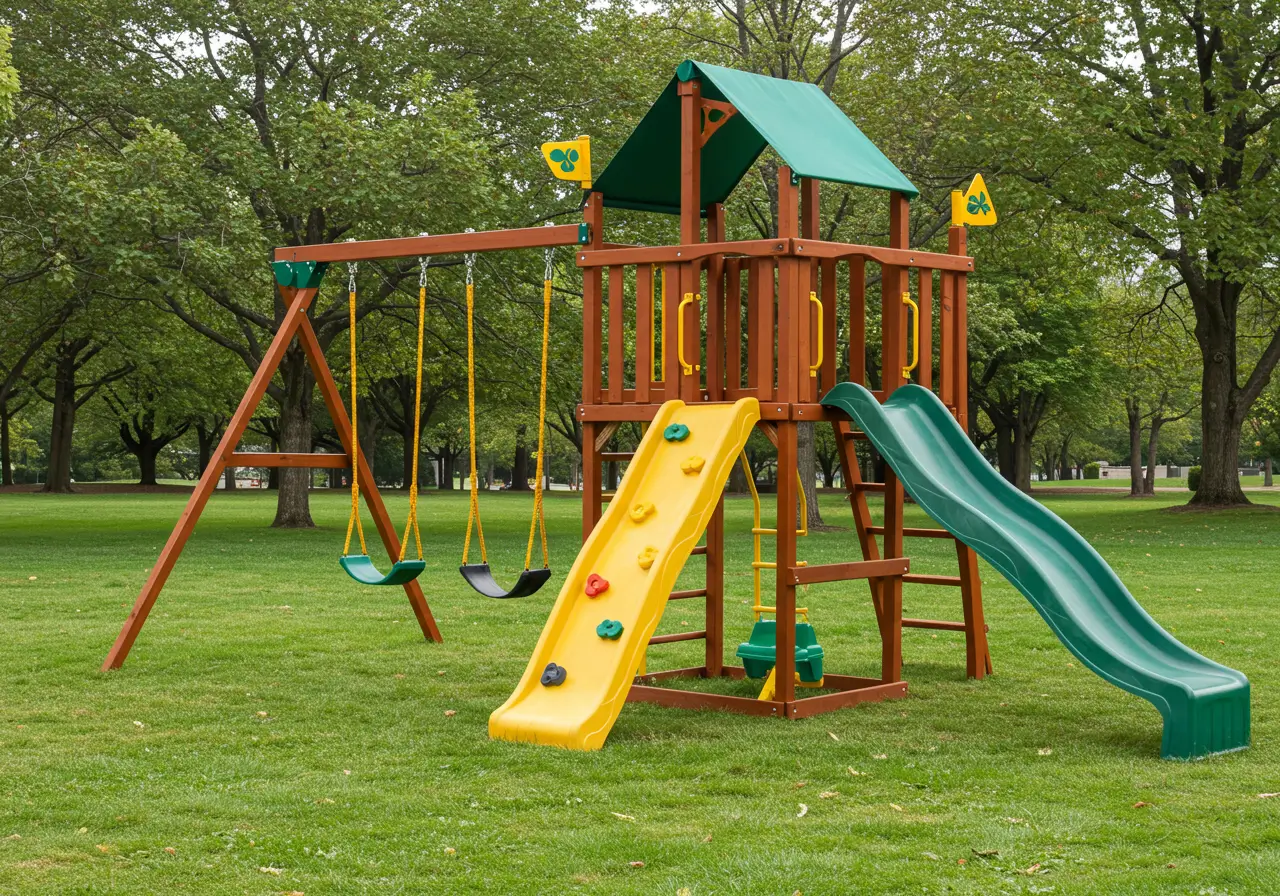
The best swing set accessories are not necessarily the biggest or most expensive. Start with the parts that make the play area safer—compatible hardware, anchors, hand grips, intact restraints, and protective surfacing—then add one or two activities that suit your children’s ages and interests. A well-chosen belt swing, toddler seat, slide, climber, or imaginative-play panel can make an existing structure more useful without creating crowding or new hazards.
Before buying anything, identify the swing set manufacturer and model, measure the beam and platform, check the stated user limits, and read the instructions for both the structure and the accessory. If the accessory cannot be installed exactly as directed, it is not the right fit.
Why Quality Swing Set Accessories Matter

An accessory becomes part of the safety system of the entire playset. Its weight, movement, attachment method, and required clearance can affect the frame as well as nearby activities. A seat with strong chains is not a safe upgrade if the beam is not rated for it, the hangers are spaced incorrectly, or the swing path crosses a slide exit.
Look beyond color and style. Useful quality indicators include clear installation instructions, a stated age range and weight limit, corrosion-resistant outdoor hardware, smooth finished edges, replaceable parts, and contact information for the manufacturer. For home playground equipment sold in the United States, ASTM F1148 is the relevant voluntary safety specification; impact-attenuating playground surfacing is addressed by ASTM F1292. The U.S. Consumer Product Safety Commission’s Outdoor Home Playground Safety Handbook explains how those principles apply in a residential yard.
Start With Safety Accessories and the Use Zone

Before adding entertainment features, inspect the structure itself. Ground anchors may be required to stop the set from shifting or tipping, but they must be installed according to the playset manufacturer’s directions and covered so they do not become trip hazards. Replace missing bolt caps, damaged hangers, open connectors, cracked seats, and frayed ropes with approved parts rather than improvised hardware.
Protective surfacing matters just as much as the accessory. Grass and bare soil are not dependable impact-absorbing surfaces. The CPSC advises placing suitable protective surfacing beneath and around elevated play equipment, generally extending at least 6 feet from the structure. A back-and-forth swing needs a larger front-and-rear use zone: twice the height of its top suspension bar. Follow the handbook and the surfacing manufacturer’s tested fall-height instructions when choosing material and depth.
Keep the play area free of fences, branches, wires, roots, rocks, and other obstacles. A slide should not empty into a swing path, and a rotating tire or disk swing may require its own bay. Never attach a jump rope, pet leash, clothesline, belt, or other loose cord to the structure. Secure purpose-built climbing ropes at both ends as directed, and do not let children wear bicycle helmets on play equipment because straps can become caught.
Popular Types of Swing Set Accessories
Belt, Bucket, Glider, and Trapeze Swings

A flexible belt swing is a versatile choice for a child who can sit, hold on, and swing independently. A full-bucket or high-back toddler swing provides more support for a younger child, while a glider encourages coordinated play between two children. Trapeze bars and ring combinations add an upper-body challenge for children who are ready for them.
For a ready-to-hang trapeze option, compare the Jungle Gym Kingdom 18-inch trapeze swing bar with 48-inch chains and locking carabiners. Confirm that its dimensions, hardware, and user limits match your swing-set beam before installation.
Do not assume that every open bay can accept every swing. Compare the accessory’s required beam height, hanger type, side clearances, and user limit with the playset manual. Lightweight seats are preferable to heavy wood or metal seats because they reduce the impact if someone walks into the swing path.

For a replacement belt swing, examine the complete assembly rather than the seat alone. Flexible outdoor-rated material, corrosion-resistant chains, protective chain coating in the hand-contact area, and compatible connectors all matter. Never reuse visibly worn suspension hardware simply because the new seat fits it.
If the existing hangers also need replacement, the BETOOLL heavy-duty swing hangers with snap hooks are one option to compare. A high advertised capacity does not prove that the beam or playset can support the same load, so follow the playset manufacturer’s limits.
Toddler Swings

Choose a toddler seat only when its stated age, size, and developmental requirements match the child. Use every restraint exactly as instructed and check that the child cannot slide beneath it or climb out. Close adult supervision is essential; a toddler should never be left unattended in a swing. Replace a seat if its restraint, attachment point, or plastic shell is cracked or damaged.
The heavy-duty high-back full-bucket toddler swing in pink provides a more supportive alternative to a standard belt seat. Check its restraint design, chain spacing, ground clearance, age guidance, and compatibility before use.
Web and Saucer Swings

Saucer and web swings offer a broad sitting surface and may allow more than one user when the manufacturer explicitly permits it. Their size and side-to-side movement can also demand more clearance and place different loads on the beam than a standard belt swing. Confirm the playset’s capacity, use only the supplied or approved attachment system, and keep the full travel area clear.
Families starting with a freestanding structure can compare the Trekassy backyard swing set with a two-seat saucer and belt swing. Review its site, anchoring, surfacing, assembly, and total-user requirements rather than relying only on the listed swing capacity.
Slides

A slide must match the platform height specified by its manufacturer. A slide designed for a taller or shorter deck can have the wrong slope, an unsafe entry, or a poor landing angle. Check the mounting pattern, entrance handholds, sidewalls, and required exit zone before ordering. Position the exit away from swings, paths, walls, and other obstacles, and feel the surface before play because exposed slides can become hot in direct sun.
For a 4-foot play deck, one model to evaluate is the Swing’n’Slide NE 4701 Summit two-piece plastic scoop slide. Use it only with the platform height and installation configuration specified by the manufacturer.

One-piece rotationally molded slides are common because they have a continuous sliding surface and can be made for outdoor exposure. Material labels such as UV-stabilized polyethylene may help when comparing products, but compatibility and sound installation are more important than a material name. Reject any slide with cracks, sharp damage, an unstable connection, or gaps near the entrance that could catch clothing.
Climbing Walls, Nets, Ladders, and Ropes

Climbing accessories add challenge and variety, but they also introduce fall and entrapment risks. Select a difficulty level appropriate for the child, provide secure handholds, and keep impact-absorbing surfacing below the full climbing area. Do not create openings or angled gaps that could trap a child’s head, neck, or clothing.

Climbing holds should have a textured gripping surface and manufacturer-approved mounting hardware. Inspect each hold for rotation before play. Use only outdoor climbing rope intended for the equipment, secure both ends as instructed, and replace it if it frays, loosens, or begins to separate. A homemade hanging rope or loop is not a safe substitute.
For a tree-based course rather than a conventional wooden climbing wall, the 20-piece Ninja tree-climbing hold set with six ratchet straps is an option to compare. Follow the tree-size, strap-placement, spacing, supervision, and user-limit instructions supplied with the kit.
Children ready for a more varied hanging challenge may also enjoy this Ninja obstacle-course set with rings, trapeze wheels, and monkey bars. It requires an appropriate support system, clear fall zone, protective surfacing, and installation exactly as directed.
Imaginative-Play Panels

Steering wheels, telescopes, periscopes, play phones, chalkboards, and mailboxes can refresh a fort without adding another elevated activity. They work best where children can reach them without leaning over a barrier or entering a moving swing zone. Choose items with smooth edges and enclosed hardware, and avoid cords, detachable small parts for young children, or projections that could catch clothing.
The four-piece playground accessory set with a steering wheel, telescope, and safety handles offers several coordinated additions in one package. Install each component in a location that does not interfere with barriers, access points, or moving equipment.
How to Check Compatibility Before You Buy

Compatibility is more than whether a bolt fits through a hole. Record the brand and model number, then measure the exact installation point. Compare those details with the accessory manual before purchase.
- For swings: Verify beam dimensions, beam height, hanger style, hanger spacing, minimum ground clearance, lateral clearance, and the structure’s allowable load.
- For slides: Match the specified deck height, mounting width, fastener locations, slope, and exit-zone requirements.
- For climbers: Confirm platform height, panel or frame strength, mounting pattern, fall zone, and whether additional bracing is required.
- For panels and play features: Check that fasteners will not create sharp points, protrusions, finger traps, or openings that can catch a head or clothing.
If the original manual is missing, search the manufacturer’s website using the model number or contact the manufacturer directly. Do not drill new holes, mix structural brackets, or substitute general-purpose hardware unless the manufacturer authorizes it.
Match the Accessory to the Child

Use the accessory’s stated age and user limits rather than judging by appearance. Consider whether the child can get on and off independently, maintain a secure grip, understand turn-taking, and use the feature as intended. When siblings of different ages share a set, create options at different challenge levels and supervise the younger child closely.
Accessibility also deserves attention. A supportive seat, a lower play panel, an easy-grip handle, or a ground-level activity may make the space more welcoming for a child who benefits from extra stability or reduced climbing. Choose products around the individual child’s needs and the manufacturer’s use instructions.
Install It Exactly as Directed

Lay out every supplied component, compare it with the parts list, and follow the instructions in order. Use the specified outdoor-rated hardware and tightening method. Confirm that connectors are properly closed, bolt ends are capped, anchors are covered, and moving parts travel freely without contacting the frame.
After installation, apply a controlled load as directed by the manufacturer and watch the structure for movement. Recheck all clearances and fasteners before children use it. Hire a qualified installer when the work involves structural modification, concrete footings, a large slide, or instructions you cannot confidently follow.
For a new wood-frame project, this DIY swing-set hardware kit can simplify sourcing compatible brackets and fasteners. It should be used only with the lumber dimensions, layout, anchors, and assembly method specified in its plans.
Choose Accessories by Play Style
For Active Adventurers
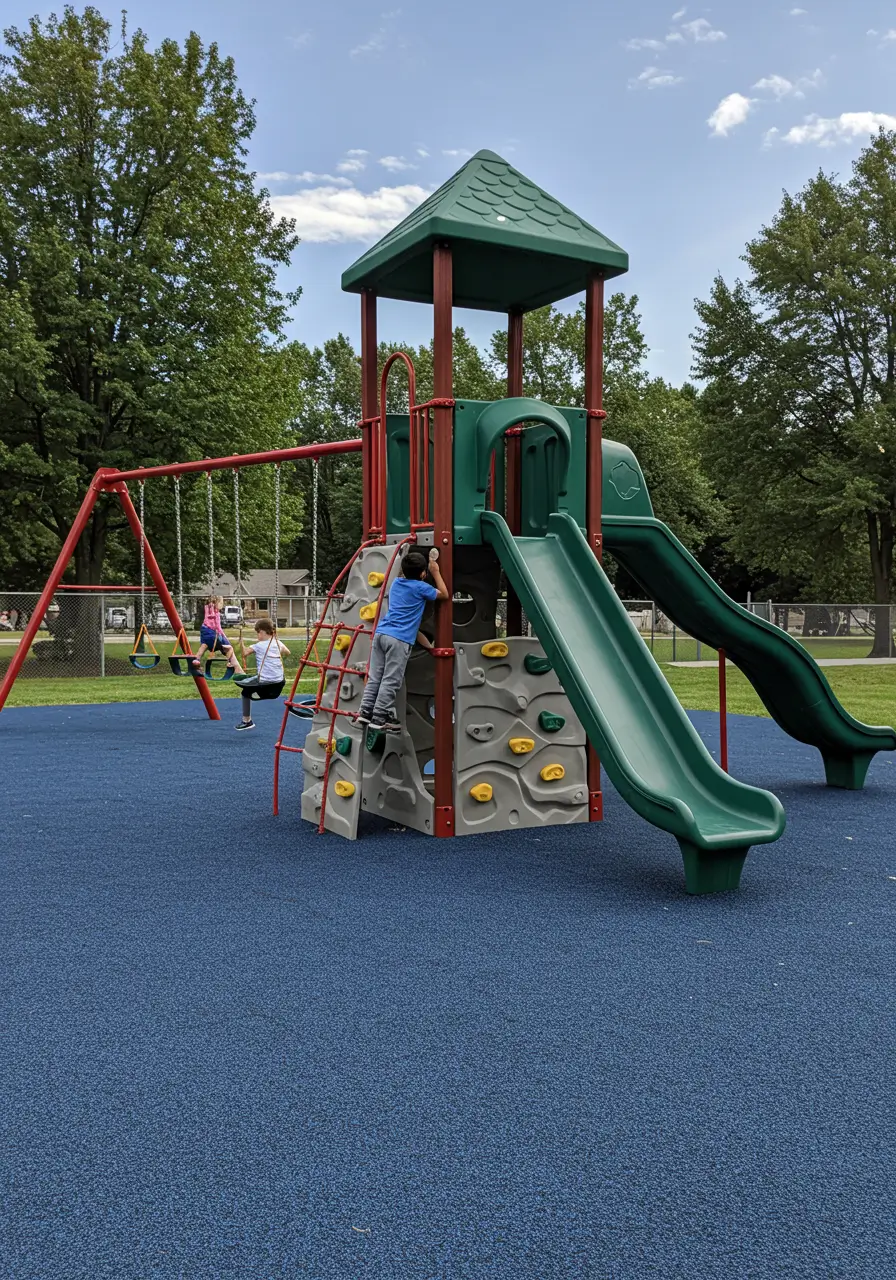
A rock wall, rope ladder, trapeze bar, or challenging climber gives an energetic child several ways to move. Add one challenge at a time so you can preserve the required fall zone and see whether it is used. A feature that is slightly challenging but still controllable is more useful than one a child cannot enter or exit safely.
For Imaginative Dreamers

A steering wheel, telescope, play counter, or chalkboard can turn the platform into a ship, shop, kitchen, or clubhouse. Ground-level additions under an appropriately designed fort can create a quieter place for pretend play, provided they do not interfere with structural supports, access routes, or the required protective surfacing.
For Children Who Prefer Social Play

A manufacturer-approved glider, appropriately rated saucer swing, activity counter, or picnic-table attachment can support shared play. Check the total user limit rather than assuming a wide seat is designed for several children. It is often better to offer two or three different activities than to crowd multiple moving components into one small structure.
How to Plan a Swing Set Accessory Budget
Prices change by size, material, hardware, shipping, and installation, so treat broad ranges as planning estimates rather than promises. Spend first on repairs, compatible connectors, anchors, and surfacing. Decorative accessories are inexpensive only when they can be attached without compromising the structure.
| Budget Tier | Approximate Price Range | What You May Find |
|---|---|---|
| Basic Additions | $20–$50 | Standard belt swings, simple play panels, safety handles, or selected replacement hardware |
| Mid-Range Enhancements | $50–$150 | Some specialty swings, toddler seats, rope ladders, or smaller climbing kits |
| Premium Features | $150+ | Large slides, substantial climbing systems, large swings, or professionally installed additions |

Buying one well-matched accessory is usually more practical than filling every available surface. Include any new surfacing, mounting kit, replacement hanger, delivery fee, and professional installation in the true project cost.

If you are also designing a comfortable family area near the play zone, these 20 innovative banquette bench-style nook seating designs offer ideas for built-in seating. Keep any seating outside the swing and fall zones so supervising adults have a clear view without creating an obstacle.
Maintenance That Keeps Accessories Safe
Save the manuals, model numbers, receipts, and replacement-part information. Inspect the set before play for obvious damage, especially after storms, freezing weather, landscaping work, or long periods without use. The CPSC home-playground guidance recommends checking nuts, bolts, caps, seats, ropes, chains, cables, and surfacing regularly rather than waiting for a part to fail.
- Check nuts, bolts, hangers, protective caps, anchors, and connectors for looseness, rust, damage, or movement.
- Inspect seats and molded plastic for cracks, sharp edges, brittleness, and fading that may signal deterioration.
- Look for fraying, separation, corrosion, stretched links, and worn contact points on ropes, chains, and cables.
- Rake loose-fill surfacing back into high-use areas and restore the depth required for the equipment’s fall height.
- Inspect wood for splinters, decay, loose boards, and insect damage; check metal for rust and bent sections.
- Clean components with the method recommended by the manufacturer and lubricate moving metal parts only where instructed.
Seasonal Care

Temperature, moisture, sunlight, and wind affect materials differently. Follow the manufacturer’s directions about removing plastic seats, fabric canopies, or other components during harsh weather. At the start of the main play season, inspect the entire frame and every attachment point, not just the accessories that were stored. Recheck drainage and redistribute displaced surfacing before reopening the set.
A torn canopy can be replaced with an appropriately sized outdoor cover such as the MOFEEZ 52-by-90-inch PVC-coated swing-set replacement tarp. Measure the existing roof and confirm the attachment layout before ordering because playset canopy dimensions are not standardized.
When to Repair or Replace
Stop using an affected component immediately if you find cracked plastic, a damaged restraint, a frayed rope, a bent or deeply rusted connector, a loose anchor, a rotating climbing hold, or a structural crack. Replace safety-critical parts with components approved by the manufacturer. Tape, household rope, general-purpose hooks, and improvised fasteners can hide damage without restoring the accessory’s original strength or geometry.
Newer Accessory Ideas Worth Evaluating Carefully
Sensory and Technology Features

Textured activity panels, musical elements, water-play attachments, and outdoor lights can add variety, but each needs a safety check. Water features can make platforms and ladders slippery and may change the performance of loose-fill surfacing. Electrical or solar components should be specifically intended for outdoor use, mounted outside impact and entanglement areas, and installed according to their instructions. A simple tactile panel is often easier to maintain than an add-on that introduces cords, batteries, or wet surfaces.
Recycled and Natural Materials
Accessories made with recycled plastic or responsibly sourced wood may appeal to families trying to reduce material impact. Evaluate them with the same criteria as any other product: documented outdoor use, compatible hardware, smooth finishes, stated limits, repairability, and clear end-of-life guidance. A sustainability claim does not replace safe design or proper installation.
A Simple Final Decision Checklist
Before placing an order, make sure you can answer yes to each question:
- Is the accessory compatible with the exact playset model, beam, or deck height?
- Does it suit the child’s age, abilities, and the stated user limits?
- Can it be installed with the specified hardware without modifying the structure?
- Is there enough clear space for its full movement, fall, and exit zones?
- Will the existing frame, anchors, and protective surfacing remain adequate?
- Are instructions and replacement parts available from an identifiable manufacturer?
- Can an adult clearly supervise the child while the accessory is in use?
The right swing set accessories make a backyard play area more engaging while respecting the limits of the original structure. Begin with safety and fit, choose activities children will genuinely use, and leave enough open space for each feature to work as designed. Thoughtful selection, correct installation, active supervision, and regular maintenance will do more for long-term value than the number of accessories attached to the set.
If the existing structure cannot safely accept the desired upgrades, replacing it may be more practical than modifying it. The Backyard Discovery Buckley Hill cedar wood swing set combines a wave slide, play deck, rock-wall ladder, belt swings, chalkboard, and canopy roof in one coordinated playset. Confirm the available yard space, use zones, surfacing needs, age guidance, anchoring requirements, and assembly instructions before purchasing.
This post contains affiliate links.