You reach for a wide ball, plant your outside foot, and push back toward the middle of the court. In that one movement, your shoes have to grip, support a sideways cut, and let you recover without your foot sliding inside them. A pair that felt comfortable on a walk may feel completely different after a few games of tennis.
Choosing women’s tennis shoes gets easier when you start with three questions: Which court do you play on most, does the shoe hold your foot securely without squeezing it, and where do your current shoes wear out? Get those right before comparing colors, cushioning names, or a professional player’s favorite model. The result is a shoe you can stop thinking about while you play.
Why tennis shoes feel different from running shoes

Running usually sends you forward. Tennis sends you forward, backward, and sideways, sometimes within the same point. Court shoes are built around that mix of movements: a supportive upper helps contain the foot during lateral cuts, the outsole is designed for court traction, and reinforced areas take the wear from stops and toe drags.
A soft running shoe can feel appealing in the store, particularly if you like a thick cushion underfoot. On court, however, the shape and construction may let your foot shift too far over the side of the sole. The American Podiatric Medical Association’s guidance on sport-specific shoes advises against using running shoes for sports with lateral movement. Shoes cannot prevent every injury, but the appropriate design gives you a more suitable starting point.
If you are taking your first lesson, you do not need the most technical shoe on the shelf. You do need a court shoe that fits, works on your facility’s surface, and complies with any nonmarking-sole rules. Ask the club or instructor about its court policy before buying.
Start with the surface under your feet
The same outsole will behave differently on a gritty public hard court and a clay court after watering. Look at where you actually spend most of your playing time. If you play on several surfaces, decide whether one versatile pair is adequate or whether your schedule warrants separate pairs.
Hard courts: durability and controlled grip

Hard courts are abrasive, especially when you drag your toe on a serve or scrape the outside edge during a wide recovery. A hard-court shoe generally prioritizes a durable rubber outsole, secure support through the upper, and enough cushioning for repeated stops and landings. Inspect the sole’s high-wear areas rather than choosing by the thickness of the shoe alone.
Most U.S. recreational players will find a hard-court or appropriately labeled all-court model the most practical first pair. If a product is described as “all court,” read its outsole description: that label signals versatility, not identical performance on every surface.
Clay courts: a tread that manages loose material
Clay outsoles commonly use a more continuous herringbone pattern, a zigzag tread that can release clay and help with movement on the loose surface. The upper may also be designed to limit clay getting into the shoe. Clay play often involves controlled sliding, but a special sole is no substitute for learning how to move safely on that court.
Some U.S. facilities use green clay, which can feel different from red clay. Check the facility’s footwear rules and ask an instructor if you are unsure which outsole works there. ASICS’ court-surface guide explains how outsole needs change between clay, grass, and hard courts.
Grass and indoor courts: check the venue first
Grass-specific shoes are specialized, and some venues restrict sole patterns to protect the court. Indoor courts can also have their own traction and nonmarking requirements. If you play these surfaces only occasionally, find out the rules before assuming your usual outdoor shoe is acceptable.
Quick choice: If nine out of ten of your sessions are on a neighborhood hard court, shop for that surface first. Occasional travel to another court should not dictate a less suitable everyday pair.
Find the right balance of stability and cushioning

Two shoes in the same size can feel remarkably different. One sits low to the court and feels nimble; another has a more substantial platform and feels protective underfoot. Neither sensation automatically makes a shoe better. What matters is whether you can move in it without your foot tipping, sliding, or feeling squeezed.
Look for a stable base. When you make a gentle side step in the store, your foot should stay centered over the sole. A secure heel and midfoot help, but the upper should not cut into the sides of your foot. A very soft shoe may feel wonderful standing still and less controlled when you change direction.
Choose cushioning you can actually play in. Hard-court players often appreciate some impact comfort, particularly during longer sessions. Too much bulk may make it harder to feel planted. Try shoes with different amounts of cushioning and notice both the first step and the recovery step after a sideways move.
Think of arch shape as one clue, not a prescription. A high arch or low arch does not determine one universally correct tennis shoe. Overall fit, your comfort, and any existing foot condition matter more than a generic label on a shoe box. Persistent pain deserves an assessment from a qualified foot-health professional, especially if changing shoes has not helped.
Check the parts that wear out first
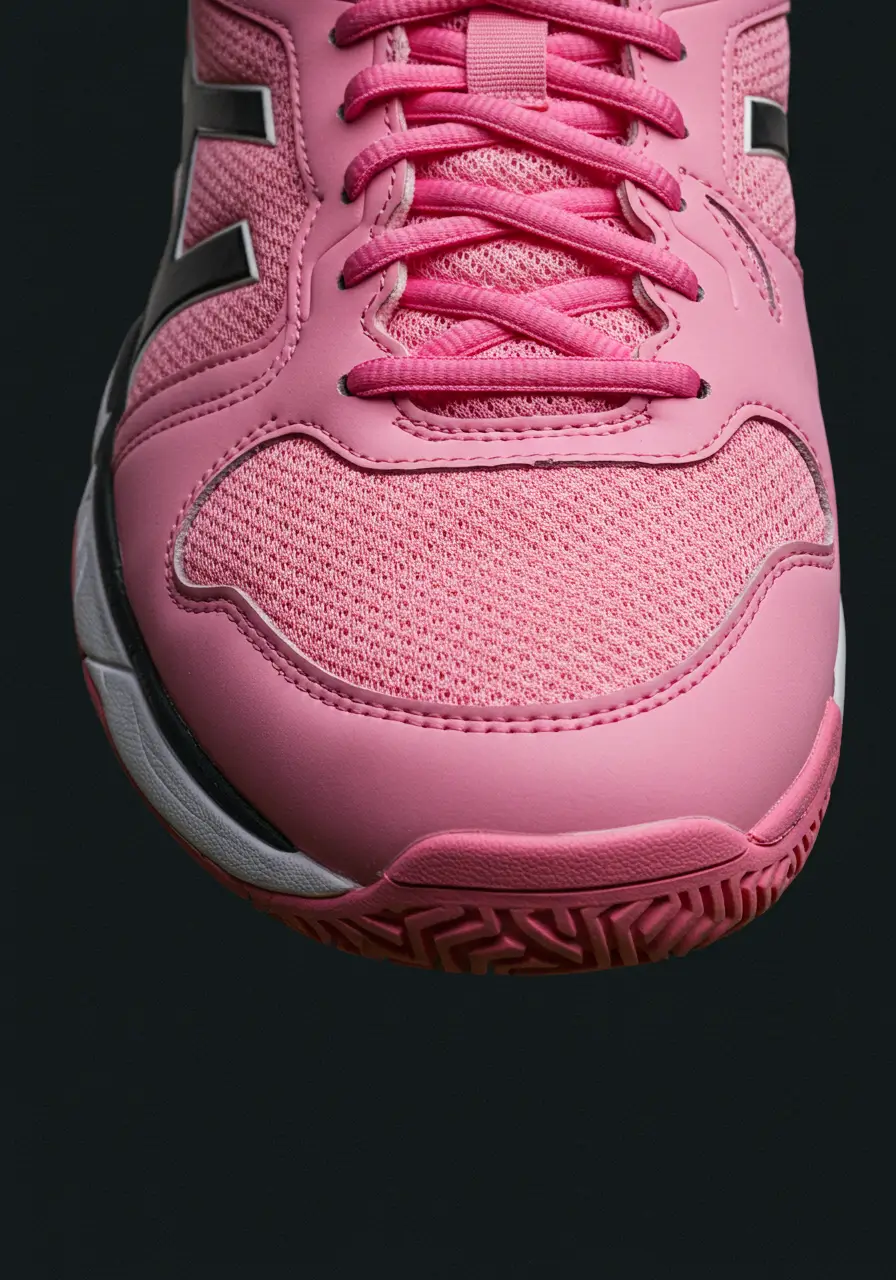
Turn your current pair upside down before shopping. Is one forefoot corner almost smooth? Have you worn a hole above the big toe? Is the heel lining torn, or does the upper bulge over the side when you cut? Your old shoes tell you more about your needs than a generic “best tennis shoes” list.
If you drag your toe on serves, look for a robust toe bumper or reinforced upper. If you spend long rallies moving side to side, pay attention to the outside edge of the outsole and the way the upper contains your foot. A durability promise may be useful for heavy wear, but read the exact warranty terms for the specific model, retailer, and eligible outsole wear before factoring it into the price.
More reinforcement can make a shoe heavier or warmer. That is a reasonable trade if you regularly wear through the same spot; it may be unnecessary if you play occasionally and your shoes stay intact. Buy for the wear you actually see.
Lightweight or sturdy? Match the feel to your game

A lighter shoe can feel quick during short sprints, while a more substantial one may feel reassuring when you brake hard or play long rallies. Neither category guarantees speed or support. Try both, then notice whether the lighter pair still holds your foot in place and whether the sturdier pair lets you move comfortably.
Breathable panels are welcome during a hot afternoon match, but mesh alone does not guarantee a dry foot. Socks, ventilation, weather, and how long the shoes take to dry all play a part. If you frequently play in heat, bring your usual tennis socks to the fitting and consider how the upper feels after your feet warm up.
Picture two familiar sessions: a relaxed doubles hour with plenty of pauses, and a singles match with repeated wide runs. The demands are different. If you do both, look for the pair that still feels secure in your most demanding session, rather than choosing solely for how light it feels in your hand.
How women’s tennis shoes should fit
Fit is the decision that ties everything else together. A correctly sized shoe should give your toes room to spread without letting your heel lift or your foot slide forward when you stop. The printed size is a starting point, not a promise: shapes vary among models, and your feet may not match each other exactly.
Try this five-minute fitting routine

- Bring your playing socks and any inserts. A thicker cushioned sock or orthotic changes the space inside the shoe.
- Try both shoes while standing. Check the space in front of your longest toe, and make sure no toe is pressed against the front or roof. Fit the larger foot if your feet differ.
- Check width separately from length. Your forefoot should not spill over the sole, but it should not be squeezed between the upper and the sidewall either. Going longer to fix a width problem may create heel slip.
- Lace them as you would for a match. Walk, make a few controlled side steps, and gently stop. Your heel should remain secure without excessive pressure across the top of your foot.
- Recheck after a few minutes. A seam that starts to rub or a little toe that goes numb is useful information. A stiff upper may soften somewhat; a painfully narrow shoe is unlikely to become a good fit.
The APMA’s shoe-shopping advice recommends measuring both feet later in the day and trying shoes with the socks you intend to wear. There is no rule that every player must go up half a size. Check the actual toe room and lockdown in each model.
Shopping online? Measure both feet according to the brand’s current sizing instructions, read width information, and choose a retailer with a workable return policy. Test the shoes indoors before taking them onto an abrasive court, where returns may no longer be possible.
Wide feet, orthotics, and recurring pain

If your forefoot needs more space, search for actual width options and compare the shape of the toe box. A roomy toe box and a secure heel can coexist. A shoe that feels wide everywhere may allow too much movement, while a narrow model in a longer size can leave the real problem unsolved.
Bring your orthotics when you try shoes on and ask whether the stock insole is removable. After inserting them, recheck the heel and the space above your toes. If you have ongoing heel, arch, or ankle pain, avoid treating a marketing phrase such as “extra stability” as a diagnosis or a guaranteed fix. A clinician can help assess the cause and any need for a specific insert or treatment.
For more everyday sizing and width ideas, see our guide to wide shoes for women.
Use brand names as a starting point, not a verdict
Brand families can help narrow a crowded wall of shoes, but model names, materials, width offerings, and availability change. Even two shoes from the same company can fit differently. Use the pictures below to orient your search, then compare current product specifications and try the actual model before committing.
Nike

When considering a Nike court shoe, pay particular attention to forefoot room and how securely its lacing holds your heel during a lateral step. The brand name alone says little about the fit of a specific release. Compare the outsole version with your main court surface before deciding.
Adidas

Adidas has offered both more structured and lighter-feeling tennis styles. If you are comparing them, try each on with the same socks and repeat the same side-step test. Look at the actual toe reinforcement and outsole rather than assuming every shoe in a familiar family feels alike.
ASICS

ASICS describes different court-shoe families for players who value support or a lighter feel. Those categories can help you decide what to try first, but they are no substitute for fit. Check that the heel stays seated and the upper contains your foot without pressing on sensitive spots.
New Balance
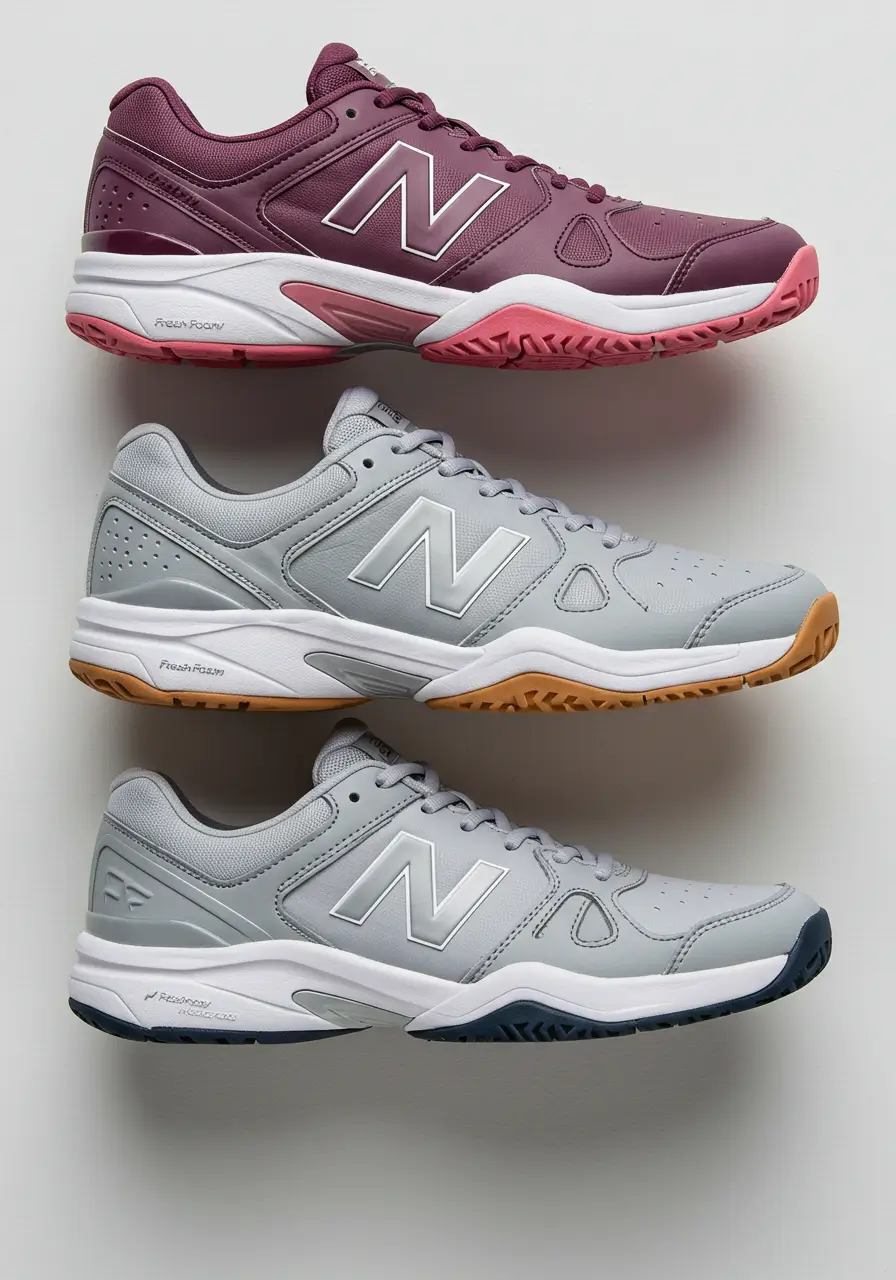
New Balance is worth comparing when you are searching for specific width options, though availability varies by model. Confirm the listed width rather than assuming all of its tennis shoes share one shape. Try a properly sized width alongside your current shoe to see whether it solves pinching without sacrificing heel security.
Match the shoe to how you move
“Baseline player” and “all-court player” are useful shorthand, but you can make a better decision by describing your movements. Do you chase wide balls and brake sharply? Drag the same toe on every serve? Play mostly doubles at the net? Each pattern points to a feature to inspect.
Long baseline rallies
Repeated sideways movement makes secure lateral containment and outsole durability especially noticeable. Check whether the upper holds your forefoot over the sole when you recover from a wide ball. If your local courts are rough, look at the toe and outer edge reinforcement. You may prefer a slightly more substantial shoe if light models leave you feeling unstable late in a session.
Frequent approaches to the net
Quick forward bursts, small adjustment steps, and abrupt stops put the forefoot to work. Choose a shoe that lets you push off comfortably while still supporting a sideways reach for a volley. If you drag a toe during your serve, a protective bumper may matter more than shaving a little weight.
A mix of singles, doubles, and lessons
Most recreational players do not need a shoe built around a single textbook style. A secure all-around fit and an outsole matched to your main court can serve a varied schedule well. If two pairs feel equally good, compare which one protects your personal high-wear spots and stays comfortable after more than a few minutes.
Spend where it makes a difference
Prices change with retailers, colorways, and sales, so a fixed price bracket can date quickly. Set a budget, then decide what you need the shoe to do. A casual player may find a well-fitting introductory court model sufficient. Someone who plays several days a week on abrasive hard courts might save over time by paying for a more durable upper and outsole. There is no reliable month-by-month lifespan for every pair.
Try the current model and a previous version if both are available. An older colorway can cost less, but confirm that the return terms and the outsole design still suit you. Do not pay extra for a cushioning name you cannot feel or a durability warranty you will not use.
Before checkout, ask: Can I move side to side without sliding inside it? Is the outsole right for my home court? Is the toe or sidewall strong enough for my wear pattern? Can I return it if the fit fails an indoor trial? These questions are more useful than a generic top-ten ranking.
Care for your shoes and know when to replace them
After play, loosen the laces, open the shoes, and let them dry in a ventilated spot. Brush off court dust and clean the upper according to the manufacturer’s care instructions. Avoid leaving shoes in a hot car or forcing them dry against a heater. If you play often, alternating between pairs can give each pair time to dry fully.
Look at your shoes every few weeks, particularly if you play on hard courts. An outsole that has worn smooth where you plant, an upper that no longer contains your foot, or cushioning that feels noticeably flat are more useful signals than the calendar alone. The USTA discusses roughly 45 to 60 hours of play as a general replacement rule of thumb, but your court surface, movement, and shoe construction can move that point earlier or later.
Wear changes gradually, so compare the older pair with a fresh one if you are unsure. If traction feels unreliable, a new pain appears, or one shoe wears much faster than the other, take a closer look instead of relying on a preset schedule. Persistent pain deserves medical advice; buying another shoe at random may delay an answer.
A simple plan for your next pair
Take your old shoes to the store, name your main court surface, and try at least two shapes in your actual playing socks. Give each pair a gentle sideways movement test. Check toe space, forefoot width, heel hold, and the sole’s contact with the floor. Then choose the pair that fits your feet and your game, even if it is not the one you expected to like.
The first outing should feel like tennis, not a project of managing hot spots or retightening laces between points. Pay attention to the shoes during a short practice session. When your feet stay comfortable and secure, the next thing on your mind can be the ball.