If your garden has a dry, sunny slope where grass refuses to grow, sedum ground cover might be the answer you have been looking for. These tough succulents, often called stonecrops, form dense mats that suppress weeds and handle neglect with grace. With roughly 400 to 500 species in the genus, there is a variety for nearly every tough spot in your yard. Below, you will find eleven distinct stonecrop varieties that make excellent ground covers, each with its own color, texture, and growth habit.
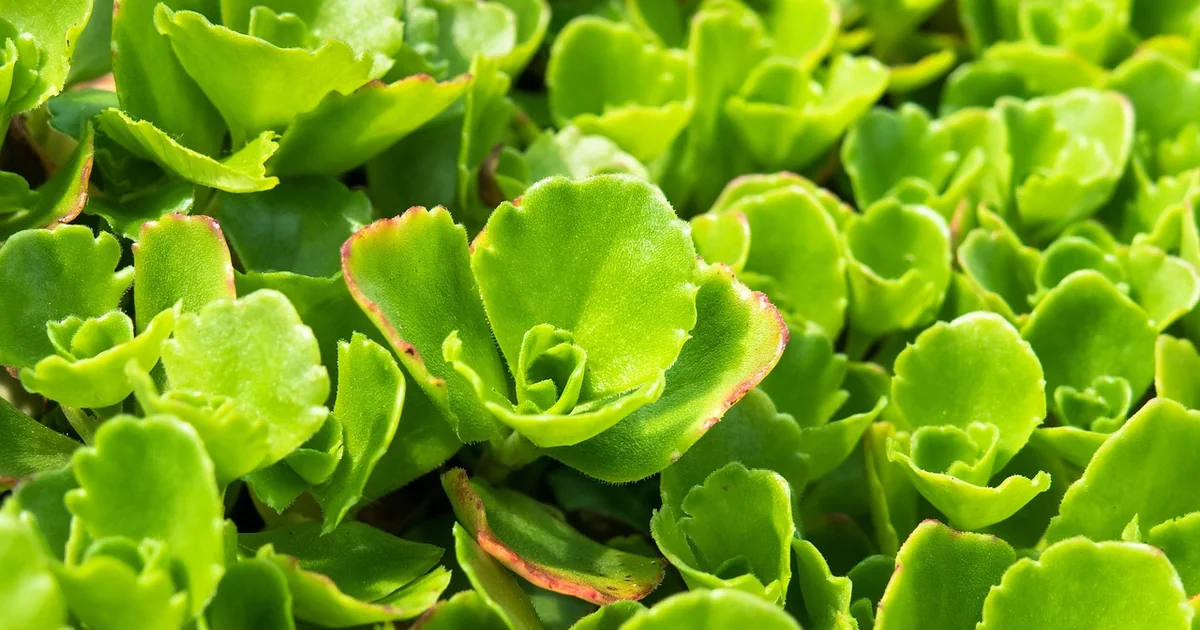
Sedums belong to the Crassulaceae family and are native to many parts of the Northern Hemisphere. Their thick, fleshy leaves store water, allowing them to survive extended dry periods. This makes them ideal for hot, dry climates where other plants wither. Most sedum ground cover varieties are creeping types that spread quickly by rooting along their stems. They stay low, usually under 8 inches tall, and create a living carpet that cools the soil and reduces evaporation.
Another benefit is their shallow root system. Because the roots do not go deep, you can plant them in thin, rocky soils where traditional turf would struggle. Deer rarely bother them, and they have few pest problems. Gardeners in USDA zones 3 through 9 can grow the majority of these varieties. They also adapt to varying light conditions, from full sun to light shade, though flowering is best with at least six hours of direct sunlight.
The following list includes both classic species and popular cultivars. Some have been reclassified into related genera such as Hylotelephium, but nurseries and gardeners still refer to them as sedums. Each entry includes USDA hardiness zones, light requirements, flower color, and mature size so you can choose the best fit for your landscape.
1. White Sedum (Sedum album)
White sedum is a reliable, slow-spreading ground cover with fine, green foliage that takes on reddish tones in autumn. During summer, it produces clusters of white flowers that rise just above the leaves. This species thrives in poor, sandy soils and on rocky embankments. If drought persists, the leaves may shift to a pinkish hue, but the plant bounces back quickly when moisture returns.
- USDA Hardiness Zones: 3–9
- Light: Full sun; tolerates light shade
- Flower Color: White
- Mature Size: 3–6 inches tall, 12–18 inches spread
2. ‘Murale’ (Sedum album ‘Murale’)
This cultivar of white sedum stands out for its bronze-purple foliage and pink flowers that appear in early summer. The blossoms attract butterflies, adding movement to the garden. ‘Murale’ stays slightly smaller than the species, making it a good choice for tighter spaces between stepping stones or along pathway edges.
- USDA Hardiness Zones: 3–9
- Light: Full sun; tolerates light shade
- Flower Color: Pink
- Mature Size: 3–4 inches tall, 12–18 inches spread
3. Cascade Stonecrop (Sedum divergens)
Also called spreading stonecrop, this perennial species forms low mats that spill over rocks and retaining walls. Its bright green leaves develop a reddish tinge in full sun. In midsummer, yellow flowers cover the plant. Individual plants send out stems that radiate from the crown, sometimes spreading several feet in irregular directions. This makes it an excellent choice for covering large, sunny banks.
- USDA Hardiness Zones: 4–9
- Light: Full sun; tolerates light shade
- Flower Color: Yellow
- Mature Size: 3–4 inches tall, 12–24 inches spread
4. Pink Mongolian Stonecrop (Hylotelephium ewersii)
Formerly classified as Sedum ewersii, this species now belongs to Hylotelephium, but you will still find it sold under the old name. Its blue-gray leaves form a dense mat that stays tidy throughout the growing season. In late summer, clusters of pink flowers appear. This sedum ground cover is especially well-suited to dry soil and rock gardens. Cut the foliage to the ground in late fall as it begins to die back, which encourages fresh growth in spring.
- USDA Hardiness Zones: 2–9
- Light: Full sun to partial shade
- Flower Color: Pink
- Mature Size: 4–6 inches tall, 12 inches spread
5. ‘Blue Spruce’ Sedum (Sedum reflexum ‘Blue Spruce’ / S. rupestre ‘Blue Spruce’)
Named for its needle-like, blue-green foliage that resembles a miniature spruce tree, this variety is one of the fastest-growing sedum ground covers. Small yellow flowers emerge in mid to late summer, providing a bright contrast against the bluish leaves. ‘Blue Spruce’ pairs well with low-sprawling evergreens and is easy to propagate from stem cuttings. It also holds up well in dry, poor soil once established.
- USDA Hardiness Zones: 4–9
- Light: Full sun
- Flower Color: Yellow
- Mature Size: 4–8 inches tall, 12–24 inches spread
6. Japanese Stonecrop (Hylotelephium sieboldii)
Japanese stonecrop was originally a Sedum but was reassigned to Hylotelephium. It features distinctive silver-blue leaves with red edges, forming a low, spreading mound. In fall, hot-pink flower clusters appear, making this a standout option for late-season color. The leaves are arranged in whorls around the stems, adding a unique texture. This variety is perfect for the front of borders or as a filler in rock gardens.
- USDA Hardiness Zones: 3–9
- Light: Full sun to partial shade
- Flower Color: Hot pink
- Mature Size: 4–6 inches tall, 8–12 inches spread
7. ‘Angelina’ Stonecrop (Sedum rupestre ‘Angelina’)
‘Angelina’ is widely loved for its brilliant golden-yellow foliage that turns bronze-orange when temperatures drop in late autumn. It is a low-growing, mat-forming sedum ground cover that spreads moderately fast. In midsummer, clusters of bright yellow flowers appear. The dramatic seasonal color change makes it a top pick for adding warmth to the garden year-round. Plant it where you want a bold sweep of color that shifts with the seasons.
- USDA Hardiness Zones: 5–9
- Light: Full sun
- Flower Color: Yellow
- Mature Size: 4–6 inches tall, 12–24 inches spread
8. ‘Dragon’s Blood’ Sedum (Sedum spurium ‘Dragon’s Blood’)
This cultivar of Sedum spurium is famous for its deep red, almost burgundy foliage that darkens in full sun. The leaves are small and rounded, forming a dense mat. In late summer, star-shaped red flowers cover the plant, attracting pollinators. ‘Dragon’s Blood’ spreads vigorously without being invasive, making it a reliable choice for covering slopes or filling gaps between pavers. It also tolerates light foot traffic.
You may also enjoy reading: Experts Say: 5 Ways to Stop Lawn Grubs From Destroying Grass.
- USDA Hardiness Zones: 4–9
- Light: Full sun to partial shade
- Flower Color: Red
- Mature Size: 4–6 inches tall, 12–24 inches spread
9. ‘John Creech’ Sedum (Sedum spurium ‘John Creech’)
‘John Creech’ is a finer-textured version of Sedum spurium with bright green, tiny leaves that create a lush, moss-like carpet. It blooms with pinkish-purple flowers in late summer. This variety is particularly useful for areas where you want a smooth, even ground cover without the coarser look of larger-leaved sedums. It grows well between flagstones and along the edges of garden beds.
- USDA Hardiness Zones: 4–9
- Light: Full sun to partial shade
- Flower Color: Pinkish-purple
- Mature Size: 2–4 inches tall, 12–18 inches spread
10. ‘Vera Jameson’ (Hylotelephium ‘Vera Jameson’)
‘Vera Jameson’ is a hybrid that produces purple-gray leaves and pink flowers in late summer. Though it grows slightly taller than most creeping sedums — reaching up to 10 inches — its spreading habit and attractive foliage make it a fine ground cover for the front of a sunny border. The stems are sturdy enough to hold the flower heads upright, and the foliage holds its color well through the season.
- USDA Hardiness Zones: 3–9
- Light: Full sun
- Flower Color: Pink
- Mature Size: 6–10 inches tall, 12–18 inches spread
11. ‘Fuldaglut’ Sedum (Sedum spurium ‘Fuldaglut’)
‘Fuldaglut’ is another Sedum spurium cultivar that offers bronze-tinged green foliage in spring, deepening to mahogany red in summer. The leaves are slightly larger than those of ‘Dragon’s Blood’, giving it a bolder texture. Bright pink-red flowers appear from July to September. This variety is extremely drought-tolerant once established and spreads reliably to form a thick mat that chokes out weeds.
- USDA Hardiness Zones: 4–9
- Light: Full sun
- Flower Color: Pink-red
- Mature Size: 4–6 inches tall, 12–18 inches spread
How to Use Sedum Ground Cover in Your Landscape
Planting a sedum ground cover is straightforward. Choose a site with well-drained soil and full sun. Space the plants 12 to 18 inches apart, depending on the variety’s spread. Water them lightly after planting, then let the soil dry out between waterings. Once established, these succulents need very little irrigation in most regions.
You can use sedum ground cover on sunny banks where mowing is difficult. They also work beautifully in rock gardens, along retaining walls, and in between stepping stones. Some varieties, like ‘Angelina’ and ‘Blue Spruce’, create striking color contrasts when planted in drifts. For a tapestry effect, combine three or four varieties with different foliage colors — gold, blue-green, bronze, and red.
If you garden in a colder climate, most sedum ground covers will survive winter without extra protection. Snow cover actually helps insulate them. In late fall, you can leave the dried foliage in place or cut it back. Many gardeners prefer to trim old growth in early spring before new shoots emerge.
Sedum ground cover also serves an ecological purpose. The flowers attract bees, butterflies, and other pollinators. Because the plants stay low, they provide shelter for small beneficial insects. And since they require no fertilizer or pesticides, they are a low-impact choice for sustainable landscaping.
With so many varieties to choose from, you can transform a barren slope or a hot, dry corner into a colorful, living tapestry. Whether you pick the golden glow of ‘Angelina’ or the deep red of ‘Dragon’s Blood’, these stonecrops will reward your effort with years of trouble-free coverage.