How do you actually find the best Glasses For Face Shape when every optician, blog, and brand seems to give you different rules?
Maybe you’ve tried frames that looked amazing on the display stand but felt wrong on your face—too heavy on your cheeks, too sharp at your jawline, or somehow making your features look tougher or more tired than they really are. The right glasses should do the opposite: soften what you want softer, define what you want sharper, and look like they belong on your face, not just near it, so they truly feel like the best Glasses For Face Shape for you.
This guide breaks down how to choose glasses for face shape in a way that feels practical and human. We’ll talk about real-life faces—not airbrushed models—different sizes and proportions, and what actually works when you’re choosing frames for work, casual days, sports, and special occasions. We’ll also weave in current trends so your frames feel modern, but not so trendy that they date your photos next year.
Once you’ve narrowed down your Glasses For Face Shape, you can explore real frame ideas in my roundup of trendy glasses for women over 40, where you’ll see these face-shape tips in action.
Reflection Box:
When you think about your last pair of glasses, what bothered you most—shape, size, color, comfort, or how they looked in photos?
Discussion question: Do you feel more confused by face-shape “rules” today than you did when you bought your first pair of glasses?
Face Shape Basics: How to Read Your Face For the Best Glasses For Face Shape
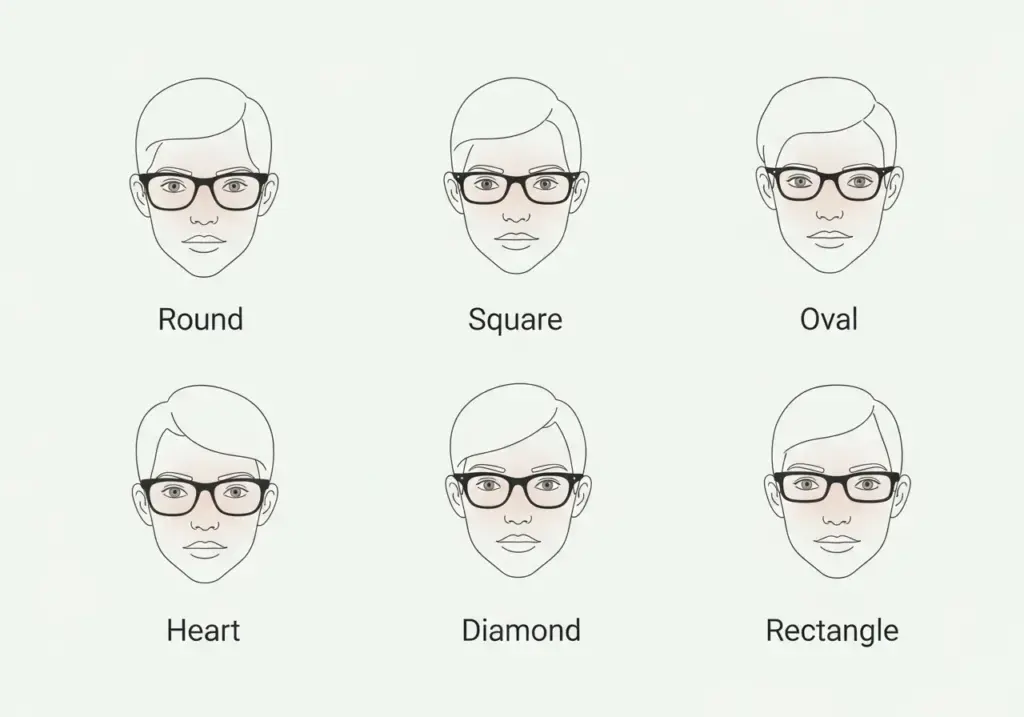
Let’s start with the big myth: you do not have to fit perfectly into one neat face shape box. Most people are a blend—“round with a stronger jaw,” “heart leaning toward oval,” or “square but slightly longer.” Think of face-shape guides as a starting point for reading your own features, not a strict label you’re stuck with forever.
When we talk about choosing glasses for face shape, what actually matters are your proportions: the relative width of your forehead, cheekbones, and jawline; how long or short your face appears; and where your features sit vertically. Glasses can visually lengthen or shorten your face, soften strong angles, or create more definition where your features are softer.
Common Face Shape Types (Real-World Version)
- Round: Softer jawline, full cheeks, similar width and length.
- Square: Strong jaw, broad forehead, more angular lines.
- Oval: Balanced proportions, slightly longer than wide, gently rounded jaw.
- Heart: Broader forehead, high cheekbones, narrower or pointed chin.
- Diamond: Narrow forehead and jaw, widest at cheekbones.
- Rectangle / Oblong: Longer face with straighter sides, often similar width at forehead and jaw.
You don’t need to obsess over getting this “perfect.” If you recognize yourself in two categories, read advice for both and test the suggestions that feel closest to what you see in the mirror. The best Glasses For Face Shape come from understanding your own features, not chasing a label.
Common Style Myth
Myth: “Only one frame shape will ever suit your face.”
Reality: Most people look good in several shapes once size, color, and fit are right.
Which frame shapes have you ruled out without actually trying on?
Discussion question: If you had to describe your face in two words, which would feel more accurate—soft or angular, wide or long?
How to Check Your Face Shape and Size at Home Before Choosing Glasses For Face Shape
Before you choose frames, it helps to have a rough sense of your shape and size so you can narrow down the best Glasses For Face Shape instead of guessing in every direction. You don’t need fancy tools—just a mirror, good light, and either a flexible tape measure or the “photo and outline” method on your phone.
Step 1: Tie Hair Back and Remove Glasses

Pull your hair away from your face so you can clearly see your hairline, temples, cheekbones, and jawline. Remove your glasses if you already wear them; you’re trying to see the natural outline of your face without distraction before you pick any new Glasses For Face Shape.
Step 2: Compare Widths and Length

Look at four areas: forehead, cheekbones, jawline, and overall length. Is one clearly the widest? Does your chin end in a softer curve or a stronger corner? Does your face feel as wide as it is long, or noticeably longer than it is wide? These clues matter more than fitting a textbook definition and help you understand which Glasses For Face Shape will balance you best.
Step 3: Note Scale (Petite, Average, or Wider Face)
Two people can both have “oval” faces and still need very different glasses because one has a very petite head and the other is broader or plus size. When you shop for glasses for face shape, also read size terms: narrow, medium, wide. If most hats or headbands feel tight, you may need wider frames and longer temple arms for comfort.
Reflection Box:
When you look in the mirror, which feature jumps out first—your forehead, cheekbones, jawline, or the overall length of your face?
Discussion question: Do you think your past glasses choices matched your face size and width, or were they too small, too large, or just “there”?
The Best Glasses For Face Shape: What Flatters Each Type
Now let’s get specific. Use this section like a menu: focus on the face shapes that sound most like you, then note which tips repeat across shapes—that often means a style is extra versatile and belongs on your shortlist of Glasses For Face Shape.
Glasses for Round Faces

Round faces typically have softer contours, full cheeks, and a rounded chin. Your goal is usually to add definition and subtle angles. Frames that are more square or rectangular create contrast, making your face appear slimmer and more structured without losing its warmth, which is why they tend to be the most forgiving Glasses For Face Shape on round faces.
- Try: Rectangular, square, and geometric frames; wayfarer shapes; upswept cat‑eye styles that add lift to the outer corners.
- Avoid: Extremely round, tiny, or very narrow frames that echo the roundness and offer no structure.
- Fit tip: Choose frames slightly wider than the broadest part of your face so your cheeks don’t push the lenses up when you smile.
Glasses for Square Faces

Square faces have a strong jawline, broad forehead, and more angular lines. Here, the goal is usually to soften edges and bring a bit of curve to balance the structure. Rounded or oval frames, as well as gentler cat‑eye styles, can create a flattering contrast to a prominent jaw and often end up being the softest‑looking Glasses For Face Shape on square features.
- Try: Round, oval, and softly curved cat‑eye frames; thinner rims; slightly wider frames that sit higher on the nose.
- Avoid: Very boxy, thick, square frames that repeat your strong angles and can look severe.
- Fit tip: Make sure the lower edge doesn’t sit right on your cheekbone; a bit of space keeps them from digging in when you talk or laugh.
Glasses for Oval Faces

Oval faces are naturally well balanced—cheekbones sit slightly wider, jawline tapers gently, and the face is a little longer than it is wide. The good news: most frame shapes work. The challenge: narrowing your options and choosing which styles highlight your personality best so you end up with truly personal Glasses For Face Shape.
- Try: Almost anything, especially frames that are as wide or slightly wider than your cheekbones—cat‑eye, square, round, aviator, or bold geometric shapes.
- Avoid: Frames that are much wider or much narrower than your face, which can throw off your natural balance.
- Fit tip: Watch the height. Extremely tall lenses can overwhelm a small oval face; aim for proportions that echo your own.
Glasses for Heart-Shaped Faces

Heart-shaped faces have a broader forehead, high cheekbones, and a narrower chin. With these shapes, you’re usually trying to balance width at the top and bring gentle attention toward the lower half of the face without making the chin look sharper. The best Glasses For Face Shape here often add softness and width just below the eyes.
- Try: Cat‑eye frames, browline styles, light-coloured or semi‑rimless frames, and frames that are slightly wider than your forehead.
- Avoid: Very heavy top rims with tiny bottoms that overemphasize the forehead and disappear at the chin.
- Fit tip: Look for nose bridges that sit comfortably without sliding; heart-shaped faces often have a bit more challenge with slippage.
Glasses for Diamond Faces

Diamond faces are narrow at the forehead and jaw, with the cheekbones as the widest point. Frames that draw attention to the eyes and soften the mid-face can be very flattering here, especially styles with detail at the top that act as lifting Glasses For Face Shape around the brow.
- Try: Oval, round, and softer cat‑eye frames; frames with subtle detailing or color at the browline; slightly wider frames that line up with or just exceed your cheekbones.
- Avoid: Very narrow, rimless frames that can disappear on your face and highlight the widest point at the cheeks.
- Fit tip: Look for adjustable nose pads if your nose bridge is narrow—this helps keep frames centered instead of sliding.
Glasses for Rectangle or Oblong Faces

Rectangle or oblong faces are longer than they are wide, often with straighter sides. Here, the goal is to prevent frames from making the face look even longer. Slightly taller lenses and frames with more depth can add visual balance and shorten the face, making them smart Glasses For Face Shape when you want proportion.
- Try: Taller rectangular or softly square frames, deeper round or oval shapes, and details on the temples that add width.
- Avoid: Very narrow, shallow frames that exaggerate the face’s length.
- Fit tip: Make sure the top of the frame doesn’t sit far below your brows; that extra gap can make your face look longer.
Glasses for Plus-Size Faces and Wider Heads

Guides often ignore width and scale, but if your head is wider or you’re plus size, you need frames that respect your proportions. Narrow frames that technically “fit” still look strained if the temples bow outward or leave marks by your ears. Look for wider sizes, extended temple lengths, and brands that clearly label frame width in millimeters so you can target wider Glasses For Face Shape that truly fit.
For wider faces, the most flattering glasses usually line up with or extend just beyond the widest part of your face without flaring dramatically. Oversized frames can be fantastic here, especially if they’re lightweight and balanced. You can still use the same face-shape tips above—just scale up the frames and watch comfort closely.
Trend Watch
Softer cat‑eye, transparent acetate, and modern round frames are all trending again, especially for women over 40 who want lift and lightness instead of heavy, dark boxes.
Which of these shapes feels closest to your personality right now?
Related Reading:
Ready for specific frame ideas once you know your shape? Check out 15 trendy glasses for women over 40
Discussion question: Based on this section, which two frame shapes are you most curious to try on next?
Getting the Fit Right: Size, Comfort, and Everyday Practicality in Glasses For Face Shape
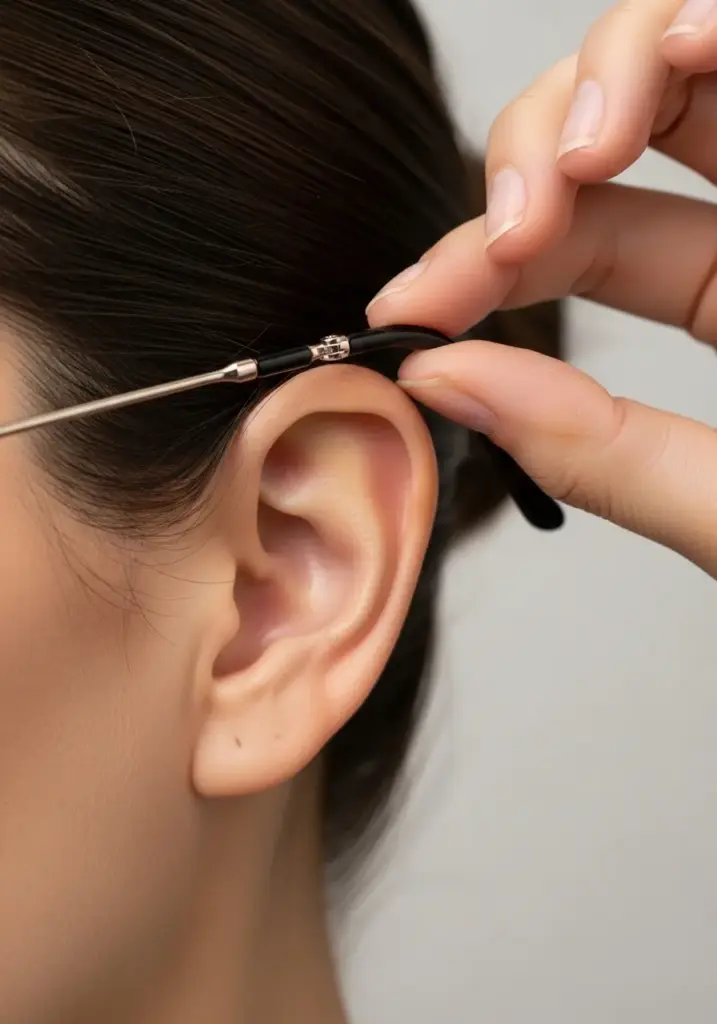
The best glasses for face shape still fail if they pinch, slide, or leave red marks. Think of fit as your non‑negotiable foundation. Once that’s right, you can play with color, shape, and style.
Key Measurements to Watch (Without Getting Overwhelmed)
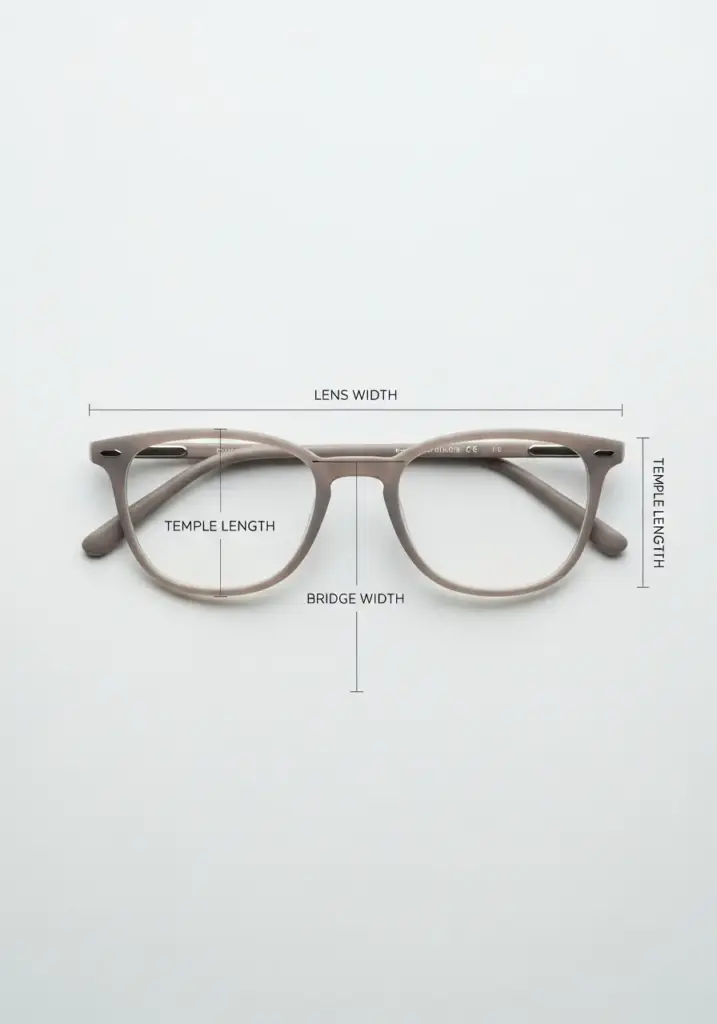
- Lens width: Affects how wide the frame feels overall. Too narrow looks pinched; too wide looks droopy or mask‑like.
- Bridge width: Where the frame sits on your nose. Too wide, glasses slide; too narrow, they pinch and leave marks.
- Temple length: The arms that go over your ears. Too short, they pinch; too long, they slide and feel unstable.
How Should Good Glasses Feel?
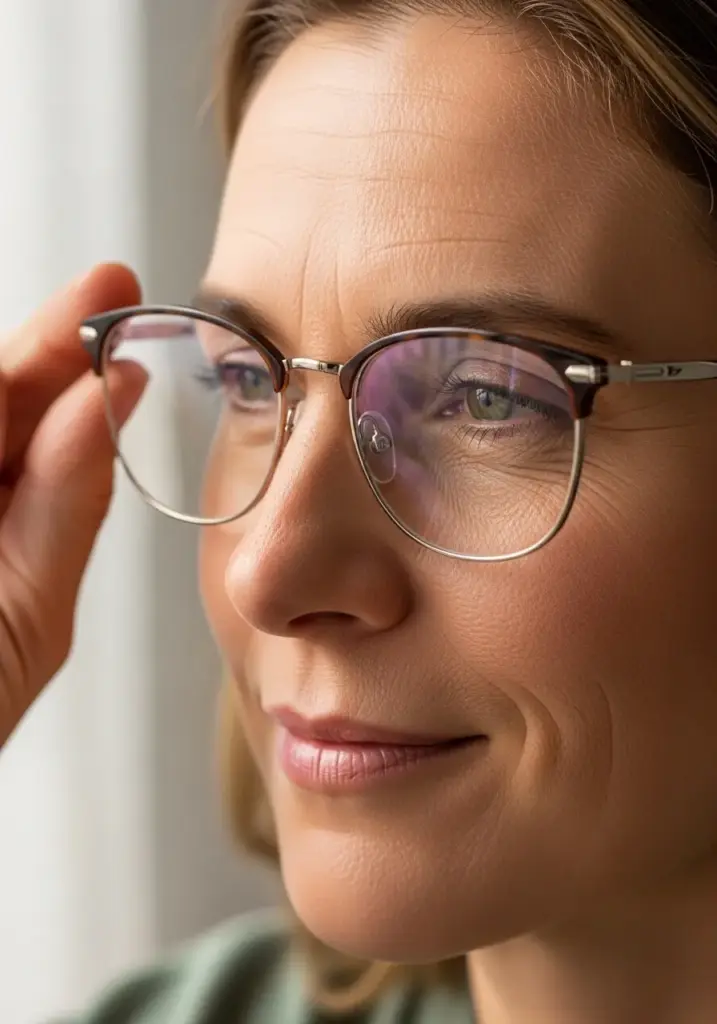
Properly fitted frames feel almost “unremarkable” after a few minutes—no hot spots behind the ears, no constant slipping down your nose, and no deep dents on your nose pads by the end of the day. You should be able to talk, laugh, and look down without adjusting them every few minutes. If you wear hearing aids or headsets, test them with your frames on before you commit to a pair of Glasses For Face Shape and lifestyle.
New vs Old Approach
Old approach: “You’ll break them in, just get used to it.”
New approach: Tiny adjustments at the bridge, nose pads, and temple tips can transform how your glasses feel in under five minutes.
When was the last time you asked for a professional fit adjustment?
Discussion question: If you rated your current glasses purely on comfort from 1–10, what number would you give them—and why?
Style, Color, and Material: Making Frames Feel Like “You”
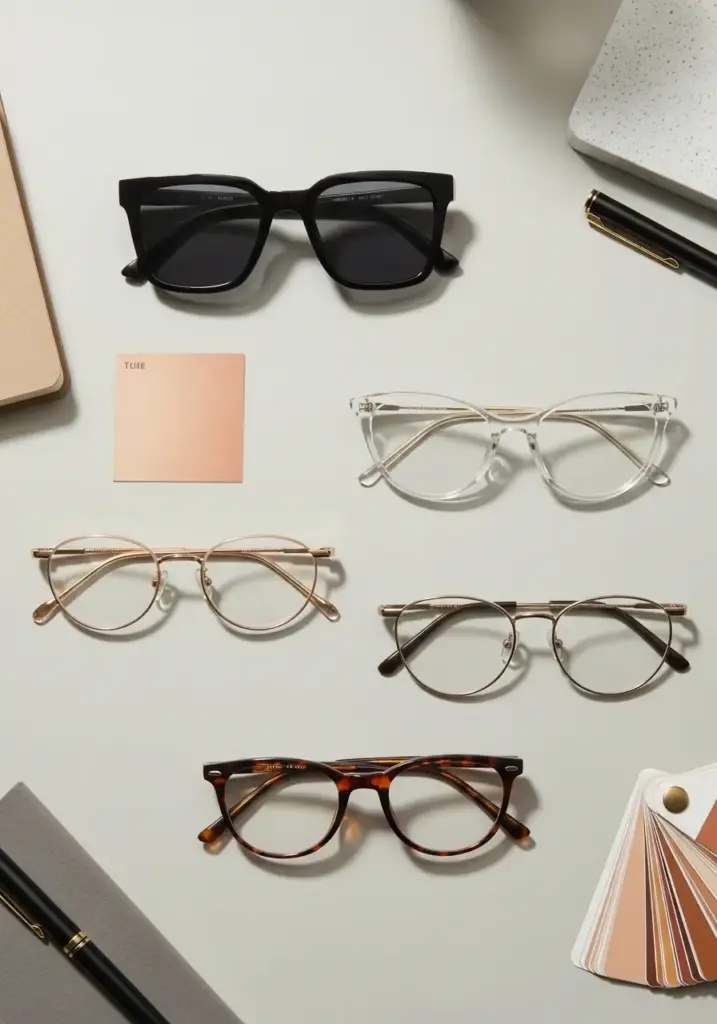
Once you understand which Glasses For Face Shape flatter your features and you’ve locked in your fit, you can finally have fun. This is where your lifestyle, budget, and personal style all meet. Think beyond “do these technically suit my face?” and ask “do these feel like a version of me I like?”
Frame Materials and Price Ranges
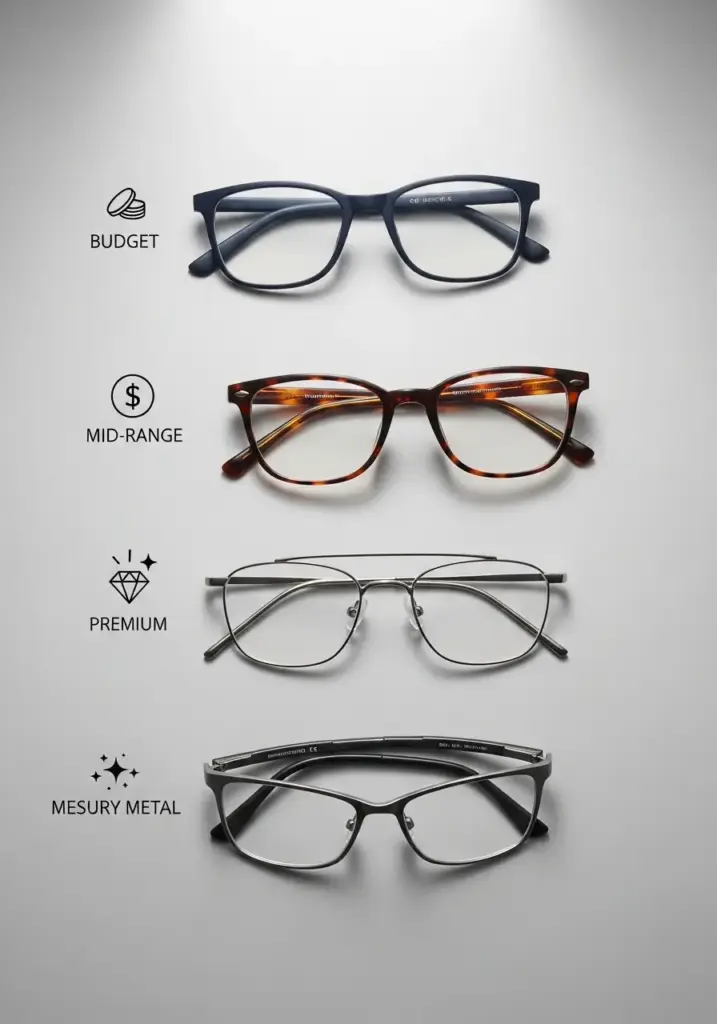
Budget‑friendly plastic frames can be great for experimenting with color, while mid‑range acetate offers better durability, richer patterns, and a more polished finish. Lightweight metal (like stainless steel, titanium, or memory metal) often costs more up front but can be worth it if you want ultra‑light, long‑wear comfort and thinner profiles that don’t overwhelm your features.
You don’t need to choose all‑budget or all‑premium. Many people build a small eyewear “wardrobe”: one higher‑end everyday pair they wear constantly, plus one or two more affordable “fun” frames to switch up their look.
Color Choices That Flatter Your Face Shape
Color changes how strong or soft your frames appear on your face. Dark, thick frames create more contrast and structure; light or translucent frames blend in and let your features stand out. If your face shape is softer (round, oval), darker or more angular frames can add definition. If your features are angular (square, rectangle), softer colors and translucent materials often feel more flattering and less harsh.
Timeless vs. Trendy (Especially Over 40)
For women and men over 40, the sweet spot is usually timeless with a twist. Classic shapes—cat‑eye, rectangular, round—updated with fresh details like a translucent finish, subtle two‑tone color, or a lighter matte texture feel modern without shouting. Avoid choosing a frame only because it’s trending; use trends as inspiration to refine what already flatters your face shape.
Quick Update
Current collections highlight transparent acetates, softer cat‑eye shapes, and modern round frames that work surprisingly well across multiple face shapes.[web:69][web:72][web:81]
Which detail feels more “you” right now—clear frames, bolder temples, or a softer silhouette?
Discussion question: Do you want your next pair of glasses to quietly blend in, or to be the first thing people notice when they see you?
Matching Glasses to Your Life: Work, Casual, Formal, and Sport
Most people now own more than one pair of glasses, even if one is a budget backup. Thinking about glasses for face shape across different parts of your life keeps you from buying a single pair that almost works everywhere, but doesn’t shine anywhere.
Work and Professional Settings

For office, teaching, healthcare, or leadership roles, aim for frames that look intentional but not distracting. Rectangular or soft cat‑eye frames often photograph well on video calls, while thinner metals and subtle colors feel professional up close. If your workplace is conservative, use face-shape guidelines to choose flattering shapes, then keep color more neutral—deep tortoise, navy, charcoal, or soft clear tones.
Casual, Weekend, and Travel

On weekends, you can relax the rules. Oversized round frames on a square face, or slightly bolder geometric frames on an oval face, can be a fun contrast. For travel, prioritize lightweight materials and a bridge that doesn’t leave marks after long flights or drives. This is also where color play makes sense: warm tortoise, blush crystal, or soft teal can make casual outfits feel styled without effort.

Formal Events and Special Occasions

For weddings, graduations, and big celebrations, think about how your frames work with your hairstyle and neckline. Soft cat‑eye or thin metal frames can visually “lift” your features in photos, especially for heart and oval faces. If your outfit is bold, choose simpler frames that flatter your face shape; if your outfit is very minimal, your glasses can become the polished statement piece.
Sports and Active Days

For walking, hiking, or gym sessions, fit and security matter most. Look for rubberized nose pads, slightly wrapped shapes, or lightweight materials that hug your face without pinching. If your face is narrower, avoid overly wide sports frames that slip; if it’s wider, check that the temples don’t dig into the sides of your head. Consider prescription sunglasses or photochromic lenses that still respect your face shape while protecting your eyes.
Seasonal Alert
As more people work hybrid schedules, “desk to weekend” frames—lightweight styles that look polished with blazers and easy with denim—are becoming the go‑to choice across face shapes.
Would a versatile all‑rounder or separate work/weekend pairs suit your lifestyle better?
Discussion question: If budget allowed only two pairs, which would you prioritize—work + casual, work + sport, or casual + special occasion?
What’s New in Glasses for Face Shape
Eyewear has shifted a lot in the last few seasons. Instead of one or two “it” shapes, the trend now is personalization—choosing frames that match your face shape, but also your lifestyle, values, and comfort level. Designers are offering more size ranges, lighter materials, and subtle modern twists on classic shapes.
Soft cat‑eyes, transparent and translucent acetates, cleaner round frames, and slim metals are showing up across collections, especially for women over 40 who want frames that lift and brighten without feeling heavy. You’ll also see more eco‑conscious materials and flexible metals that work well if you’re hard on glasses or wear them all day.
If you want specific style ideas, you can also browse 15 trending glasses frames and the latest round glasses trends
to see how different shapes look on real faces and how they interpret today’s trends for your own Glasses For Face Shape.
Outdated Advice You Can Ignore
- “Pick one frame and wear it for a decade.” Today, a small eyewear wardrobe is normal.
- “Avoid bold frames over 40.” In reality, the right bold frame can make you look more vibrant and awake.
- “Stick strictly to your face shape rules.” Modern trends mix shapes more playfully; good fit and comfort now matter just as much.
Smarter Ways to Use Face-Shape Rules Now
Instead of treating face-shape charts as law, use them to understand why certain frames feel better than others. Then try a “rule‑breaker” pair intentionally: round frames on a round face, or square frames on a square face, but with careful attention to thickness, color, and size. You might find that a gently curved version of a “forbidden” frame is exactly the style that feels like you.
Trend Watch
Many brands now tag frames with recommended face shapes and offer virtual try‑on tools, making it easier to test bolder options safely from home.
Would you trust a virtual try‑on to choose your next pair, or do you still prefer in‑store mirrors?
Discussion question: Which piece of old glasses advice are you ready to let go of—and what new rule of your own will you replace it with?
Key Takeaways, FAQs, and Your Next Step
Key Takeaways: Glasses For Face Shape Made Simple
- You probably lean toward a couple of face shapes, not just one; use guides as suggestions, not strict rules.
- Round faces benefit from more angles; square faces from more curves; oval faces can wear almost anything with the right size.
- Heart and diamond faces look great in frames that balance broader foreheads and strong cheekbones.
- Scale matters: petite faces need lighter frames, while plus-size or wider faces shine in slightly larger, well‑proportioned designs.
- Fit is non‑negotiable—no sliding, pinching, or red marks by the end of the day.
- A small eyewear “wardrobe” (work + casual + fun or sport) serves real life better than one compromise pair.
- Use trends—like softer cat‑eyes and translucent frames—to refresh your look, not to erase what already suits you.
FAQ: Best Glasses For Face Shape
1. I don’t know my face shape. Where should I start?
Start by noticing which area looks widest—forehead, cheekbones, or jawline—and whether your chin is softer or more angular. Take a straight‑on, well‑lit photo of yourself, pull your hair back, and loosely trace the outline. Then compare it to simple diagrams of round, square, oval, and heart shapes. Once you have two shapes that feel close, try frames recommended for both. Your mirror is always more important than any chart when choosing Glasses For Face Shape.
2. Are bold, thick frames still okay over 40?
Yes—if they support your features instead of overwhelming them. On smaller or shorter faces, a bold frame is often best in a slightly softer color, like tortoise or deep teal. On larger or angular faces, thicker frames can look powerful and youthful. The key is balance: you still want to see you first, not just the glasses. If you’re unsure, compare a bolder pair to a lighter version at the same time and notice which one makes your eyes stand out more.
3. Can I wear round glasses if my face is round?
You can—especially if you play with size and thickness. Very small, perfectly round frames often exaggerate roundness. But slightly wider, round‑ish frames with a straight or keyhole bridge, or with a subtle brow line, can actually look charming and intentional. If you like the softness of round frames, try a version that tilts a bit toward oval or has a slightly flattened top to add structure.
4. How do I choose between budget and premium frames?
Think about how you’ll use them. If you wear one pair all day, every day, a higher‑quality frame with better hinges, lighter materials, and careful sizing is worth the investment. For a backup pair or a fun color experiment, budget frames are fine. Many people go mid‑range for their main pair and add one budget-friendly “personality” frame to rotate in for weekends and trips.
5. Should I buy glasses online or in-store for the best face-shape match?
Both can work—if you use them wisely. In‑store, you get real‑time feedback and professional fit adjustments. Online, you often get more styles, clearer size filters, and virtual try‑on tools. A strong strategy is to try on a few shapes in‑store to learn what works, then use that knowledge (lens width, bridge size, general shape) when comparing online options. However you shop, always give yourself time to return or exchange if the frames look or feel wrong after a week of real wear.
Your Next Step: Try, Compare, and Decide With Confidence
The most flattering Glasses For Face Shape are the ones you actually enjoy wearing. Start by narrowing your face to one or two shape categories, then pick two frame shapes from this guide that sound promising—and one that breaks the rules a little. Try them side by side, in good daylight, with your hair styled how you usually wear it. Take photos from the front and slightly turned; notice which pair makes your eyes look brighter and your features feel more “lifted.”
If you already own a pair that gets you compliments, study it: the width, the height, the color, and the curve. That frame is your secret reference point. Use it as a baseline when you explore new trends, whether that means experimenting with translucent acetate, softer cat‑eyes, or modern round frames that you haven’t tried before.
Your glasses are not just a medical device; they’re part of your face in every photo, every meeting, every moment with people you love. You deserve frames that fit your life, your style, and the unique shape of your features.
What’s one small, low‑pressure step you can take this month—an in‑store try‑on, a virtual fitting, or a side‑by‑side photo session—to move closer to frames that truly feel like you?
Share your experience in the comments below! What’s your take? Let’s discuss!