This article contains affiliate links. As an Amazon Associate, we earn from qualifying purchases.
To dress a pear body shape, start with clothes that fit comfortably through your hips and thighs, then check the waist, rise, and shoulder fit. Curvy-cut jeans, adjustable-waist dresses, and separates in different sizes can make shopping easier. If you enjoy a more balanced silhouette, add detail near your shoulders or define your waist—but neither is a requirement.
The familiar problem of jeans fitting your hips while gaping at the back usually calls for a different cut, not a different body. This guide focuses on finding that fit, choosing shapes you enjoy, and putting together outfits you can move in comfortably.
What Is a Pear Body Shape?
In clothing advice, “pear” generally describes a silhouette with hips wider than the shoulders or bust, often with a more defined waist. It is a broad styling description, not a precise sizing system. Two people who identify with this shape may have different bust sizes, torso lengths, heights, and fit needs.
You do not need to match a celebrity or meet a numerical threshold to use the advice. Pay attention to the fit issues you actually experience: a loose waistband, trousers pulling across the seat, or dresses that fit below the waist but feel too roomy above it.
Take the Measurements That Help You Shop
Use a flexible tape, keep it level, and measure without pulling it tight. Follow the retailer’s instructions if its measurement locations differ.
- Waist: Measure around your natural waist, usually the narrower part of your torso.
- Hips: Measure around the fullest part of your hips and seat.
- Bust: Measure around the fullest part when shopping for fitted tops or dresses.
- Inseam: Measure along the inside leg of trousers whose length you already like, from the crotch seam to the hem.
Compare these with the specific item’s size chart. A size label alone cannot tell you whether the garment has enough room in the places you need it. Buying a smaller top and a larger bottom is a useful solution, especially with suits and coordinated sets.
Choose How Much Waist Definition You Want
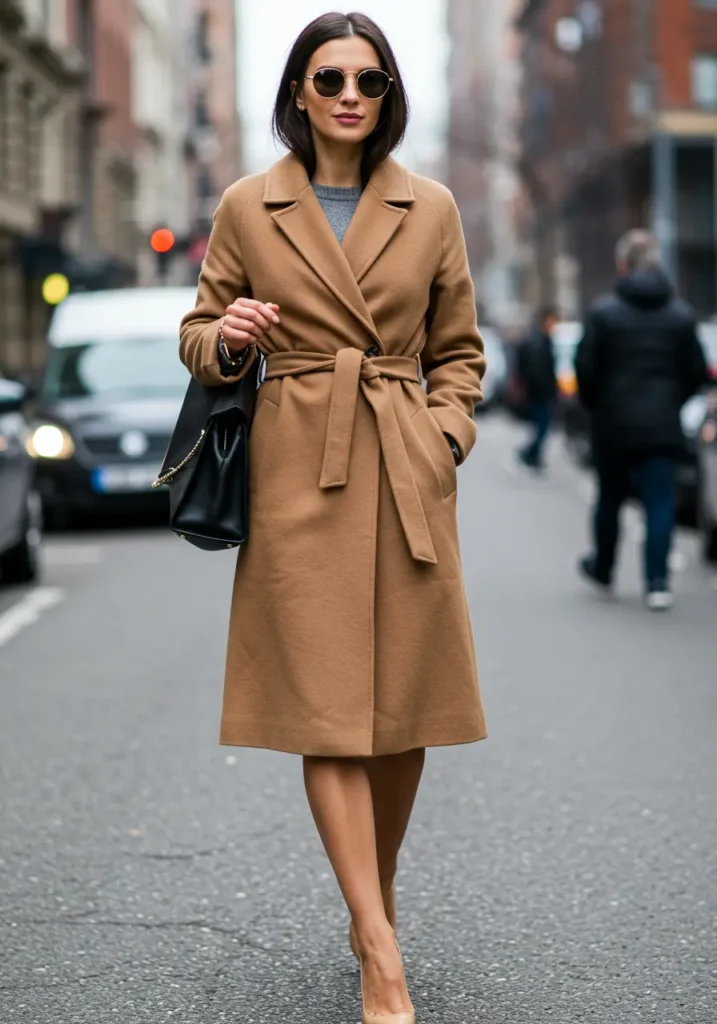
If you like highlighting your waist, try a shaped waistband, a wrap fastening, a softly fitted knit, or a belt over a dress. You can also tuck in just the front of a shirt to show where the waistband sits without fitting the entire top closely.
High-rise bottoms are one option, but the highest rise is not automatically the most comfortable. A waistband that presses into your ribs when you sit may be too high for your torso. Compare mid-rise and high-rise cuts, and judge them while seated as well as standing.
For a relaxed outfit, leave a shirt untucked or choose a straight-cut dress with enough hip room. Waist definition should be a styling choice, not something every outfit must have.
Use Tops and Layers to Shape the Outfit
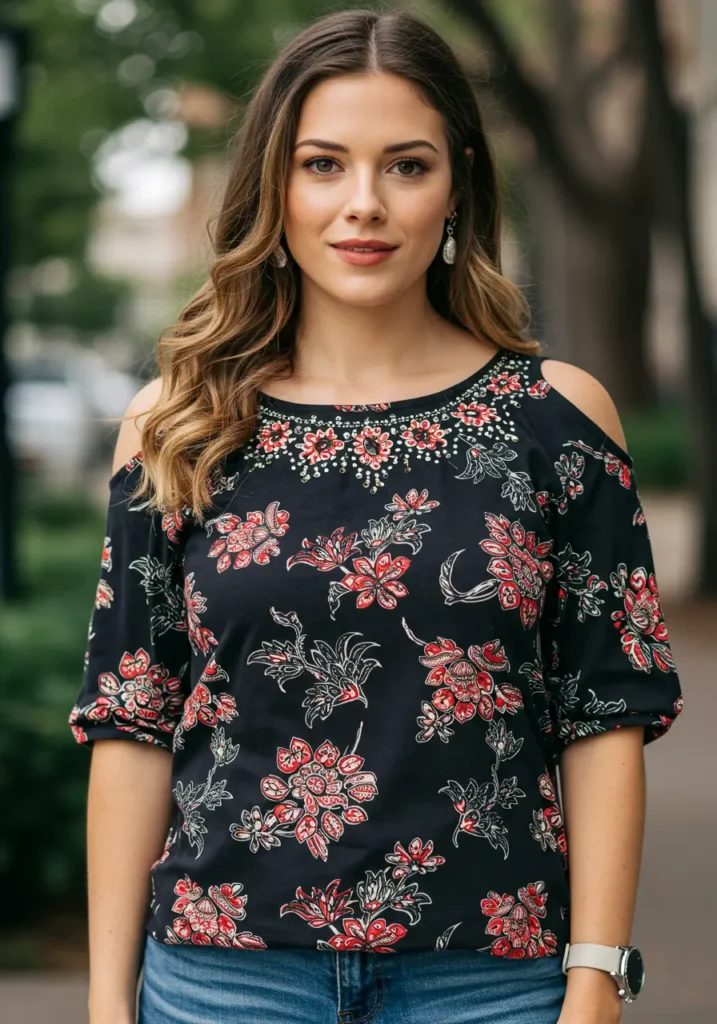
Boat necklines, puff sleeves, textured knits, and structured shoulder seams can add emphasis to your upper half if that is the effect you want. A patterned blouse or colorful cardigan offers another way to create a focal point.
You can get the same sense of interest with more coverage. Try a collared shirt, a high-neck blouse with sleeve detail, or a lightweight scarf. There is no need to choose an off-the-shoulder neckline to make an outfit work.
For a light layer, consider this women’s open-front cardigan with three-quarter sleeves. Try it over a simple top with jeans or a skirt, and check that the hem falls freely rather than catching across your hips. Choose the size using the listing’s measurements.
Check Where Tops and Jackets Sit
There is no single ideal hem length for everyone with fuller hips. Compare a waist-length jacket, a hip-length blazer, and a longer open layer with the same trousers. Notice whether each hem hangs freely or catches across your hips.
A blazer should feel comfortable when you reach forward. If you intend to wear it buttoned, check that the front closes without pulling across your waist or hips. For an oversized look, choose a deliberately roomy cut rather than simply sizing up until the shoulders no longer sit as intended.
Find Jeans and Pants That Fit Your Waist and Hips
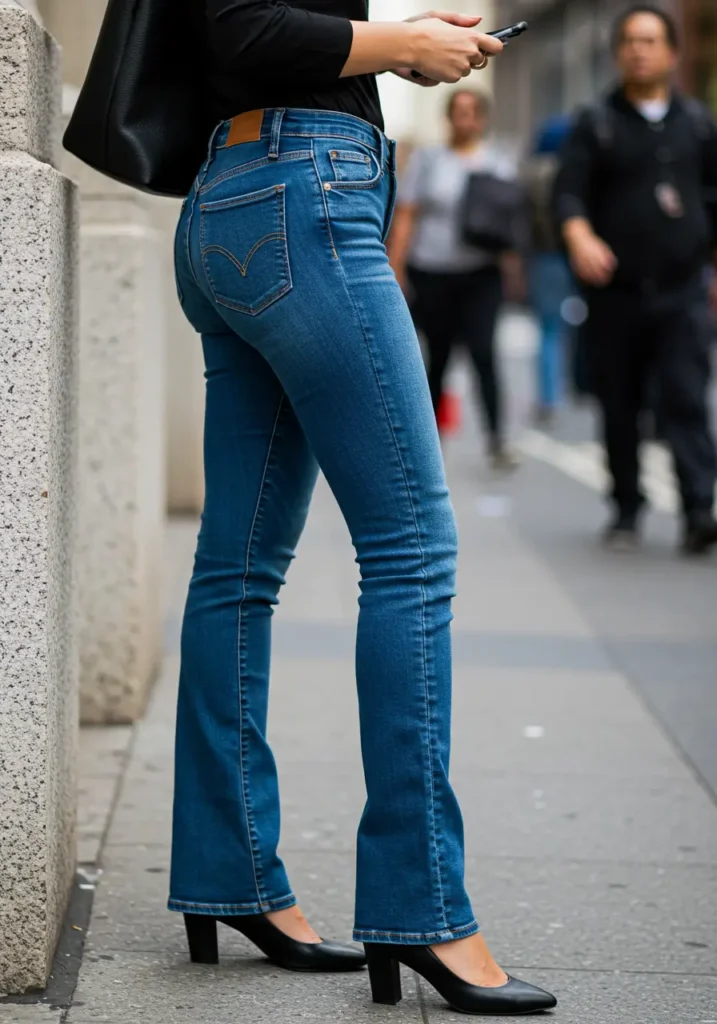
Start with the fit through the seat and thighs, then assess the waistband. Sizing down to close a waist gap can leave the rest of the trousers too tight. A curvy cut or a contoured waistband—a band shaped to follow the waist—may be a better starting point.
Choose the Leg Shape You Enjoy
- Straight-leg: Try this if you want a relatively even line below the knee without a very wide hem.
- Bootcut or flare: A wider opening gives the outfit more volume toward the hem. Check the length with the shoes you will wear.
- Wide-leg: Look for enough room through the upper thigh as well as the lower leg. A wide hem does not guarantee a roomy seat.
- Skinny or slim: Choose these when you want a close fit. Check that you can sit and bend without the waistband digging in or the fabric restricting movement.
Dark denim is versatile, but white jeans, colorful trousers, and printed bottoms are also options. Choose based on the outfit you want to create rather than a rule about concealing your hips.
If you want to try a higher waistband with a bootcut leg, consider Levi’s Women’s 725 High Rise Bootcut Jeans. Compare the rise with a pair you already find comfortable, and check the hem length with your usual shoes.
For a curvy-cut option, look at WallFlower Luscious Curvy Bootcut Jeans. Use the waist and hip measurements together when choosing a size; a curvy label does not guarantee that the waistband will fit without a gap.
If a high waistband feels uncomfortable on your torso, Lee Women’s Legendary Mid Rise Bootcut Jeans offer a mid-rise alternative to compare. Check comfort while sitting and bending, as well as the fit through the seat and thighs.
Understand What Fabric Can and Cannot Fix
Stretch can help with movement, but it cannot fully compensate for an unsuitable cut. Rigid denim needs sufficient room from the start; do not rely on uncomfortable jeans stretching into a good fit. Lighter fabrics may drape softly, while firmer fabrics hold a more defined shape.
Look at how the actual pair behaves. Pockets that pull open, a waistband that slides down, or seams that twist suggest you should compare another size or cut.
When a Waistband Alteration Makes Sense
If trousers fit well everywhere except for a modest waist gap, ask a tailor whether taking in the waistband is practical. The construction, pocket placement, and amount of adjustment affect the result. Get a quote before committing to a purchase you cannot return.
A belt can handle a small adjustment. If tightening it creates bunches of fabric, a different fit will usually be more comfortable.
Choose Dresses and Skirts for Fit and Movement
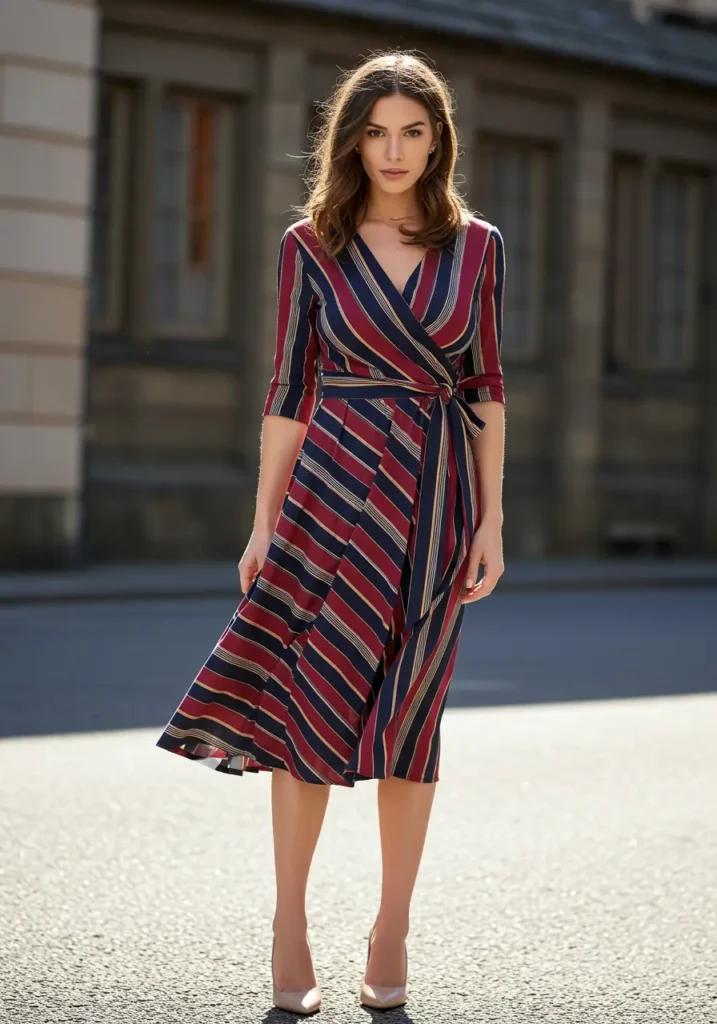
A-line skirts and fit-and-flare dresses are useful starting points because they provide more space below the waist. Wrap styles offer some adjustability, but the bodice and skirt still need to fit; the tie cannot correct every proportion mismatch.
- A-line: Check that the waistband sits comfortably and the fabric falls freely from the hip.
- Fit-and-flare: Look for a waist seam that lands where you want it, rather than pulling above or below that point.
- Wrap: Sit and walk to check neckline coverage and skirt overlap. A camisole or a different wrap cut may suit your coverage preferences.
- Bias-cut: Fabric cut diagonally can drape closely around curves. Check for pulling, cling, and the way it settles after walking.
- Pencil or body-skimming: Choose enough room or stretch for sitting and taking a full stride. You do not need to avoid a fitted silhouette.
If a one-piece dress consistently fits your hips but feels loose at the bust, consider a coordinated skirt and top. You can choose the two sizes independently while keeping the appearance of a complete outfit.
To try a pleated A-line silhouette, consider the GRACE KARIN Pleated Chiffon Midi Skirt. Pair it with a simple knit or tucked-in blouse. Check the waistband measurements, lining, and skirt length for your chosen size and color.
Let Accessories Support Your Personal Style
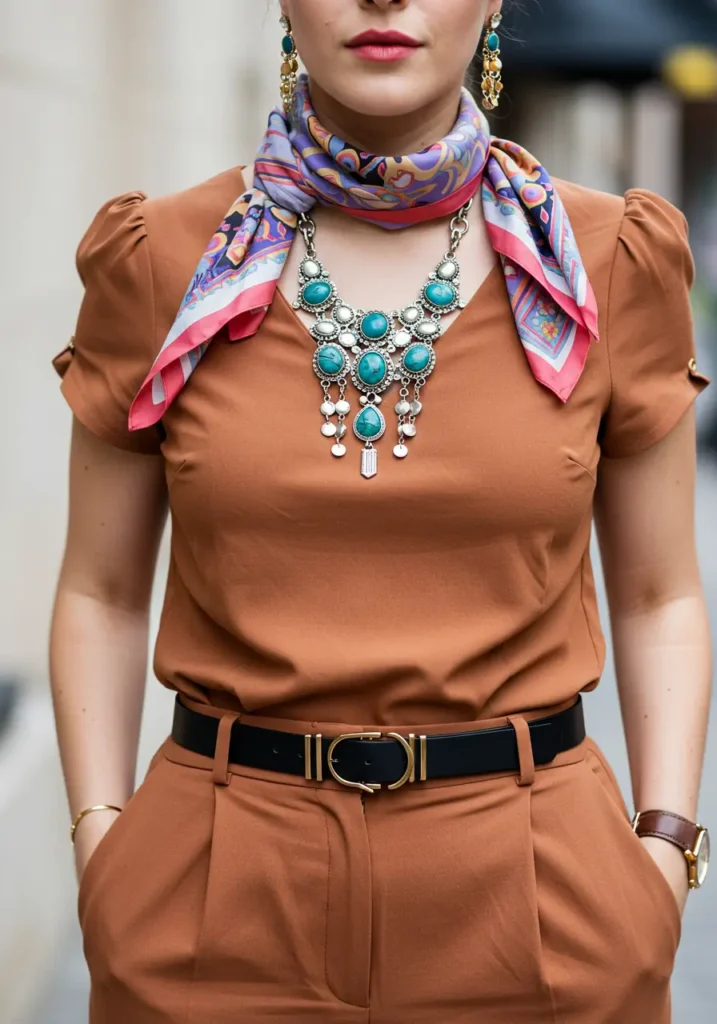
Earrings, necklaces, and scarves can bring attention toward your face. Start with one detail you like, then decide whether the outfit needs anything else. A textured neckline may already provide all the interest you want.
Choose belt width by comfort and available torso space. A narrow belt may sit more easily between your ribs and hips than a wide one. For bags, prioritize useful capacity and a comfortable strap position; a bag resting at your hip is not a styling mistake.
Flats, sneakers, boots, heels, and ankle-strap shoes can all work. Match trouser length to your footwear so hems hang as intended without dragging under your shoes.
Try New Styles Without Rebuilding Your Wardrobe
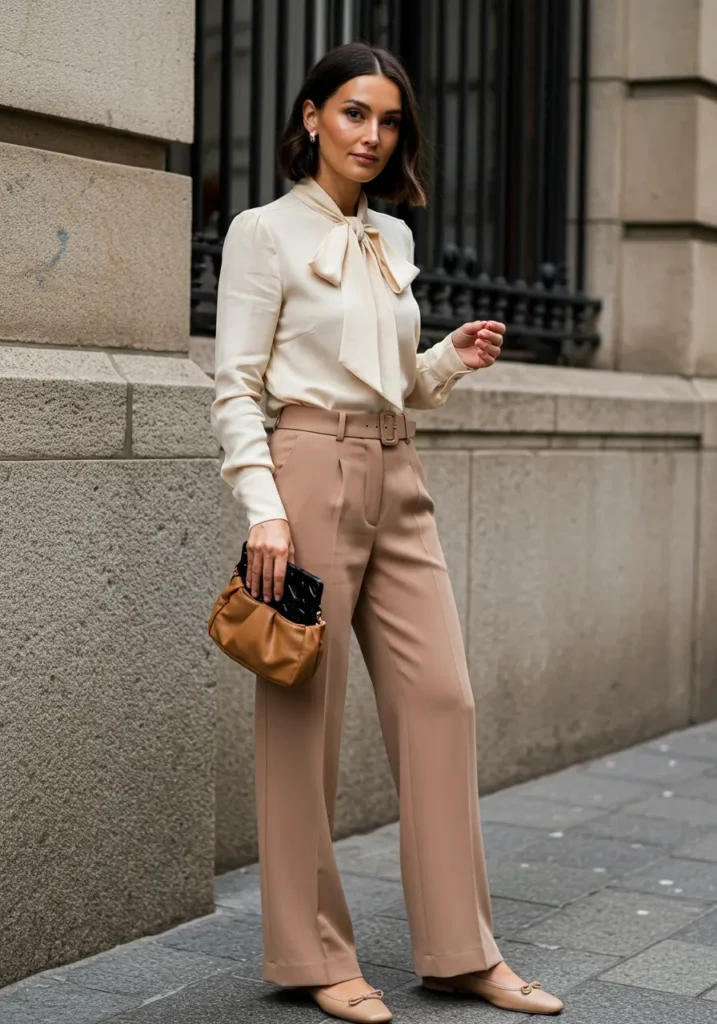
You can experiment with barrel-leg jeans, cargo pockets, a fitted skirt, or an oversized shirt without treating your body shape as a restriction. Start with one unfamiliar piece and combine it with clothes you already enjoy.
For example, try roomy trousers with a simple knit, or pair a fitted skirt with a relaxed shirt. If the proportions feel different from what you expected, change the tuck, layer, or hem length before deciding the style cannot work for you.
Quick Clothing Reference
| Clothing type | What it can offer | What to check |
|---|---|---|
| Puff-sleeve top | Extra detail around the shoulders | Sleeve volume and comfort under layers |
| A-line skirt | Room below a defined waistband | Waist fit and free movement through the hips |
| Wide-leg pants | A loose or structured line through the legs | Seat, thigh room, and hem length |
| Wrap dress | Adjustable waist definition | Neckline coverage and skirt overlap when seated |
Where to Start Shopping for Curvy Fits
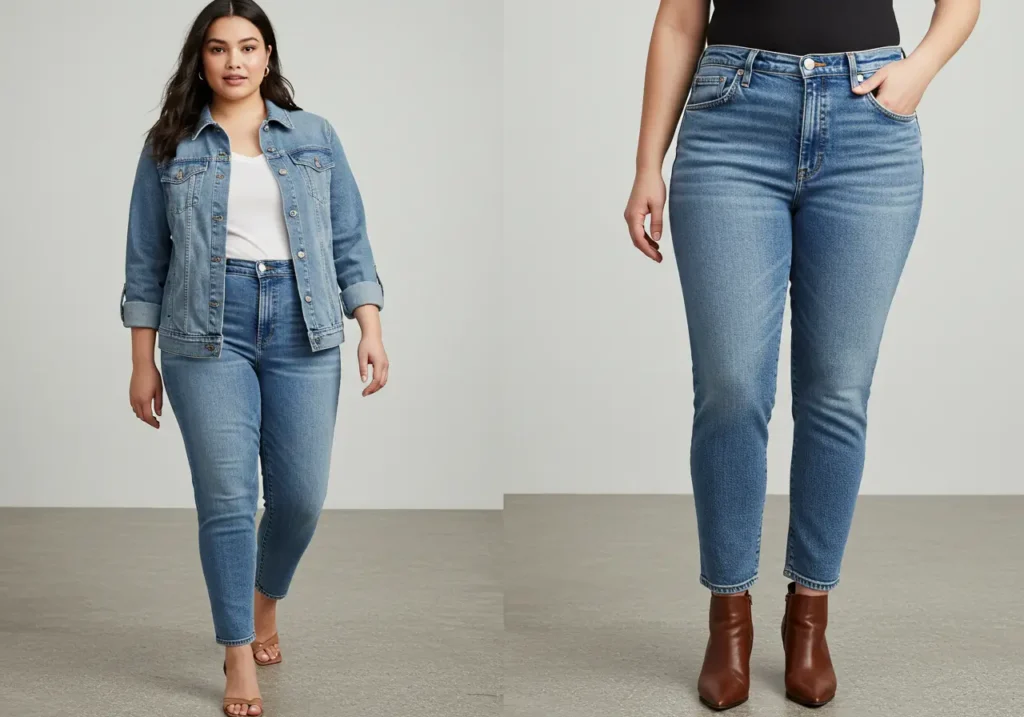
Look for the specific fit description rather than assuming every item from a brand follows the same proportions. “Curvy” describes a cut, not a universal size range, and brands use the term differently.
Abercrombie & Fitch Curve Love
Abercrombie describes its Curve Love jeans as having an additional two inches through the hip and thigh compared with its classic fit. That makes the line worth comparing when a standard cut fits your waist but feels too close below it. Check the Curve Love fit description and the size guide for the particular style; the design does not guarantee a gap-free fit for everyone. :contentReference[oaicite:0]{index=0}
Madewell Curvy Denim
Madewell’s denim guide describes its curvy fit as using a contoured waistband with additional room through the hips and thighs. Compare the rise, leg shape, fabric, and inseam of individual pairs rather than choosing by the curvy label alone. :contentReference[oaicite:1]{index=1}
Before ordering from any retailer, check the current return terms, available lengths, and item-specific measurements. Keep notes on cuts that fit well—including the fabric and rise—so your next search starts with useful information.
Use This Fitting-Room Checklist
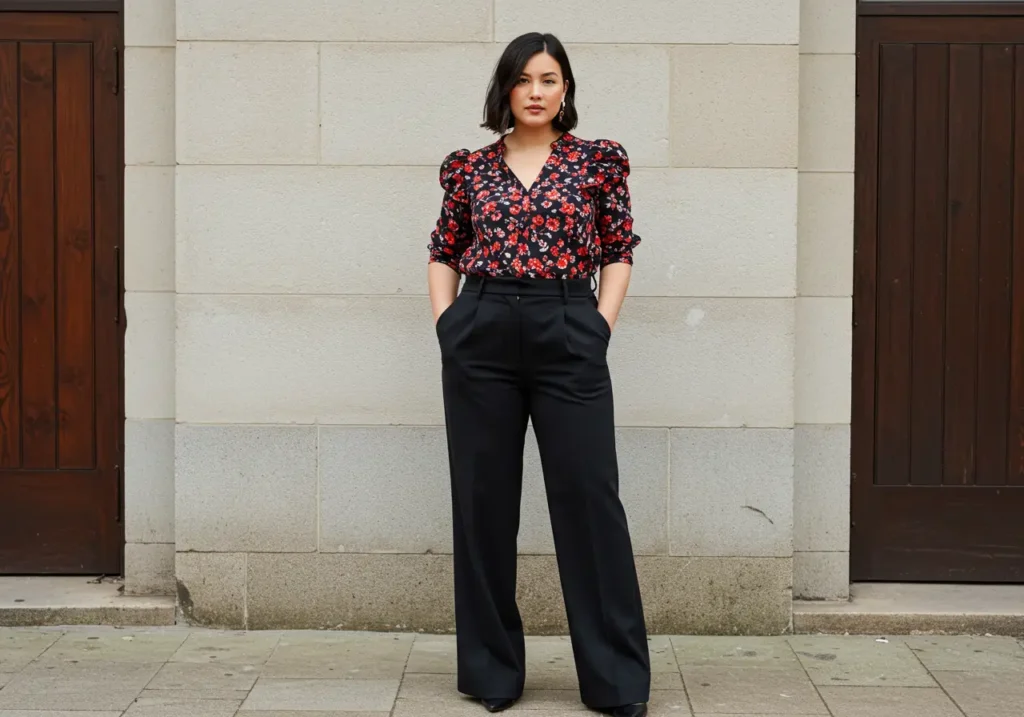
A standing mirror check is only part of the decision. Try the movements you will make during an ordinary day.
- Sit down: Check for waistband pressure, skirt movement, and wrap coverage.
- Walk and bend: Notice pulling through the seat or thighs and hems that interfere with your stride.
- Reach forward: Make sure shirts and jackets allow comfortable movement.
- Check the back and sides: Look for a waist gap, stretched pockets, or fabric caught above the hips.
- Try your usual shoes: Evaluate trouser length with the footwear you actually plan to use.
- Ask whether it needs constant adjustment: Repeated tugging is a reason to compare another option.
For another wardrobe perspective, explore Azuloz’s style advice for women over 40.
Four Outfit Ideas to Make Getting Dressed Easier
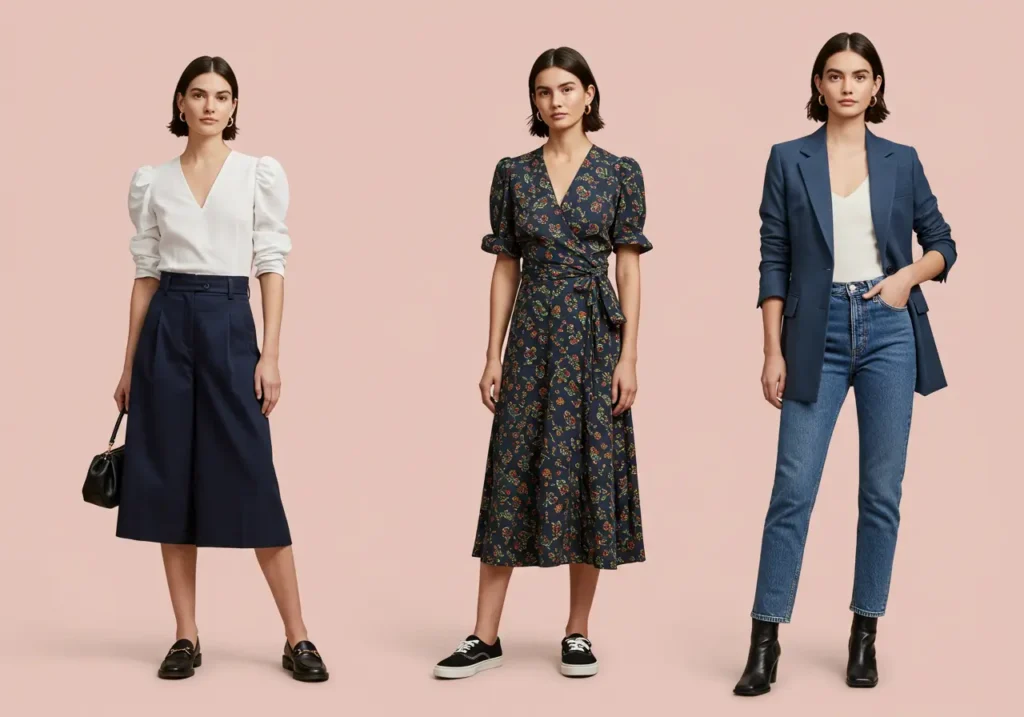
For Work: Blouse, Wide-Leg Trousers, and Loafers
Choose trousers that sit comfortably at the waist and a blouse that tucks in without excessive bunching. Add a blazer if you want more structure. Fit each piece separately rather than expecting one suit size to work throughout.
For a Casual Day: Knit Top, A-Line Skirt, and Sneakers
Try a waist-length knit or tuck a longer one into the skirt. Keep the waistband comfortable when seated, and choose a skirt length that allows easy walking. A colorful skirt works just as well as a neutral one if it suits your taste.
For an Evening Out: Wrap Dress and Simple Accessories
Choose a wrap dress with secure coverage and enough skirt overlap. Add earrings or a necklace according to the neckline, then wear flats, low heels, or another comfortable shoe. Check the outfit while sitting before leaving home.
The Amazon Essentials Women’s Long Sleeve Classic Wrap Dress is one option for this outfit formula. Check the V-neck coverage and skirt overlap while moving; add a camisole if you prefer more coverage at the neckline. Use the selected variation’s size chart rather than relying on your usual dress size.
For Everyday Errands: Straight-Leg Jeans, T-Shirt, and an Open Shirt
Start with jeans that fit your waist and seat, add a comfortable T-shirt, and leave an overshirt open for an easy layer. Try a small front tuck if you want waist definition, or leave the T-shirt loose if you prefer.
Build Around the Clothes You Reach For
You do not need a separate set of fashion rules for every body part. Start with one well-fitting bottom, two tops you like wearing with it, and a useful layer. Photograph the combinations that feel good so you can repeat them on busy mornings.
Let your next purchase solve a specific problem—a waistband that gaps, a missing work outfit, or trousers in the right length. The most useful wardrobe is one that fits your body, your preferences, and the way you spend your day.