Blown Head Gasket: Warning Signs, Diagnosis, Repair, and What to Do Next
The temperature warning comes on during the drive home. A few days later, the coolant reservoir is low again, even though there is no puddle in the driveway. It is tempting to top it off and hope for the best. But when coolant keeps disappearing or an engine repeatedly overheats, the question becomes urgent: could it be a blown head gasket?
A failing head gasket can let combustion pressure, coolant, or oil cross boundaries inside the engine. The symptoms vary with the location of the leak, so one sign alone does not prove the gasket has failed. If the engine is overheating, steaming, running badly, or showing coolant contamination in the oil, pull over safely, turn it off, and arrange an inspection. A timely diagnosis may prevent a repairable problem from becoming extensive engine damage.
Here is how to recognize the meaningful clues, understand what a shop should test, and decide whether a gasket repair or another path makes sense for your vehicle.
What Does a Head Gasket Actually Seal?
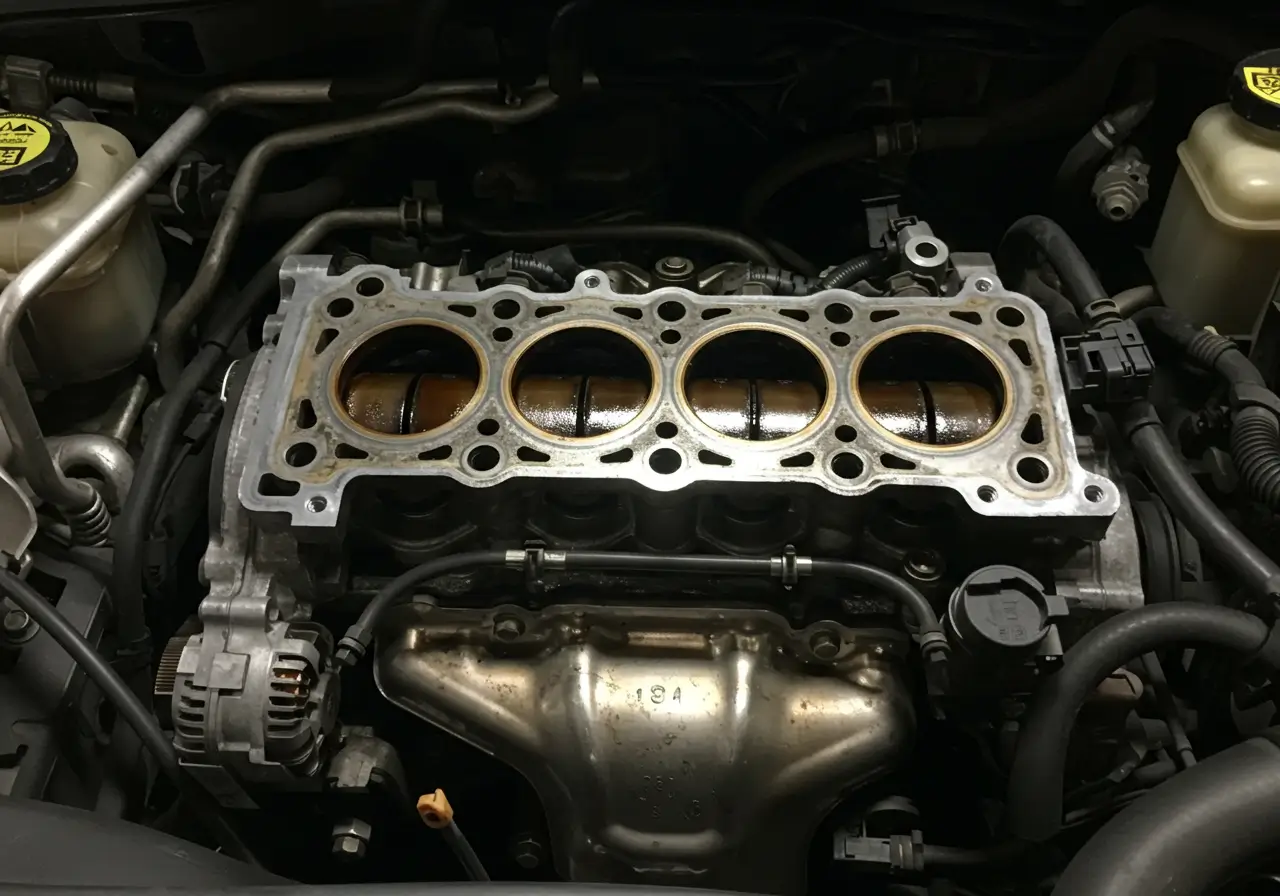
The head gasket sits between the engine block, which houses the cylinders and pistons, and the cylinder head, which closes the top of the cylinders and carries part of the valve train. It has to seal several openings at once. Around each cylinder, it holds in the pressure created during combustion. Elsewhere, it seals passages carrying coolant and engine oil between the block and head. It also helps prevent those fluids from leaking out along the joint.
A leak does not always mean oil and coolant will mix. The gasket might fail between a cylinder and a coolant passage, allowing combustion gas into the cooling system and sometimes coolant into the cylinder. It might fail between adjacent cylinders, causing a loss of compression. Or fluid may seep externally along the edge. Those different routes explain why two cars with a bad head gasket can behave quite differently.
Modern engines may use multilayer steel gaskets; other engines use different designs. The correct replacement is the one specified for the particular engine, installed against surfaces that meet its requirements. The price of the gasket itself tells you little about the total repair: reaching it means taking apart a substantial portion of the engine.
Signs of a Blown Head Gasket—and What Else They Could Mean
Think of the symptoms as clues to investigate together. A mechanic will look at the pattern, test the cooling and combustion systems, and check for simpler explanations before recommending major work. Fel-Pro’s overview of head gasket symptoms describes several of the common leak paths.
Repeated overheating or unexplained coolant loss
A gasket leak can push combustion gas into the cooling system, displace coolant, and make the engine run hot. Coolant can also enter a cylinder and leave through the exhaust. Yet a leaking hose, radiator, water pump, reservoir cap, or other cooling-system part can produce similar complaints. A missing driveway puddle does not rule out an external leak: coolant may evaporate on hot engine parts or escape only when the system is under pressure.
If the reservoir keeps dropping, note how quickly it happens and whether the temperature gauge rises at idle, on the highway, or after a cold start. Share that pattern with the shop. Do not keep driving and repeatedly adding coolant without finding where it goes.
Persistent white exhaust, rough running, or a misfire
Coolant entering a combustion chamber may create a lingering white vapor from the tailpipe, sometimes with a sweet odor. An affected cylinder may misfire, especially after the car has sat overnight. Normal condensation can also produce a brief white plume on a cold start, so the duration and accompanying symptoms matter. A misfire has many possible causes, including ignition or fuel problems.
A flashing check-engine light with noticeable shaking calls for prompt attention. Avoid continuing the trip: an unresolved misfire can damage emissions components, and a coolant leak into a cylinder introduces additional risk. Tell the technician whether the problem appears only on startup or continues after the engine warms.
Milky oil or oily coolant
Oil that looks uniformly cloudy or unusually creamy can indicate coolant contamination. Oil in the coolant reservoir may leave a slick or sludge. These observations deserve quick professional evaluation, but they do not identify the head gasket by themselves. Other components and leak paths can sometimes cause fluid mixing. A little residue under the oil-fill cap after many short trips can also be condensation; the dipstick, coolant, and overall symptoms provide more context.
Do not run an engine that appears to have significant coolant mixed into its oil merely to see whether the symptom clears. Contaminated lubricant may not protect moving parts adequately.
Bubbles, pressure, or fluid escaping from the cooling system
Combustion gas leaking into coolant can produce persistent bubbling, unusually rapid pressure buildup, or coolant forced out of the reservoir. These can be useful clues for a technician, but an overheating system has several possible causes. Never open the radiator or a pressurized coolant cap while the engine is hot to look for bubbles. Hot coolant and steam can cause serious burns.
Loss of power or a no-start condition
A leak between cylinders can reduce compression and cause rough running or weak acceleration. In a severe internal leak, enough liquid can collect in a cylinder that the engine cannot turn normally. If the starter abruptly stops or the engine will not crank after a coolant-loss episode, do not keep trying to start it. Ask for a tow and diagnosis; forcing a liquid-filled cylinder to compress can damage internal parts.
Read Also: Car Damage Responsibility in No-Fault States: Who Pays?
What Should You Do When the Engine Runs Hot?
If the temperature gauge climbs into the danger zone, a warning appears, or you see steam, signal and pull into a safe place as soon as you can. Turn the engine off and request roadside help or a tow. If you cannot stop immediately, turning off the air conditioner and turning on the cabin heat may help briefly while you reach a safe stopping point; it is not a way to continue the journey. AAA’s overheating guidance also warns against removing a hot radiator cap.
Amazon US Verified
AstroAI Digital Tire Pressure Gauge & Inflator
Heavy-duty 250 PSI dial for exact cold tire pressure tuning and fuel savings.
Wait for the system to cool before any visual check, and follow the owner’s manual. Do not pour coolant into a dangerously hot engine or reach into a running engine compartment. If you are on a highway shoulder, put personal safety first and wait for roadside assistance in a safe location. Describe the warning light, temperature behavior, smoke, and any recent coolant additions when you call the shop.
Can you drive a short distance with a suspected blown head gasket? There is no reliable mileage allowance. A small leak may seem intermittent, while another can trigger overheating or rapid fluid loss. The practical decision depends on the vehicle’s current condition, and towing is the prudent choice when it is overheating, losing coolant, misfiring, or showing contaminated oil. A confirmed leak deserves repair planning even if the car still runs.
Why Head Gaskets Fail
Overheating is a common route to failure. The block and cylinder head expand as they heat; excessive temperature can distort sealing surfaces or stress the gasket. A cooling-system fault may start the problem, and a leaking gasket can then worsen overheating by putting combustion gas into the coolant. That cycle makes it especially important to identify the original cause, not merely replace the gasket.
Possible triggers include low coolant from a leak, a thermostat that does not work properly, a failing water pump, an inoperative cooling fan, radiator problems, or neglected cooling-system service. Abnormal combustion, sometimes called detonation or engine knock, can also stress the seal. Previous engine work with unsuitable parts, incorrect fastening, or poorly prepared sealing surfaces may contribute to repeat failure. An individual engine may have its own known design issues; a shop familiar with your make and model can check applicable service information.
Age alone does not prove that a gasket has failed, and a blown gasket is not automatically evidence that the owner missed maintenance. Conversely, fitting a new gasket without repairing a leaking radiator, fan fault, or other source of overheating invites another breakdown.
How a Shop Confirms the Diagnosis
Because the repair is substantial, ask what evidence supports the diagnosis and what alternatives were ruled out. The first steps usually include a history of symptoms and a visual check for external coolant and oil leaks, fluid condition, overheating faults, and stored misfire codes. A shop may use one or several tests depending on what it finds.
- Cooling-system pressure test: The technician pressurizes the system to look for leaks. A pressure drop is a clue, but it does not automatically identify the gasket; an external hose or radiator leak may be responsible.
- Combustion-gas check: A test of gas above the coolant can support the suspicion that combustion products are entering the cooling system. Results have to be interpreted with the engine’s symptoms and the test procedure.
- Compression test: Comparing cylinder pressures may reveal a sealing problem, particularly when neighboring cylinders are affected. Low compression can also have other causes.
- Cylinder leak-down test: Compressed air is introduced into a cylinder to help locate where pressure escapes. The mechanic may look for signs that it is entering the cooling system or an adjacent cylinder.
- Inspection for coolant entering a cylinder: Depending on the case, the shop may inspect spark plugs, use a borescope, or pressure-test a cold cooling system and check the cylinders later. Fel-Pro describes this diagnostic approach for coolant loss without an obvious outside leak.
No single convenient driveway observation always settles the matter. A cracked cylinder head, for example, can mimic a bad gasket; in some cases the distinction becomes clear only after disassembly and inspection. Fel-Pro notes that a removed head may need machine-shop pressure testing to check for cracks. Ask whether the initial estimate covers diagnosis only, removal and inspection, or the complete repair.
Amazon US Verified
BlueDriver Bluetooth Pro OBDII Diagnostic Scanner
Reads and clears check engine codes directly from your smartphone with verified fixes.
What a Proper Repair Involves
For an engine worth repairing, the usual solution is to remove the cylinder head, inspect the damage, prepare the mating surfaces to the engine and gasket maker’s specifications, and install the correct gasket and fasteners according to the repair procedure. The shop must also address whatever caused the overheating or abnormal pressure. Resurfacing is performed when measurements and specifications call for it; removing metal indiscriminately is not a universal requirement or a substitute for checking cracks.
The work may involve draining fluids, removing intake or exhaust components, disturbing the timing system, and replacing one-time-use fasteners or related seals. The exact list varies greatly by engine. The technician should inspect the head and block for damage, evaluate the cooling system, and refill and bleed it correctly. If coolant has contaminated the oil, the repair plan should address the oil and filter as well. Ask how the shop will confirm that the engine holds temperature and no longer loses coolant after reassembly.
If the head or block is cracked, badly distorted, or accompanied by internal bearing damage, the original estimate may change. At that point, compare a repair with a remanufactured or used replacement engine, including the warranty, what components transfer over, the condition of the replacement, and the full installed price. A second opinion is reasonable before authorizing an expensive teardown or replacement.
What about a head gasket sealer in a bottle?
A pour-in product cannot straighten a distorted cylinder head, restore lost compression between cylinders, or repair a crack in metal. A product may temporarily slow some small leaks, but its result is uncertain and it does not diagnose or correct the cause of overheating. Compatibility, instructions, and possible effects on the cooling system also differ by product. If the vehicle is one you rely on, discuss the suspected leak with a mechanic before adding anything to the coolant. Do not treat a temporary reduction in symptoms as proof that the engine is sound.
How Much Does Head Gasket Repair Cost?
There is no dependable universal price for this job. The bill depends on access to the cylinder head, engine layout, labor rates, parts, machine-shop work, and the damage found after disassembly. A repair on a simple engine with a sound head is a different proposition from one involving a cracked casting, damaged timing components, or a cooling system that also needs work. Published price ranges can miss those differences and age quickly.
Get a written, vehicle-specific estimate and ask the shop to separate diagnostic charges, labor, gasket and fasteners, fluids, machining or testing, and any related cooling-system repairs. Clarify what happens if the head fails inspection: will the shop pause for your approval, and what teardown labor will you owe if you decline further work? The Federal Trade Commission’s auto repair guidance recommends a written estimate that identifies the condition, parts, anticipated labor, and a threshold for approval of additional work.
Then weigh the full repair against the car you have, not just its resale value. A well-maintained vehicle with otherwise sound brakes, transmission, tires, and body may justify a major repair. If several expensive problems are imminent, a different vehicle may be the better use of your money. Compare the total cost of each option, including taxes, registration, financing, and the unknown maintenance history of a replacement car. If you have a factory warranty or service contract, read the exact coverage and claim procedure before authorizing work; coverage depends on the contract and the cause of failure.
How to Lower the Risk of Another Failure
The most useful habit is to respond to cooling problems early. Check the coolant reservoir only as the owner’s manual directs, usually when the engine is cool. Use the specified coolant and service schedule for your vehicle. A level that repeatedly falls needs an explanation, even if you never see a puddle. Ask a shop to check aging hoses, the radiator, water pump, thermostat, cap, and fan when symptoms point to them.
Learn where your temperature gauge normally sits, or what your vehicle’s warning light means. If it rises abnormally, stop safely instead of testing how much farther the engine can go. Keep up with scheduled maintenance and address engine knock or recurring misfires rather than masking them. After a gasket repair, monitor the coolant level and temperature as the shop instructs, and report any renewed loss promptly while the repair details are fresh.
If you are facing the repair now, begin with a simple request: ask the technician to show which tests point to the head gasket, what caused the first overheat, and which findings could change the estimate after the head comes off. Those answers turn a frightening diagnosis into a decision you can evaluate.
As an Amazon Associate, azuloz.com earns from qualifying purchases.