How to Choose, Style, and Care for Cashmere, Silk, and Designer Scarves
The best scarf is not necessarily the most expensive one. It is the piece that feels comfortable, works with your wardrobe, drapes well, and can be cared for without becoming a burden. A soft cashmere wrap can provide lightweight warmth, while a silk square can add color to a simple outfit, protect your hair, or become a polished neck accessory.
This guide explains how to compare scarf materials, recognize meaningful quality markers, choose designer pieces wisely, master practical tying techniques, and care for delicate fabrics without damaging them.
Choose the Scarf Material for the Way You Will Wear It
Fabric affects warmth, texture, drape, durability, cleaning requirements, and price. Start with your climate and intended use rather than choosing by appearance alone.
Cashmere: Lightweight Warmth and a Soft Finish
Cashmere comes from the fine, dehaired undercoat of cashmere goats. It is valued because it can provide considerable warmth without the weight and bulk of many conventional wool scarves.
Do not rely on vague terms such as “cashmere feel” or “cashmere touch.” These usually describe texture, not fiber content. Check the sewn-in label for the exact percentage. In the United States, a product labeled as cashmere must meet specific fiber standards, including an average fiber diameter no greater than 19 microns. The Federal Trade Commission’s cashmere labeling guidance explains these requirements in more detail.
Terms such as “Grade A” are commonly used in marketing, but they are not a universal consumer grading system. Instead of treating a grade claim as proof, evaluate the scarf itself:
- Read the fiber label: “100% cashmere” is different from a wool-and-cashmere blend.
- Inspect the knit or weave: It should look even, without loose yarns, distorted edges, or thin patches.
- Feel for softness and resilience: Quality cashmere should feel comfortable, but extreme slipperiness can result from finishing treatments that may change after washing.
- Look for excessive loose fuzz: A small halo is normal, but heavy shedding before use can indicate short or poorly secured fibers.
- Check the finishing: Straight seams, neat hems, and securely attached labels are signs of careful construction.
Some pilling is normal where cashmere rubs against coats, bags, or seat belts. Price alone cannot guarantee that a scarf will never pill.
Silk: Fluid Drape, Color, and Year-Round Versatility
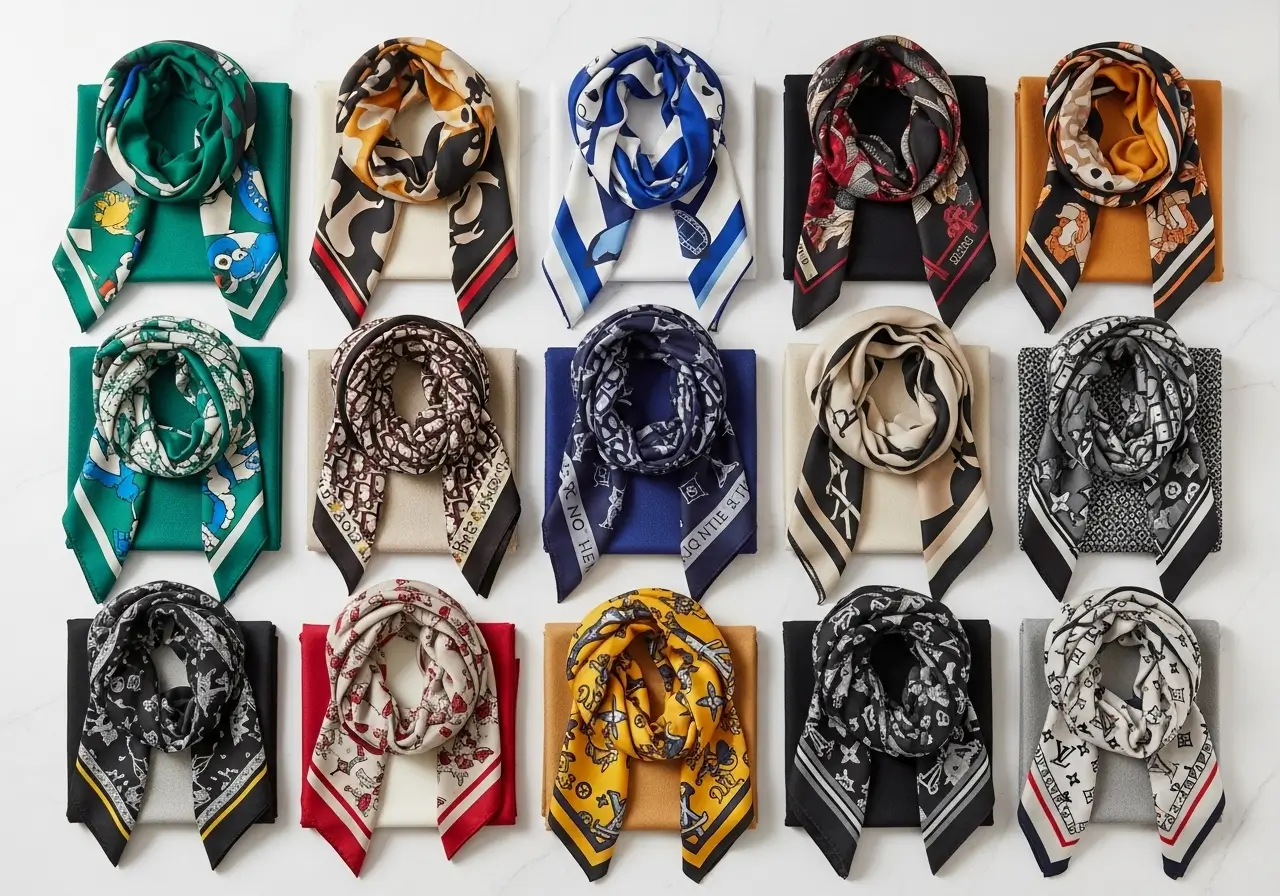
Silk scarves are lightweight, smooth, and capable of holding detailed prints. Silk twill has a subtle diagonal weave and enough structure for neck knots, headscarves, and decorative bows. Silk chiffon and georgette feel airier but are more transparent and can be easier to snag.
When comparing silk scarves, examine:
- The fiber-content and care labels
- The clarity and alignment of the print
- The consistency of the weave
- The quality of the hem or hand-rolled edge
- Any pulled threads, stains, pinholes, or color transfer
Silk can reduce friction against hair compared with rougher fabrics, which is one reason it is popular for headscarves. However, it is not entirely slip-proof. A smooth silk scarf may need an undercap, discreet pins designed for delicate fabric, or a less complicated knot to remain secure.

Amazon US Verified
ChomChom Roller High-Efficiency Lint Remover
Reusable pet hair and lint cleaning roller requiring no sticky tape or refills.
Wool and Merino Wool: Reliable Cold-Weather Options
Wool traps air within its fibers, making it a practical choice for cold weather. Merino wool is generally finer than many traditional wools and may feel more comfortable against the neck, although individual sensitivity varies.
Look for a smooth, even surface and enough density to block cold air without creating unnecessary bulk. A wool-cashmere blend can offer a useful balance of warmth, softness, durability, and price.
Cotton and Linen: Breathable Choices for Warm Weather
Cotton scarves absorb moisture and are usually easier to wash than silk or cashmere. Lightweight cotton voile, gauze, and muslin work well as summer neck scarves, head coverings, or beach layers.
Linen is breathable and develops a relaxed texture with wear. It wrinkles readily, but that is often part of its appeal. Cotton-linen blends can provide a softer drape while preserving some of linen’s airy character.
Alpaca, Bamboo-Derived Fabrics, and Synthetic Fibers
Alpaca can feel warm and smooth, but “baby alpaca” describes fiber fineness rather than necessarily indicating the age of the animal. It may suit people who dislike coarse sheep’s wool, although no animal fiber is guaranteed to be irritation-free.
Many scarves marketed as bamboo are made from rayon or viscose produced from bamboo cellulose. These fabrics can feel soft and fluid, but the label should be checked if production method or fiber origin matters to you.
Polyester and acrylic scarves are affordable, widely available, and often easy to maintain. They do not automatically indicate poor quality, but they may retain odors, generate static, or feel less breathable than natural fibers.
[hostinger-affiliate-table id=”188744″]
A Practical Scarf Buying Checklist
| Check | What to Look For | Warning Signs |
|---|---|---|
| Fiber label | Specific percentages and clear care instructions | Vague descriptions such as “cashmere feel” |
| Construction | Even weave, neat hems, secure seams | Loose threads, puckering, crooked edges |
| Comfort | A texture you can tolerate against your neck | Immediate itching, stiffness, or heavy shedding |
| Color | Shades that complement several existing outfits | A beautiful color that works with nothing you own |
| Dimensions | Enough fabric for your preferred knots | Too short for wrapping or too bulky for your frame |
| Care | Cleaning requirements that fit your routine | A delicate-care item you are unlikely to maintain |
| Seller | Clear descriptions, photographs, and return terms | Copied images, missing labels, or suspiciously low prices |
How to Choose the Right Scarf Size
Your preferred styling method matters more than a rigid rule based on height or face shape. Use these measurements as practical starting points:
- Small square, approximately 40–55 cm: Best for a neckerchief, handbag accent, ponytail bow, or wrist wrap.
- Medium square, approximately 65–75 cm: Suitable for larger neck knots and some hair styles.
- Large square, approximately 85–90 cm: Versatile enough for head coverings, shoulder drapes, belts, and many top styles.
- Long rectangular scarf: Ideal for looping, wrapping, and creating vertical lines over coats.
- Oversized wrap or stole: Useful as a shoulder layer, travel wrap, or evening cover.
If possible, test the scarf while wearing the type of coat, blazer, or blouse you plan to pair with it. A scarf that looks balanced over a T-shirt may feel too bulky beneath a fitted coat.
Are Designer Scarves Worth the Price?
A designer scarf can be worthwhile when you value the artwork, material, finishing, and history of the piece—and when you expect to wear it regularly. A recognizable logo is not enough to make a scarf a sound purchase, and resale value is never guaranteed.
Hermès Silk Scarves
Hermès is known for printed silk-twill squares with hand-rolled edges. A current Hermès “scarf 90” product listing describes the finished dimensions as approximately 88.5 by 88.5 cm, noting that measurements can vary because of the rolled hem. You can review the construction and official care recommendations on an official Hermès scarf page.
A Hermès scarf may appeal to collectors, but buy it first as something you enjoy wearing. Condition, design, age, colorway, packaging, provenance, and market demand all influence secondhand prices.
Burberry Cashmere Scarves
Burberry’s checked scarves are easy to coordinate with neutral coats, but check the exact fiber content because the brand offers different materials and blends. A classic pattern can be versatile, while a highly recognizable design may not suit someone who prefers subtle accessories.
Chanel, Gucci, and Louis Vuitton Scarves
These houses offer silk, wool, cashmere, and blended scarves in seasonal and signature designs. Compare the composition and dimensions instead of assuming that every scarf from a luxury label uses the same material or construction.
Buying Designer Scarves Preowned
Secondhand shopping can make discontinued designs and luxury materials more accessible, but authentication matters. Before buying:
- Request clear photographs of the entire scarf, hems, care tag, logo, print details, and any flaws.
- Compare the measurements and design with reliable brand references.
- Review the seller’s history and return policy.
- Use a platform or independent service that offers authentication for high-value purchases.
- Be cautious when a price is dramatically lower than comparable listings.
Packaging, receipts, and tags can support provenance, but none is conclusive by itself. They can also be copied.
How to Build a Scarf Collection You Will Actually Wear
Begin with your most frequently worn clothing rather than shopping for isolated statement pieces. A useful starter collection might include:
- A neutral cold-weather scarf that works with your main coat
- A small or medium silk square containing two or three wardrobe colors
- A lightweight cotton or linen scarf for warm weather
- An optional statement piece with a bolder print or texture
Before buying, imagine at least three outfits you can create with the scarf. If you cannot identify them, the piece may spend more time in storage than around your neck.

Amazon US Verified
Natural Red Cedar Wood Coat Hanger Set
Contoured cedar hangers preserving jacket shoulders while repelling moths naturally.
Easy Ways to Style a Scarf
The Classic Loop
Fold a long scarf in half and place it around your neck. Pass both loose ends through the folded loop, then loosen the scarf until it sits comfortably. This method is quick, secure, and practical in cold weather.
The Loose Drape
Place a rectangular scarf behind your neck and allow both ends to hang at the front. Keep them even for symmetry or adjust one end slightly longer for a more relaxed look. This creates a vertical line without adding much volume around the face.
The Single Wrap
Place the middle of a long scarf at the front of your neck, cross the ends behind it, and bring them forward. Adjust the loop so it is loose enough to breathe and move comfortably.
The Side Knot
Fold a small silk square diagonally, roll it into a narrow band, and wrap it once around your neck. Finish with a small knot placed slightly to one side. Pair it with an open collar, crew-neck knit, or simple T-shirt.
The Ascot-Inspired Knot
Fold a square scarf into a band and place it around your neck. Cross one end over the other, bring it upward through the neck loop, and allow the top end to fall over the knot. Tuck the ends into a shirt or leave them visible.
The Scarf Ring
Pass both ends of a folded scarf through a smooth scarf ring. Avoid rings with rough seams or sharp edges that could pull silk threads. A ring provides structure without requiring a tight knot.
The Shoulder Drape
Fold a large square into a triangle and place it over one or both shoulders. Secure it loosely at the front or with a brooch placed through an area where puncture marks will not be noticeable. This works well over dresses, blazers, and lightweight knitwear.
Seasonal Scarf Styling
Spring
Choose silk, lightweight wool, cotton, or blends that can handle changing temperatures. A small neckerchief adds color to a trench coat, while a large square can cover the shoulders on cooler evenings.
Summer
Use cotton voile, linen, or light silk. Tie a small scarf around a ponytail, wear it as a loose headband, or attach it to a handbag handle. Avoid wrapping several dense layers around your neck in hot or humid weather.
Autumn
Introduce texture through fine wool, brushed cashmere, checks, and muted prints. Long scarves can create a clean vertical line over blazers, leather jackets, and lightweight coats.
Winter
Choose a scarf wide enough to cover gaps at the coat collar. Cashmere, merino wool, wool blends, and dense knits offer warmth. Keep bulky knots outside fitted collars so the coat can close comfortably.
How to Wear a Scarf as a Top
A large square scarf can become a summer top, but coverage and security depend on its dimensions, fabric, your movement, and the tying method. Silk can loosen or slip, so test the style at home before wearing it outside. A fitted bandeau, camisole, fashion tape, or discreet underlayer can provide additional coverage.
Triangle Halter
- Fold a large square scarf diagonally into a triangle.
- Position the long folded edge across your chest with the point facing downward.
- Bring the upper corners behind your neck and tie a secure double knot.
- Bring the remaining corners around your torso and tie them securely at the back.
- Raise your arms, bend, and sit to check coverage before leaving home.
Bandeau Wrap
Fold the scarf into a wide rectangle, wrap it around your torso, and secure it at the back. This style needs enough overlap to remain stable. It is better suited to low-movement settings than active days.
One-Shoulder Drape
Place the scarf diagonally across your torso, secure two corners at one shoulder, and tie the lower corners around your waist. Wear a coordinated fitted top beneath it if you want easier movement and dependable coverage.
Hair and Headscarf Styles
Simple Headband
Fold a square scarf diagonally, then continue folding until it forms a band. Place the center at the nape of your neck, bring the ends over your head, and tie them once or twice. Move the knot to the top, side, or nape.
Ponytail Wrap
Secure your ponytail with an elastic first. Tie a small scarf around the elastic or thread it through once before forming a bow. The elastic should support the hairstyle; the scarf should remain decorative rather than carrying all the tension.
Triangle Headscarf
Fold a square into a triangle and position the folded edge near your hairline. Tie the corners under your hair at the nape for a casual bandana style, or beneath the chin for a vintage-inspired look.
Low-Bun Wrap
Create a low bun with pins or an elastic, then wrap a narrow scarf around its base. Knot it beneath the bun and allow short ends to hang naturally.
Remove earrings or hair accessories with rough settings before adjusting a silk scarf. They can catch and pull delicate threads.
Use Face Shape as an Option, Not a Rule
You do not need to identify your face shape before wearing a scarf. Color, scale, comfort, neckline, hairstyle, and personal preference usually matter more. If you want to experiment with proportion, try these visual effects:
- To create length: Let the scarf ends hang vertically or use a loose V-shaped drape.
- To add width: Try a soft cowl, bow, or fuller wrap around the neck.
- To soften angular lines: Choose flowing fabric and rounded knots.
- To keep the face area open: Position the knot lower on the chest or choose a smaller scarf.
Take a quick photograph of each variation. A photo often makes proportion and color easier to evaluate than a close-up mirror view.
[hostinger-affiliate-table id=”188744″]
How to Care for Cashmere and Wool Scarves
Always follow the sewn-in care label. Construction, dyes, decorative finishes, and trims can make two scarves with similar fiber content require different treatment.
Hand-Washing When the Label Allows It
- Fill a clean basin with cool or lukewarm water.
- Add a small amount of detergent intended for wool or delicate fibers.
- Submerge the scarf and gently press the water through it. Do not scrub, twist, or stretch it.
- Rinse with water at a similar temperature to reduce the risk of felting or distortion.
- Support the scarf with both hands when lifting it from the basin.
- Place it on a clean towel, roll the towel, and press gently to remove water.
- Reshape the scarf and dry it flat away from direct sun and strong heat.
Do not hang a saturated cashmere scarf, as the weight of the water can stretch it. The Woolmark care guide provides additional advice for washing, drying, stain treatment, and storage.
Managing Pilling
Use a cashmere comb or fabric shaver lightly on a flat surface. Do not pull pills by hand, because this can draw out surrounding fibers. Reduce friction by avoiding rough bag straps and abrasive coat linings.
How to Care for Silk Scarves
Some silk scarves can be hand-washed, while others should be professionally cleaned. Follow the manufacturer’s instructions, particularly for designer scarves, saturated prints, hand-rolled hems, or pieces with delicate embellishment. Hermès, for example, advises keeping its silk scarves away from water and chemicals, storing them flat and untied, and using professional dry cleaning when necessary.
If the label permits hand-washing:
- Test an inconspicuous area for colorfastness.
- Use cool water and a small amount of silk-safe detergent.
- Wash briefly without soaking, rubbing, or twisting.
- Rinse carefully and press between clean towels.
- Dry flat away from direct sunlight.
Avoid chlorine bleach, enzyme detergents, perfume, hairspray, and deodorant contact. Apply beauty products before putting on the scarf and allow them to dry first.
For stains on a valuable silk scarf, avoid improvised treatments involving vinegar, alcohol, baking soda, or aggressive spot removers. A professional cleaner experienced with silk may be the safer option.
How to Store Scarves Properly
- Clean scarves before long-term storage because food residue, body oils, and stains can attract pests.
- Store silk flat, untied, and away from direct light.
- Fold cashmere and heavy wool instead of hanging them for long periods.
- Use breathable, clean storage containers rather than sealing damp textiles in plastic.
- Keep scarves away from sharp jewelry, rough zippers, and unfinished wood.
- Refold valuable scarves periodically along different lines to reduce permanent creasing.
- Inspect wool and cashmere for moth activity, particularly before and after seasonal storage.
Cedar and lavender may provide a pleasant scent, but they should not replace cleaning, inspection, and a well-sealed storage system. Keep oils and scented products from touching the fabric directly because they can stain it.
Frequently Asked Questions
What is the best scarf for sensitive skin?
There is no universally irritation-free material. Fine merino, cashmere, silk, smooth cotton, and some alpaca scarves may feel comfortable, but sensitivity differs from person to person. Test the scarf against your neck for several minutes and check the label for blends, finishes, and dyes. If animal fibers consistently cause irritation, a smooth cotton or other familiar tolerated fabric may be a better choice.
How can you tell whether cashmere is genuine?
Touch and price cannot prove fiber content. Read the fiber label, buy from a reliable seller, and be cautious of vague claims. Microscopic laboratory analysis is the dependable way to distinguish cashmere from similar fine fibers. Home burn tests can damage the scarf, create fumes, and still fail to provide a reliable answer.
Can silk scarves be worn in winter?
Yes. Silk twill can add a comfortable layer beneath a coat or over a turtleneck, but a thin silk scarf will not replace an insulating wool or cashmere scarf in severe cold. Use silk for style and light coverage, or layer it with warmer outerwear.
How often should scarves be washed?
Wash based on soil, odor, contact with cosmetics, and the care label rather than following a rigid schedule. Airing a scarf after wear can reduce unnecessary cleaning. Neck scarves worn directly against skin usually need attention sooner than decorative pieces worn over a coat.
Does expensive cashmere always last longer?
No. Fiber quality, yarn construction, knit density, finishing, use, friction, and care all influence durability. A higher price may reflect material, craftsmanship, brand, or retail positioning, but it is not a guarantee against pilling or damage.
Are designer scarves a good financial investment?
Some rare designs retain or increase their resale value, but most scarves should not be treated as predictable financial assets. Buy a designer scarf because you appreciate its material, design, and wearability. Any future resale value should be considered a possible benefit rather than a guaranteed return.
How do you keep a silk scarf from slipping?
Choose a compact knot, use a smooth scarf ring, or wear the scarf over a fabric with a little texture. For head styles, anchor your hair first and consider an undercap or snag-free pins. Avoid safety pins and rough clips that can puncture or pull the silk.
A Better Way to Choose Your Next Scarf
Start with one clear purpose: winter warmth, everyday color, hair protection, travel, formal styling, or collecting wearable art. Then compare fiber content, size, construction, care requirements, and compatibility with your existing wardrobe.
A well-chosen scarf should not require constant adjustment or remain untouched because it feels too precious to wear. Whether it is a simple cotton neckerchief, a soft cashmere wrap, a handmade crochet piece, or a carefully selected designer silk square, its real value comes from comfort, versatility, and repeated use.
This post contains affiliate links.
As an Amazon Associate, azuloz.com earns from qualifying purchases.