

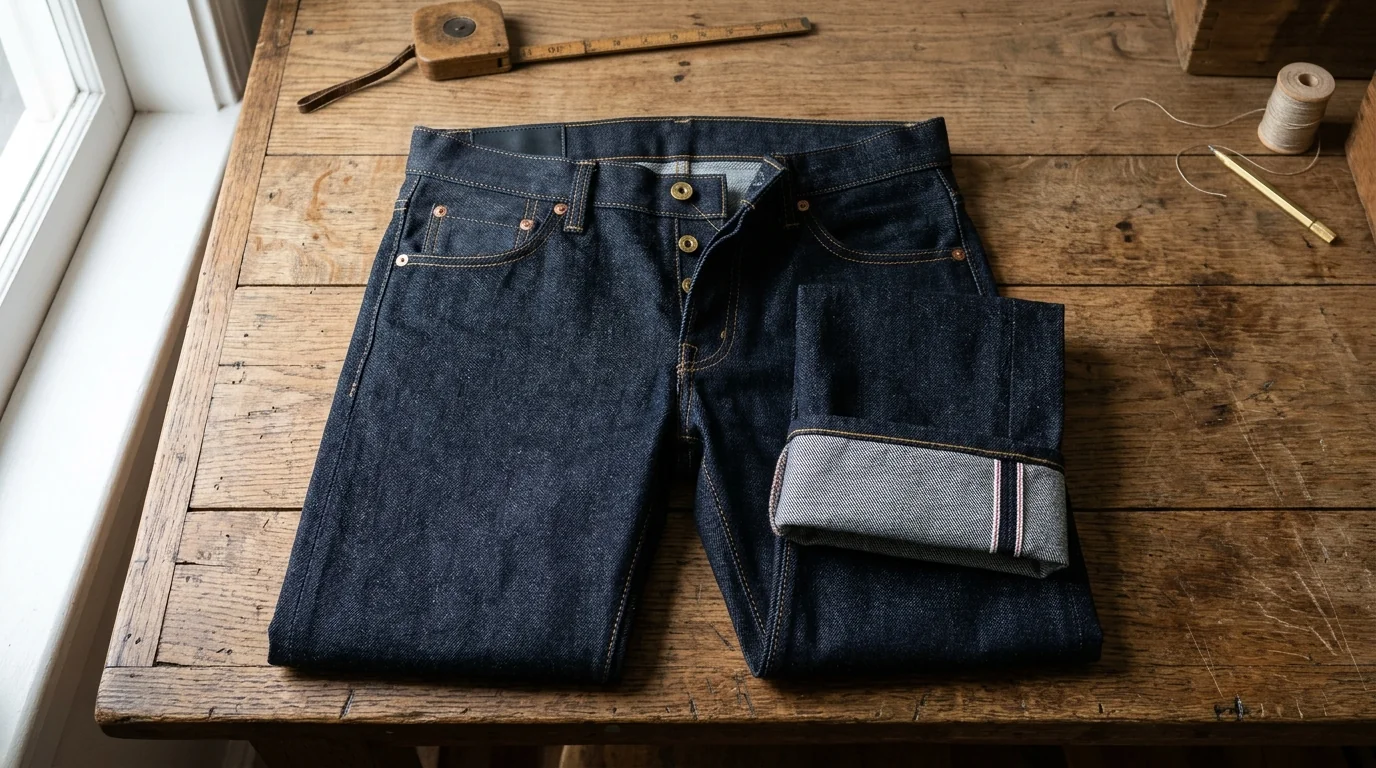
You stand in front of the mirror admiring an extraordinary new addition to your wardrobe. You have just invested in your first pair of authentic, heavy-weight raw selvage denim jeans—perhaps woven on vintage Japanese Toyoda shuttle looms from 14-ounce ring-spun cotton. The fabric feels unlike any pair of commercial mall jeans you have ever owned: it is stiff, substantial, slightly abrasive, and holds its architectural silhouette like a suit of modern armor.
The color is a mesmerizing, abyssal midnight-indigo, so dark it borders on black. You wear them proudly for three or four days. Then, Sunday laundry morning arrives. Acting on decades of unquestioned domestic habit, you unbutton the fly, toss the jeans into your top-load washing machine, pour a capful of standard blue laundry detergent into the drum, and hit “Normal Wash” with a 1,000 RPM spin cycle.
Forty-five minutes later, you reach into the washer drum and pull out an unmitigated disaster. The deep, moody midnight-indigo has faded into a flat, chalky, generic royal blue. The crisp, sculptural drape has collapsed into a limp, wrinkled mess. White, spider-web stress streaks mar the thighs, and the outer outseam has twisted violently three inches forward across your kneecap. In less than an hour, you have erased the craftsmanship of a master weaver and destroyed a three-hundred-dollar investment.
This laundry tragedy occurs thousands of times every week because consumers treat raw selvage denim like ordinary cotton clothing. But textile engineers, dye chemists, and denim purists know a secret: raw denim is a living, kinetic material governed by the unique molecular physics of indigo ring-dyeing and twill torque. Understanding how indigo oxidizes and why water agitation destroys contrast reveals the sacred art of breaking in raw denim to achieve authentic, one-of-a-kind personalized fades.
The Molecular Secret: The “White Core” of Rope Dyeing
To understand why a washing machine ruins raw denim, you have to look into the microscopic chemistry of how denim yarn is manufactured. Standard cotton clothing—like a navy blue T-shirt or black chinos—is typically piece-dyed or reactive-dyed. In reactive dyeing, chemical dye molecules penetrate completely through the cotton fiber, forming permanent covalent bonds with every cellulose molecule from the outer surface to the innermost core.
Raw denim, however, is manufactured using an ancient, highly specialized method known as rope dyeing. Long bundles of un-spun cotton yarns (warp yarns) are gathered into continuous “ropes” and fed through a series of automated dipping vats filled with synthetic or natural indigo dye.
Indigo is a chemically bizarre pigment: in its natural oxidized state, indigo is completely insoluble in water. To make it adhere to cotton, textile mills must chemically reduce the indigo using sodium hydrosulfite in an alkaline bath, turning it into a pale yellow-green compound known as “leuco-indigo.”
Here is where the magic happens:
- The cotton rope plunges into the yellow-green leuco-indigo bath for just 15 to 20 seconds.
- The rope is pulled upward into the open air of the factory floor, traveling high overhead on specialized rollers (known as the “skying” phase).
- The moment the wet yellow-green yarn encounters atmospheric oxygen, a rapid oxidation reaction occurs: the leuco-indigo oxidizes back into insoluble, dark blue crystalline indigo pigment.
- Because the immersion time is so brief and the oxidation is instantaneous, the dye molecules do not have time to penetrate the interior of the cotton fiber. The indigo forms an ultra-thin, crystalline crust on the outer circumference of the yarn.
- The rope is dipped and skied multiple times (typically 8 to 16 dips) to build a thick crust of blue. But deep inside the center of every single warp yarn, the core remains pure, un-dyed, brilliant white cotton.
This structural phenomenon—the “white core”—is the holy grail of raw denim. Every breathtaking fade, honeycombed knee, and whiskered lap you admire on vintage jeans is created when the outer crystalline indigo crust is physically chipped away to reveal the brilliant white cotton core hidden beneath.
The Physics of the Fade: Mechanical Friction vs. Detergent Stripping
How are authentic, high-contrast fades created in the real world? Through mechanical abrasion and kinetic movement.
When you wear a stiff pair of raw denim jeans during your everyday life, your body heat, sweat, and movement cause the rigid, starched cotton to crease in sharp, repeatable accordion folds:
- Whiskers: The horizontal creases radiating outward across the upper lap and groin as you sit.
- Honeycombs: The sharp, diamond-shaped geometric folds formed behind the knees from walking and climbing stairs.
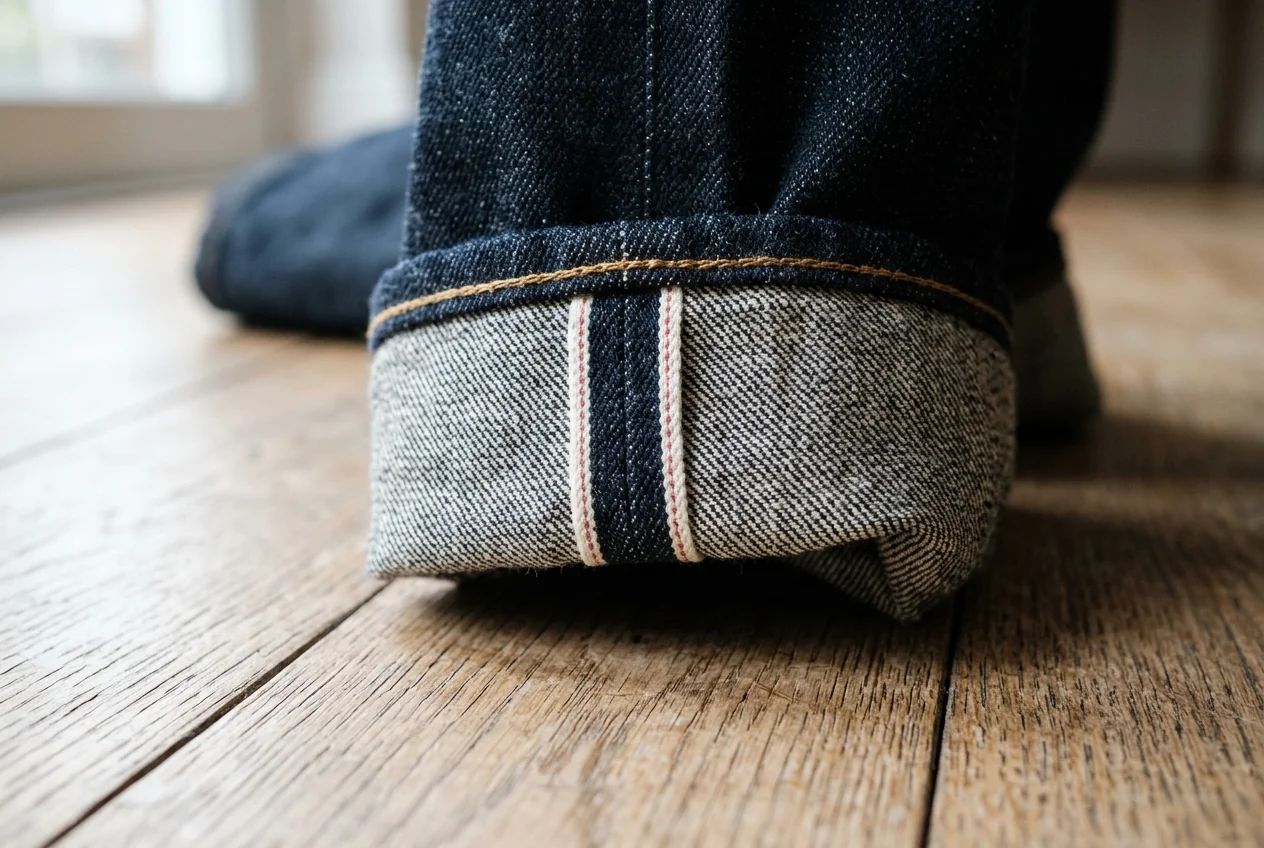
- Railroad Tracks: The raised, double-stitched ridge of the selvage outseam running down the exterior of each leg.
As you walk, sit in wooden chairs, drive your car, and move through the world, the raised crests of these sharp creases experience continuous, microscopic mechanical friction against other fabric, furniture, and your skin. Over months of wear, this friction physically abrades the outer indigo crystals off the highest ridges, exposing the pristine white core beneath. Meanwhile, the recessed valleys of the creases remain protected from friction, retaining their deep, midnight-indigo darkness.
Now, consider what happens when you throw raw denim into a washing machine with warm water and laundry detergent:
- Standard commercial laundry detergents contain alkaline builders and surfactants specifically engineered to break surface tension and dissolve non-polar surface coatings.
- The detergent and water attack the outer indigo crystals across the entire garment uniformly.
- Instead of removing indigo only from high-friction ridges, the wash cycle strips indigo equally from the valleys, the pockets, the calves, and the thighs.
- The mechanical agitation of the spin cycle causes the rigid, wet denim to crush against itself in random, chaotic folds, creating permanent, ugly white vertical marbled streaks known in the denim community as “wash lines.”
In less than an hour, the washing machine obliterates the contrast between the crests and valleys, reducing a prized pair of artisanal selvage denim to a flat, boring, washed-out blue.
The Mechanical Tragedy of “Leg Twist”: Twill Torque
The second disaster caused by machine-washing raw denim is structural: the infamous phenomenon known as leg twist. When you purchase raw, un-sanforized (loomstate) denim, the side seams run straight down the outer edge of your legs. But after a single machine wash, you pull the jeans on and discover that the outer seam on your right leg has spiraled around to sit directly on top of your kneecap.
Leg twist is not a tailoring defect; it is a fundamental law of diagonal fabric mechanics. The vast majority of classic denim is woven using a 3×1 Right-Hand Twill (RHT), also known as a Z-twist. In a right-hand twill, the diagonal diagonal lines (wales) run upward and to the right.
When raw, untreated cotton fibers are exposed to hot water and aggressive spin agitation, the fibers swell in diameter and shrink in length. Because the weave is oriented diagonally, the shrinkage does not occur in a straight vertical line. The fabric experiences a powerful rotational torque along the diagonal twill angle:
- Right-hand twill naturally twists clockwise (to the right). The outer outseam of the right leg is pulled forcefully forward toward the shin.
- Left-hand twill (S-twist) twists counter-clockwise (to the left).
While vintage purists appreciate a subtle degree of leg twist as an authentic badge of shuttle-loom construction, aggressive machine washing and high-heat tumble drying violently exaggerates this torque, permanently warping the garment’s geometric fit.
The Purist’s Care Protocol: The 6-Month Wear Horizon
To cultivate jaw-dropping, high-contrast, personalized fades that fit your body like a bespoke second skin, denim masters adhere to a strict three-phase care discipline:
Phase 1: The Initial 6-Month Dry Horizon
For the first six months of owning a pair of raw selvage jeans, they should never, under any circumstances, be submerged in water. This six-month window allows your body heat, natural skin oils, and daily movement to break down the factory starch, molding the rigid fabric to your exact hip, knee, and thigh geometry. The sharp accordion creases of your whiskers and honeycombs must become permanent physical memory before water ever touches the fabric.
Phase 2: Routine Hygiene Without Washing
If you don’t wash your jeans for six months, won’t they become dirty and odorous? Not if you understand textile hygiene:
- The boars-hair brushing: After a day of wear, hang your jeans and brush them downward with a natural boar-bristle clothes brush. This removes road dust and dry grit that would otherwise settle between yarns and cut the cotton fibers like glass.
- The Fresh-Air Hang: Denim rarely smells from dirt; it smells from anaerobic bacteria feeding on skin sweat. After wearing, turn your jeans inside out and hang them in a well-ventilated room or on an outdoor balcony in the shade for 12 hours. Ambient airflow naturally disperses odors and allows the cotton fibers to breathe.
- Spot-Clean Spills Immediately: If you drop mustard or coffee on your jeans, never scrub the spot with a wet sponge (which creates an unsightly white faded patch). Instead, dab the spot with a clean, damp white cloth dipped in cold water and a drop of white vinegar, pressing gently to lift the spill without abrading the surface indigo.
Phase 3: The 6-Month Cold Tub Soak (The Restoration Ritual)
When six months of daily wear have passed and the high-friction ridges have begun showing brilliant white cotton contrast, it is time for the garment’s maiden wash—which must be performed by hand in a bathtub:
- Fill the Tub with Cold Water: Fill a clean bathtub with four to six inches of cold or lukewarm water (never hot). Add one capful of a specialized, zero-detergent dark-denim wash or gentle pH-neutral wool wash, along with one cup of plain white distilled vinegar. The acetic acid in vinegar acts as a natural mordant, chemically setting the remaining indigo into the fibers.
- Submerge Inside-Out and Flat: Turn the jeans inside-out. Lay them completely flat in the tub. Weight them down with a couple of clean shampoo bottles so they remain fully submerged. Do not scrub, do not rub, and do not agitate. Let them soak undisturbed for 45 minutes. The water will turn an ominous yellow-brown; that is not indigo, but accumulated body sweat, road dust, and oxidized factory starch dissolving away.
- Rinse and Gently Press: Drain the tub. Run cold running water over the flat jeans to rinse away soap residue. Gently press the wet denim against the porcelain bottom of the tub to expel bulk water. Never twist, wring, or fold wet raw denim, as torsional shear causes fiber cracking.
- The Upside-Down Hang: Take the soaking-wet jeans to a shaded outdoor line or shower rod. Hang them completely upside-down by the leg hems using wooden clothespins. While soaking wet, run your hands firmly down the outseams and inseams, pulling the fabric taut to counteract twill torque and lock the leg seams straight. Allow them to air-dry naturally over 24 to 48 hours away from direct sunlight.
When your dry raw selvage jeans emerge from their maiden soak, you will witness the sublime reward of your patience: the fabric will have softened into an exquisite, pliable drape, the seams will remain razor-straight, and every crease across your lap and behind your knees will glow with the unmistakable, high-contrast signature of your own life’s movement—an authentic heirloom forged through patience, craftsmanship, and textile physics.
📥 Free Download: Raw Selvage Denim Preservation Blueprint
The physics of indigo surface adhesion, right-hand twill torque, and the 6-month cold tub soak protocol.