

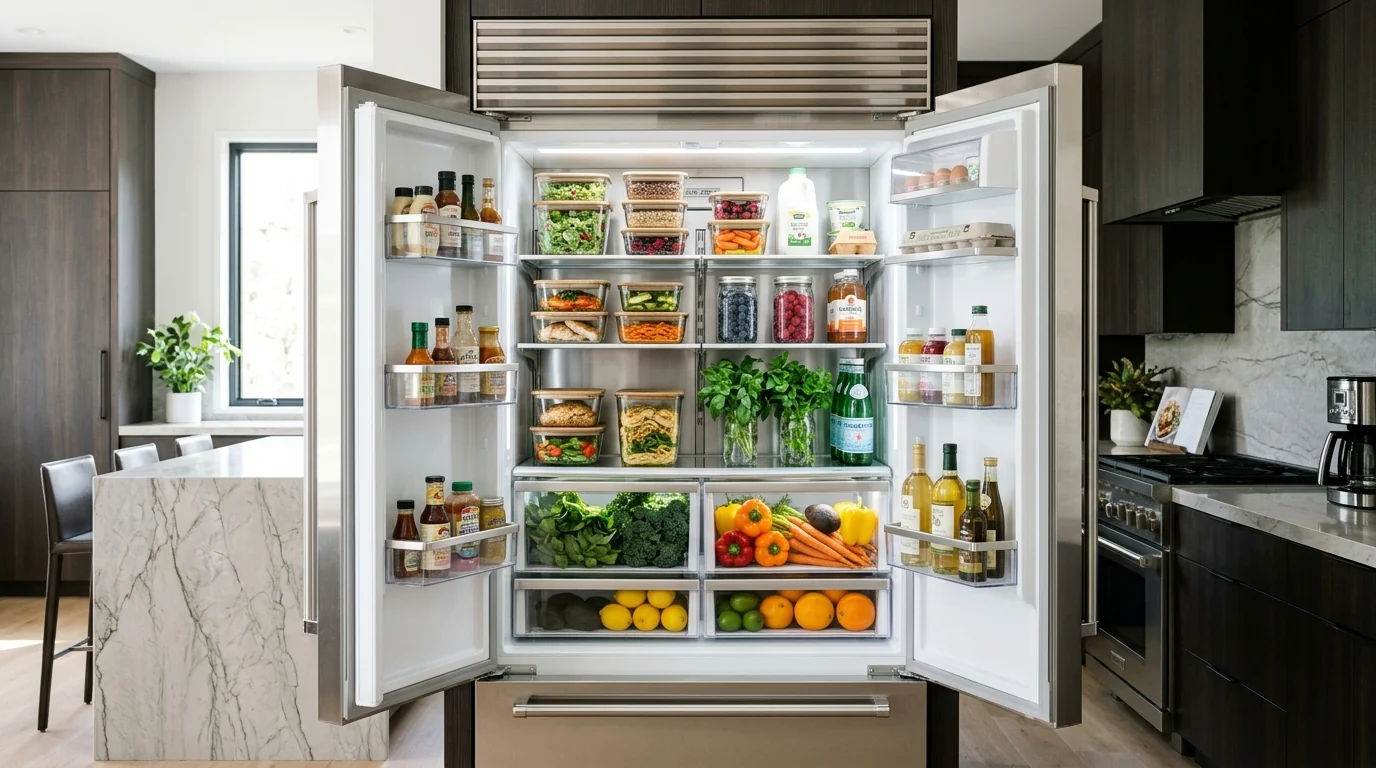
It is Sunday afternoon, and you have just returned from the grocery store or farmers’ market with thirty dollars’ worth of fresh, vibrant produce: crisp heads of romaine lettuce, deep green Tuscan kale, firm organic cucumbers, tender asparagus spears, and a bag of crisp Honeycrisp apples. You open your refrigerator, slide open the large bottom crisper drawer, carefully load all your fresh greens and apples together into the bin, and close the drawer with a satisfied sigh.
Four days later, you pull open that same drawer to assemble a Wednesday night salad, and you are greeted by a culinary wasteland. The vibrant green romaine has collapsed into yellow, slimy, liquid decay. The crisp cucumbers are covered in soft, translucent indentations weeping watery rot. The broccoli florets have turned a repulsive, sulfurous pale brown. Meanwhile, the apples sit beside them, looking cheerful, plump, and completely unscathed.
You assume your refrigerator is failing, adjust the thermostat down two degrees, or curse the grocery store for selling sub-par greens. In reality, your refrigerator is operating with precision. You have simply committed the most ubiquitous food preservation mistake in modern domestic life: you stored climacteric ethylene-producing fruit in a closed chamber alongside ethylene-sensitive vegetables.
Those crisper drawers at the bottom of your refrigerator are not generic bins for produce dumping; they are calibrated thermodynamic micro-climates designed to control humidity and gas diffusion. Understanding the plant biology of the gaseous ripening phytohormone ethylene (\(\text{C}_2\text{H}_4\)) is the secret to extending the lifespan of your fresh produce from four days to over three weeks.
The Botany of Ethylene: The Gaseous Ripening Phytohormone
To master produce preservation, you must recognize that fresh fruits and vegetables are not dead food; they are living, respiring plant organs that continue metabolic cellular processes long after harvest. They breathe in oxygen, metabolize stored sugars and acids, and expel carbon dioxide, water vapor, and metabolic gases.
Among these gases, the most chemically potent is ethylene (\(\text{C}_2\text{H}_4\))—a natural plant hormone produced via the methionine-to-ACC (1-aminocyclopropane-1-carboxylic acid) biochemical pathway. In nature, ethylene acts as the master signaling trigger for plant senescence, tissue maturation, fruit softening, sugar accumulation, and seed dispersal.
In post-harvest botany, plant species fall into two radically different metabolic categories:
- Climacteric Produce (The Heavy Ethylene Emitters): Fruits that continue to ripen after harvest, characterized by a massive respiratory spike accompanied by an exponential surge in ethylene gas production. Exemplary emitters include apples, pears, cantaloupes, avocados, ripening bananas, peaches, and tomatoes. A single ripe apple in a confined space can emit several thousand nanoliters of ethylene gas per hour.
- Non-Climacteric Produce (The Victims): Fruits and vegetables that do not ripen after harvest; their quality only degrades from the moment they are plucked from the soil. Leafy greens, herbs, and root vegetables do not produce significant ethylene—but they possess hyper-sensitive cellular receptors that react violently when exposed to it.
“Ethylene is not a smell; it is an invisible, odorless gaseous plant hormone. Storing apples next to leafy greens is like setting off a botanical tear-gas canister inside a sealed closet.”
The Chlorophyll Breakdown Disaster: What Ethylene Does to Greens
When an ethylene-sensitive vegetable—such as broccoli, spinach, romaine lettuce, parsley, or asparagus—is exposed to trace amounts of ambient ethylene gas (as little as 0.1 parts per million in the air), the gas binds to copper-containing protein receptors on the plant cell membranes.
This binding initiates an irreversible genetic cascade of destruction:
1. Chlorophyllase Activation (The Yellow Death)
The plant cells immediately synthesize chlorophyllase—an enzyme that systematically destroys green chlorophyll pigments, breaking them down into dull, yellow-brown pheophytin. This is why broccoli heads and kale leaves turn yellowish-brown in forty-eight hours when stored near apples.
2. Pectin Dissolution (Tissue Maceration)
Ethylene triggers polygalacturonase and pectin methylesterase enzymes, which dissolve the middle lamella—the pectic glue holding plant cells together. The cell walls lose all turgor pressure and rupture, releasing intracellular fluids. The crisp vegetable collapses into a limp, wet, translucent slime, creating an ideal feast for rot bacteria like Pseudomonas.
3. Bitter Lignin Sclerification
In root vegetables like carrots, parsnips, and celery, ethylene exposure stimulates phenylalanine ammonia-lyase (PAL), which synthesizes bitter isocoumarins and woody lignin fibers. The carrots don’t just rot; they become woody, stringy, and develop an intensely bitter, unpleasant chemical taste.
The Crisper Drawer Mechanics: High-Humidity vs. Low-Humidity
Most modern refrigerators feature two crisper drawers equipped with small sliding mechanical levers. Yet over 80% of homeowners have never touched those levers or have no idea what they do.
Those small sliders are ventilation baffles that dictate whether the drawer acts as a moisture trap or a gas exhaust chimney:
Drawer 1: The High-Humidity Zone (Vents Closed)
When you slide the lever to “High Humidity” (or the vegetable icon), you completely close the ventilation slots, sealing the drawer off from the rest of the refrigerator.
As green vegetables respire, they release water vapor. In a closed drawer, this water vapor is trapped, elevating the relative humidity inside the bin to 90% to 95%. Because the air inside the drawer is nearly saturated with moisture, the water inside the leafy greens cannot evaporate outward into the air. Transpiration ceases. Delicate greens—spinach, cilantro, lettuces, herbs, and celery—stay crisp, turgid, and hydrated for up to three weeks.
Strict Rule: Store exclusively non-climacteric, ethylene-sensitive vegetables in this drawer. Never allow an apple, pear, or avocado to cross the threshold of the closed high-humidity drawer.
Drawer 2: The Low-Humidity Zone (Vents Open)
When you slide the lever to “Low Humidity” (or the fruit icon), you open the ventilation slots, connecting the drawer to the main refrigerator airflow.
Ethylene gas is slightly lighter than ambient air. In an open-vent drawer, natural convective currents draw cold, dry air into the drawer, venting the rising ethylene gas out of the bin and into the main refrigerator compartment where the charcoal air filtration system can neutralize it. This exhaust keeps the ethylene concentration around the fruit low, preventing the fruit from over-ripening and rotting prematurely.
Strict Rule: Store all climacteric ethylene-emitting fruits—apples, pears, stone fruits, citrus, and melons—in this vented drawer.
📥 Free Download: Refrigerator Crisper Humidity & Ethylene Guide
Post-harvest botany: climacteric fruit ripening hormones, chlorophyllase enzymatic degradation, and dual-drawer humidity vent calibration.
The Master Refrigerator Produce Protocol: Step-by-Step Optimization
Follow this clinical storage framework to eliminate produce waste and save hundreds of dollars annually:
1. The 100% Produce Segregation Rule
Establish a physical wall of separation in your kitchen:
- Drawer A (High Humidity / Closed Vent): Leafy greens, fresh herbs, broccoli, cauliflower, Brussels sprouts, carrots, celery, cucumbers, peppers, green beans, and zucchini.
- Drawer B (Low Humidity / Open Vent): Apples, pears, stone fruits (peaches, plums), avocados, cantaloupe, and honeydew.
- Countertop Storage (Never in Refrigerator): Uncut tomatoes, whole onions, whole garlic, winter squash, and whole potatoes (cold temperatures turn potato starch to sugar and destroy tomato flavor volatiles).
2. The Paper Towel Moisture Cushion
While leafy greens love high humidity (95%), they despise sitting in standing puddles of liquid water. Line the bottom of your High-Humidity vegetable drawer with two layers of clean, unbleached paper towels or a washable cotton bar mat. This cushion absorbs excess liquid condensation while maintaining ambient moisture.
3. The Pre-Wash Prohibition
Never wash produce before placing it into the crisper drawer. Washing produce introduces surface water droplets that break down the natural protective waxes on leaves and create fungal incubation chambers for gray mold (Botrytis cinerea). Wash your greens in a salad spinner immediately before culinary prep, never before storage.
Breathe Life into Your Kitchen Harvest
Healthy, vibrant nutrition begins with honoring the living biology of the plants that sustain us. A head of butterhead lettuce or a bunch of heirloom carrots is not passive cargo; it is a delicate biological marvel awaiting your table.
By understanding the invisible power of ethylene gas and calibrating your refrigerator crisper vents with scientific intention, you end the heartbreak of slimy, spoiled produce. You enjoy crisp, sweet, nutrient-dense greens for weeks on end—nourishing your family with the freshest flavors nature has to offer.