
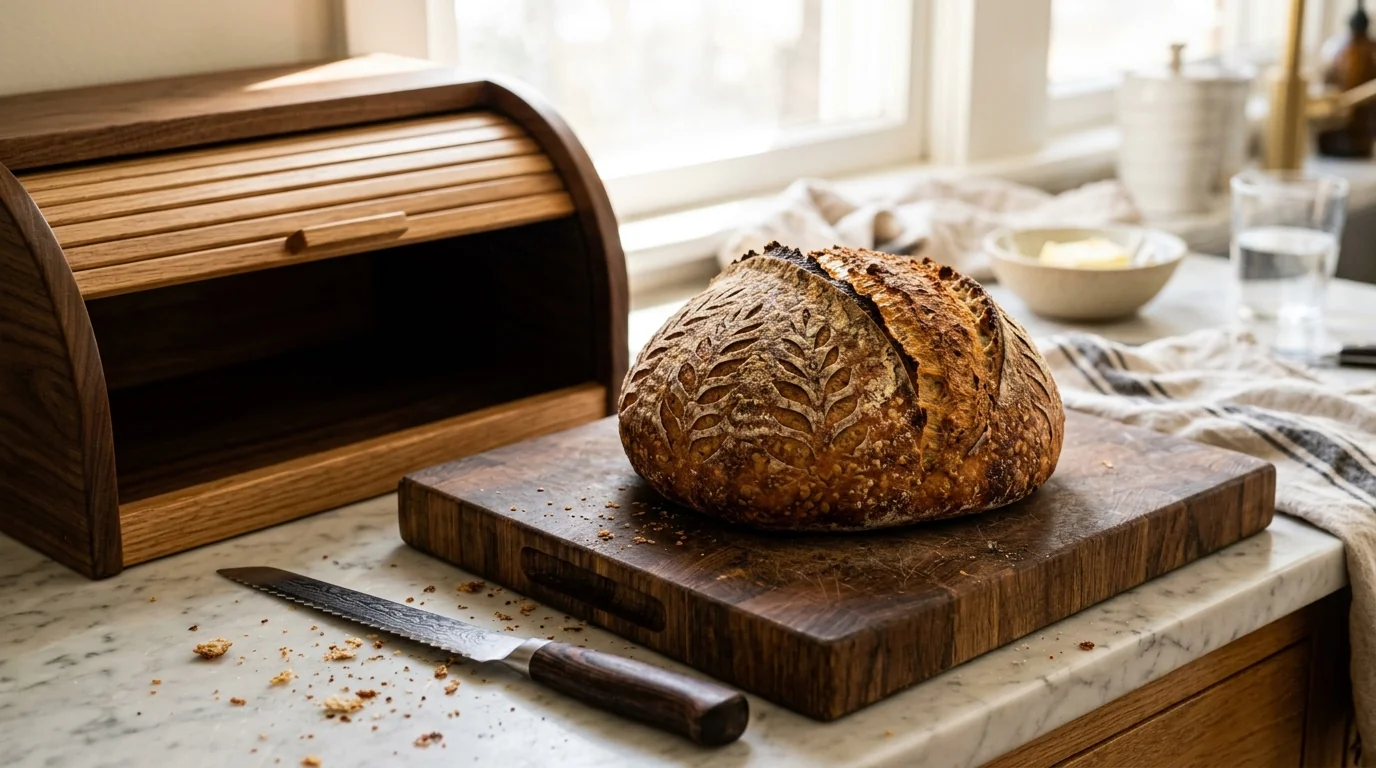
You embarked on your sourdough baking journey with romantic visions of golden, crackling, artisan boules emerging from your Dutch oven, filling your home with the intoxicating aroma of toasted grains and caramelized crusts. But six weeks in, the reality of maintaining a live sourdough culture feels less like an artisan hobby and more like an exhausting, wasteful domestic chore.
Every single morning, your alarm rings, and you drag a massive glass jar out onto the counter. You diligently measure out 100 grams of mature starter, dump the remaining 200 grams directly into the trash or compost bin, and add another cup of expensive organic unbleached flour and filtered water. As you watch pounds of premium flour vanish into the garbage can week after week, a wave of guilt washes over you: “Why am I throwing away half my food every day just to keep a jar of bubbles alive?”
You search for solutions and find endless recipes for “sourdough discard crackers,” “discard pancakes,” and “discard muffins.” Soon, your refrigerator is crammed with three separate mason jars of sour, acidic discard paste that you feel too guilty to throw away and too exhausted to bake.
Here is the liberating scientific truth that traditional cookbook dogmas refuse to tell you: daily starter discard is 100% unnecessary. It is an artifact of commercial bakery routines that has zero place in a residential kitchen. By understanding the microbial kinetics of wild yeast dormancy, cold refrigeration retardation, and the micro-inoculation scraping method, you can maintain a vibrant, indestructible sourdough starter for years with zero daily feedings, zero discard, and zero wasted flour.
The Microbiology of the Mother: An Indestructible Ecosystem
To understand why daily feeding is a myth, you must examine the microscopic symbiosis living inside a mature sourdough starter culture.
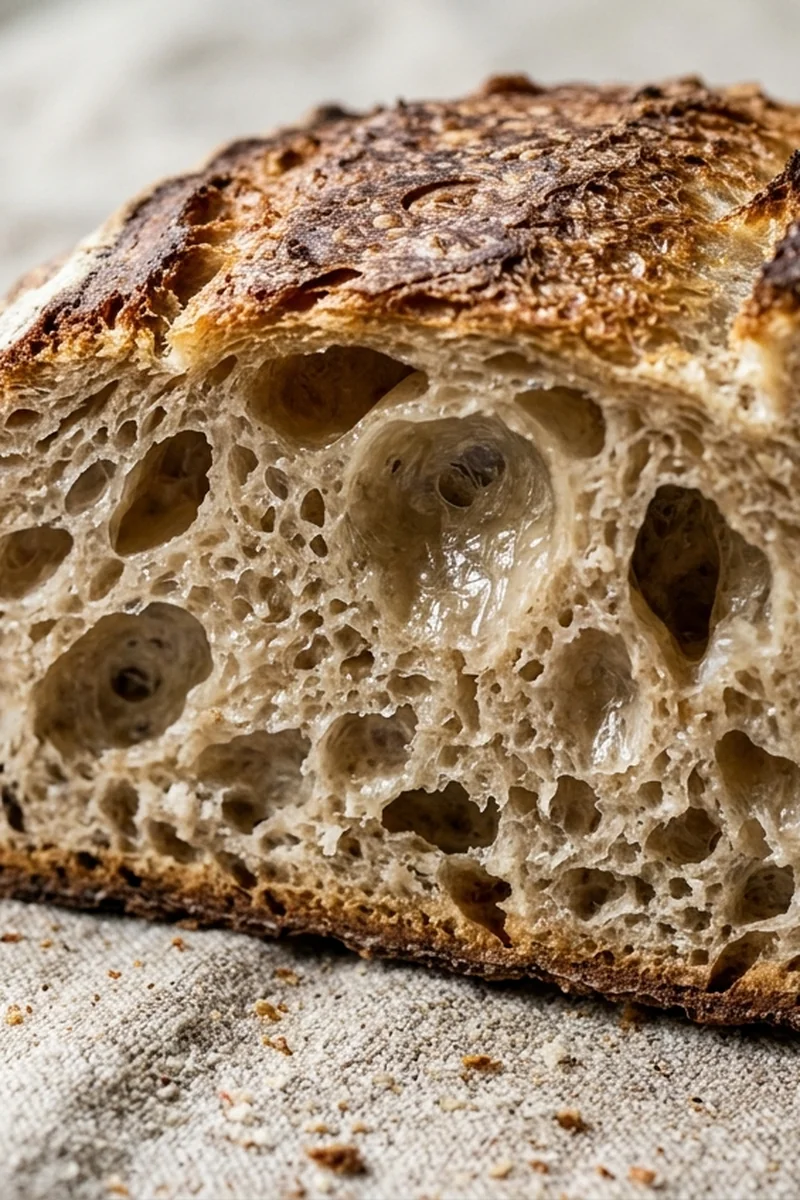
A healthy starter is not a fragile pet on the verge of starvation; it is one of the most resilient, competitive microbial ecosystems on planet Earth. It consists of billions of wild yeasts (predominantly Candida humilis, Kazachstania exigua, and wild strains of Saccharomyces cerevisiae) living in perfect mutualism with lactic acid bacteria (primarily Lactobacillus sanfranciscensis).
This symbiotic partnership operates on exquisite biochemical efficiency:
- Lactic and Acetic Acid Defense: The lactobacilli consume maltose sugars extracted from the flour, fermenting them into lactic and acetic acid. This drops the pH of the starter to an acidic 3.8 to 4.2. This high-acid environment creates a hostile biological fortress that immediately kills off mold spores, harmful pathogens, and putrefying bacteria. Your starter is naturally self-preserving.
- Non-Competing Sugar Appetites: The wild yeasts cannot metabolize maltose; they feed exclusively on simple glucose and fructose sugars released by the flour’s amylase enzymes. The yeasts and bacteria never compete for the same food supply.
- The Dormancy Adaptation: In nature, wild yeasts live on the hulls of wheat grains in outdoor fields where food and moisture are highly seasonal. They are evolutionarily programmed to endure months of cold, nutrient-depleted dormancy without dying. They do not starve overnight; they simply shut down their metabolic machinery and wait.
“Your sourdough starter is not a high-maintenance houseplant that wilts if ignored for twenty-four hours. It is an ancient, extremotolerant bacterial colony engineered by nature to survive winters inside cold grain silos.”
The Cold Retardation Shift: Slowing Metabolism by 95%
Why do traditional sourdough guides demand daily feedings? Because they assume the starter is kept on a warm kitchen counter at 72°F to 78°F (22°C to 26°C).
At room temperature, microbial metabolic rates are extremely high. The yeasts and bacteria consume available flour starches in 6 to 8 hours, produce a peak rise of carbon dioxide bubbles, and then collapse. If left at room temperature for days without food, the bacteria continue to produce acid, eventually creating an environment so intensely acidic (pH < 3.4) that even the yeasts begin to die off.
However, when you place that starter into a domestic refrigerator at 36°F to 39°F (2°C to 4°C), the Arrhenius equation governing biochemical kinetics takes over:
- For every 10°C (18°F) drop in temperature, biological enzyme activity slows by a factor of two to three.
- At 38°F, wild yeast cellular respiration slows by more than 95%. Cell division halts almost entirely. The yeasts enter a deep state of hypothermic stasis.
- The bacteria continue to produce subtle organic acids at an ultra-slow, glacial crawl, deepening complex flavor precursors without exhausting the food supply.
Inside the cold refrigerator, a mature starter can sit completely untouched for four to eight weeks without losing a fraction of its leavening power.

Amazon US Verified
Wide-Mouth Glass Sourdough Jar & Maintenance Kit
Heavy-gauge borosilicate glass jar with date-marked elastic feeding band, breathable cloth cover, airtight aluminum lid, and long silicone scraping spatula designed for zero-waste levain maintenance.
The Scraping Method: How to Never Discard Again
Pioneered by progressive bread artisans, the Scraping Method (Micro-Inoculation) permanently eliminates sourdough discard. Here is the entire system in four simple steps:
Step 1: The Tiny Mother Jar (15 Grams Only)
Stop keeping 300 grams of starter. Empty your starter jar until you have only a tiny scraping left—approximately 10 to 15 grams (about 1 tablespoon) clinging to the bottom and inner glass walls of the jar. Screw the lid on tightly and place this jar directly into the refrigerator. Do not add flour. Do not add water. Just cold scrapings.
Step 2: The Bake Eve Build (Zero Waste)
When you want to bake bread (whether that is next Saturday or three weeks from now), take the cold jar out of the fridge the night before. Calculate the exact quantity of levain your recipe requires (for example, 100 grams for two loaves). Add 50 grams of water and 50 grams of flour directly into the scraped jar. Stir thoroughly, loosely cap the lid, and leave it on your kitchen counter overnight (8 to 10 hours at room temperature).
Step 3: The Morning Miracle
By morning, the dormant yeast cells have awakened and multiplied exponentially. The jar will be filled to the brim with sweet, domed, active, bubbly levain. Pour out the 100 grams of levain directly into your bread dough mixer.
Step 4: Back to the Fridge (No Feeding Needed)
Look at your jar: what is left? The exact same 10 to 15 grams of residual scrapings clinging to the glass walls. Do not wash the jar. Do not feed it. Screw the lid on and put it straight back into the refrigerator. You have baked an artisan loaf of bread, refreshed your culture, and wasted exactly zero grams of flour.
📥 Free Download: Sourdough Starter Dormancy & Zero-Discard Field Guide
Microbial ecology of wild yeasts, scraping method workflow charts, vacation revival protocols, and hooch remediation checklists.
What About the Gray Liquid? Understanding Hooch
If you leave your scraped jar in the refrigerator for more than four weeks, you may notice a thin layer of dark, watery gray or amber liquid pooling on the surface. This liquid is called hooch.
Hooch is not mold, and it is not a sign of spoilage. Hooch is simply pure alcohol (ethanol) produced by wild yeasts as a natural metabolic byproduct of extended anaerobic fermentation. To revive a starter covered in hooch, simply pour off the dark liquid, scrape 5 grams of starter from the bottom, feed it 30 grams of water and 30 grams of flour at room temperature, and watch it bounce back to full leavening vigor within 12 hours.
By shifting to the Scraping Method, sourdough baking transforms from an oppressive chore into an effortless, joyful, sustainable art. Your starter becomes an indestructible culinary ally that waits patiently for you, fitting seamlessly into your modern lifestyle.
As an Amazon Associate, azuloz.com earns from qualifying purchases.