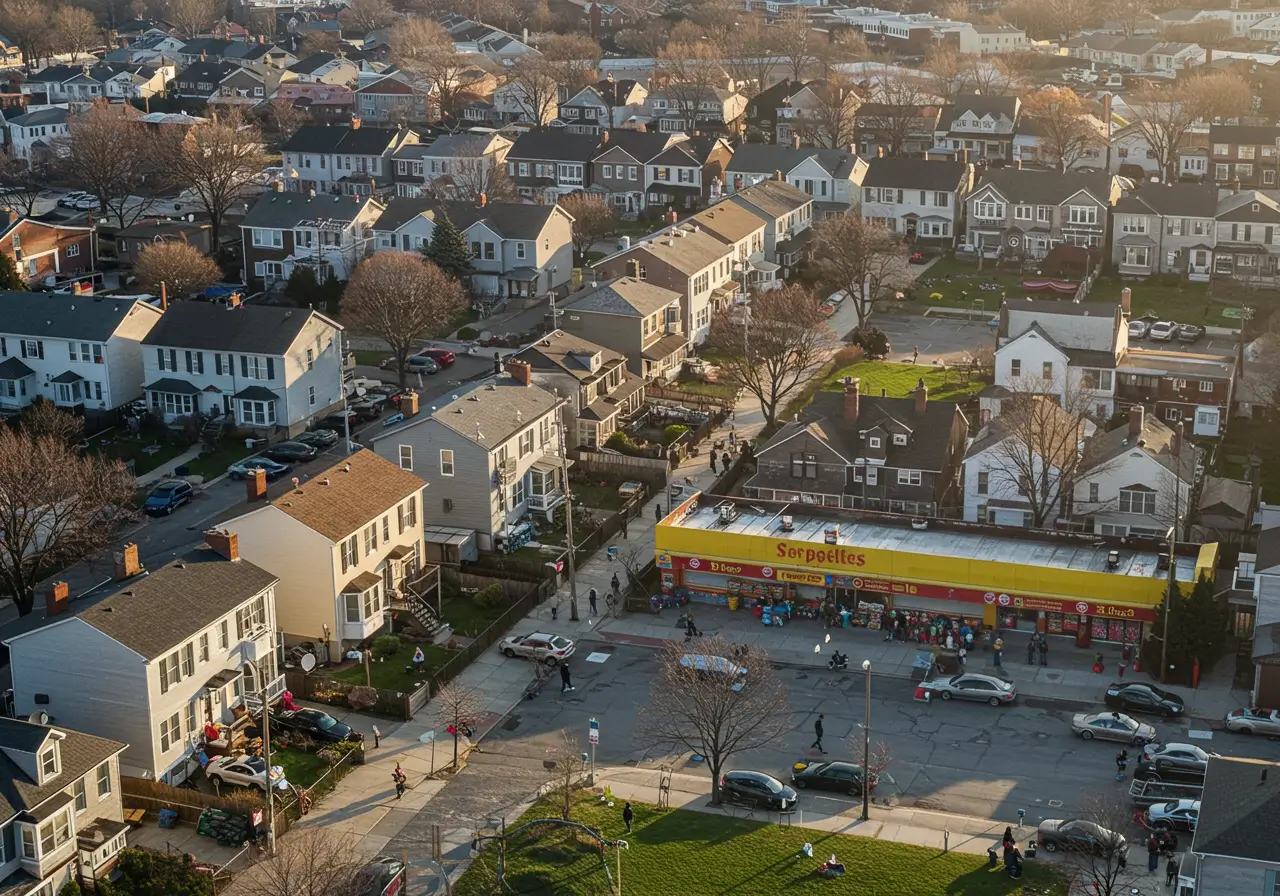
Are you feeling completely exhausted by the relentless noise, sky-high rent, and cramped living spaces of central New York City? You might be desperately craving a quiet backyard, a guaranteed place to park your car, and a true sense of community. Yet, the thought of packing up and leaving the five boroughs for the deep suburbs feels entirely too isolating.
Finding that perfect, elusive middle ground between the bustling city and a peaceful residential neighborhood can feel absolutely impossible. Most people assume that achieving the dream of homeownership with a front lawn in New York City requires winning the lottery. However, a hidden gem tucked away in the southeastern corner of Queens might just be your perfect match.
Welcome to Springfield Gardens, a vibrant community that offers a highly unique slice of urban and suburban life. Often characterized by its quiet tree-lined streets, its beautifully diverse community, and its extreme proximity to major transportation hubs, it holds a very distinct, proud identity within the vast tapestry of Queens. Whether you are a potential homebuyer, a current resident wanting to learn more, or simply curious about the different facets of New York City living, let us take a deep dive into everything that makes Springfield Gardens so incredibly special.

The Hidden History: From Quiet Farmland to a Thriving Neighborhood
The fascinating story of Springfield Gardens is deeply intertwined with the broader agricultural and developmental history of Queens. Understanding its complex past provides a vital context for its present character and sprawling layout. Like much of southeastern Queens, this area was not always the dense residential neighborhood you see today.
The Agricultural Era and Early Settlement
Long before European settlement, this fertile land was actively inhabited by Native American tribes. These were likely the Rockaway people who were part of the larger Lenape nation. Following Dutch and later English colonization, the entire area remained largely rural and untouched for centuries. It consisted primarily of sprawling farmland, dense woodlands, and coastal marshlands. It was a vital part of the wider expanse of southern Queens that was heavily known for its rich agriculture. The name “Springfield” itself beautifully evokes imagery of the natural springs and open fields that originally characterized the region. Life here entirely revolved around farming and the natural rhythms of the land, providing a stark, peaceful contrast to the bustling, heavily industrialized city developing across the river in Manhattan.
The Power of Railroad Expansion
Significant change finally began in the 19th and early 20th centuries. This shift was driven largely by massive improvements in transportation infrastructure that connected Queens to the rest of New York City. The arrival and rapid expansion of the Long Island Rail Road (LIRR) played a truly crucial role. While Springfield Gardens itself did not maintain its own dedicated LIRR station for very long, the nearby stations in Laurelton and St. Albans began to make the surrounding areas highly accessible for daily commuters. This newly found accessibility spurred the initial wave of residential development, slowly transforming Queens from isolated farmland into highly desirable potential suburban communities.
The Post-War Suburban Boom
The most significant, defining period of transformation for Springfield Gardens occurred immediately after World War II. Following the war, New York City experienced a massive, unprecedented housing boom. This explosion in growth was fueled by returning soldiers utilizing the G.I. Bill and a deep cultural desire for suburban living that offered significantly more space than crowded inner-city tenements.
Large tracts of former potato farms were rapidly developed into residential housing. This highly active era permanently defined the neighborhood’s architectural character. Builders constructed thousands of modest yet incredibly sturdy brick and frame houses during the late 1940s, 1950s, and 1960s. This rapid development specifically catered to middle-class families who were desperately seeking homeownership and a quiet suburban lifestyle completely within the city limits.
A Beautiful Evolution of Culture and Community
Over the latter half of the 20th century and well into the 21st century, Springfield Gardens experienced significant, beautiful demographic shifts. It transitioned from a predominantly white middle-class neighborhood to become one of New York City’s most incredibly diverse communities. Today, it is home to a large, vibrant African American population alongside a massive and growing Afro-Caribbean community. Residents with deep roots in Jamaica, Haiti, Trinidad and Tobago, and Guyana have enriched the neighborhood’s cultural fabric. This beautiful evolution has brought new culinary traditions, thriving local businesses, and highly active community organizations that shape the vibrant, multicultural character the neighborhood proudly possesses today.
Laying Out the Map: Where Exactly is Springfield Gardens?
Defining the precise boundaries of New York City neighborhoods can sometimes feel incredibly fluid. Borders are often based on historical precedent, real estate marketing, and strong community perception. However, Springfield Gardens occupies a generally recognized, highly strategic area in southeastern Queens within Community District 12.
Defining the Major Borders
While the exact street lines can vary slightly depending on who you ask, a few key thoroughfares and major landmarks serve as the absolute delimiters for the neighborhood. To the north, the boundary is generally considered to be Linden Boulevard, separating it from the neighboring communities of St. Albans and Cambria Heights. To the east, it is roughly bounded by Springfield Boulevard and the Laurelton neighborhood.
The western edge is bordered by Farmers Boulevard and Guy R. Brewer Boulevard, sitting adjacent to Rochdale Village and South Jamaica. Finally, the southern border is primarily defined by the Belt Parkway and the sprawling, massive northern edge of the JFK Airport area. This extreme proximity to the airport is undeniably the most defining geographical feature of the entire zip code.
The Heartbeat of the Neighborhood: Community and Daily Life
The true, beating heart of Springfield Gardens lies entirely in its residents and the incredibly strong community they have built together. It is widely known as a predominantly residential neighborhood characterized by its immense cultural diversity and a very strong sense of local identity. It feels completely distinct from the high-density, chaotic areas of central NYC.
A Rich Tapestry of Diversity
Springfield Gardens stands out proudly as one of New York City’s highly diverse and culturally rich neighborhoods. In recent decades, there has been a steady increase in residents from Hispanic and South Asian backgrounds joining the established African American and Caribbean populations. This creates a brilliant multicultural tapestry. You can walk down a single block and hear multiple languages spoken, smell an incredible variety of home-cooked cuisines, and see a beautiful blending of global traditions.
The Deep Sense of Local Civic Pride
Active, passionate community involvement contributes heavily to the neighborhood’s warm character. Local civic associations play a massive role in addressing daily neighborhood concerns, advocating fiercely for city improvements, and organizing joyful community events. Numerous churches representing various denominations are highly prominent throughout Springfield Gardens. These institutions serve as vital spiritual and social hubs, frequently hosting after-school programs, food pantries, and outreach initiatives that keep the neighborhood deeply connected.
Because of its highly residential nature and the high number of long-term homeowners, there is a much stronger sense of local community here compared to more transient, apartment-heavy neighborhoods. Neighbors actually know each other by name, and local small businesses specifically cater to the unique needs of the immediate population.
The Housing Landscape: Achieving the Elusive NYC Dream
The specific types of homes available are a defining characteristic of Springfield Gardens. The architecture heavily shapes its visual identity and influences its residential appeal. Unlike the towering, apartment-heavy landscape of Manhattan or western Queens, this neighborhood offers predominantly ground-oriented, spacious housing.
Ditching the High-Rise for a Backyard
The vast majority of the housing stock consists of beautifully detached and semi-detached single-family homes, along with numerous two-family dwellings. Single-family detached houses are incredibly common throughout the neighborhood. They almost always feature small front yards, private driveways to solve your parking nightmares, and generous backyards perfect for summer barbecues. These homes provide the traditional, highly coveted “house with a yard” experience that is desperately sought after by growing families.
Two-family houses are also highly prevalent. These properties typically feature completely separate living units, often stacked one per floor. They offer an incredible opportunity for homeowners to generate steady rental income to help pay the mortgage, or they gracefully accommodate multi-generational living with extended family members under one roof.
Post-War Architecture and Timeless Charm
Most of the homes beautifully reflect the specific period of their major development. The dominant architectural influence dates straight from the post-World War II suburban boom spanning the late 1940s through the 1960s. Common architectural styles include modest, charming Cape Cods, solid brick Tudors, and simple, sprawling ranch-style homes. The facades are very often classic red brick, updated vinyl siding, or a unique combination of both. You will immediately notice that pride of ownership is deeply evident in the meticulously well-kept front gardens and freshly painted porches lining the streets.
The Realities of Affordability and Homeownership
Compared to many other NYC neighborhoods, Springfield Gardens boasts a relatively higher rate of homeownership. This contributes massively to neighborhood stability and long-term resident investment. While housing costs have undeniably risen significantly across all five boroughs, Springfield Gardens generally remains much more affordable for purchasing a home compared to neighborhoods closer to Manhattan or traditionally affluent parts of Queens like Forest Hills.
This relative affordability is the ultimate key factor attracting young families and eager first-time homebuyers who want to build generational wealth without leaving New York City entirely.
You may also enjoy reading: Discover the Most Walkable Cities in the US.
Navigating the Commute: How to Get Around Without a Subway
Connectivity is a massive, critical aspect of life in any NYC neighborhood. Springfield Gardens offers a highly unique mix of transportation options. Because of its distance from Manhattan, daily commuting requires a bit of strategic planning.
Mastering the MTA Bus and LIRR Connections
The most important thing to know is that there are absolutely no underground subway lines located directly within the borders of Springfield Gardens. Instead, the neighborhood functions heavily as a bus-to-subway transit zone. Several vital MTA bus routes serve the area, providing crucial local connections. The Q3 bus travels along Farmers Boulevard, connecting residents directly to the major Jamaica Center subway hub where you can catch the E, J, and Z trains. The Q85 runs largely along Merrick Boulevard, also connecting north towards Jamaica Center.
For a significantly faster, albeit slightly more expensive commute to Manhattan, residents heavily rely on the nearby Long Island Rail Road (LIRR) stations located in adjacent neighborhoods. The Laurelton Station, Rosedale Station, and St. Albans Station are all heavily utilized. Taking the LIRR offers incredibly fast travel times directly into Penn Station or Grand Central Terminal, completely bypassing the grueling subway delays. You can view complete schedules and fare information directly through the Metropolitan Transportation Authority (MTA) website.

Amazon US Verified
AstroAI Digital Tire Pressure Gauge & Inflator
Heavy-duty 250 PSI dial for exact cold tire pressure tuning and fuel savings.
The Perks and Pitfalls of Being a Car Owner
Because the neighborhood is slightly removed from rapid transit hubs, owning a personal vehicle is incredibly common and highly convenient here. The neighborhood is bounded and transected by massive major roadways. The Belt Parkway forms the southern boundary, providing incredibly fast access east towards Long Island beaches and west towards Brooklyn. The Van Wyck Expressway runs just west of the neighborhood, acting as a major north-south artery.
However, you must be prepared for the reality of Queens traffic. The Van Wyck Expressway and the Belt Parkway are notoriously congested during morning and evening peak rush hours. The beautiful perk of living here is that most single-family homes come with private driveways, completely eliminating the exhausting, nightly battle for alternate side street parking that plagues the rest of the city.
Finding Your Green Space: Parks and Recreation
Access to lush parks and expansive recreational facilities is absolutely vital for maintaining a high quality of life and supporting your mental health in any urban neighborhood. Springfield Gardens heavily benefits from several key green spaces that offer residents beautiful opportunities for relaxation, exercise, and joyful community gatherings.
Springfield Park: The Ultimate Neighborhood Gem
Located roughly right in the center of the community, Springfield Park is a sizable, stunning green space that acts as the central recreational feature of the neighborhood. The park boasts an incredible variety of high-quality amenities catering to absolutely all interests and age groups.
The centerpiece is Springfield Lake, a significant natural feature offering highly picturesque views and peaceful opportunities for passive recreation like walking or jogging along its paved perimeter. The sports facilities are truly top-notch, including pristine basketball courts, tennis courts, classic handball courts, and highly active cricket pitches that beautifully reflect the community’s rich West Indian heritage. The park serves as a major gathering place for residents, hosting summer community events, youth sports leagues, and providing essential breathing room in a largely residential area. You can find more details about its facilities through the NYC Parks Department.
Exploring Nearby Baisley Pond Park
Situated just to the west of Springfield Gardens, Baisley Pond Park is another massive, easily accessible green space frequently used by local residents. This incredibly large park offers even more extensive athletic fields, including a full track and field setup, multiple soccer fields, and beautifully maintained natural walking paths. Having access to both of these massive parks significantly enhances the daily quality of life for families wanting to spend time outdoors without driving to Long Island.
Education and Essential Local Amenities
Access to quality education and daily conveniences is a primary consideration for families planting roots in a new neighborhood. Springfield Gardens is fully equipped to support daily family life.
Public Schools and the Queens Public Library
The neighborhood is served by the New York City Department of Education, falling entirely within Queens Community School District 29. Zoned elementary schools and middle schools are scattered throughout the neighborhood, offering various specialized programs. For high school, students participate in the city-wide application process, often attending the nearby Campus Magnet High School complex in Cambria Heights or other specialized schools across the borough.
The Queens Public Library system operates the highly active Springfield Gardens Library branch right within the community. This library acts as a vital, free third space for the neighborhood. It offers crucial access to high-speed internet, extensive educational programs for children, adult literacy classes, and a safe, quiet space for students to complete their homework after school.
Shopping Local on Merrick and Springfield Boulevards
The commercial life of Springfield Gardens primarily revolves around its major, bustling boulevards. These commercial strips perfectly serve the daily needs of the residents and beautifully reflect the neighborhood’s diverse population. Merrick Boulevard and Springfield Boulevard are the main commercial spines. Here you will easily find massive supermarkets, local independent grocers, chain pharmacies, reliable banks, and essential hardware stores.
The local dining scene is a massive highlight. You will find an incredible abundance of authentic Jamaican, Haitian, and Trinidadian restaurants serving up spicy jerk chicken and savory oxtail. There are countless Soul Food spots, classic New York pizza joints, and family-owned bakeries. While you will not find ultra-high-end fine dining here, the highly diverse, incredibly flavorful culinary experiences are plentiful.
For major retail therapy, the massive Green Acres Mall is located just a few minutes east of the neighborhood right across the Nassau County border in Valley Stream. It offers a huge range of department stores, big-box chain retailers, and expansive dining options.
The Honest Truth: The Biggest Challenges of Living Here
Like absolutely any urban neighborhood, Springfield Gardens faces certain very real challenges. A balanced, honest perspective is crucial if you are seriously considering making a move to this area.
Coping with Airplane Noise
We have to address the elephant in the room directly. Because Springfield Gardens is located immediately north of John F. Kennedy International Airport, aircraft noise remains a highly significant, daily quality-of-life concern for many residents. Depending on the exact daily flight paths, wind direction, and your specific location within the neighborhood, you will absolutely experience significant noise from massive departing and arriving planes. This is a long-standing issue, and while some homes have been retrofitted with soundproof windows, the noise is an unavoidable reality of living this close to a major global aviation hub.
Dealing with Transit Deserts and Traffic
As previously mentioned, the total lack of direct subway access means that your daily commute times to Manhattan will be significantly longer compared to neighborhoods in western Queens or Brooklyn. You are heavily reliant on bus connections, which can be delayed by local traffic. Furthermore, the traffic congestion on the Van Wyck Expressway and the Belt Parkway can be deeply frustrating, particularly during rush hours. You have to carefully weigh these transportation hurdles against the immense benefits of having a larger home and a private backyard.
Frequently Asked Questions About Moving to Springfield Gardens
What is Springfield Gardens, Queens primarily known for?
Springfield Gardens is proudly known for being an incredibly diverse, hard-working, middle-class residential neighborhood in southeastern Queens. It is widely recognized for its high concentration of single-family and two-family detached homes featuring private driveways and backyards. Culturally, it is celebrated for its massive Afro-Caribbean influence, which is reflected in the incredible local food scene. Geographically, it is famous for its extreme proximity to JFK International Airport and the beautiful, sprawling green space provided by Springfield Park.
Is Springfield Gardens considered a safe place to raise a family?
Safety is a major priority for any family. Springfield Gardens is generally considered a solid, quiet residential area with typical urban safety considerations. Because it is highly residential with a large percentage of invested homeowners, many blocks have a very strong community watch feel where neighbors actively look out for one another. However, like any major city neighborhood, safety can vary from block to block. Reviewing official NYPD crime statistics for the specific local precinct is always the best way to get the most current, objective data before purchasing a home.
How long does it realistically take to commute from Springfield Gardens to Midtown Manhattan?
Your daily commute times will vary wildly depending entirely on your chosen mode of transport. Using the nearby LIRR stations in Laurelton or Rosedale offers the absolute fastest option. Once you are actually seated on the train, the ride into Penn Station or Grand Central typically takes a very breezy 30 to 40 minutes. However, if you choose the more affordable MTA route, commuting via a local bus to the subway at Jamaica Center and then taking the E train into Manhattan can easily take 60 to 90 minutes each way. Driving into the city during rush hour is highly unpredictable due to severe highway congestion.
Are there good parks and outdoor spaces accessible to residents?
Yes, absolutely! The neighborhood is fantastic for outdoor lovers. The primary crown jewel is Springfield Park, which features a beautiful natural lake, extensive sports courts, modern playgrounds, and lovely paved walking paths. Residents also have incredibly easy access to the massive Baisley Pond Park located just to the west, which offers even more extensive recreational facilities, a full track, and gorgeous natural green space for weekend picnics.
Is buying a house in Springfield Gardens expensive compared to other Queens neighborhoods?
In the grand scheme of New York City real estate, Springfield Gardens is widely considered one of the more affordable options for purchasing a detached single-family or two-family home. It is significantly more affordable than Queens neighborhoods closer to Manhattan like Astoria or Long Island City, and much cheaper than historically affluent areas like Bayside. However, due to high demand for homes with yards, prices have steadily increased. Rental prices for basement apartments or full units within these multi-family houses are also generally lower than in prime western Queens locations, making it a highly attractive area for renters seeking more square footage for their budget.
The Final Takeaway:
Springfield Gardens emerges beautifully as a neighborhood defined entirely by its resilient residential character, its incredible cultural richness, and its highly strategic location in southeastern Queens. It offers a very distinct, highly sought-after living experience within New York City. It provides detached homes, private yards, and a fiercely strong sense of community fostered by highly diverse, welcoming residents.
While facing very real challenges like JFK aircraft noise and longer subway commutes, Springfield Gardens provides incredibly compelling advantages. The relative housing affordability, good road connectivity, nearby fast LIRR options, and essential local amenities make it a highly viable, deeply attractive option for families and individuals seeking a solid foothold in the NYC housing market. It remains a vital, constantly evolving neighborhood that contributes massively to the beautiful, diverse identity of the borough of Queens.
If this comprehensive neighborhood guide helped you understand the real vibe of Springfield Gardens, be sure to pin it to your favorite NYC real estate board on Pinterest so you can keep these vital tips handy for your future move!
As an Amazon Associate, azuloz.com earns from qualifying purchases.