Picture stepping outside with your coffee on a Saturday morning and seeing a place to sit, a path that stays clear, and plants that are doing well without another emergency trip to the garden center. If your actual view is a lawn that needs mowing and beds that need weeding, the gap between those two scenes can feel exhausting.
A low-maintenance backyard starts by reducing the jobs you repeat most often: mowing awkward strips, watering scattered pots, trimming shrubs that outgrew their spots, and rescuing plants from the wrong soil or sunlight. The goal is a yard you use, with manageable seasonal care. The twelve ideas below help you decide what to change first, what deserves a larger investment, and which shortcuts often create more work later.
This post contains affiliate links.
Before you change the yard, find out where your time goes
Walk the backyard on an ordinary week, not just when it looks its best. Which strip of grass is hard to reach with a mower? Where does water pool after a storm? Which bed grows weeds faster than its plants fill in? Note where your family actually sits, walks, plays, and stores things. Those observations are a more useful starting point than copying a landscape that belongs to another climate.
Make a rough sketch with sunny and shady areas, doors, hose connections, drainage routes, and any spots that must remain accessible. A backyard with children or a dog may need some durable open ground. A small urban yard may work better with one seating area and a few planted borders. If you live in a neighborhood with landscape rules, check them before replacing a lawn or adding a structure.
Then pick one repeating chore to remove. You can replace the turf in a narrow side yard, install a defined edge around an existing bed, or group thirsty plants close to a hose. A focused change gives you a chance to see how the space works through a season before you commit to a whole-yard renovation.
12 low-maintenance backyard ideas you can adapt to your space
1. Keep only the lawn you actually use
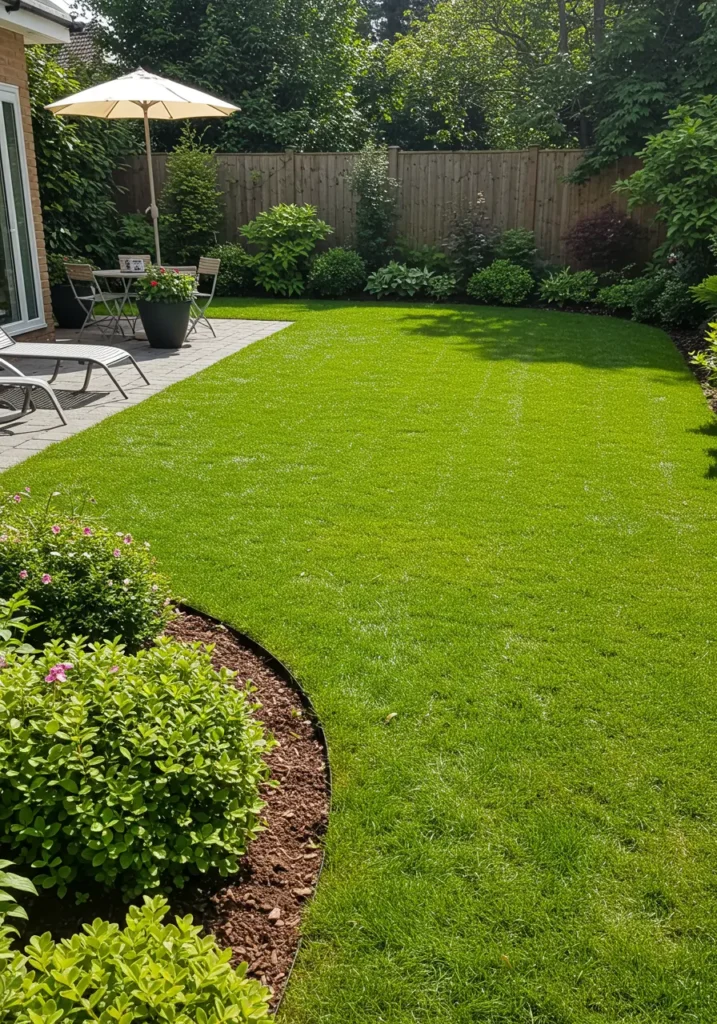
A lawn can be valuable for play, pets, and bare feet. It becomes a chore when it winds around trees, squeezes between a fence and a walkway, or grows poorly under dense shade. Keep a simple, usable shape and rethink the fragments. A broad planted border, a seating area, or a properly built path can replace a patch you only cross with a mower.
If you want a soft, lawn-like surface with less frequent mowing, ask your local extension service about grasses or sedges suited to your region and how much foot traffic they tolerate. A planting that looks lovely in a photo may fail where children run every day. The University of Maryland Extension’s lawn-alternatives guide offers a useful example of how options change with shade, use, and location.
Start with the least useful patch of turf. Removing every square foot at once can replace one manageable chore with a much bigger planting and watering project.
2. Put the right plant in the right place
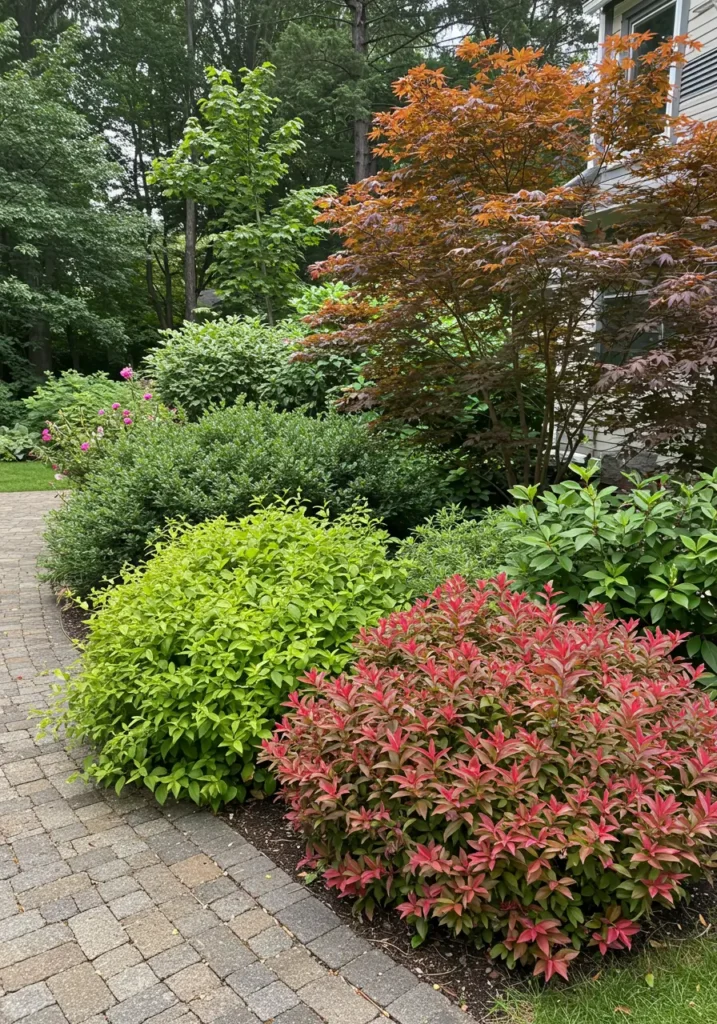

Healthy, well-sited plants ask less of you. Before buying, check a spot’s direct sun, drainage after rain, soil moisture in dry weather, and space available at the plant’s full size. A shrub that naturally matures at the right height is easier to live with than one you must repeatedly cut back from a window or walkway.
Use the USDA Plant Hardiness Zone Map as a winter-survival clue, then consider summer heat, rainfall, soil, and exposure separately. A hardiness zone does not tell you whether a plant can handle a baking afternoon beside a patio or soggy soil near a downspout.
Native plants can be excellent choices when they match the site, but the label alone is no maintenance guarantee. A native that likes moist shade will struggle in a dry, sunny bed; vigorous species may also spread beyond the space you intended. Ask a local nursery or cooperative extension office for options that suit your specific conditions, and expect to water new plants while their roots establish.
3. Trade difficult turf for site-appropriate groundcovers
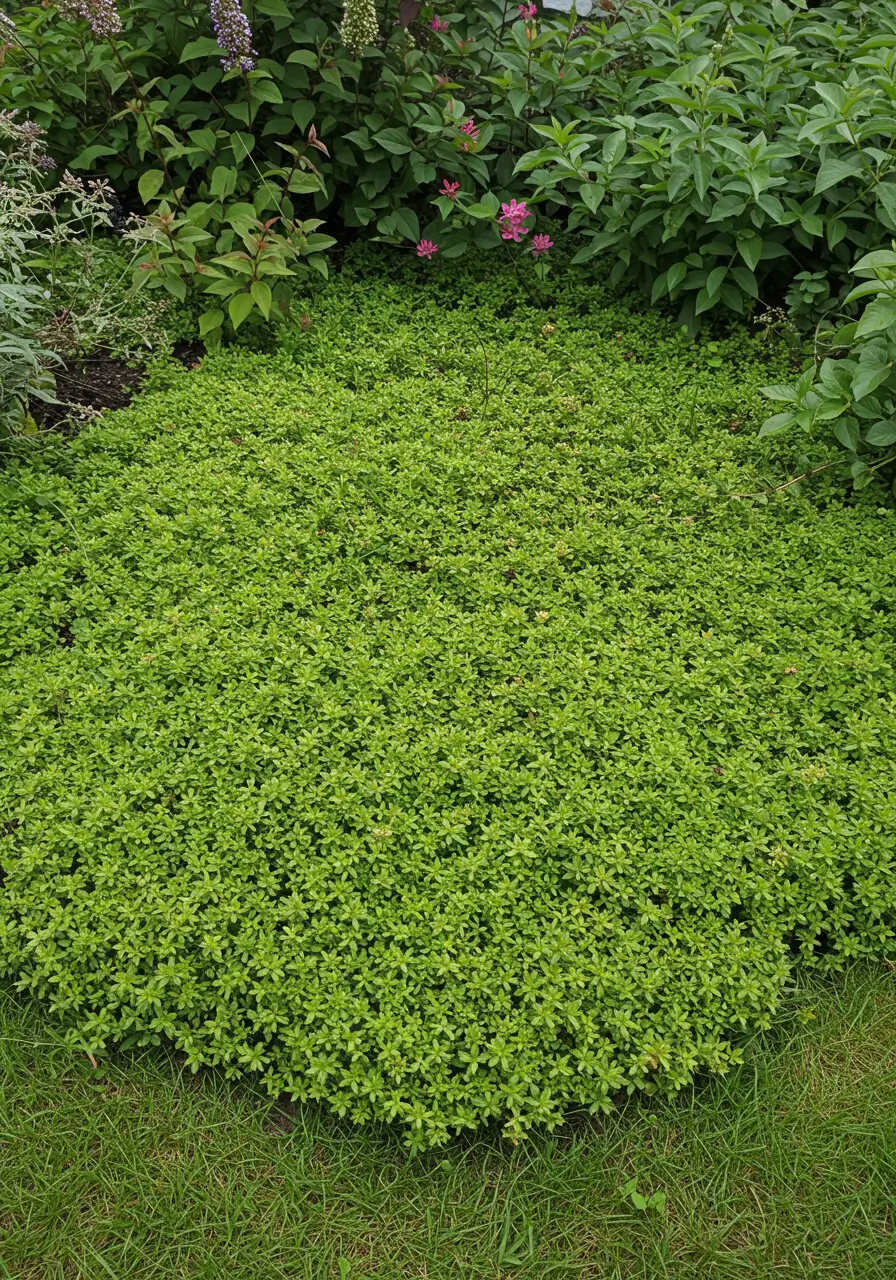
Groundcovers make sense under some trees, along low-traffic edges, and in beds where repeated mowing is awkward. The key phrase is low traffic: most groundcovers will not replace a lawn where people regularly walk or play. Until plants grow together, you will still need to water, mulch exposed soil, and pull weeds.
Choose by region and site instead of relying on a universal plant list. For example, the Maryland Extension guide recommends local native options such as certain sedges, wild ginger, and green-and-gold for appropriate Mid-Atlantic locations, while warning against invasive periwinkle, Japanese spurge, and carpet bugleweed there. In another region, ask your own extension office which species are suitable and which should stay out of the yard.
On a slope, consider erosion during establishment. If water already cuts channels through the area, plants need time and a suitable installation plan to hold the soil. This extension guide to groundcovers explains why temporary soil protection may be needed before the planting fills in.
4. Mulch beds thoughtfully instead of fighting bare soil
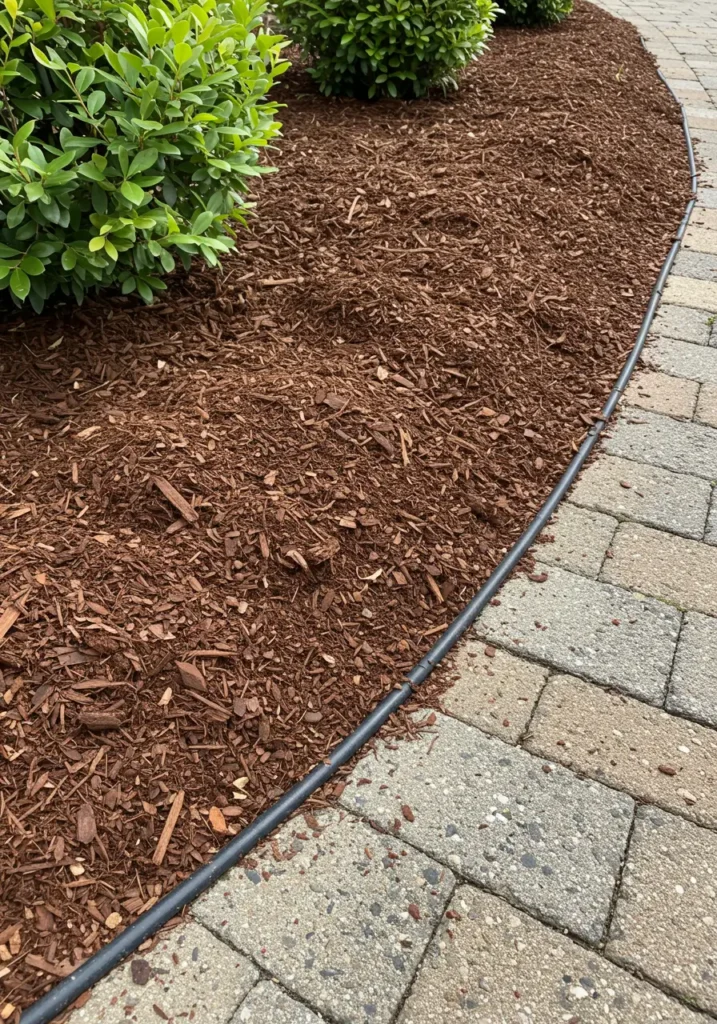
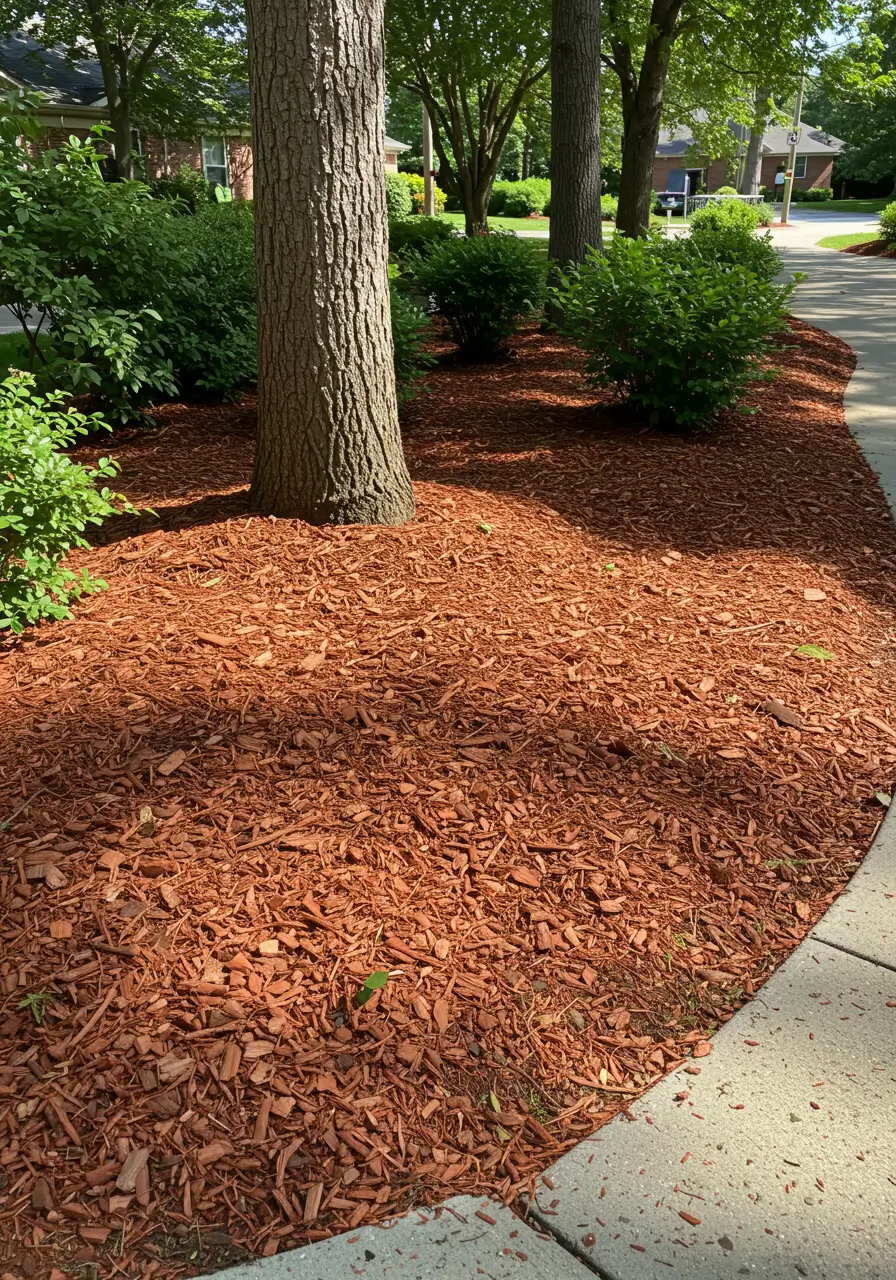
A layer of organic mulch reduces exposed soil, slows weed growth, helps hold moisture, and gives several different plants a calm visual background. Shredded leaves, arborist wood chips, bark, and pine needles can all work depending on the setting. The University of Minnesota Extension recommends about 2 to 4 inches of mulch for many beds and a clear gap around stems and tree trunks. Check the depth before adding more; piling new material onto old mulch every spring can bury plant crowns.
Prepare the area first by removing persistent weeds. Mulch reduces new seedlings, but it will not permanently defeat established roots. Rake it back when you need to plant, and top it up as it breaks down rather than applying a thick fresh layer on a calendar schedule.
Skip the idea that fabric under every bed guarantees a weed-free future. Soil and organic debris accumulate above fabric, weeds can root into it, and later planting becomes harder. Oregon State University Extension discusses these limitations. A compacted stone path may call for a different base design, but a living planted bed generally deserves its own soil-focused plan.
5. Build one outdoor living area where you will use it
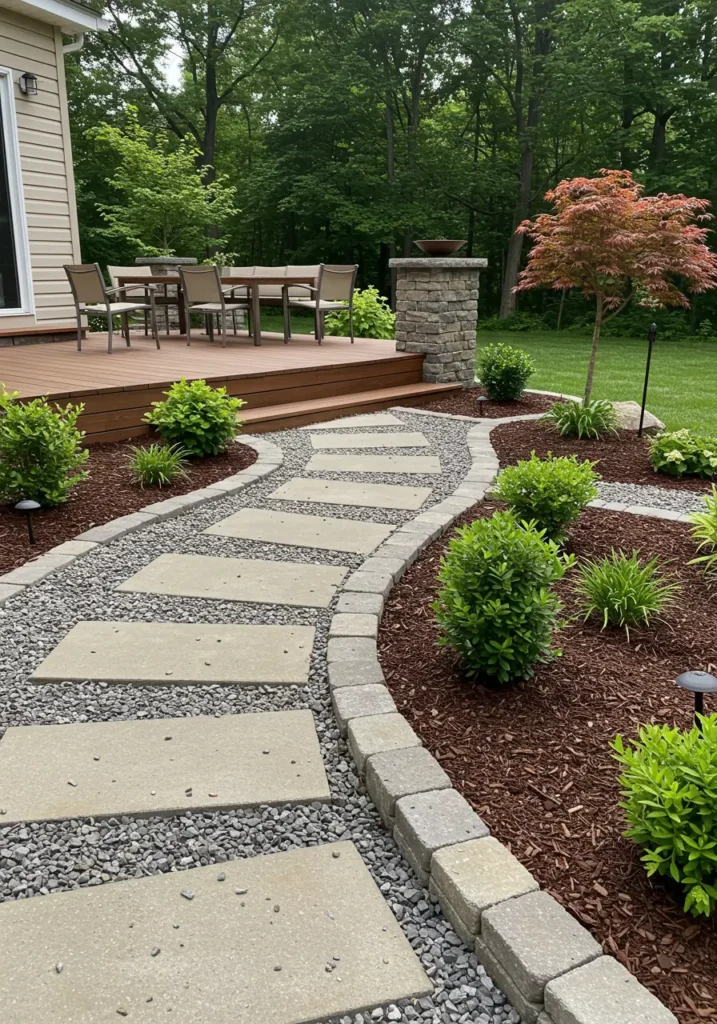
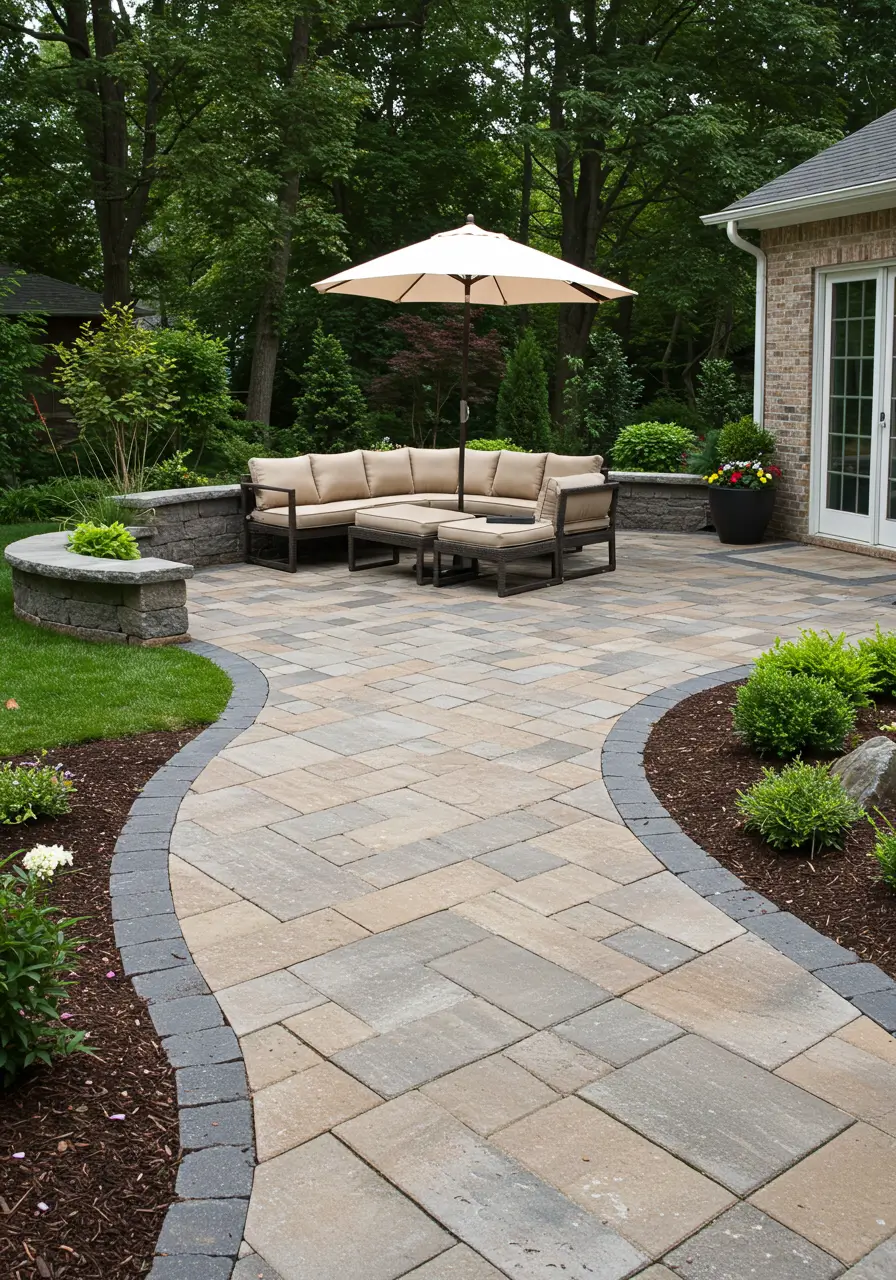
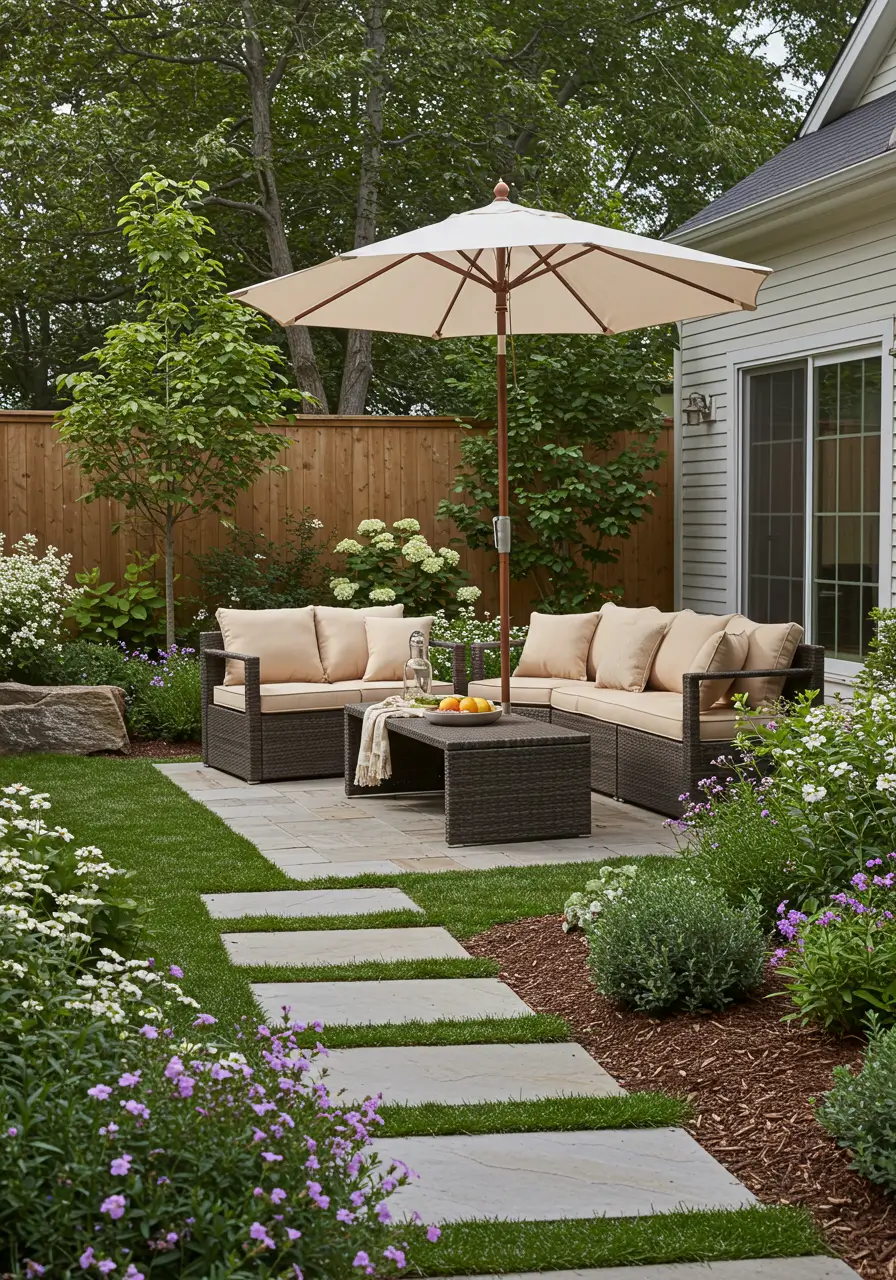
A patio or deck replaces a portion of grass with a place to eat, read, or gather. Decide what furniture must fit, where people will enter, and how they will move around it before choosing a finish. Even a modest seating pad feels generous when chairs can pull back without landing in wet grass.
Concrete and pavers typically need cleaning and attention to cracks or joints; a wood deck needs periodic upkeep, and composite boards still need washing. Pick the material according to installation conditions, climate, budget, and the amount of surface care you are willing to do. A contractor can help with grading, foundations, local permit questions, and water movement near the house.
Do not assume that covering a large yard with hardscape eliminates maintenance. Leaves still collect, weeds can appear in joints, and poor drainage can create a much bigger problem than mowing. Give rain somewhere sensible to go, and leave room for plants that soften the edges.
6. Make a path that follows the route people already take
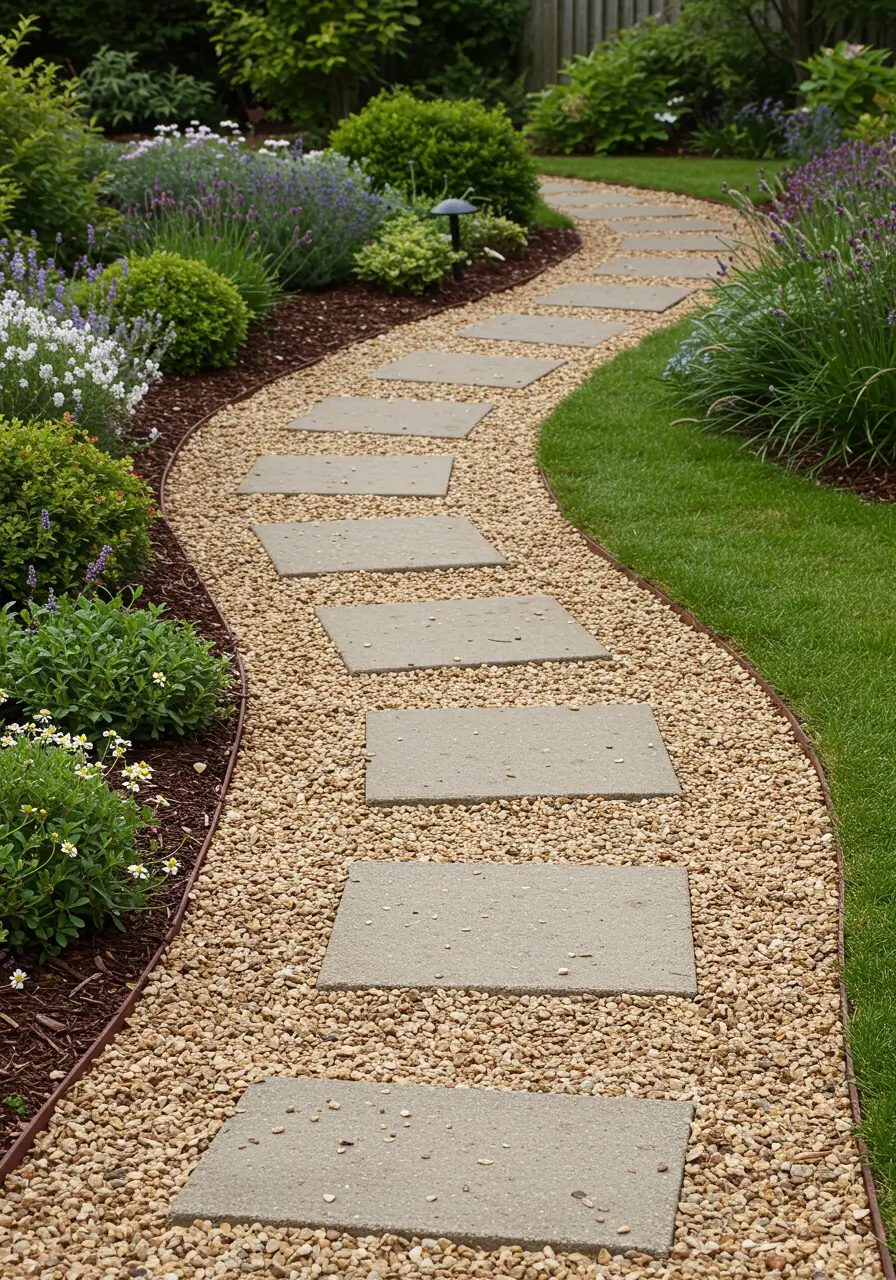
The best path often follows the worn line from the back door to the shed, gate, garden, or seating area. A practical route keeps feet off vulnerable planting beds and stops that muddy track from becoming a recurring repair job.
For a casual path, consider compacted gravel with suitable edging and an appropriate base, or stable stepping stones set at comfortable walking intervals. On a route used by a stroller, wheelchair, or rolling bin, a firm, even surface is much more useful than loose pea gravel. Steep or wet ground needs special attention to traction and drainage.
Gravel is easy to refresh in some settings, but it is not self-cleaning: leaves collect, weeds can sprout in debris above it, and loose material can migrate. Test a short stretch before committing to the whole yard, especially if the path will be a daily route.
7. Give garden beds clean, workable edges
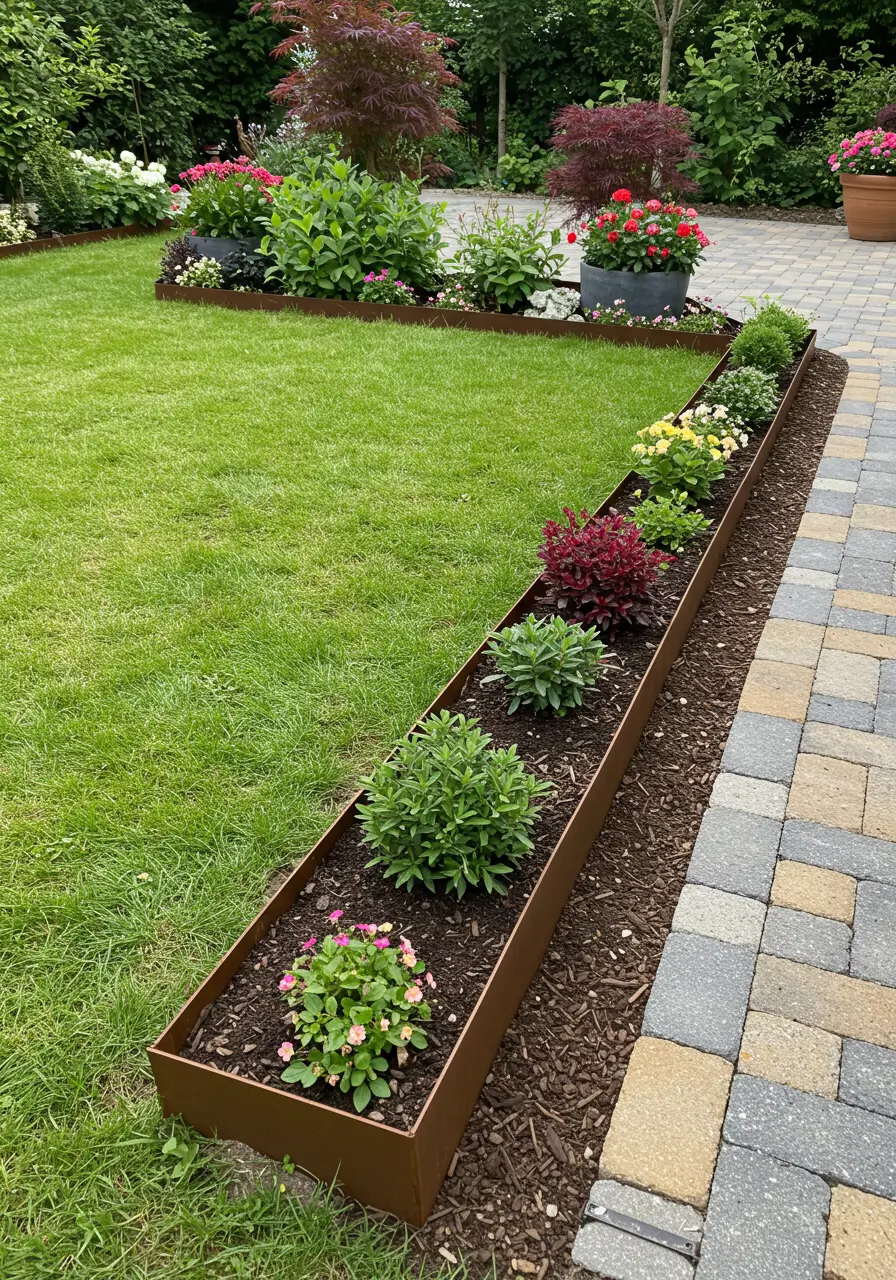
A continuous edge can keep mulch inside the bed and make the transition to grass easier to mow. It also makes a modest planting look intentional. Choose an edge that suits how the space is used: a simple cut edge can be refreshed with a spade, while installed metal, stone, or brick may give a longer-lasting boundary when set securely.
Consider the mower and your feet. Raised edging can catch wheels or become a trip point beside a busy path; an edge set too low may disappear under soil and mulch. Where turf spreads by runners, inspect the boundary occasionally instead of expecting any strip of edging to stop every root indefinitely.
Keep the bed shape broad enough for the plants’ mature size. Narrow scalloped beds and tiny islands may photograph well on installation day, but they multiply trimming corners and make it harder to cover soil with healthy plants.
8. Let long-lived plants carry the design
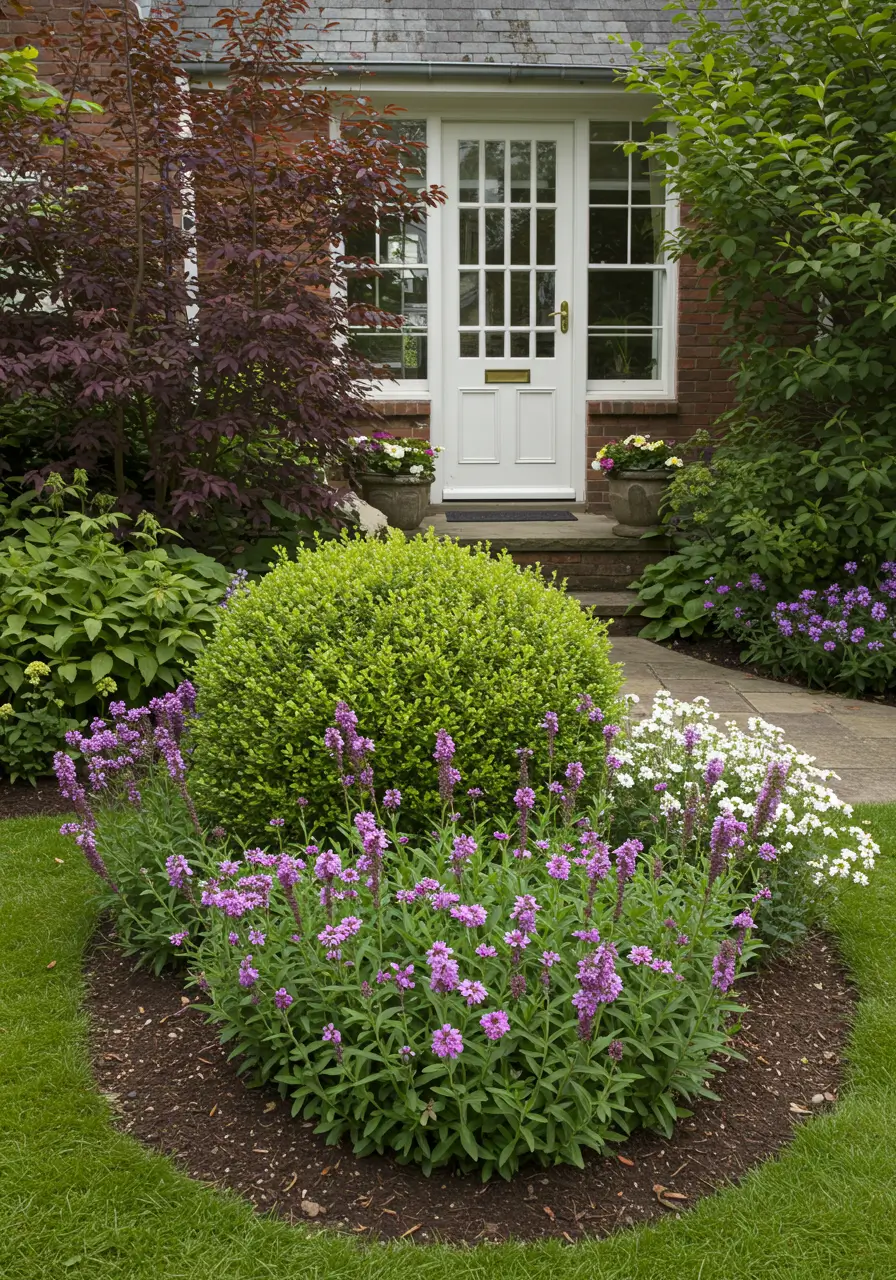
Perennials return from their roots, while shrubs add lasting structure. Together they can reduce the annual cycle of buying and replanting large displays. Choose a small group of plants with compatible needs, and repeat them in generous drifts so the yard feels connected.
Look beyond a single week of flowers. Foliage texture, seed heads, bark, and winter form can keep a border interesting through the year. Make room for plants to reach their labeled width; crowding shrubs for an instant full look often leads to more pruning and removals later. In regions with deer or heavy pest pressure, ask locally which choices tend to hold up in your neighborhood.
New perennials and shrubs are an investment of attention during establishment. Water them according to weather and soil rather than assuming a drought-tolerant label applies on planting day. Once they settle in, assess their actual performance before filling every remaining gap.
9. Use containers as accents, not a hidden watering burden
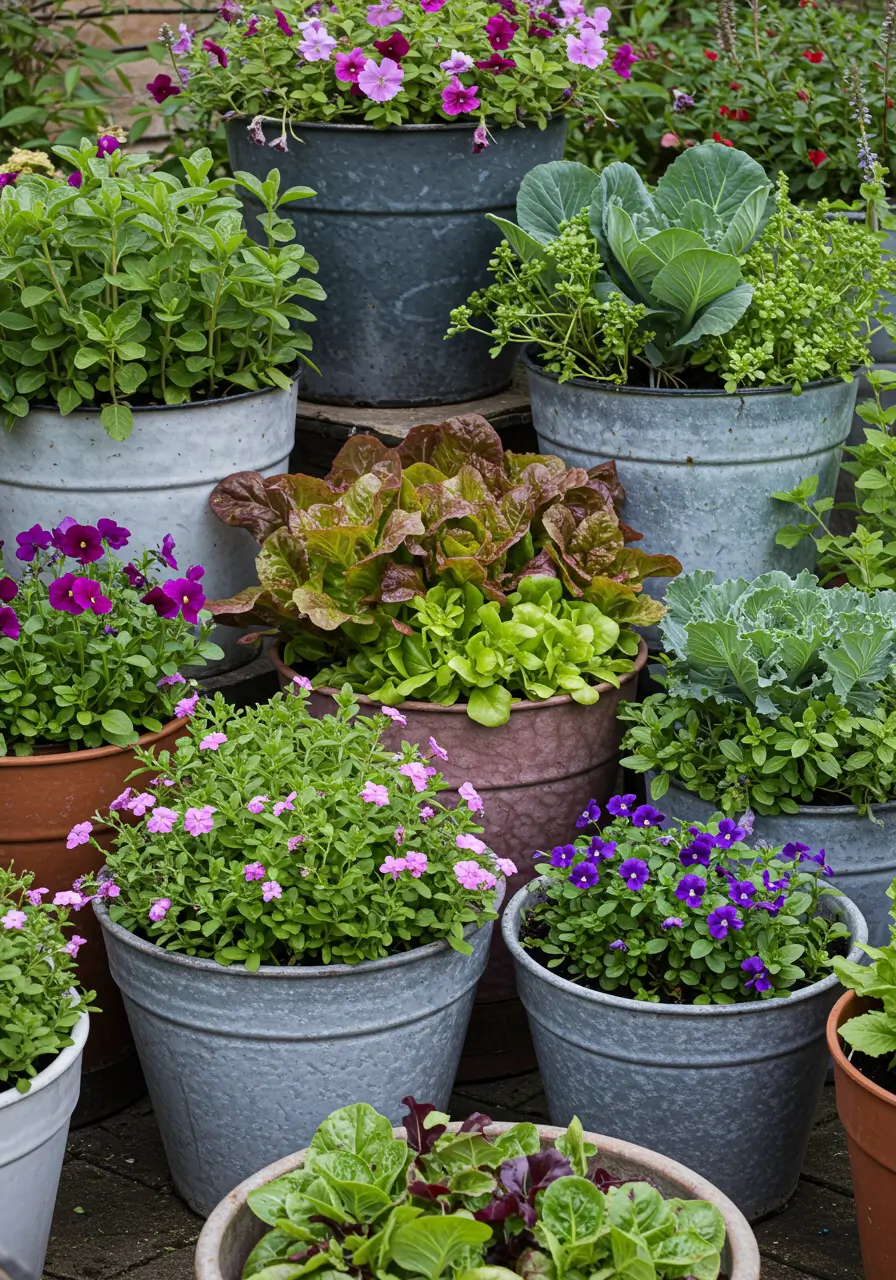
A pair of pots near a door can add color without creating another garden bed. Containers also let you enjoy herbs close to the kitchen or bring a plant into the best light on a paved patio. But potting mix dries differently from ground soil, especially in heat and wind, so a yard full of small pots can become the most demanding part of the landscape.
Choose fewer, appropriately sized containers with drainage holes. Group plants with similar moisture needs and keep pots near a convenient water source. Self-watering designs can extend the interval between visits, but they still need monitoring and proper drainage. Before a trip, ask who will check them if hot weather arrives.
If you want a truly easy display, make the permanent beds do most of the work and reserve containers for a few visible spots you enjoy tending.
10. Water planted areas by need rather than habit
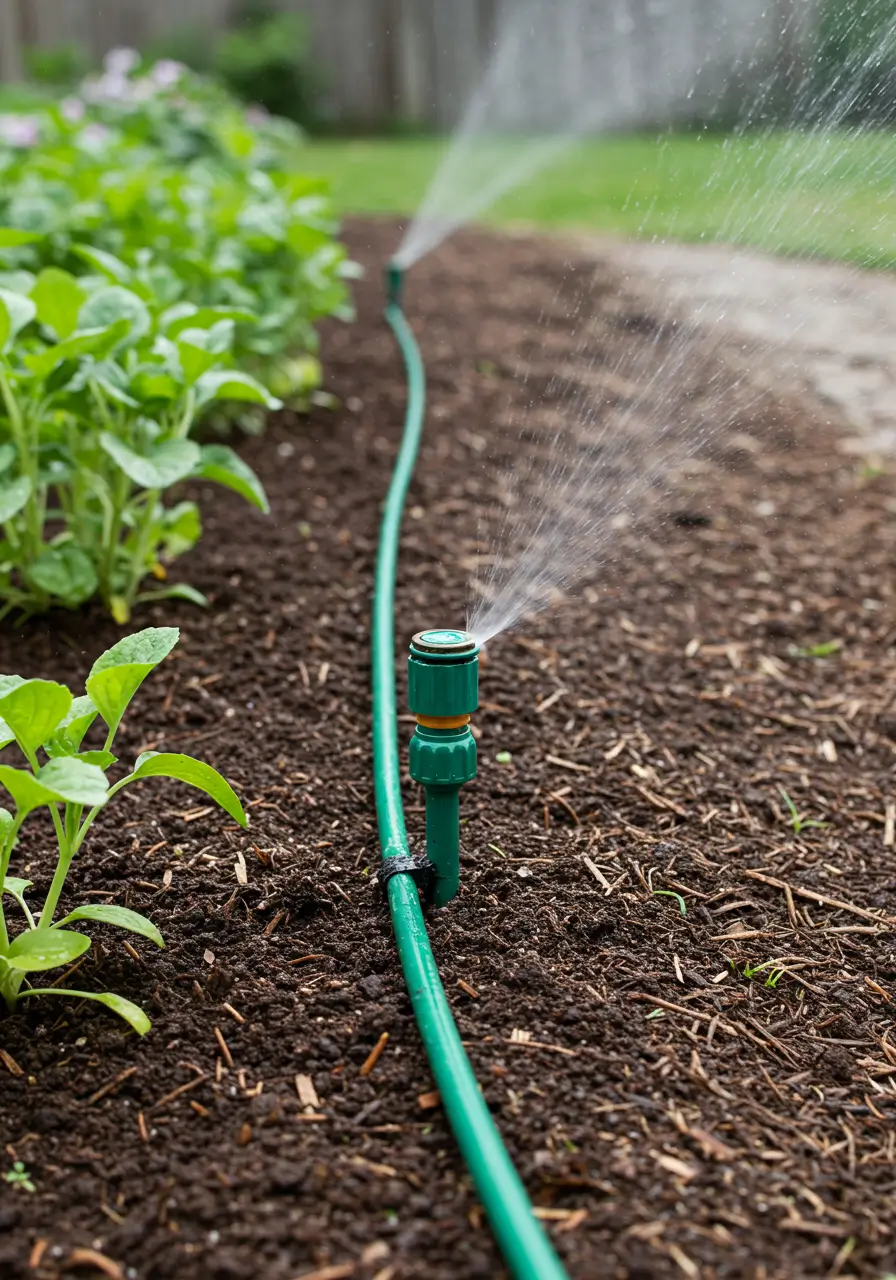
Drip irrigation and soaker hoses can deliver water near plant roots without requiring you to stand over each bed. They are especially helpful for new plantings or a vegetable patch, but neither makes watering entirely automatic. Hoses leak, emitters clog, and a timer cannot see every surprise storm unless the system has suitable controls.
Group plants with similar water needs on the same line or irrigation zone. Check soil moisture beneath the mulch before increasing a schedule, and adjust for rainfall and season. The EPA’s WaterSense microirrigation guidance explains the advantages of delivering water close to the root zone; its controller guidance covers weather- and soil-moisture-based scheduling.
Winterize or disconnect equipment as appropriate for your climate, and periodically walk the system while it runs. A quick inspection is easier than discovering a dry row or a soggy foundation later.
11. Pick furniture and lighting you can live with
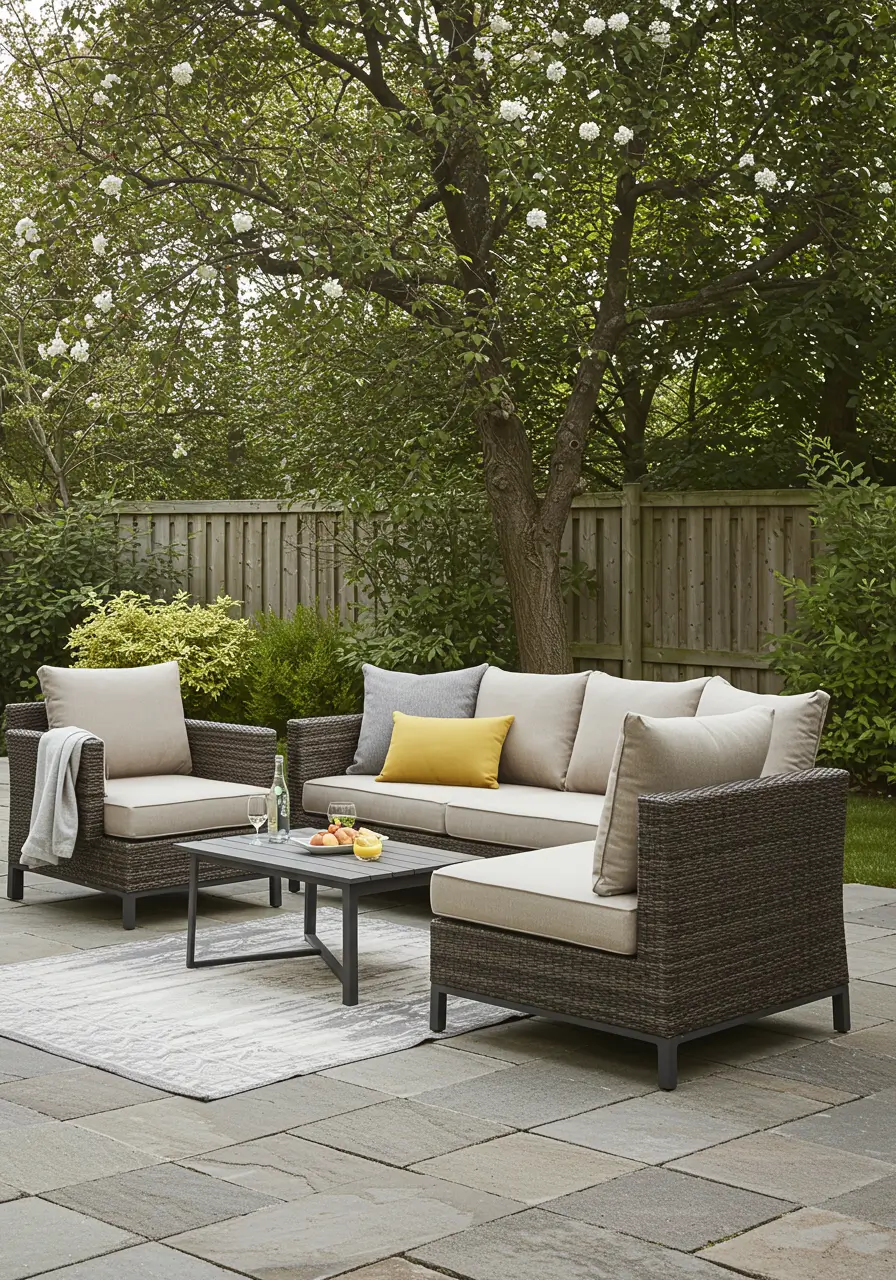
An outdoor room is only restful if sitting down does not begin with a cleaning project. Choose furniture you can wipe down and move when needed. Powder-coated metal, molded resin, and other weather-ready materials have different looks and care needs; cushions often require more attention than the frames. Check care instructions and plan a dry spot for textiles during extended wet weather.
Place a small table within reach of the main chairs, add shade where afternoon sun makes the space uncomfortable, and keep circulation clear. For evening use, a few well-placed fixtures can do more than a complicated lighting scheme. Timers or sensors can simplify operation, but choose outdoor-rated equipment and follow the manufacturer’s installation instructions.
Start with the pieces that make the yard pleasant on a normal Tuesday. Extra decor is easiest to maintain when it earns its storage and cleaning space.
12. Let some natural cycles do the work
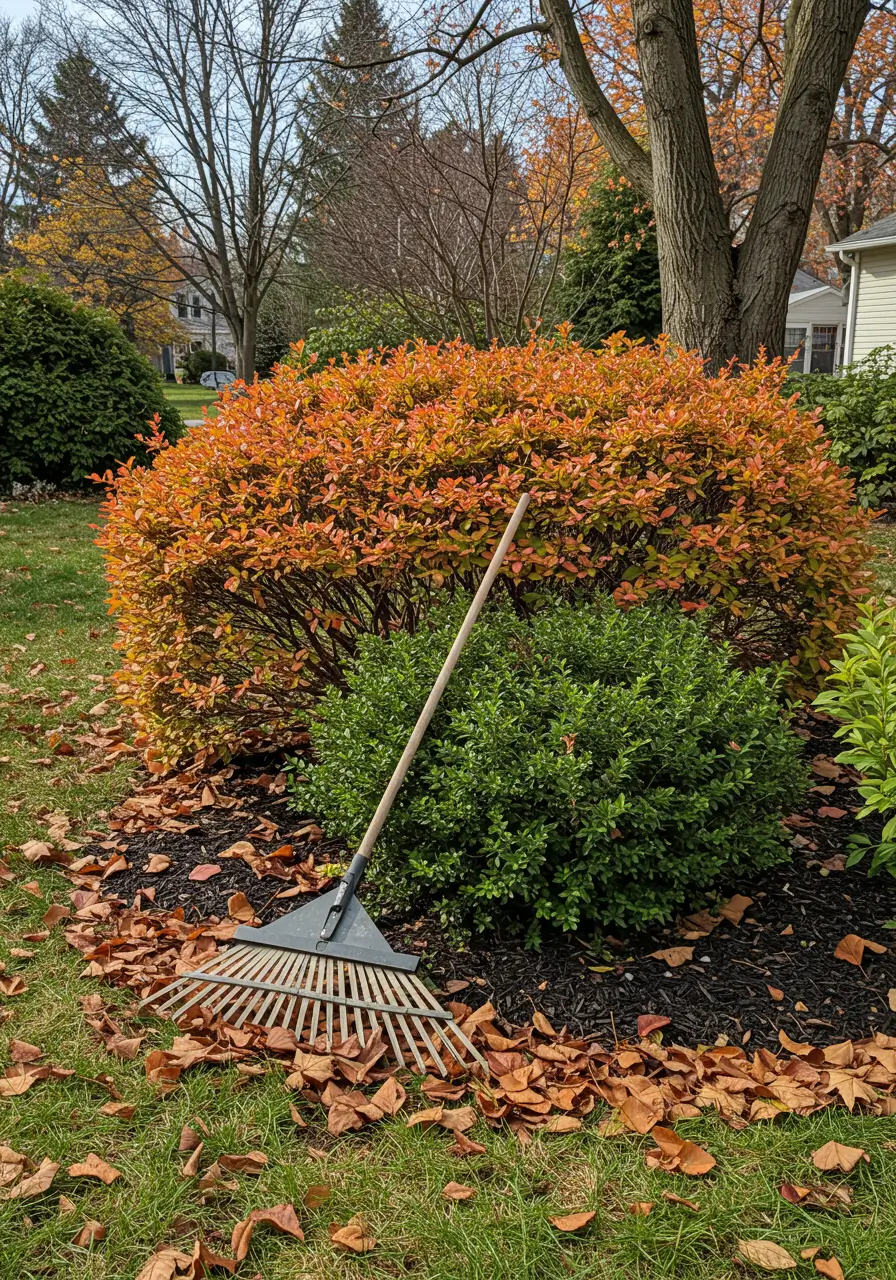
Not every fallen leaf belongs in a bag, and not every spent flower head needs immediate removal. Leaves can serve as mulch in suitable beds, and some standing stems and garden debris provide overwintering habitat. The University of Maryland Extension suggests moving leaves from lawns into garden areas where appropriate.
Keep paths clear and avoid smothering turf or burying plant crowns. Remove diseased material when local guidance calls for it, and stay ahead of invasive weeds before they seed. A cared-for natural corner can be part of a tidy yard: define its edge, give it a path, and allow plants to change with the seasons inside that boundary.
More insects in a living landscape do not automatically signal a problem. If you are trying to identify one you found near wood or mulch, our guide to wood roaches can help you distinguish them from indoor pest concerns.
How to choose plants that stay manageable
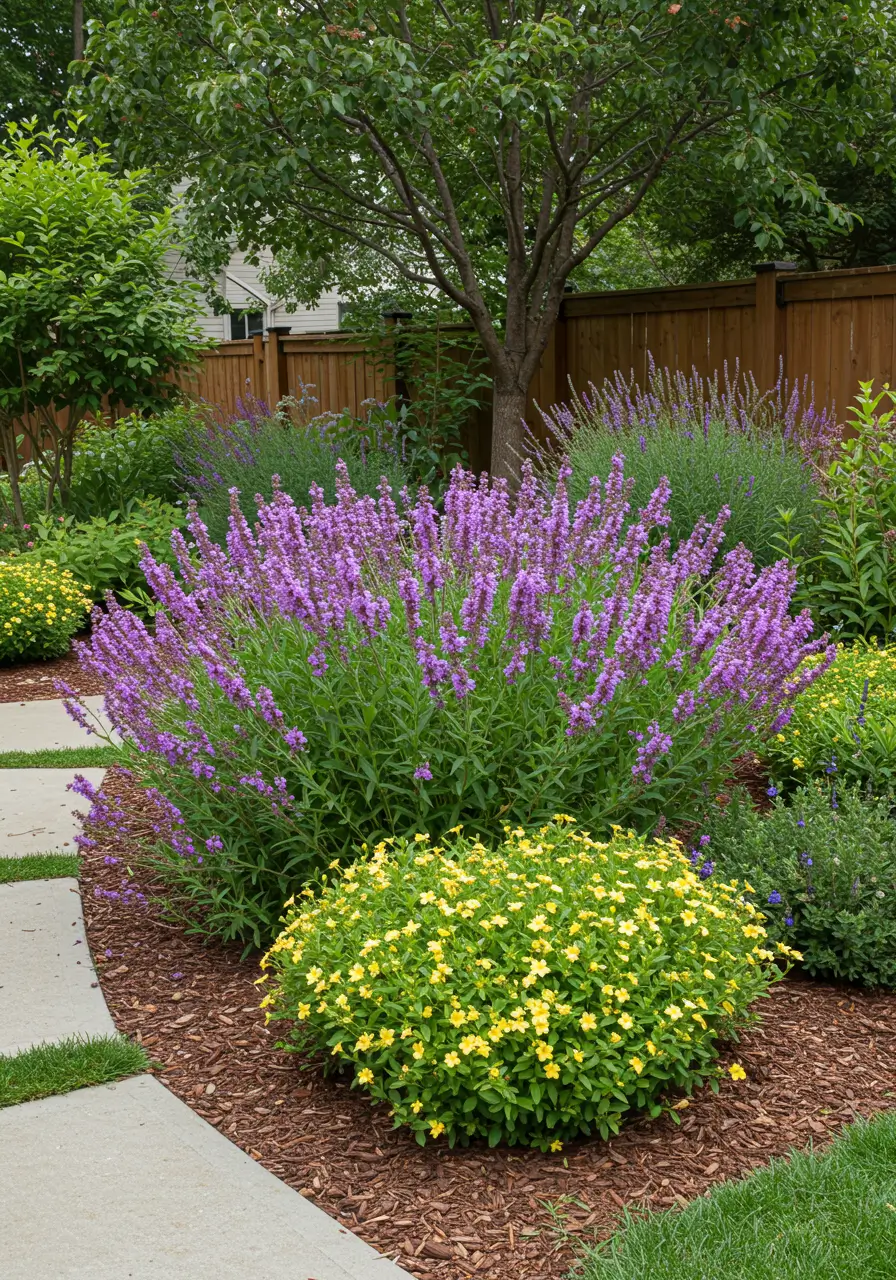
Shopping by flower color alone is tempting, but a low-maintenance planting succeeds on less photogenic details. Read the label for mature height and spread; ask whether the plant needs consistently damp soil, regular deadheading, division, winter protection, or frequent pruning. Look up its growth habit in your region, particularly if a seller describes it as a fast spreader.
A useful shortlist begins with five questions:
- Will it tolerate this spot’s light and soil? Notice where the sun falls in summer and whether the ground dries quickly or remains wet.
- Does it fit when fully grown? Leave clearances around paths, windows, vents, and fences.
- How will I water it during establishment? New plants generally need more attention than mature ones.
- Is it locally appropriate? Check regional invasive-plant guidance before buying an aggressive groundcover or ornamental.
- What happens in winter? Decide whether bare stems, seed heads, or evergreen foliage suits the look you want.
If you have a dry sunny strip and a damp shaded corner, do not try to make one plant palette serve both. A limited number of well-matched species in each area often creates a calmer design and a simpler watering routine than a collection of unrelated plants.
Choose hardscape by its real upkeep
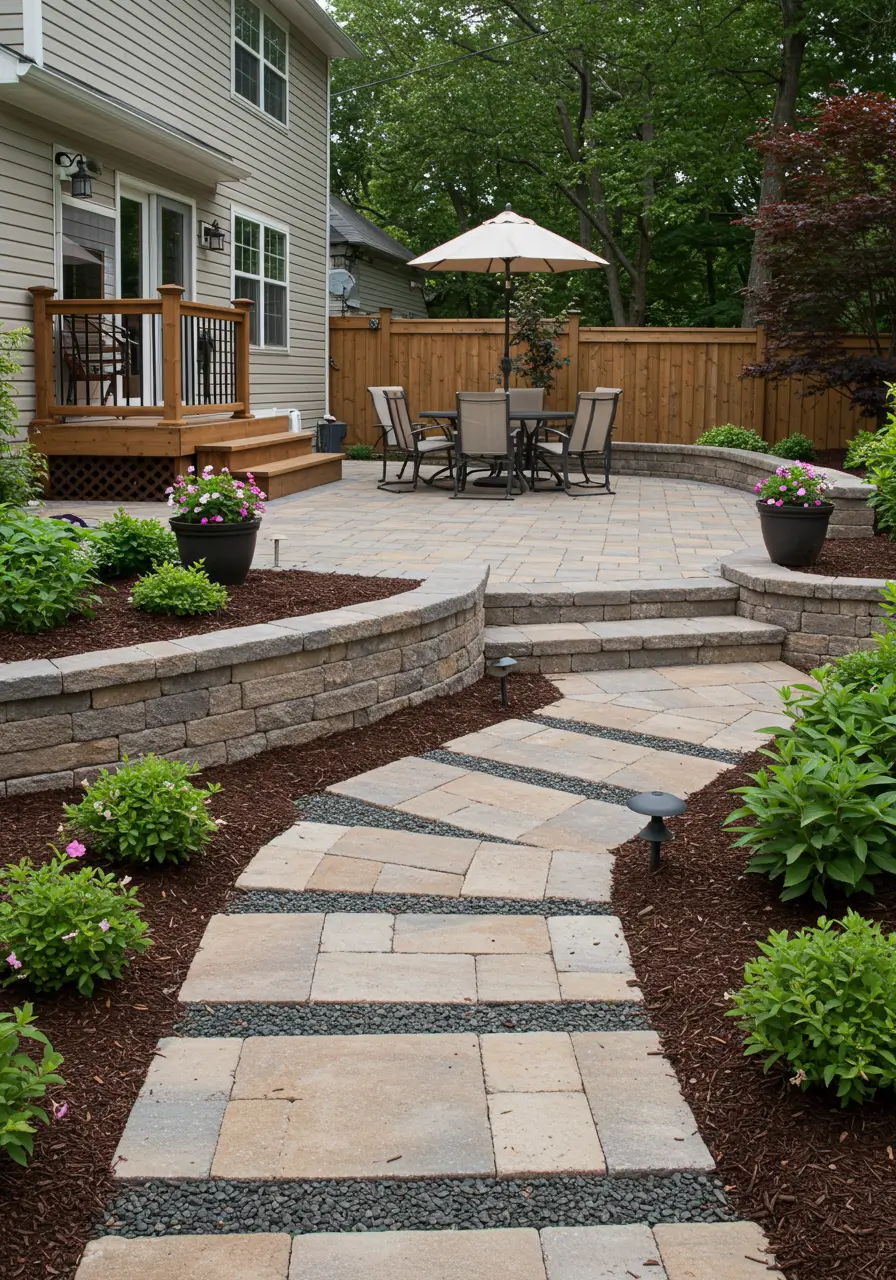
It is easy to call a new patio or path maintenance-free while ignoring its construction and drainage. Think about its daily job first, then the surface. Pavers can be repaired in sections, but joints need attention; poured concrete creates a firm surface but may crack; gravel can be economical for a casual path yet difficult for rolling traffic. Wood decks offer a warm feel and periodic refinishing work, while composite decking trades some of that routine care for cleaning and a different upfront cost.
Water is the decision that affects everything else. Watch the yard during heavy rain, keep runoff away from the house, and ask a qualified local installer about base preparation and drainage when a project is substantial. A surface advertised as permeable only performs as intended when the entire installed system and underlying soil support that function.
Artificial turf may look like a quick answer to bare lawn, but it still needs cleaning, can feel hot in direct sun, and is not living groundcover. If it appeals to you for a small, specific use, compare those trade-offs with a modest amount of real lawn, a planted bed, or a stable hardscape surface before buying.
Use tools and automation where they remove an actual chore
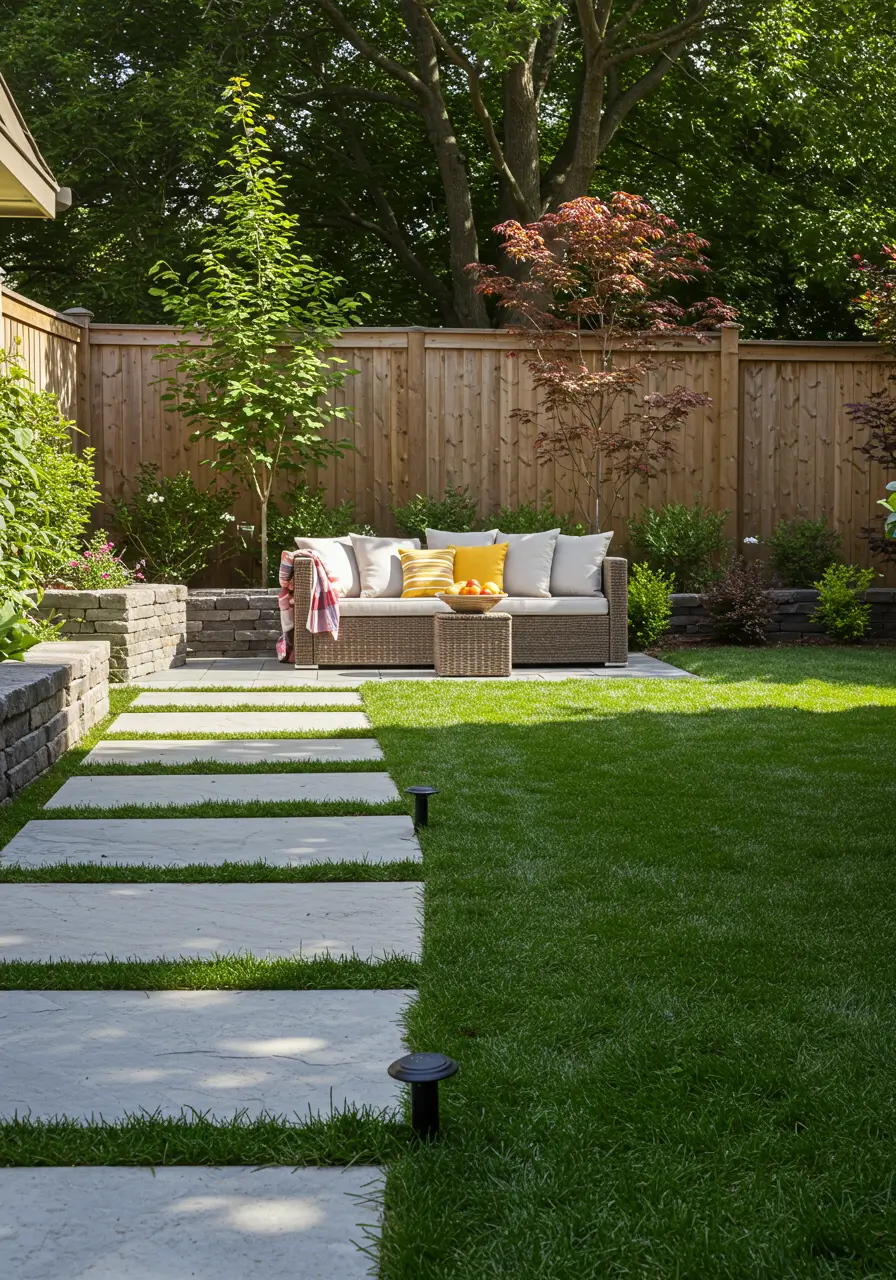
A timer helps when a watering task is predictable. A weather- or soil-responsive controller can reduce unnecessary irrigation when properly set up. Neither fixes poorly chosen plants or water running downhill from an incorrectly placed emitter. Design the planting first, then choose the simplest equipment that serves it.
The same test applies to a robotic mower, decorative lighting, and other backyard gadgets. Ask where the device will run, who will maintain it, how it handles edges or obstacles, and whether it saves more work than it creates. In a tiny, awkward lawn, removing the troublesome strip may be a better answer than buying a machine to mow it.
Put the changes together without taking on the whole yard at once
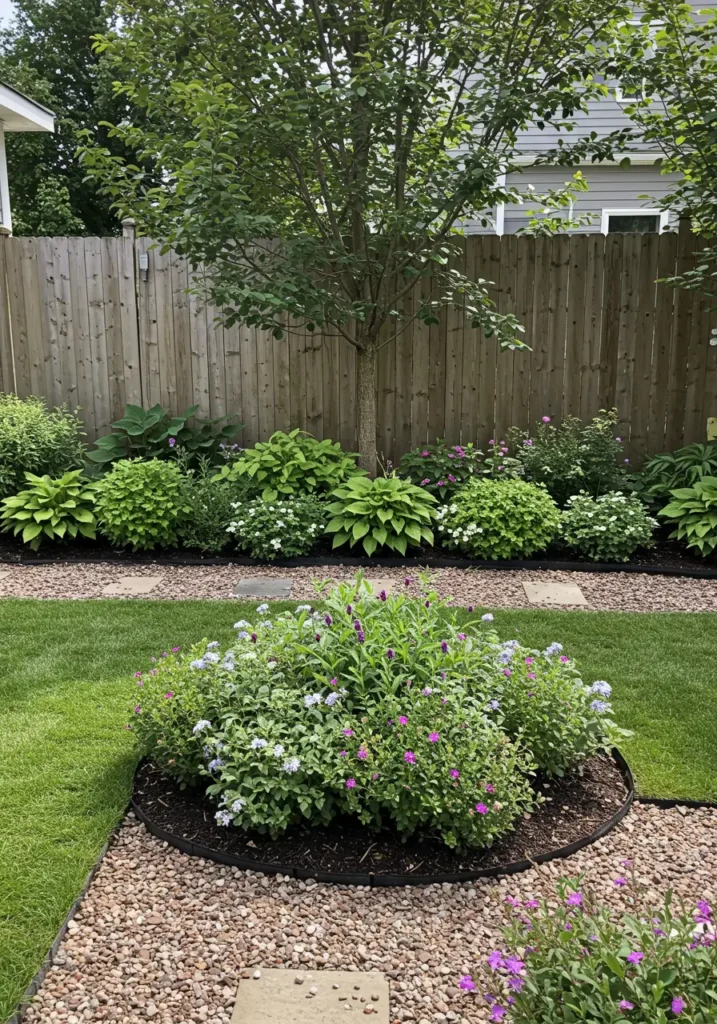
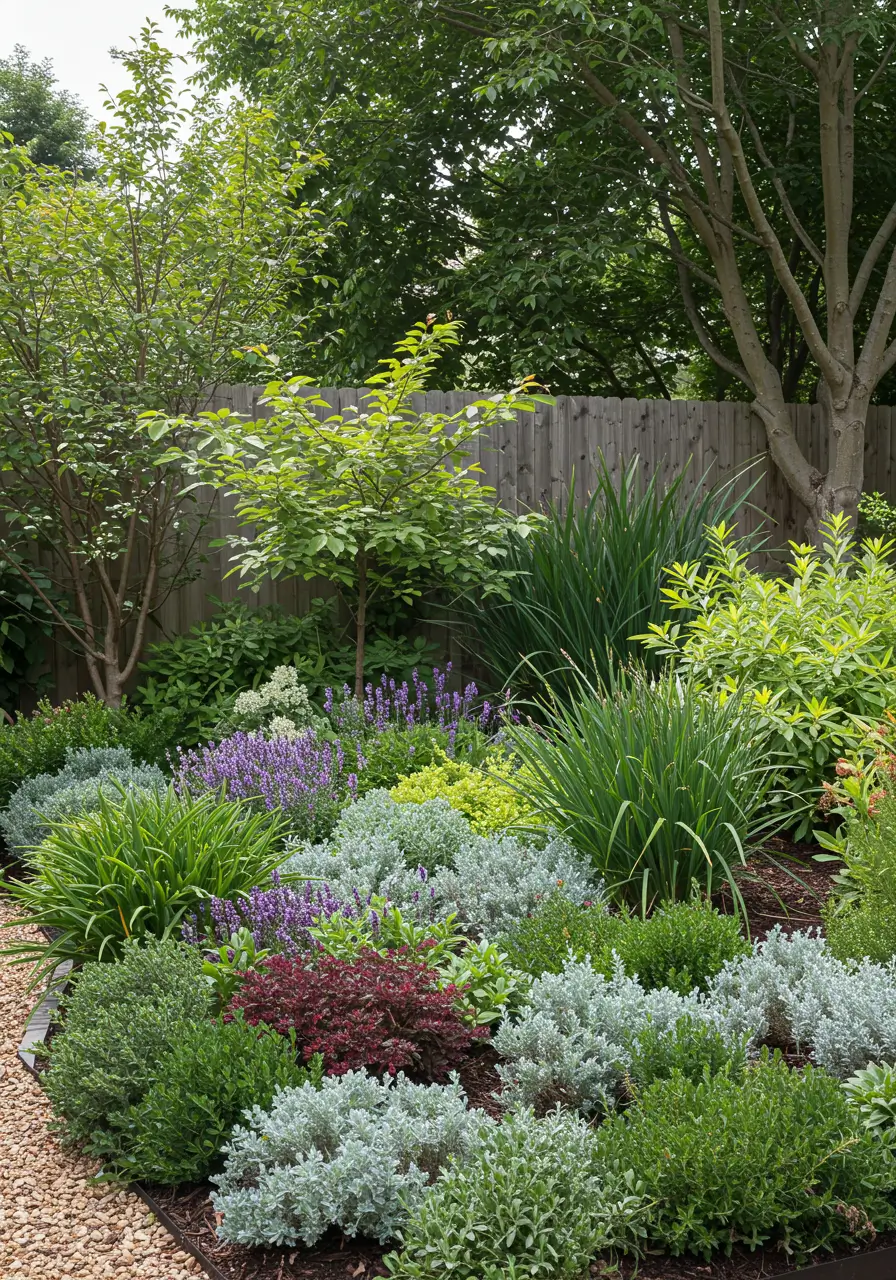
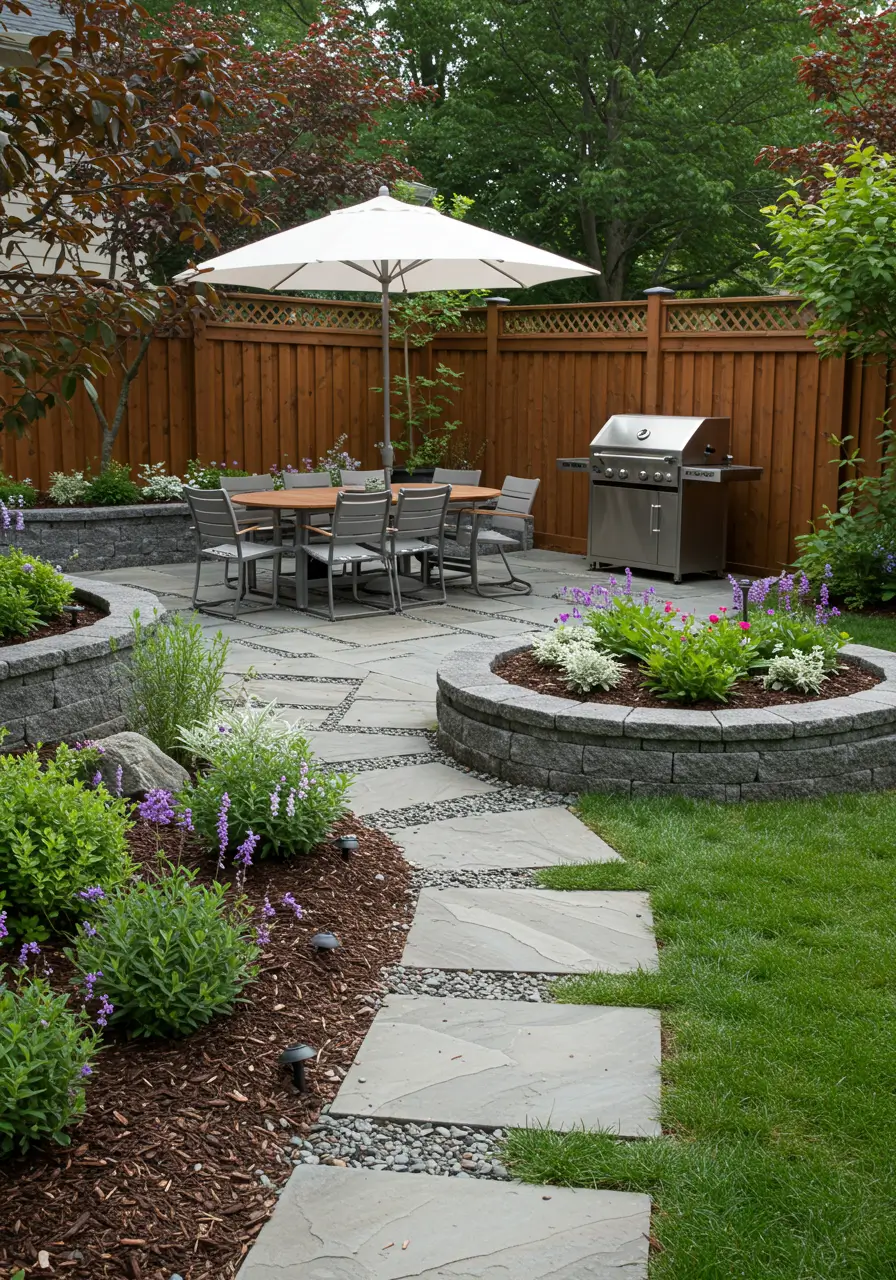
Imagine the backyard as three connected zones: an easy-to-cross route, a comfortable place to spend time, and planting that suits the conditions around both. Keep the lawn where it has a purpose. Give the seating area a usable surface and a clear path. Fill remaining beds with plants that share a watering schedule, and mulch the soil while they grow in. Repeating a few materials and plants ties everything together without adding extra care.
For the first phase, choose one project you can finish: remove a troublesome turf strip and plant it, edge and mulch an existing bed, or make the route to the gate reliable in wet weather. Take a photo before you start and revisit it after a season. Did the change actually reduce mowing, weeding, watering, or cleanup? If it did, extend that solution. If it created another chore, adjust before repeating it.
Low maintenance does not mean no maintenance. Expect to inspect irrigation, weed new beds while they establish, refresh mulch when it thins, and clean outdoor surfaces. The reward is a yard whose routine fits your life. Begin with the chore you most want to stop doing, and make the space around it easier to enjoy.