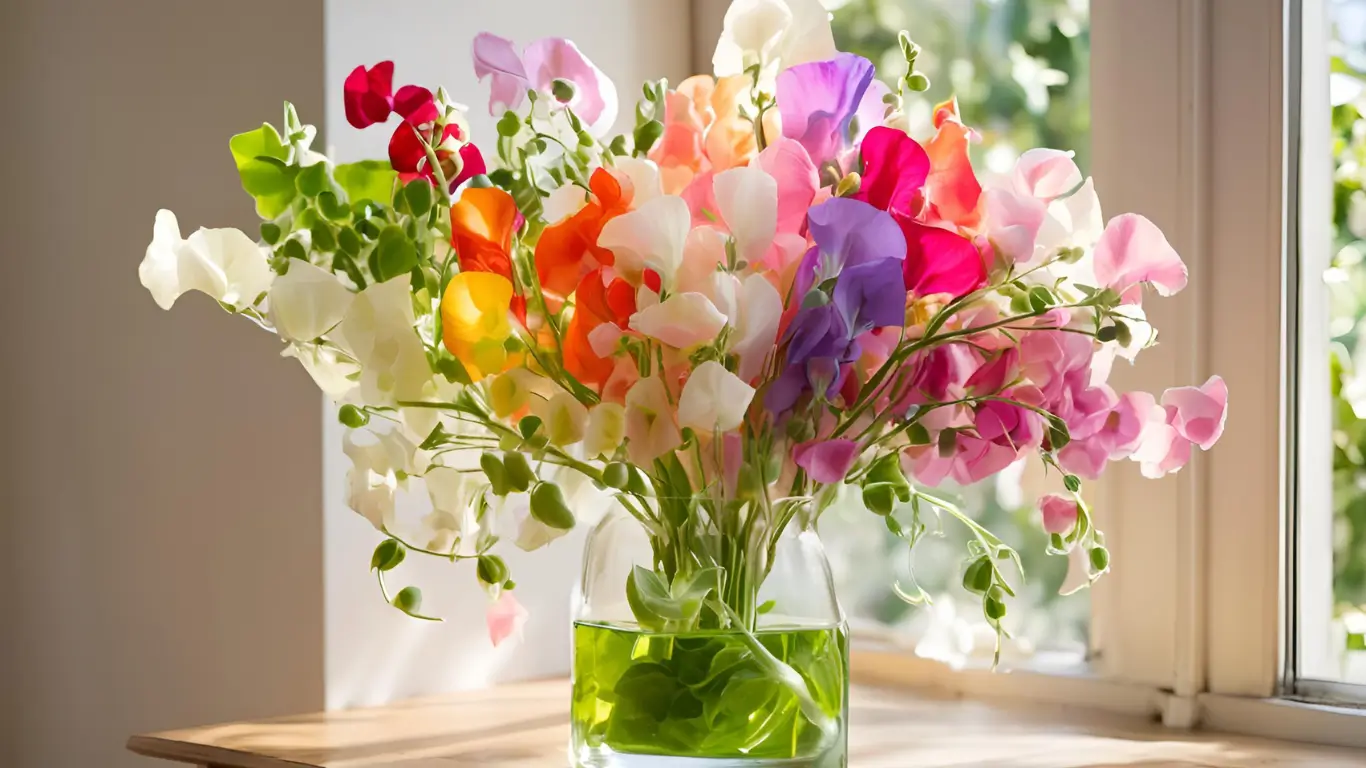
A vase of sweet peas on the kitchen table can make an ordinary morning feel special. But getting there can be frustrating: the vines look healthy, the trellis fills with leaves, and the flowers you imagined never quite arrive. Or they open beautifully, yet barely smell at all.
Amazon US Verified
Self-Watering Planters with Drainage Aerators
Elevated reservoir design that prevents soggy roots and ensures steady hydration.
For fragrant sweet peas, start with a variety selected for scent, grow it during your local cool season, and keep picking the flowers. Sunshine, steady moisture, and suitable soil help the plants bloom well. They cannot turn a lightly scented variety into a strongly perfumed one.
The most useful question is not which fertilizer promises bigger flowers. It is whether your seeds, planting date, and growing spot suit the flowers you want. These seven growing habits will help you make those choices, whether you have a backyard trellis or one sunny patio container.
Know Which Sweet Peas You Are Growing
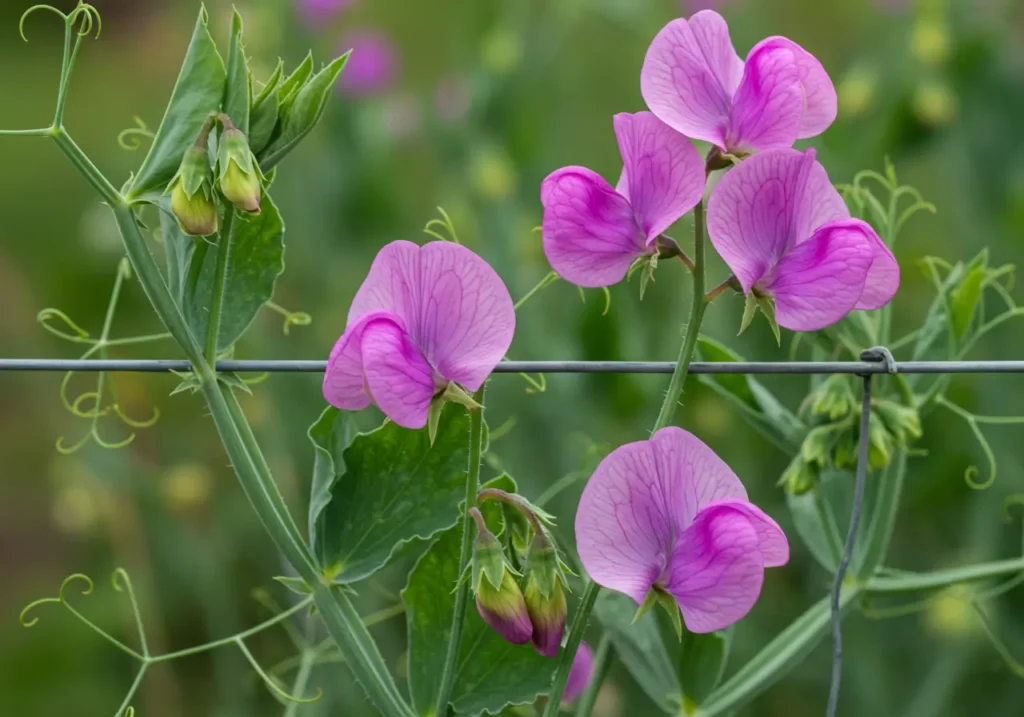
The fragrant annual sweet pea is Lathyrus odoratus. Annual means it completes its life cycle in one growing season. Most familiar varieties climb using curling tendrils, although compact varieties are available for smaller spaces.
Do not confuse it with everlasting pea, Lathyrus latifolius. That perennial returns year after year, but generally lacks the fragrance people expect from a sweet pea. A plant that covers a fence beautifully is not necessarily the right choice for scented bouquets.
Ornamental sweet peas are not edible peas. Their pods and seeds must not be eaten. NC State Extension identifies sweet peas as poisonous and advises keeping them separate from edible peas. Label seedlings clearly and keep seeds and pods away from children and pets. Do not use the flowers as food decorations. :chatgpt-content-reference{index=”0″}
1. Choose Fragrance Before Flower Color
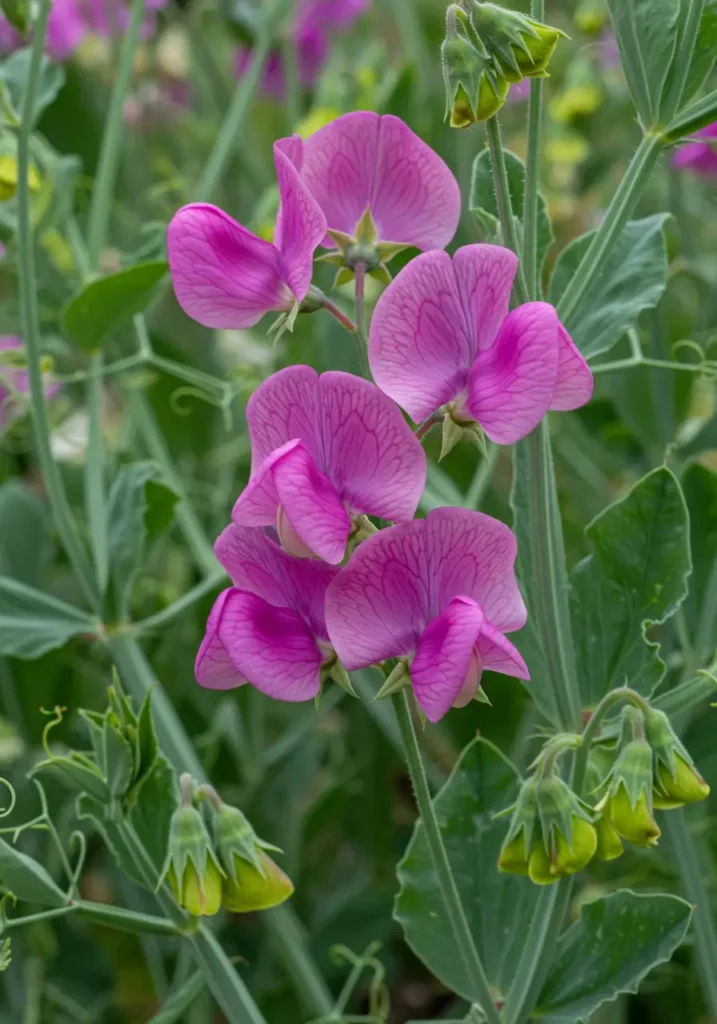
It is easy to shop for sweet peas by photograph: pale pink beside a white fence, deep purple against weathered wood, or a mixture that matches your favorite vase. If scent matters most, read the variety description before deciding on the color.
Look for an explicit description of fragrance, along with mature height and suitability for your growing season. Grandiflora selections are a useful starting point, but avoid assuming every older variety is fragrant or every newer variety has lost its scent.
- ‘Matucana’: A climbing variety with violet and deep crimson flowers. The Royal Horticultural Society describes ‘Matucana’ as very strongly scented. :chatgpt-content-reference{index=”1″}
- ‘Cupani’: An old cultivated selection worth considering when fragrance is your priority, especially if you enjoy smaller, bicolored flowers. :chatgpt-content-reference{index=”2″}
- ‘High Scent’: A strongly scented option with creamy flowers edged in violet, showing that a fragrance-focused choice need not mean dark colors. :chatgpt-content-reference{index=”3″}
Choose one or two clearly named varieties for your first planting. That makes it easier to learn what succeeds in your yard than sowing several unidentified mixtures together. Keep the packet or photograph its label so you can buy the same variety again.
If you can smell a flowering plant at a local nursery or public garden, use that opportunity. Fragrance descriptions are helpful, but your own preference matters. A flower you love at close range may be more satisfying than a variety chosen solely for its reputation.
2. Plant for Your Cool Season, Not a Nationwide Calendar
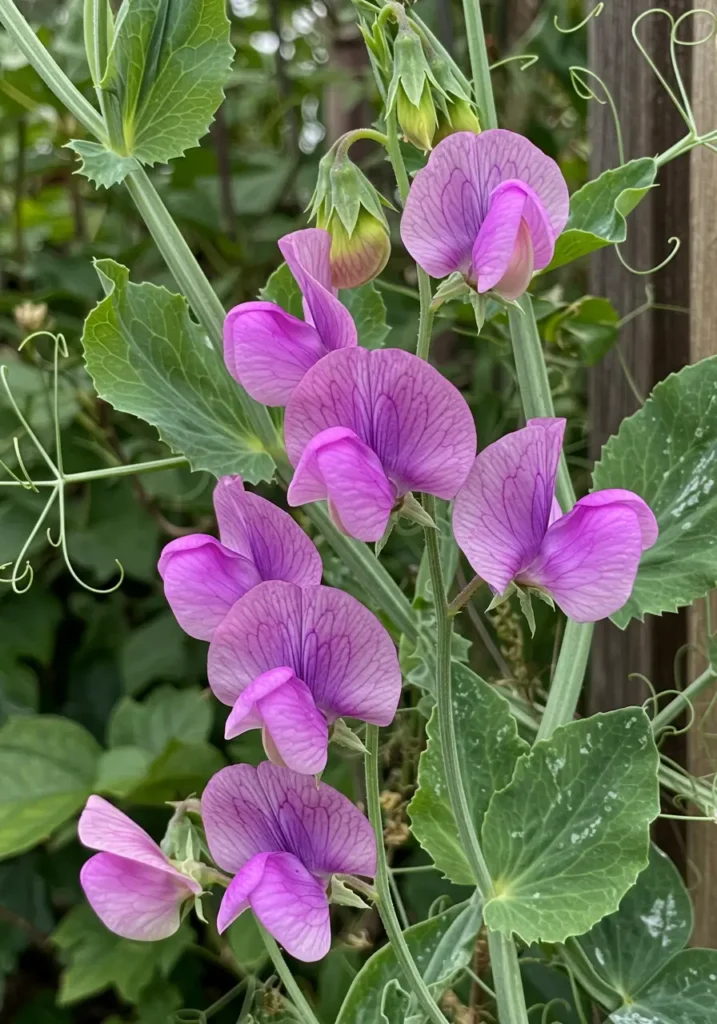
Sweet peas prefer cool growing conditions. In much of the United States, the challenge is giving them enough time to establish and flower before sustained summer heat arrives. Waiting until you plant heat-loving summer flowers can leave sweet peas with a very short season.
Your local climate matters more than an attractive planting calendar shared online. A mild coastal winter, a snowy northern winter, and a southern spring that warms quickly require different plans.
- Cold-winter gardens: Plan for an early spring crop. Check local guidance for sowing and transplanting rather than putting seedlings into frozen or saturated soil.
- Mild-winter gardens: Fall sowing may allow plants to establish for spring flowers. This is a regional option, not a promise that seedlings will survive every winter.
- Gardens with rapidly warming springs: Ask your county extension office or a local grower which sowing window gives sweet peas the longest stretch of cool weather.
For example, Illinois Extension lists a mid-March to mid-April sowing window, while UC Master Gardeners in Napa County describe late-fall sowing in their mild climate. These examples explain why copying a month without checking the location can lead to disappointment. :chatgpt-content-reference{index=”4″}
Give seedlings a practical start
Use clean pots with drainage holes and a seed-starting mix. Individual deep cells or pots make it easier to move seedlings without pulling their roots apart. Follow your packet for sowing depth; recommendations may differ between indoor sowing and direct sowing outdoors.
Amazon US Verified
Organic Perlite Horticultural Soil Conditioner
Lightweight volcanic mineral that improves root aeration and prevents compaction.
Seed preparation advice varies. Some suppliers recommend soaking or gently abrading the hard seed coat; others recommend sowing directly. Follow the instructions for your seed lot rather than combining several treatments. If you soak seeds, sow them promptly instead of leaving them submerged for days.
After germination, provide bright light and avoid an excessively warm, dim windowsill. Before transplanting, gradually introduce indoor-grown seedlings to outdoor conditions. The RHS recommends a hardening-off period of about 10 to 14 days. Keep root balls intact and water them in after planting. :chatgpt-content-reference{index=”5″}
3. Find Sunshine Without a Heat Trap
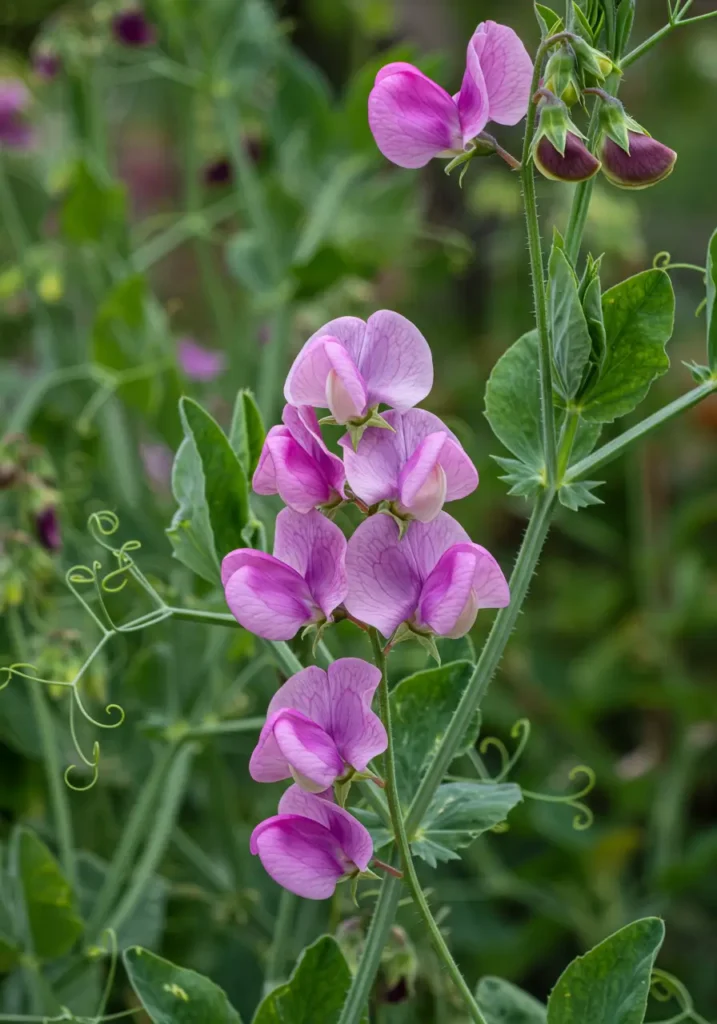
A sunny location supports flowering. Full sun generally means at least six hours of direct sunlight each day. In a cool garden, an open, sunny bed may be ideal. Where afternoons become hot, a position with morning sun and some later shade can be a better compromise.
Think about the whole location, not just the number of sunny hours. A container beside hot paving or a wall that radiates afternoon heat may experience very different conditions from a garden bed nearby. Shade alone will not make a hot-summer climate suitable for indefinite flowering.
Before planting, watch your proposed spot in the morning, around midday, and later in the afternoon. Notice whether a fence blocks the useful light or a nearby tree will shade the bed once its leaves return. This simple observation is more useful than guessing from one sunny moment.
Place the flowers somewhere you will actually enjoy them: beside a sitting area, along an accessible garden path, or near the route you take to water your containers. Leave room to walk around the support and reach the blooms. A beautiful planting tucked behind other shrubs can become difficult to harvest.
4. Prepare Soil That Holds Moisture and Still Drains
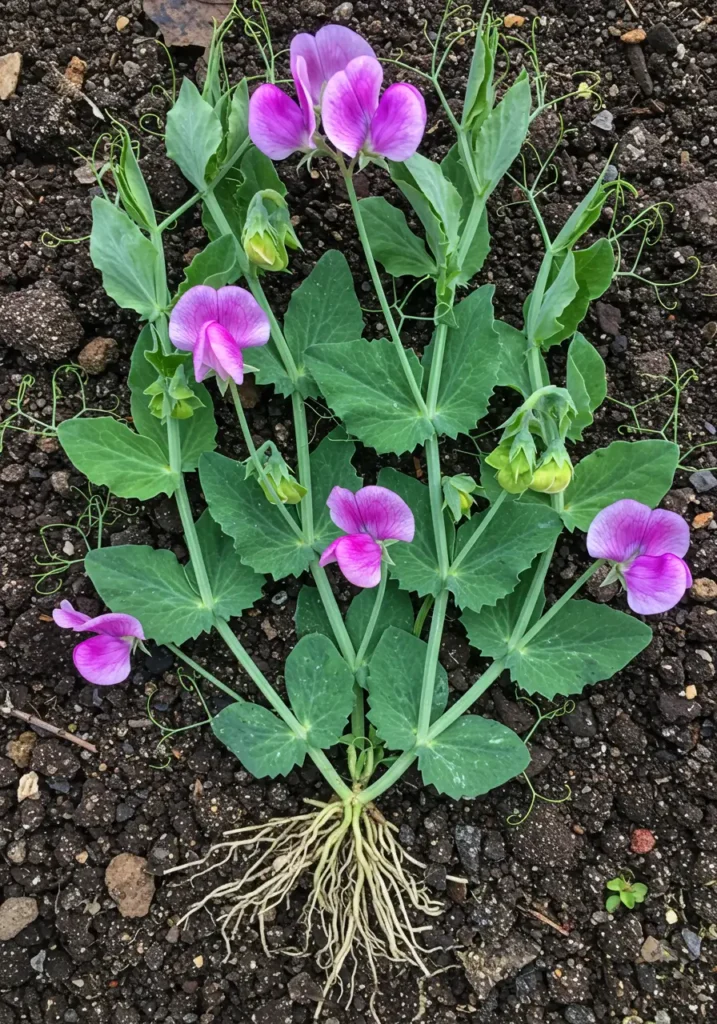
Sweet peas need fertile soil that stays reasonably moist without remaining waterlogged. That balance matters more than creating an elaborate planting trench or collecting several different amendments.
Work finished compost into the planting area where appropriate, remove competing weeds, and check how the bed behaves after rain. If water remains pooled, address drainage or choose another spot before planting. More fertilizer will not correct a location where roots remain saturated.
Do not add lime simply because a general guide gives a preferred pH range. Test the soil first and follow the resulting recommendations. Likewise, avoid adding phosphorus or other nutrients on the assumption that every flowering plant needs more. Your starting soil may already contain enough.
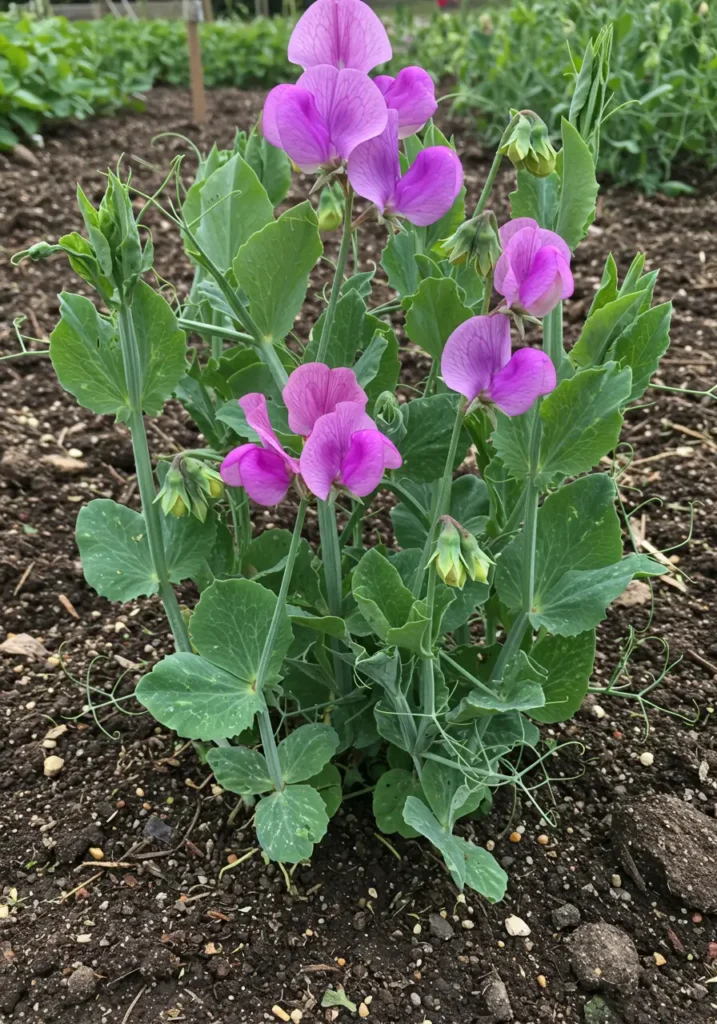
A surface mulch can help conserve moisture and reduce weeds. Keep it away from direct contact with the stems, and leave young seedlings unobstructed. The aim is a protected root zone, not a damp mound piled against the plant.
Make container growing easier
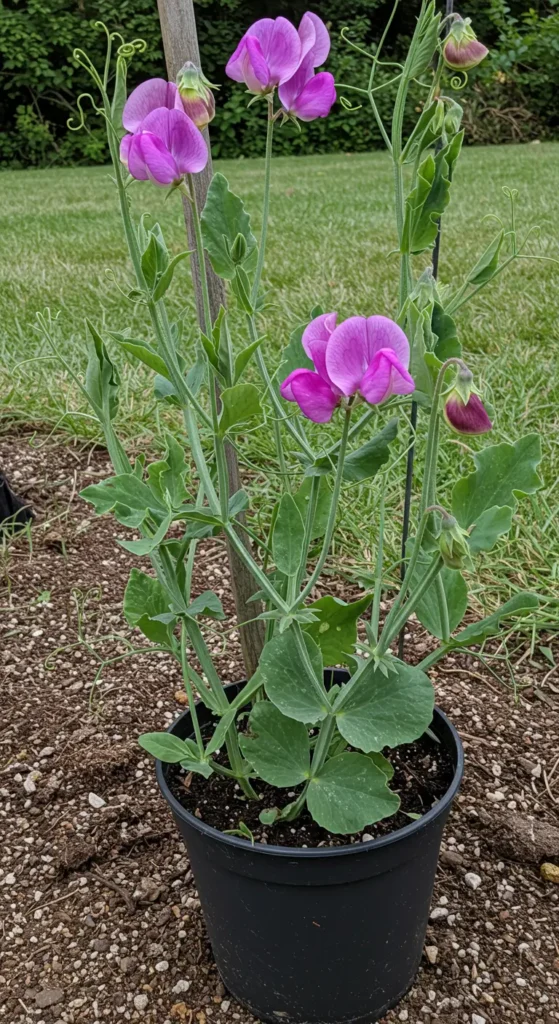
Choose a roomy container with drainage holes and a potting mix intended for containers. A tall climbing variety needs both root space and a stable support; a compact variety can suit a smaller arrangement. Match the pot to the mature plant rather than the size of the seedling you bring home.
Set up the pot where it will stay before filling and planting it. Consider access to water, wind exposure, and how you will reach the back of the support. Avoid leaving the container standing in collected water. A decorative outer pot should not prevent drainage from the growing pot inside.
For a first attempt, one manageable container is often more useful than several crowded pots. It gives you a clear view of how quickly the mix dries and how much space the chosen variety needs.
5. Install a Support the Tendrils Can Actually Grip
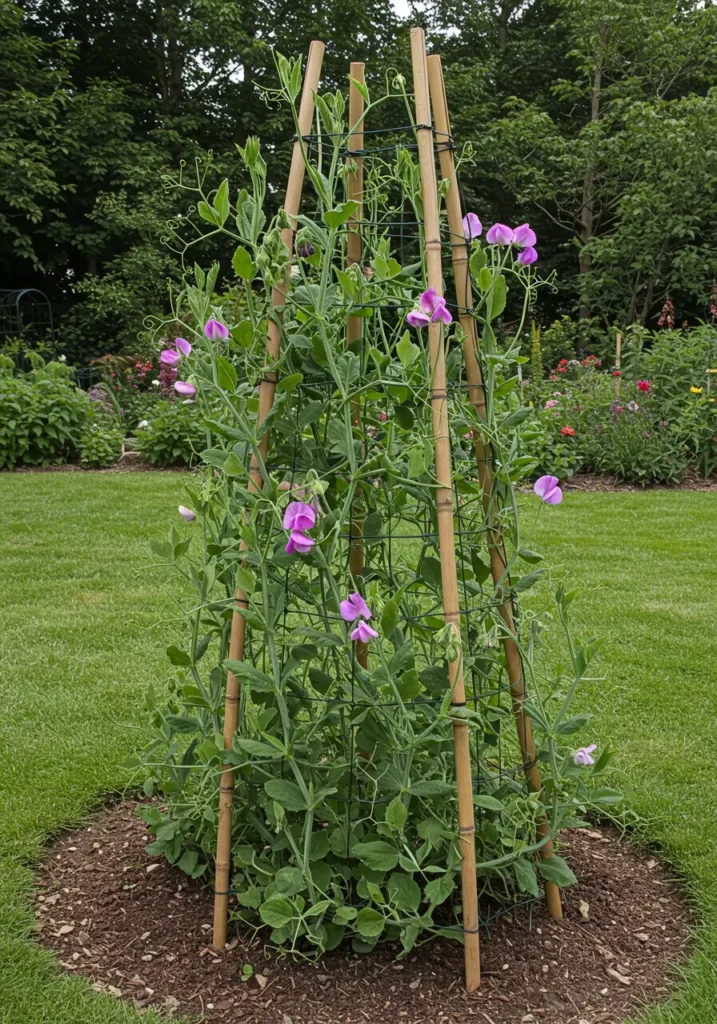
A thick post can hold up a fence, yet offer little for a sweet pea tendril to grasp. Climbing varieties need slender contact points such as garden twine, suitable mesh, or twiggy supports. A few upright poles work better when connected with a climbing surface.
Install the structure before sowing or transplanting. That avoids pushing stakes through established roots later. Check the variety’s expected height: many climbing sweet peas need a tall support, while dwarf forms may not need one at all.
Anchor the support securely and keep it clear of doorways and gates. If you are planning a border near an entrance, these ideas for iron gates and wrought iron gates can help you consider the surrounding layout. Give the sweet peas their own fixed support rather than allowing vines to catch in a moving gate.
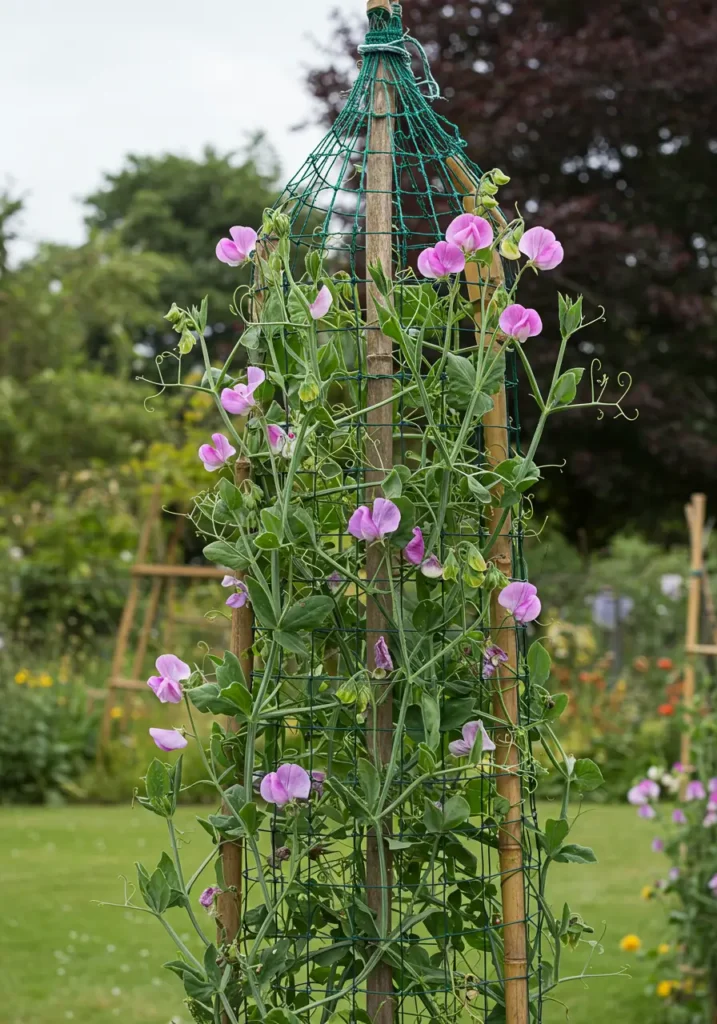
Guide new shoots toward the support and loosely secure wayward stems with soft ties. Check ties as stems grow so they do not become tight. It is easier to direct a few young shoots than untangle a heavy mass of vines later.
Pinching the growing tip of young plants can encourage branching. The RHS sweet pea growing guide recommends pinching spring-sown plants at roughly 3 to 4 inches tall; fall-sown seedlings may branch naturally. Pinching is an early shaping step, not something to repeat on every developing flowering shoot. :chatgpt-content-reference{index=”6″}
6. Keep Moisture Steady and Feed According to Need
Amazon US Verified
Digital 3-in-1 Soil Moisture & pH Meter
Accurate probe to test deep root zone moisture and prevent accidental overwatering.
Sweet peas struggle when their root zone repeatedly swings from very dry to saturated. Check the soil or potting mix before watering rather than following the same schedule through cool rain, warm wind, and summer heat.
Water at the base and give moisture time to reach the roots. Container plants deserve frequent checks because their supply of moisture is limited. A dry-looking surface does not always tell you what is happening deeper in the pot, so check below it before adding more water.
Feeding also depends on where you are growing. A prepared garden bed and a container of potting mix do not start with the same nutrient supply. Check whether your potting mix already includes fertilizer, and follow the fertilizer label for dilution and frequency when feeding is needed.
Avoid combining several products because each promises more blooms. Extra feeding does not solve every problem, and it cannot compensate for a poor planting date. If your plants are growing vigorously but flowering poorly, review light, temperature, maturity, and the variety’s requirements before adding another dose.
Make care easy to remember: keep a simple note of feeding dates and check moisture while inspecting the vines. The purpose is to notice changes early, not to turn a small flower patch into a complicated maintenance project.
7. Pick Flowers and Remove Developing Pods
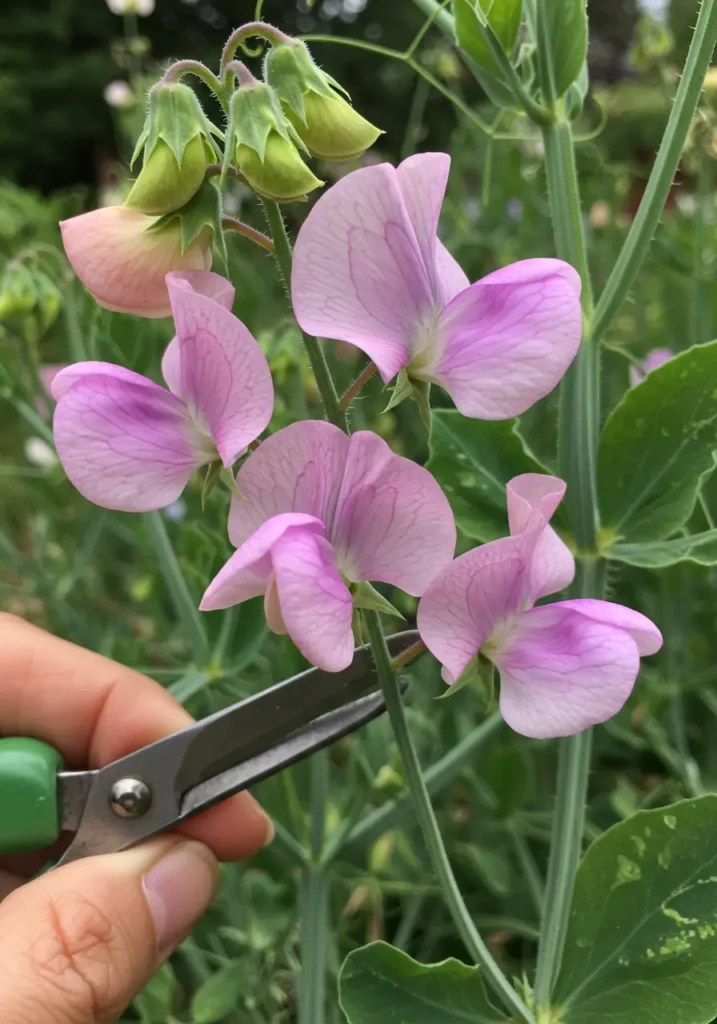
Once flowering begins, regular picking becomes part of the care routine. Allowing pods to develop reduces continued flowering. You do not have to leave every bloom on the vine to keep the planting attractive; gathering small bouquets helps you enjoy the crop while keeping up with it.
Deadheading means removing faded flowers. Check the entire support, including the side facing a fence, because flowers hidden behind foliage are easy to miss. Remove developing pods when your goal is continued bloom.
Use clean snips to cut the individual flower stem rather than pulling at the vine. Choose fresh flowers for the vase, place the stems in water promptly, and remove foliage that would sit below the waterline. A small vase suits shorter stems just as well as a large arrangement suits long ones.
Build harvesting into something you already do. Bring snips when you water, or check the flowers during a morning walk around the yard. Frequent short visits are easier than discovering a tangle of faded blooms and pods after a week away.
If you want to save seed, reserve a few pods near the end of the season and accept less flowering on those plants. Label saved seed clearly as ornamental sweet pea seed. Keep it separate from vegetable seeds and anything intended for food.
Check Problems Before Reaching for a Spray
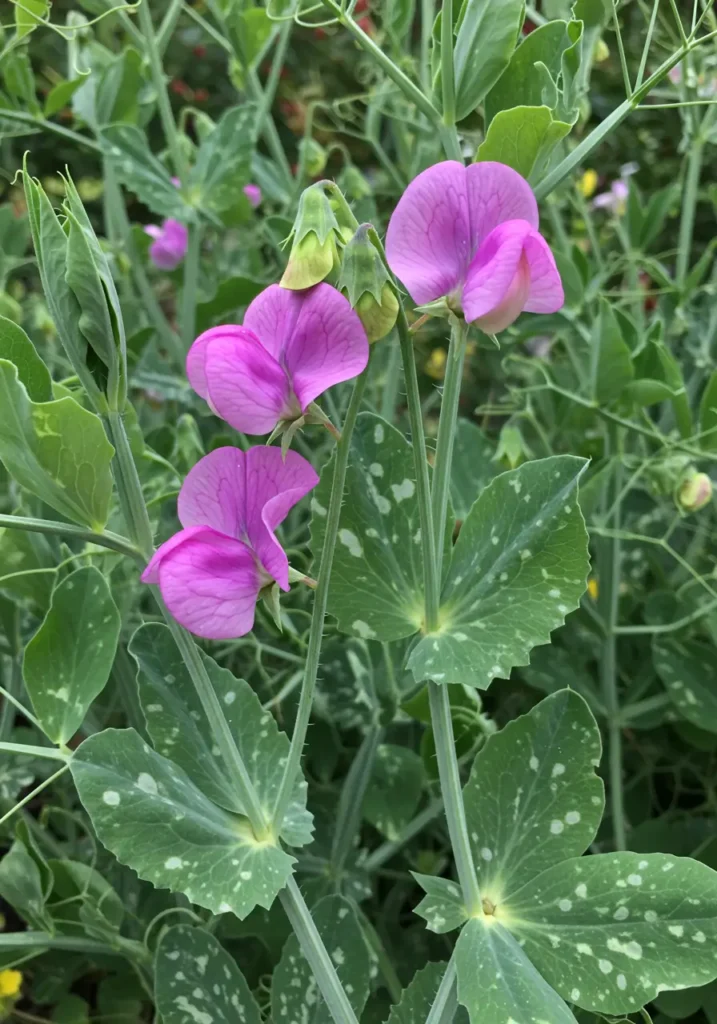
A damaged leaf does not tell you which treatment, if any, is needed. Look at new shoots, leaf undersides, stems near the soil, and the moisture around the roots. Take clear photographs if you need help identifying the cause.
Aphids, slugs, snails, spider mites, and several diseases can affect sweet peas. The University of California’s sweet pea pest guide provides links to individual pests and disorders. Use those descriptions to narrow the problem before choosing a response. :chatgpt-content-reference{index=”7″}
- White powder on leaves: Powdery mildew is a possibility. Check the diagnosis and growing conditions before assuming any fungicide is appropriate.
- Wilting despite wet soil: Stop automatically adding water. Poor drainage or root problems may need investigation.
- Damaged seedlings: Inspect for slugs, snails, or other chewing pests, including after dusk when some are easier to find.
- Scorched foliage or dropped buds: Review recent heat, drying, and temperature changes as well as possible pests.
Do not apply copper fungicide or insecticidal soap as a universal preventive treatment. If a product is appropriate, follow its label and plant restrictions. The word “organic” does not mean a spray is suitable for every problem or harmless under every condition.
Why Healthy Sweet Peas May Still Disappoint
The flowers have very little scent
Check the variety first, then confirm that the plant is an annual sweet pea rather than an unscented perennial pea. If fragrance was not a selling point on the packet, changing fertilizer may not give you the result you wanted. Make a note to choose a specifically fragrant selection next time.
There are plenty of leaves but few flowers
Review when you sowed, how much direct light the plants receive, and whether your variety is suited to the season. Plants also need time to mature. Compare their progress with the packet guidance and local growing conditions before treating normal development as a deficiency.
Flowering slows when summer arrives
A short hot spell may interrupt flowering, while sustained heat can bring the crop to an end. Deadheading and watering help within the plant’s limits; they do not guarantee flowers all summer. In hot climates, an earlier planting window next season may matter more than increasingly intensive care now.
Make Your Sweet Pea Patch Fit Everyday Life
You do not need an elaborate cottage garden to enjoy fragrant flowers. Start with a small, accessible planting and a support you can reuse. Spend first on suitable seed, workable growing conditions, and a reliable way to water. A decorative obelisk is optional.
In a family backyard, keep ornamental sweet peas separate from edible crops and children’s picking areas. If you are also planning a play space with swing set accessories, keep garden supports and vines outside the equipment’s required clearance area.
Before ordering seeds, answer three questions: Where will I grow them, when is my local cool-season planting window, and which variety explicitly offers the scent I want? Those choices give your flowers a useful start. After that, leave the snips near the door and enjoy bringing a little of the garden inside.
As an Amazon Associate, azuloz.com earns from qualifying purchases.