29 Office Accent Wall Ideas for a More Stylish and Functional Workspace
As an Amazon Associate, Azuloz earns from qualifying purchases. This does not affect the price you pay.
An office accent wall can give your workspace a clear focal point without requiring a complete renovation. The right design may also improve storage, reduce visual clutter, create a polished video-call background, or soften an echo-prone room.
For the simplest transformation, choose paint. If you need organization, consider pegboard, cork, shelving, or a writable surface. For rooms with noticeable echo, decorative acoustic panels may be more useful than a purely visual treatment.
How to Choose the Right Office Accent Wall
The best accent wall is usually the surface behind your desk, opposite the entrance, or visible behind you during video calls. A relatively uninterrupted wall is easier to decorate than one divided by several doors, windows, or vents.
- Add color: Paint, wallpaper, murals, and fabric coverings provide the strongest visual change.
- Improve organization: Pegboard, cork, shelving, and writable boards keep useful items within reach.
- Make the room feel warmer: Wood, cork, fabric, and textured plaster soften a plain workspace.
- Reduce reflected sound: Purpose-made acoustic panels can help control reverberation during calls and recordings.
- Create a professional background: A restrained gallery wall, shelving arrangement, or paneled surface works well on camera.
Consider the Room’s Light
Paint and material samples can look dramatically different under daylight, warm bulbs, and cool office lighting. Test samples on the intended wall and observe them in the morning, afternoon, and evening.
Matte and low-sheen finishes generally create fewer distracting reflections than glossy surfaces. This is especially important when the wall faces your monitor. The OSHA workstation guide recommends arranging lighting and screens to minimize glare.
For customizable indirect illumination, a Govee Smart LED Light Strip can be installed behind shelving, beneath a desk, or along an architectural feature. Position it so the individual LEDs do not reflect on your monitor or create distracting bright spots during video calls.
Choose Color for the Space
Blue and green are often associated with calm interiors, while yellow, terracotta, and warm red can feel more energetic. These associations are not universal. Room size, lighting, personal preference, and color intensity all influence how a shade feels.
If you are uncertain, use a muted version of the color or apply it to a smaller architectural section instead of the entire wall.
Plan Around Furniture and Technology
Measure the desk, monitor, shelves, outlets, switches, and camera frame before installing anything. Slats, mirrors, shelves, and thick panels can interfere with cables or mounting hardware if the layout is not planned first.
29 Office Accent Wall Ideas
1. Deep Navy Blue
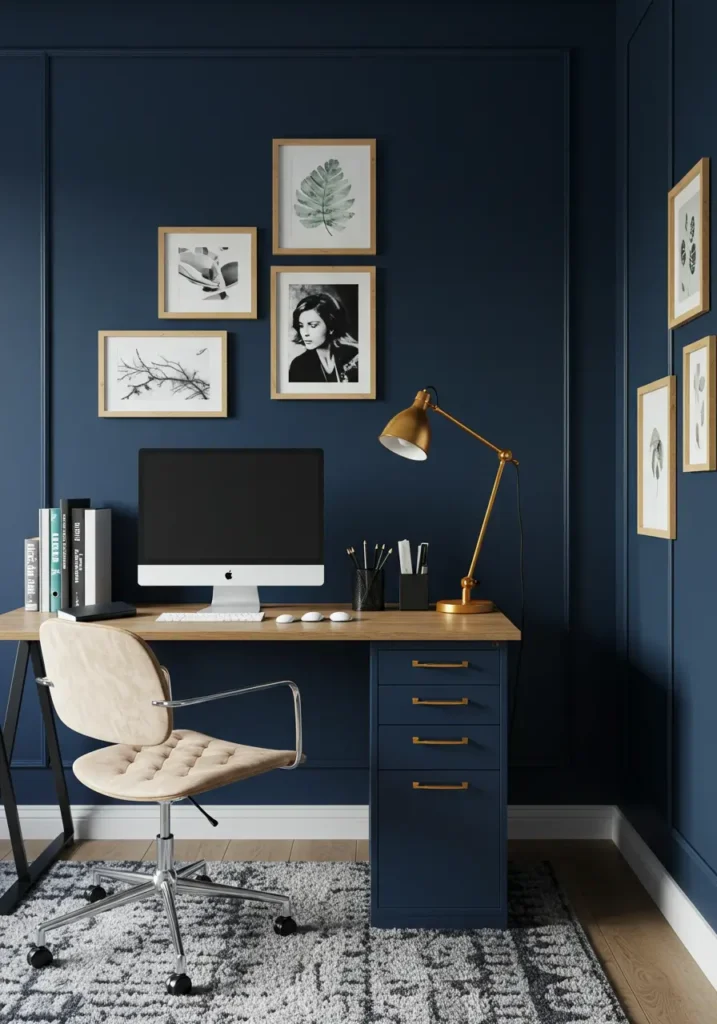
Deep navy creates a grounded, sophisticated backdrop that works particularly well with light wood, white furniture, brass details, and warm task lighting. Test the shade carefully in a small or dim room because very dark paint can absorb considerable light.
2. Chalkboard Wall
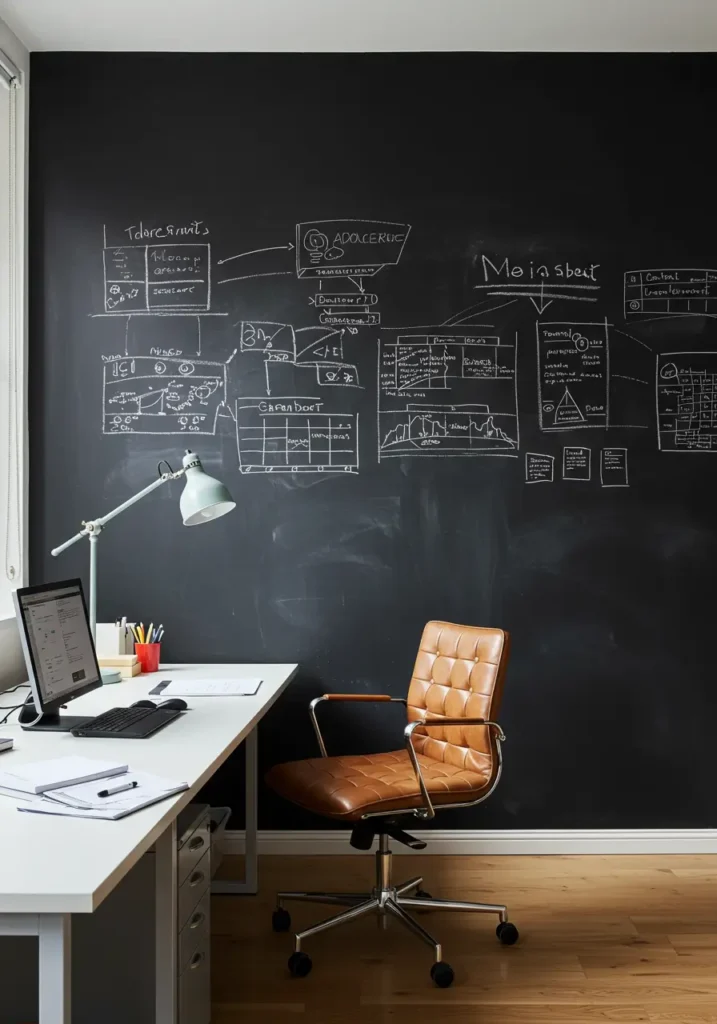
Chalkboard paint turns a blank wall into space for sketches, deadlines, reminders, or brainstorming. Use a limited section if you want the function without making the room feel like a classroom. Traditional chalk creates dust; chalk markers may be cleaner, but confirm that they are compatible with the surface.
3. Wood Slat Paneling
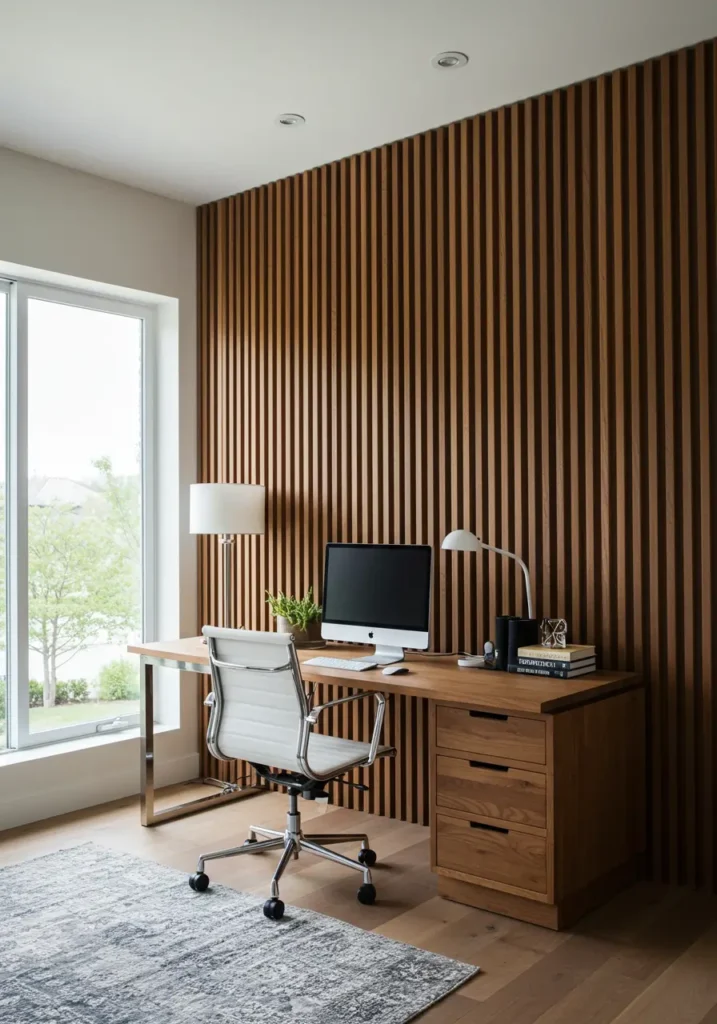
Vertical wood slats add warmth and can make a low ceiling appear taller. Horizontal slats visually widen a narrow wall. Decorative slats alone should not be assumed to provide meaningful sound control; choose a purpose-made system with an absorptive backing if acoustics are a priority.
One option is the Art3d 4-Pack Wood Slat Acoustic Panels in a teak finish. Each panel measures approximately 47.2 by 23.6 inches. Calculate the wall area, examine the mounting requirements, and confirm how many packs you need before ordering.
4. Geometric Painted Mural
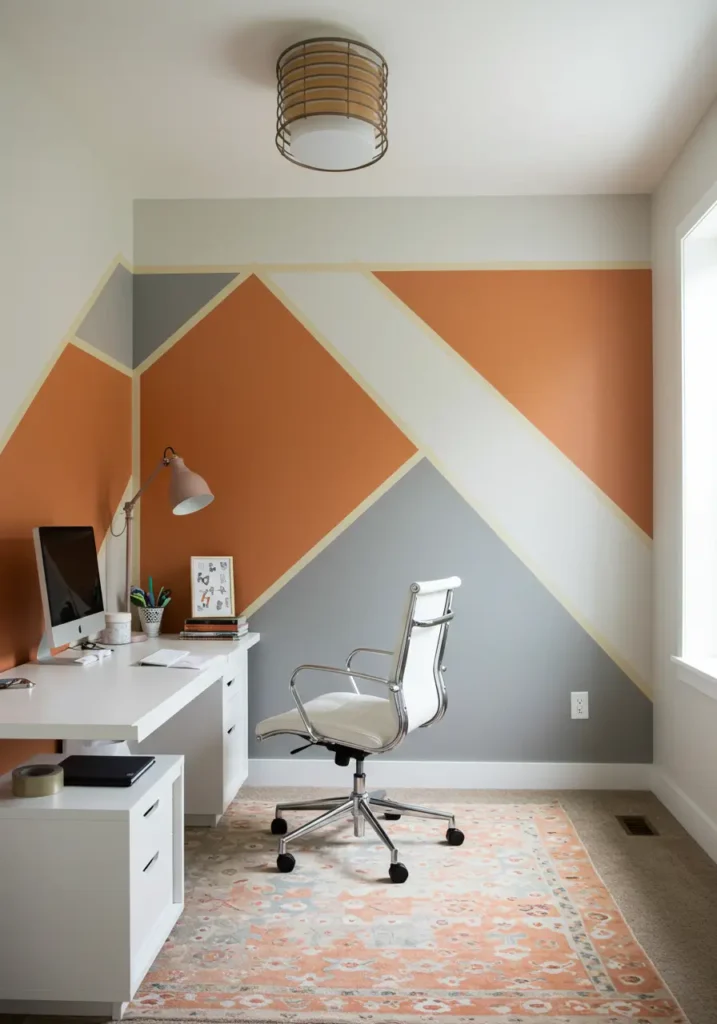
A mural created with painter’s tape is an accessible way to add a custom pattern. Limit the design to two or three coordinated colors so it remains visually comfortable during long work sessions. Plan the complete pattern on paper before placing tape on the wall.
5. Full or Partial Corkboard Wall
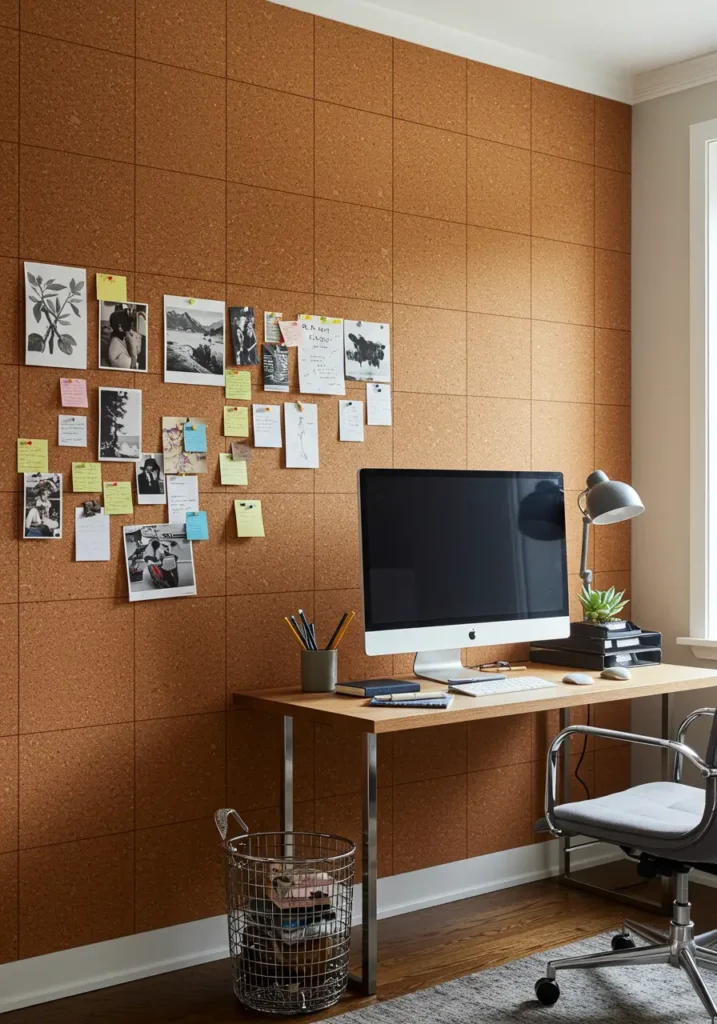
Cork gives you a flexible surface for calendars, samples, photographs, and active projects. A framed cork section often looks more intentional than covering the entire wall. Choose material thick enough to hold pins without allowing them to reach the wall beneath.
6. Textured Wallpaper
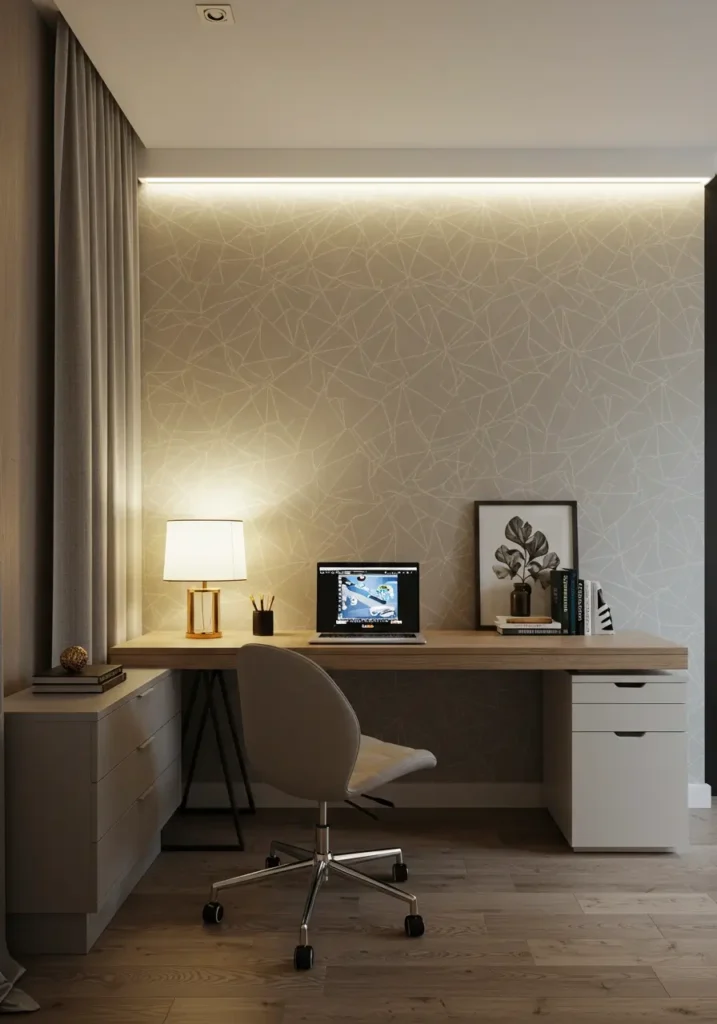
Linen-look, grasscloth-style, and subtle geometric wallpaper can add dimension without introducing a busy pattern. Natural grasscloth may show visible seams and can be sensitive to moisture, so a washable imitation may be more practical in a frequently used office.
7. Curated Gallery Wall
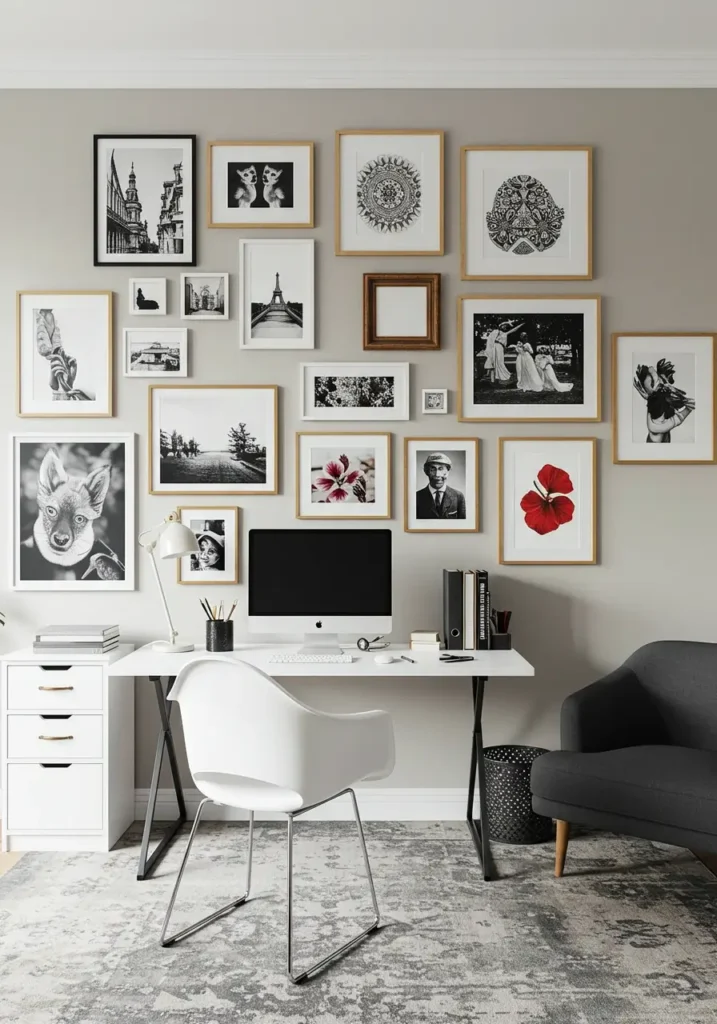
Combine photographs, prints, certificates, or illustrations using a consistent frame color or restrained palette. Arrange the composition on the floor first, then use paper templates to test spacing on the wall. Check how the display appears in your webcam frame before installing it permanently.
For compatible frames and wall surfaces, Command Large Picture Hanging Strips offer an alternative to nails. Check the package’s weight limit, surface restrictions, preparation instructions, and removal procedure before hanging anything valuable.
8. Exposed Brick Veneer
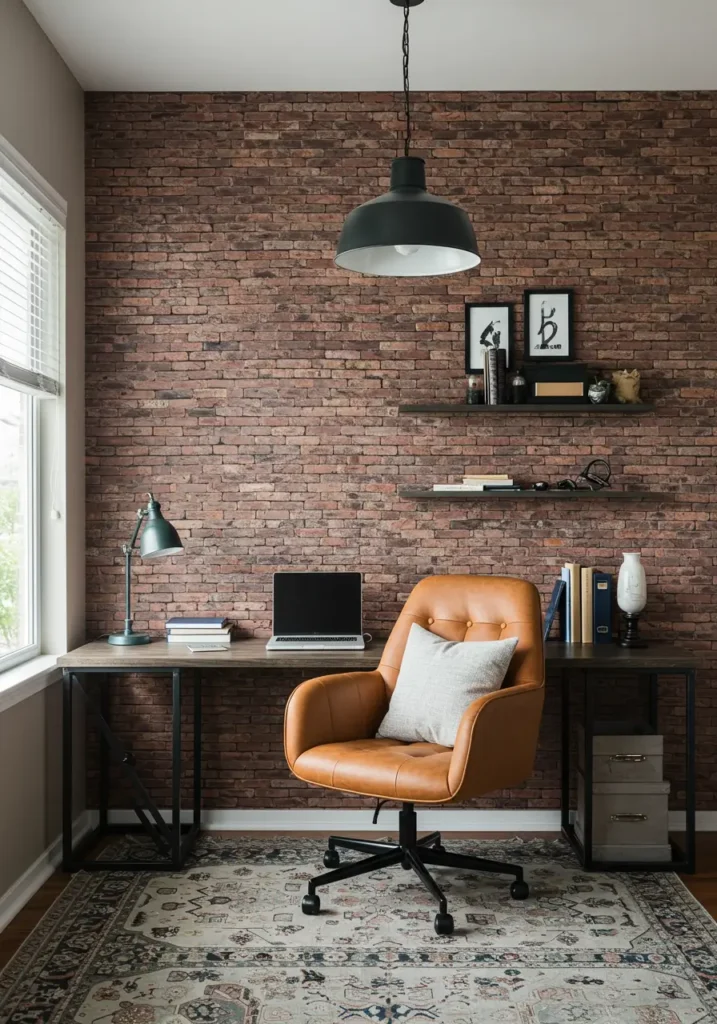
Thin brick veneer provides texture without the depth of structural masonry. It is visually strong, so simple furniture and restrained accessories usually create the best balance. Confirm the wall can support the selected material and use the manufacturer’s recommended installation method.
9. Removable Wallpaper
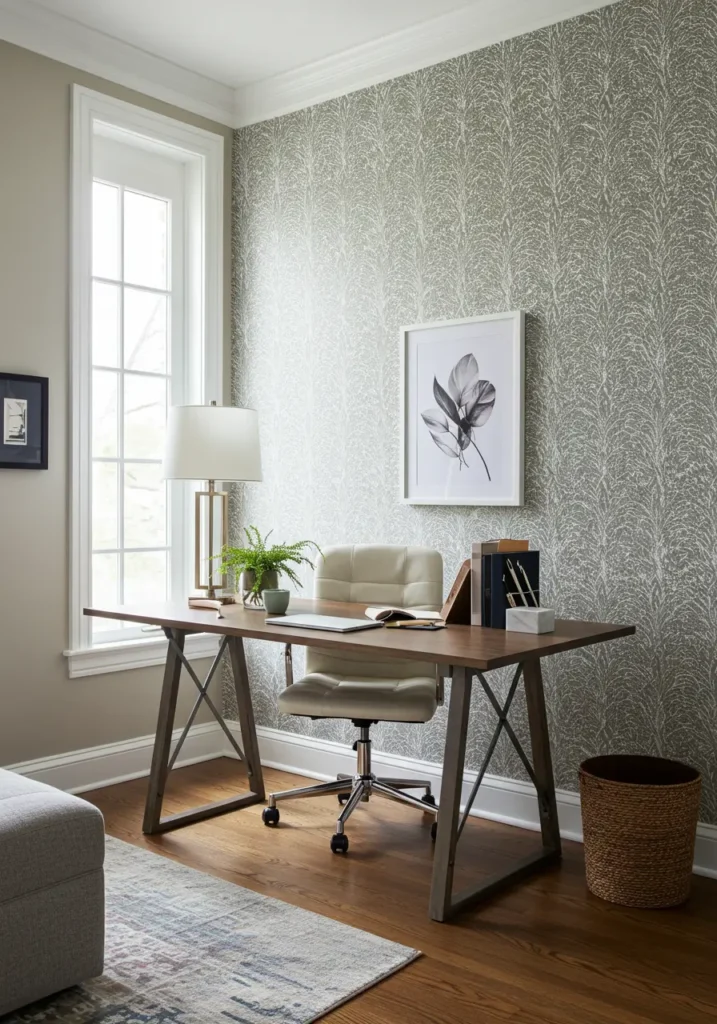
Peel-and-stick wallpaper is useful for renters and anyone who enjoys changing designs. Results depend heavily on the wall condition. Test a small hidden area first because adhesion and removal can vary on textured, freshly painted, damp, or poorly prepared surfaces.
NuWallpaper Peel and Stick Wallpaper is one option for creating a removable accent wall. Check the selected pattern’s roll dimensions and repeat measurement, then calculate coverage with an allowance for trimming and pattern matching.
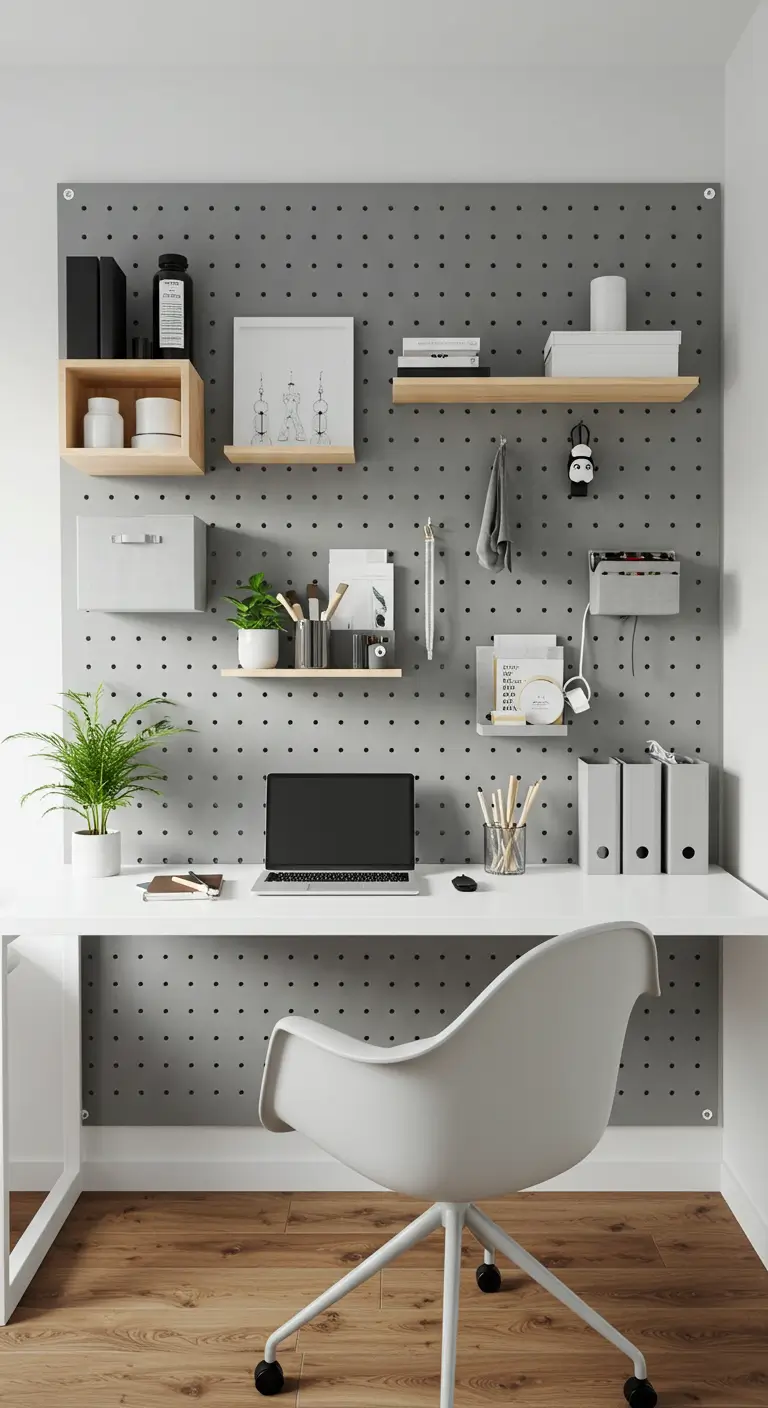
10. Pegboard Organization System
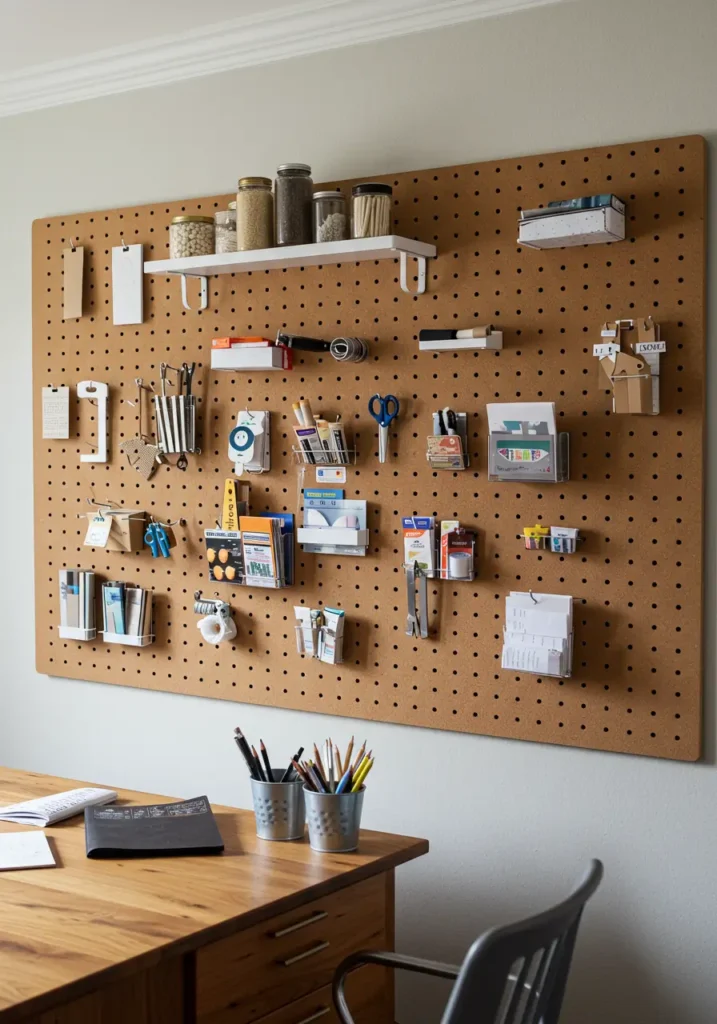
A pegboard can hold stationery, craft tools, headphones, cables, small plants, and display shelves. Position frequently used items near the desk and keep heavier objects lower. Use wall anchors and hardware rated for the combined weight of the board and its contents.
The Wall Control Craft and Hobby Pegboard Organizer Storage Kit with white accessories can create a coordinated storage zone for tools and office supplies. Confirm that the included accessories suit the objects you want to store and follow the mounting instructions carefully.
11. Living Green Wall or Moss Display
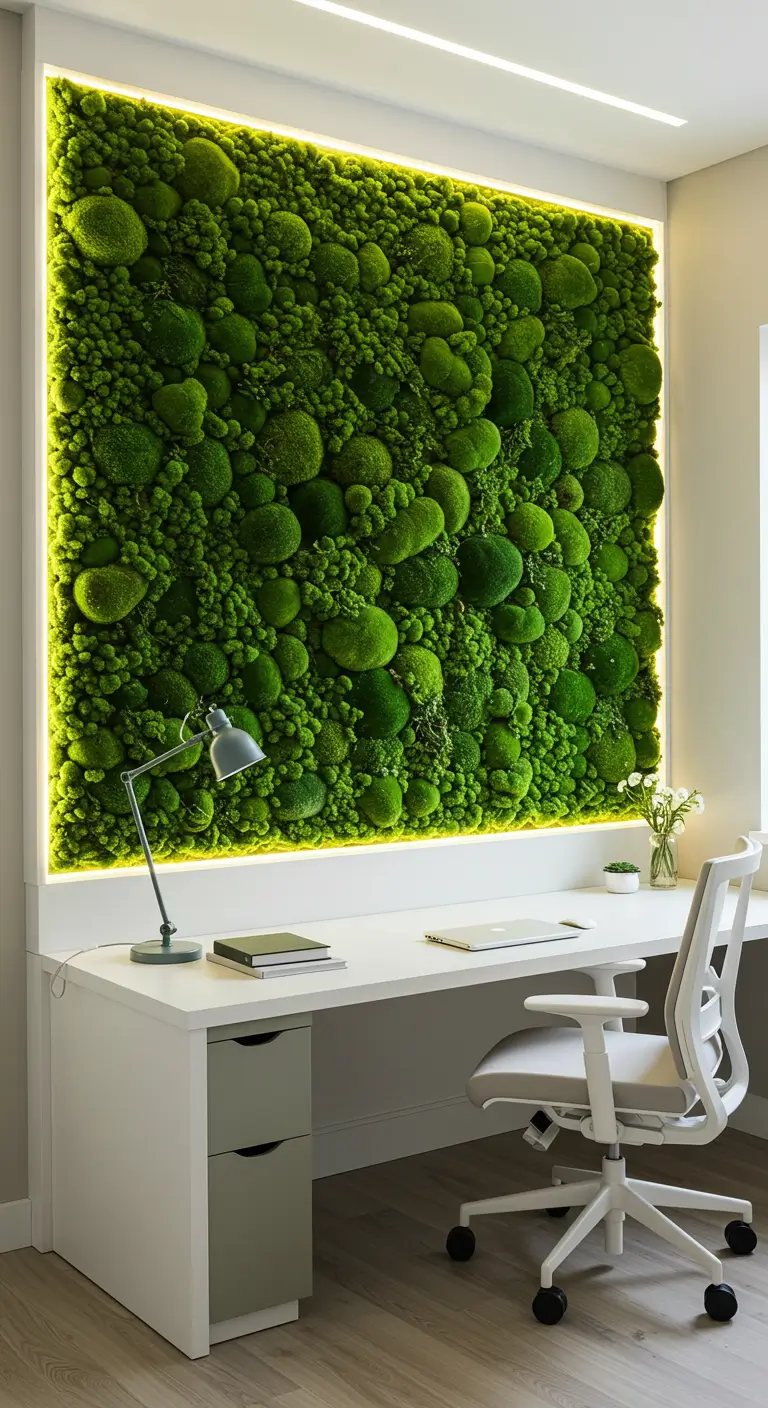
Wall-mounted plants can soften a technology-heavy office, but a true living wall needs suitable light, irrigation, drainage, and maintenance. For a simpler option, use several removable planters or a preserved moss display. Protect the wall from moisture and choose non-toxic plants if pets can reach them.
12. Ombre Painted Wall
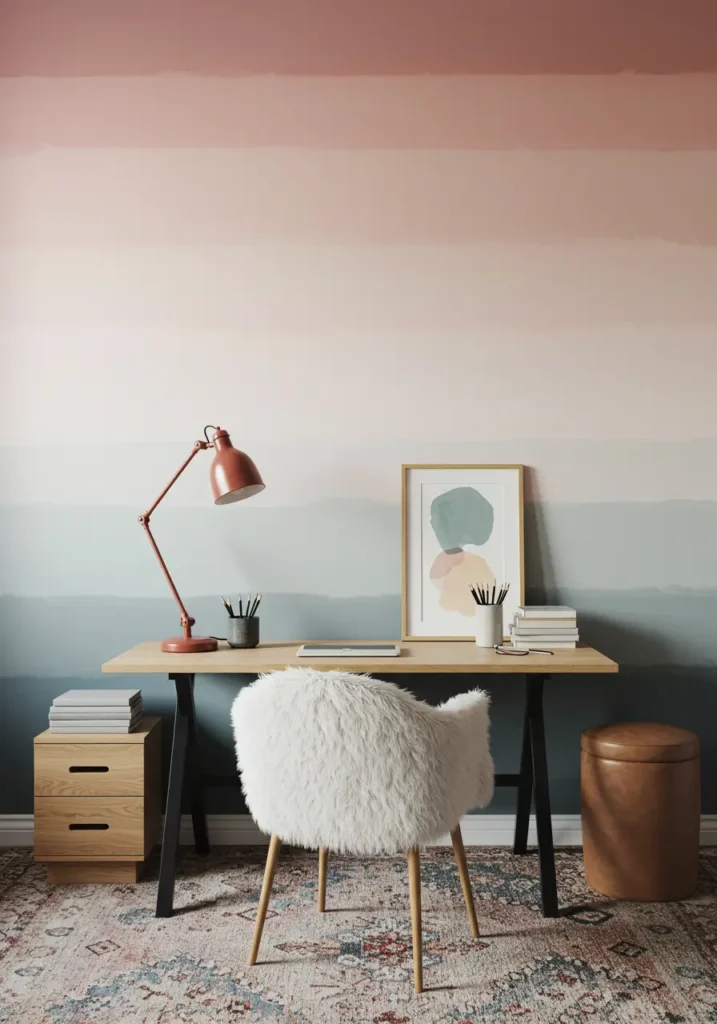
An ombre wall blends related shades into a soft transition. It feels creative without relying on a detailed repeating pattern. Work in manageable sections while the paint remains workable, and practice the blending technique on a sample board first.
13. Fabric Wall Covering
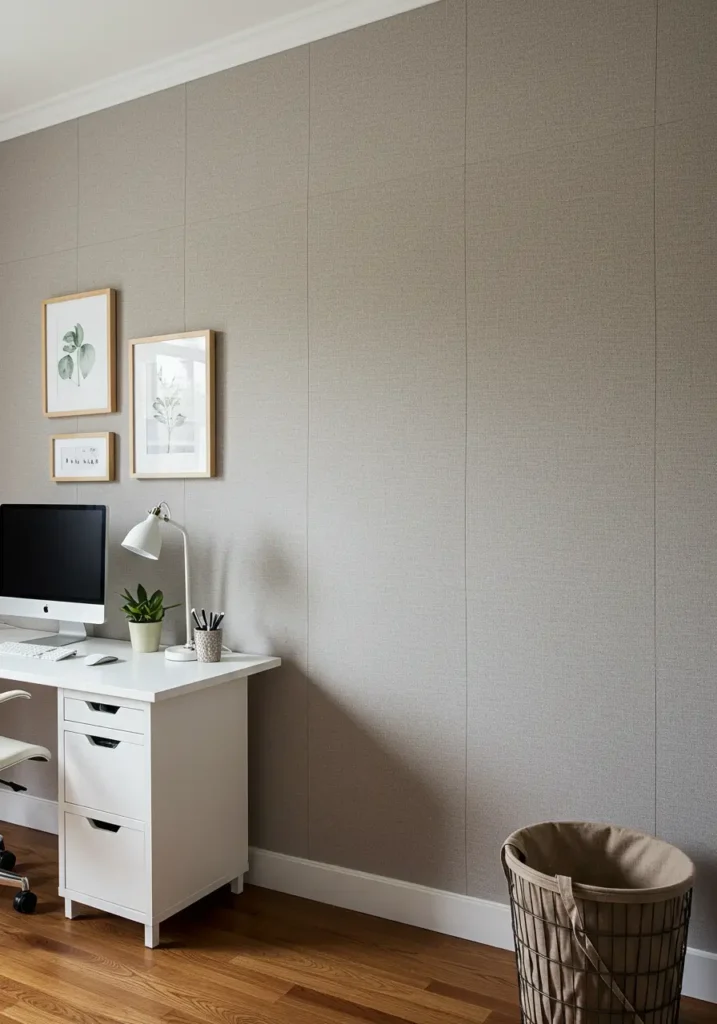
Fabric introduces softness, color, and texture. Upholstered panels are generally easier to remove and repair than fabric attached directly to the entire wall. In commercial spaces, confirm that the material and installation comply with applicable fire-safety requirements.
14. Built-In Shelving
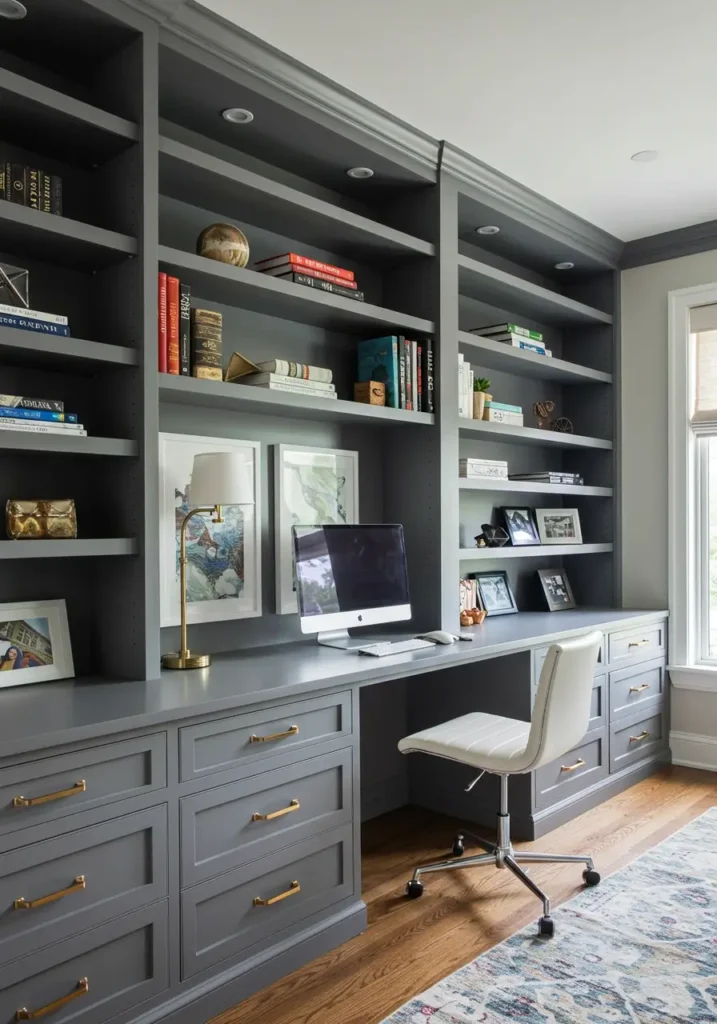
Built-ins combine storage with architectural structure. Paint or wallpaper the back panels to create depth, then balance books with closed storage so the wall does not become visually cluttered. Leave ventilation space around electronics and avoid overloading shelves.
15. Mirrored Panels
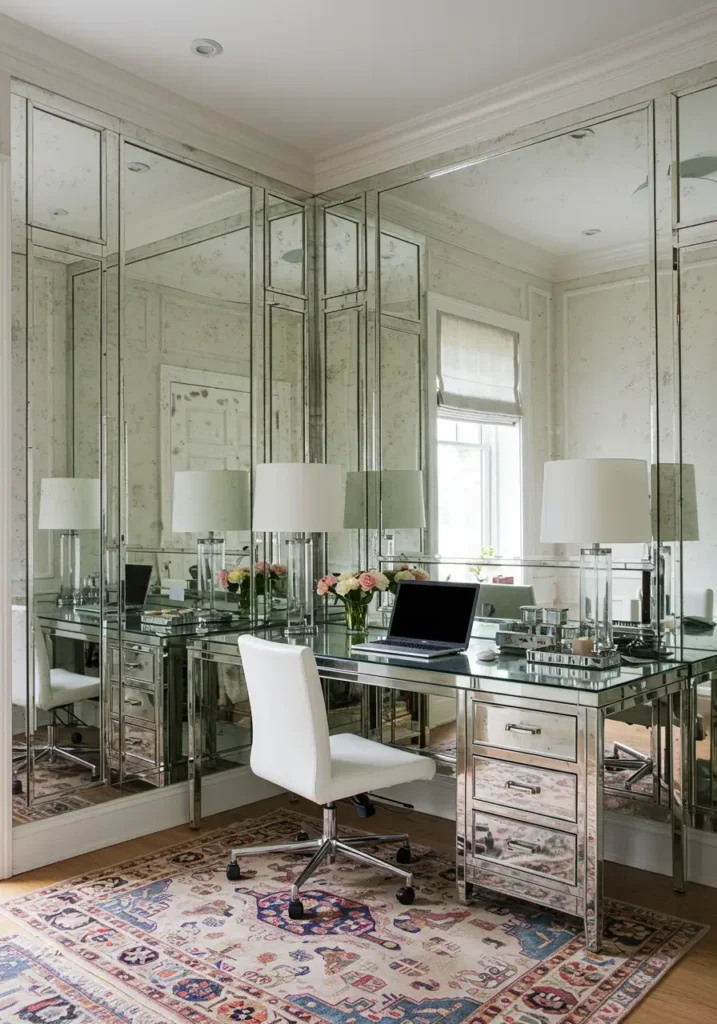
Mirrors can spread available light and give a compact office a more open appearance. Position them where they will not reflect the monitor, an uncovered window, confidential information, or distracting movement during calls.
16. Textured Plaster or Stucco
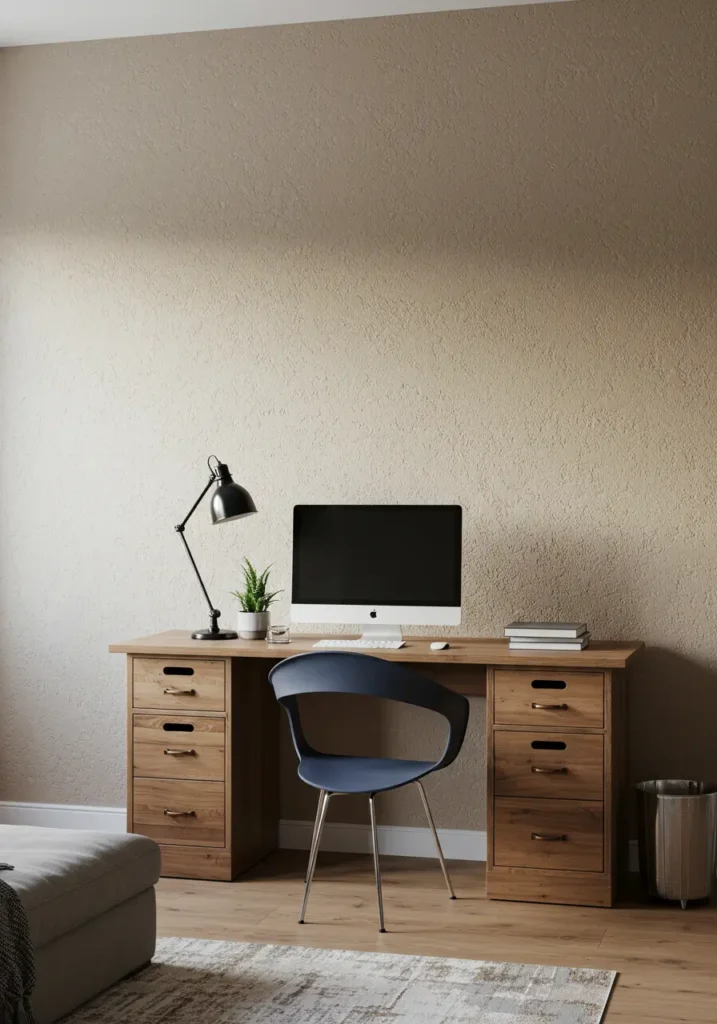
Limewash-style finishes, mineral coatings, and textured plaster can create soft movement and an artisanal appearance. Application requirements vary, and some finishes need a compatible primer or protective coating. Follow the product instructions and test the color and texture first.
17. Botanical Wallpaper
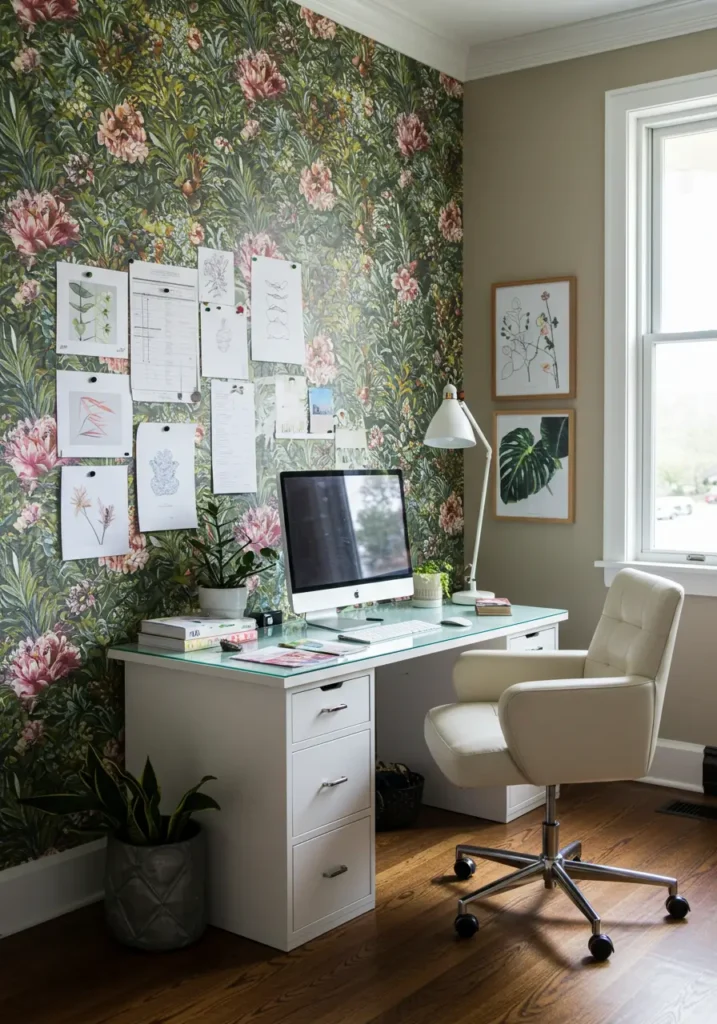
A large botanical print brings pattern and natural forms into the room. Let it remain the focal point by using simpler furniture and accessories nearby. A design with generous open space is usually easier to live with than a densely packed print.
18. Decorative Acoustic Panels
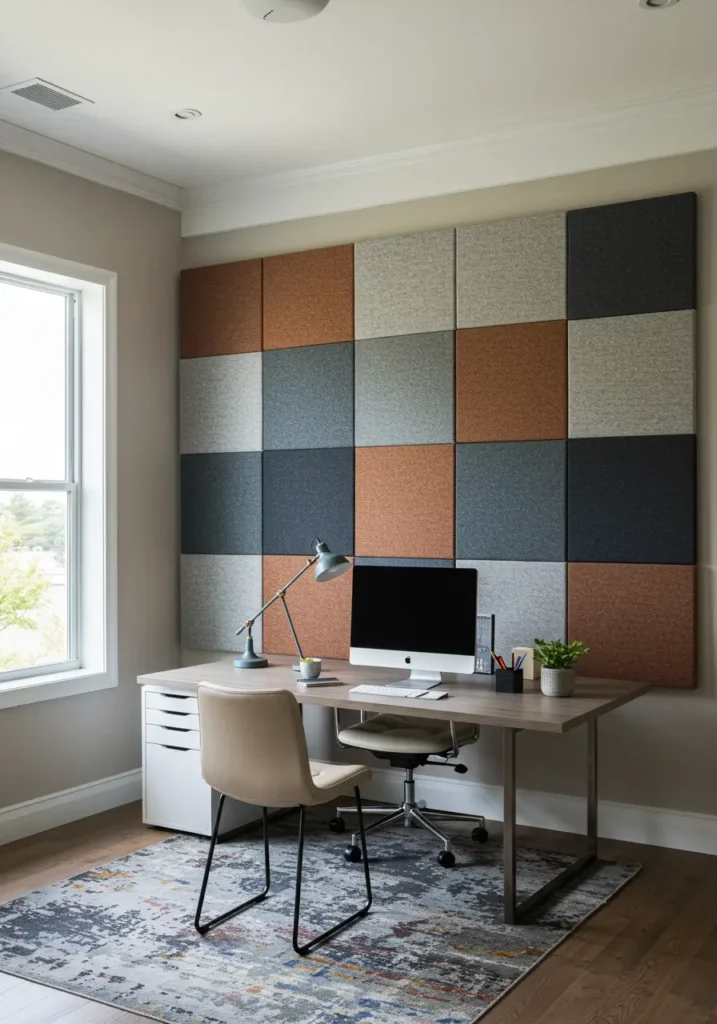
Acoustic panels can reduce reflected sound and reverberation, which may make speech clearer during calls and recordings. They do not automatically soundproof a room or stop noise passing through walls. Check the manufacturer’s acoustic test data and placement guidance rather than choosing by appearance alone.
For a modular design, consider these 12-pack hexagon felt bulletin board tiles in Denim Mist. They can be arranged behind a desk as a decorative pinboard, but verify their dimensions, adhesive method, pin compatibility, and acoustic specifications before purchase.
19. Whiteboard or Glass Board
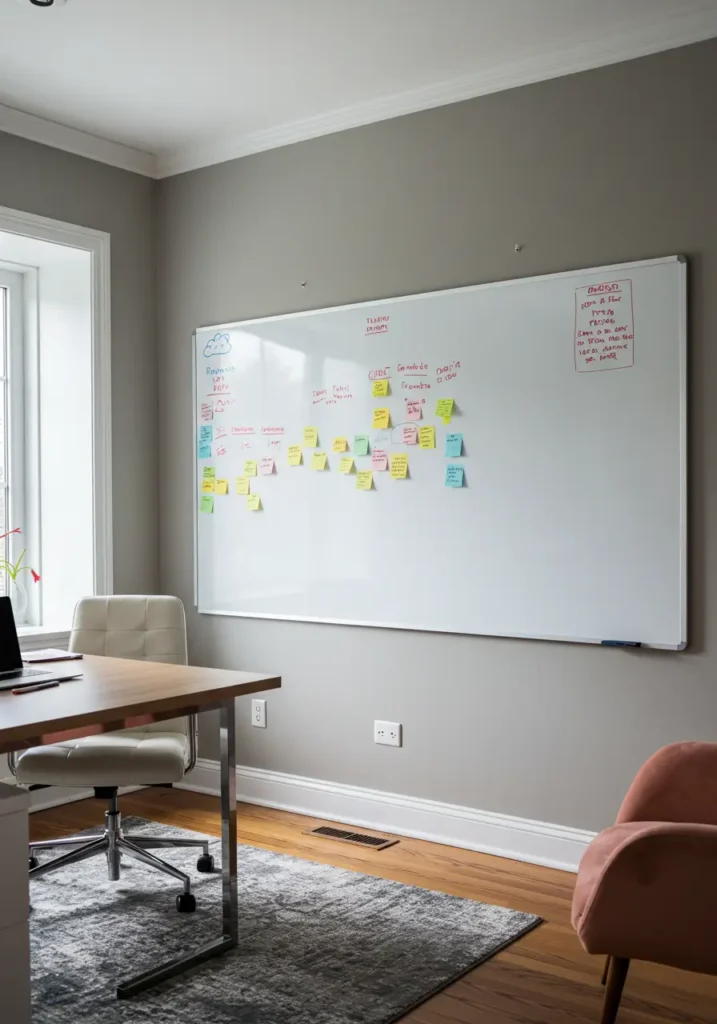
A large writable surface is useful for project planning, schedules, diagrams, and team discussions. Magnetic glass boards often require strong magnets specifically designed for the material. Mount heavy boards into suitable framing or anchors and verify the installation requirements before drilling.
This 48-by-36-inch frameless magnetic glass whiteboard is sized for a home office, school, or shared workspace. Review its weight, included mounting hardware, wall requirements, and compatible magnets before installation.
20. Board-and-Batten Paneling
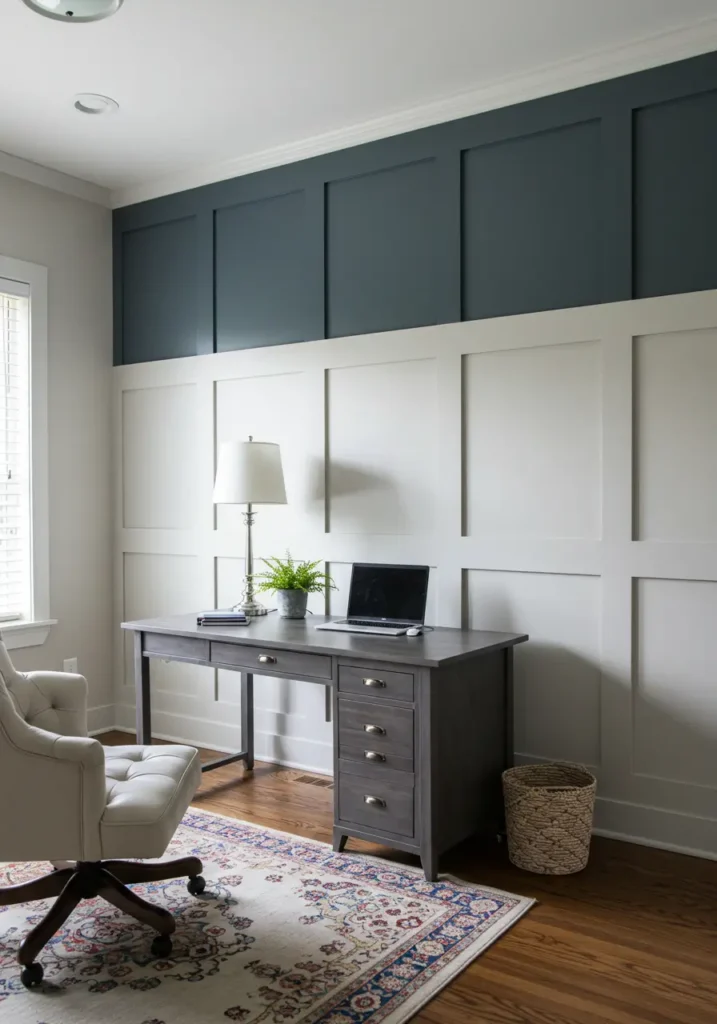
Board and batten creates architectural detail using relatively simple lines. A single color offers quiet depth, while a contrasting upper section makes a stronger statement. Map outlet, switch, and furniture positions before deciding on the spacing.
21. Subtle Gradient Wall
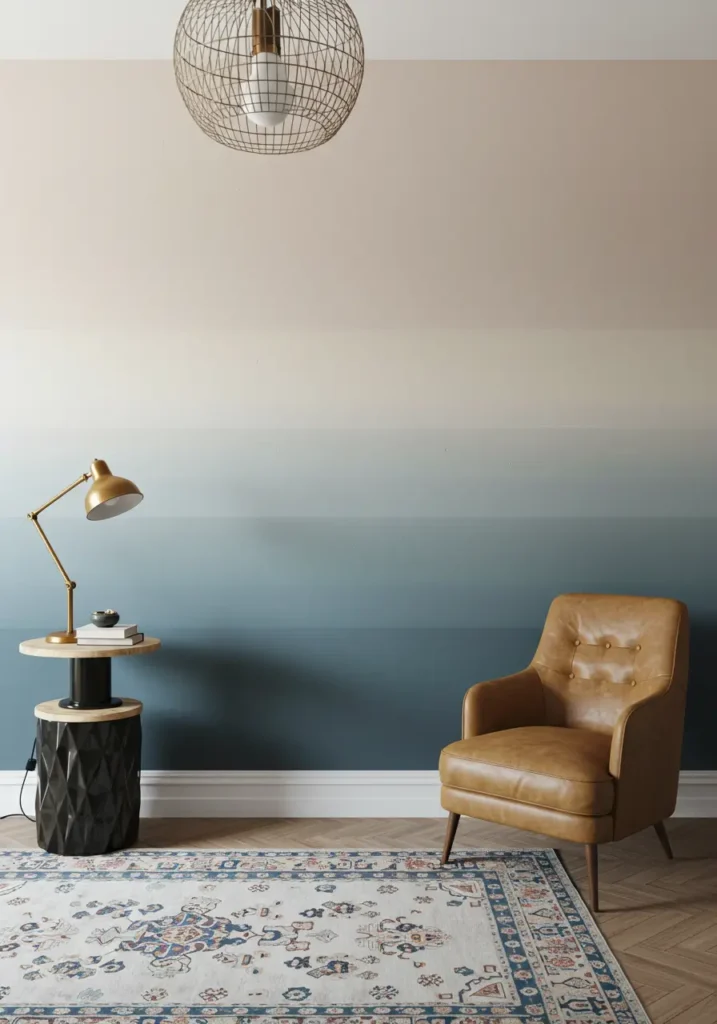
A gentle light-to-dark gradient provides visual depth while remaining understated. Positioning the lighter shade near the ceiling can help the upper part of the room feel brighter. Use closely related colors for a smooth, professional result.
22. Patterned Cork Tiles
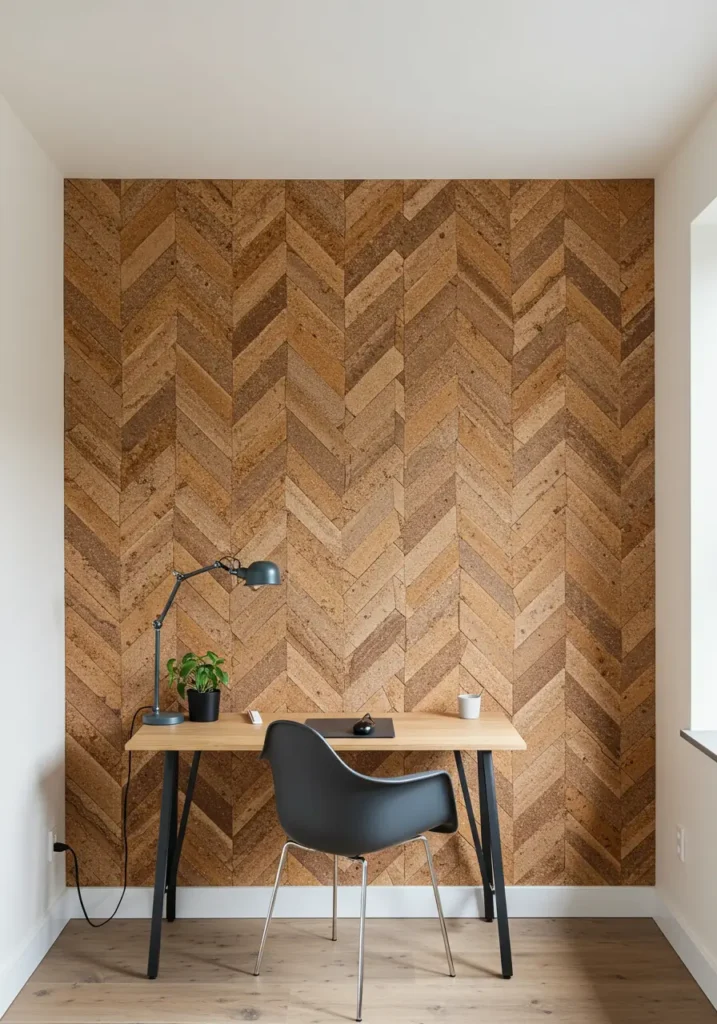
Arrange cork tiles in a checkerboard, chevron, or offset pattern for a surface that is decorative and usable. Lay the full pattern out before attaching it, especially if the tiles have natural color variations.
23. Personal Photo Collage
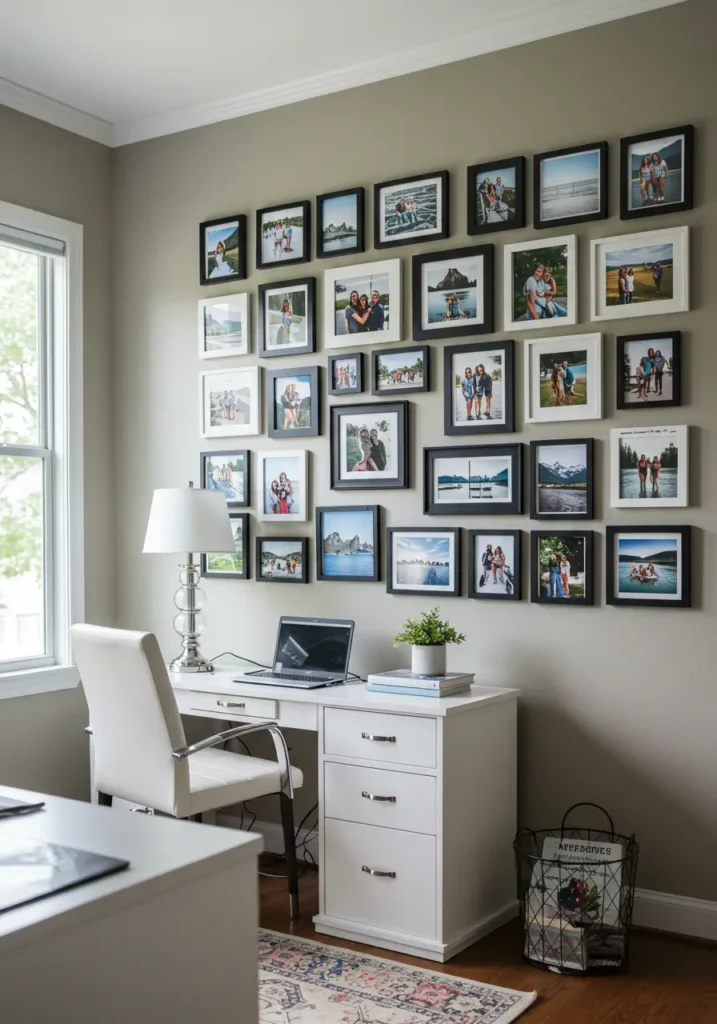
A photo wall can feature family moments, travel, milestones, or creative work. Repeating one frame style, mat color, or image treatment helps separate a deliberate gallery from visual clutter. Avoid displaying sensitive personal information in a work video-call background.
24. Faux Concrete or Metallic Finish
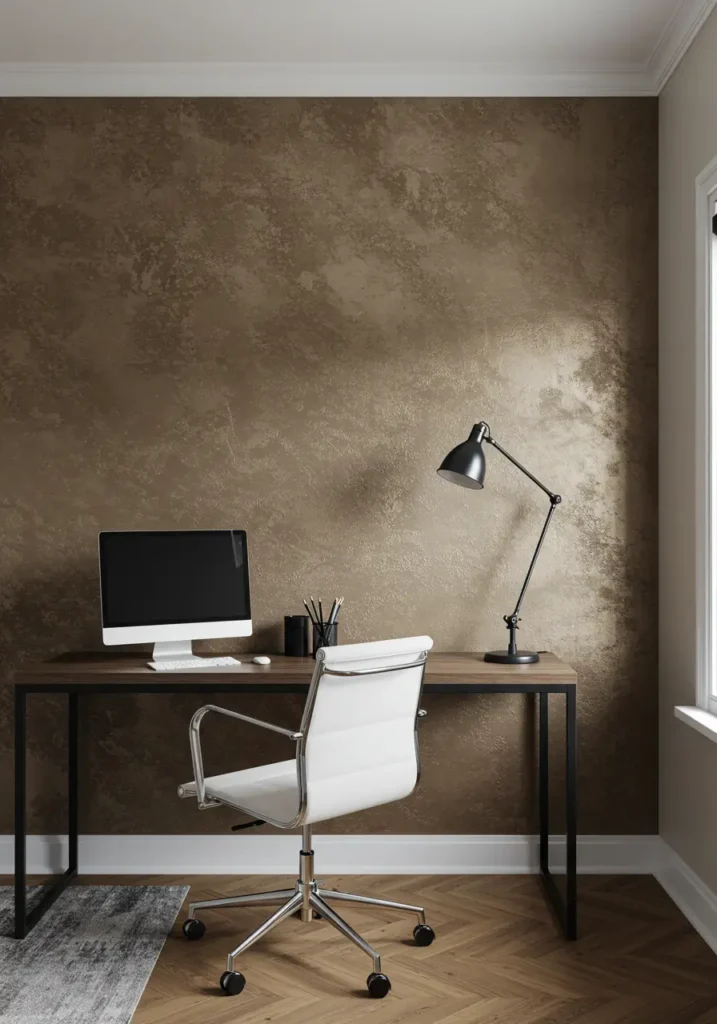
Faux concrete suits industrial and minimalist offices, while metallic paint introduces controlled shimmer. Apply metallic finishes carefully because uneven roller marks can become more visible under directional lighting. A sample panel will reveal how the surface behaves before you commit.
25. World Map Mural
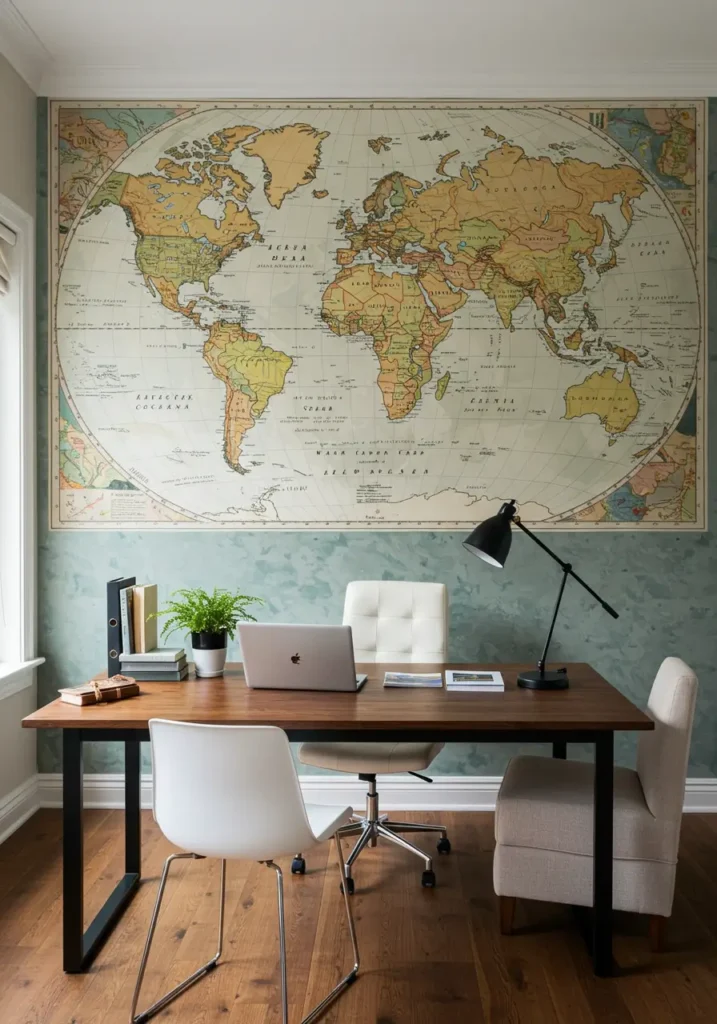
A map mural works well for travel planning, education, logistics, or internationally focused work. Choose a map appropriate to its purpose: a stylized map may be decorative, while a planning wall should use accurate, legible geographic information.
26. Shiplap Paneling
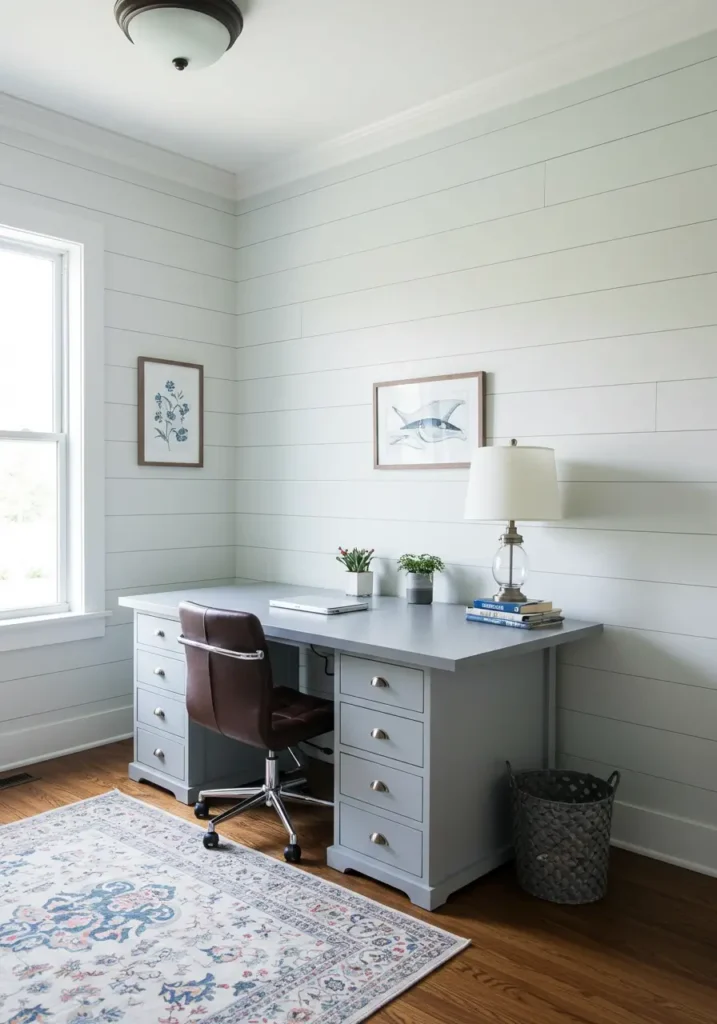
Shiplap adds repeating horizontal lines and a relaxed architectural feel. White creates a familiar farmhouse look, while muted blue, gray, or natural wood can feel coastal or contemporary. Account for the added wall thickness around outlets and trim.
27. Illuminated Art Niche
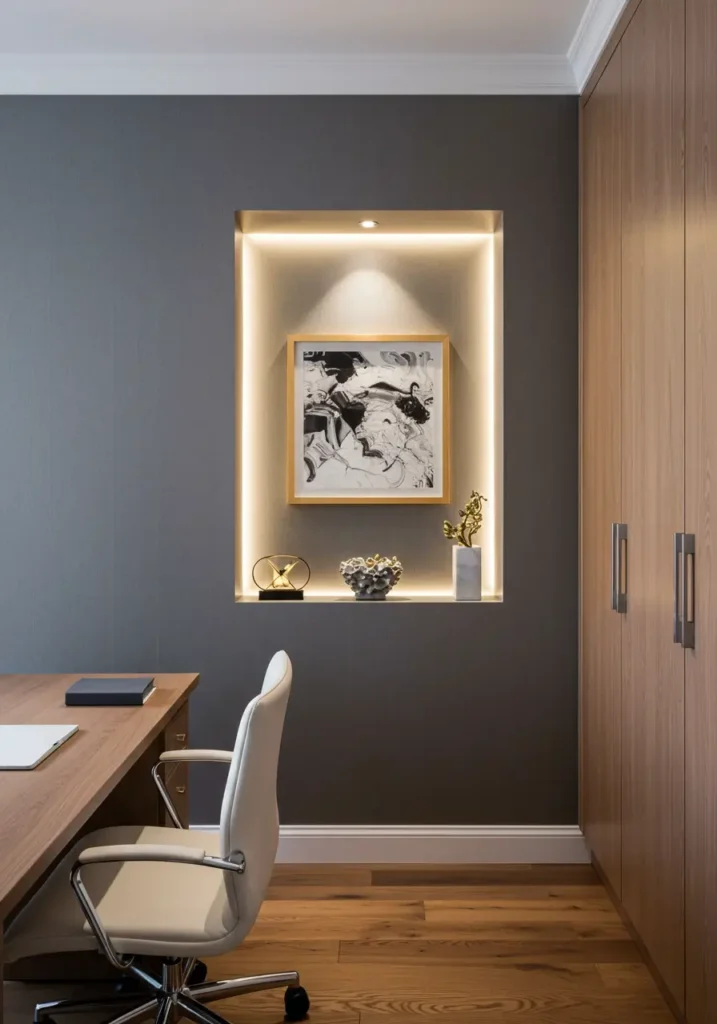
A recessed or framed niche can turn one sculpture, artwork, or meaningful object into the room’s focal point. Use a shielded or adjustable light that does not create screen glare. Any new electrical work should comply with local requirements and be completed by a qualified professional when necessary.
28. Bold Geometric Bookshelf
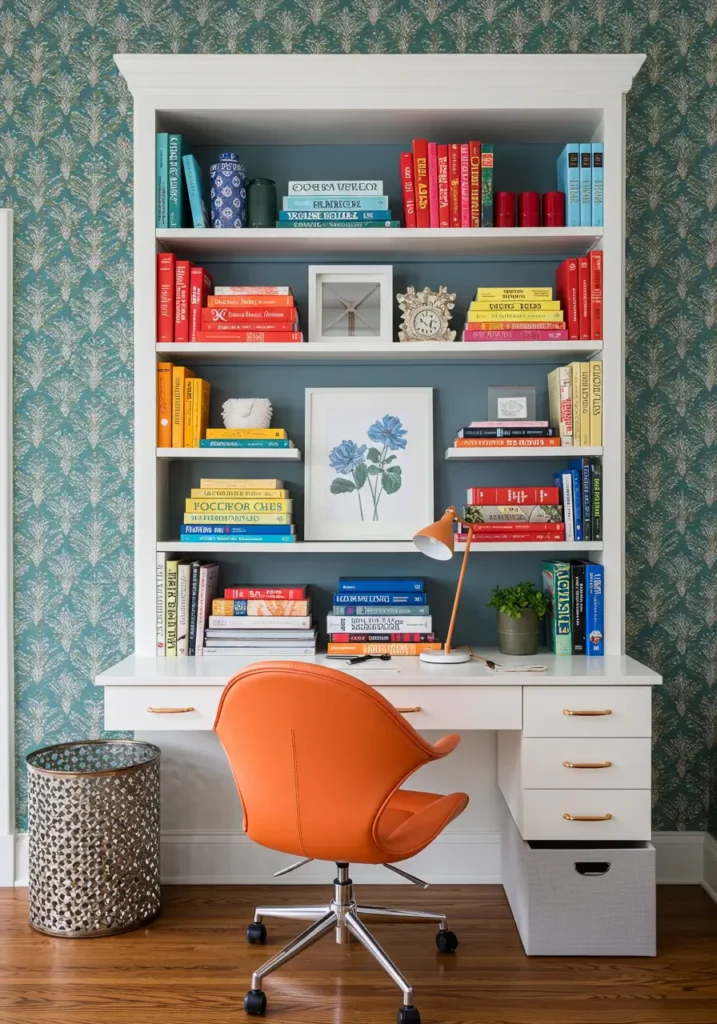
Asymmetrical shelving can function as storage and wall art. Keep the arrangement practical by placing frequently used items within comfortable reach and distributing weight according to the manufacturer’s limits.
29. Contrasting Bookshelf Back Panels
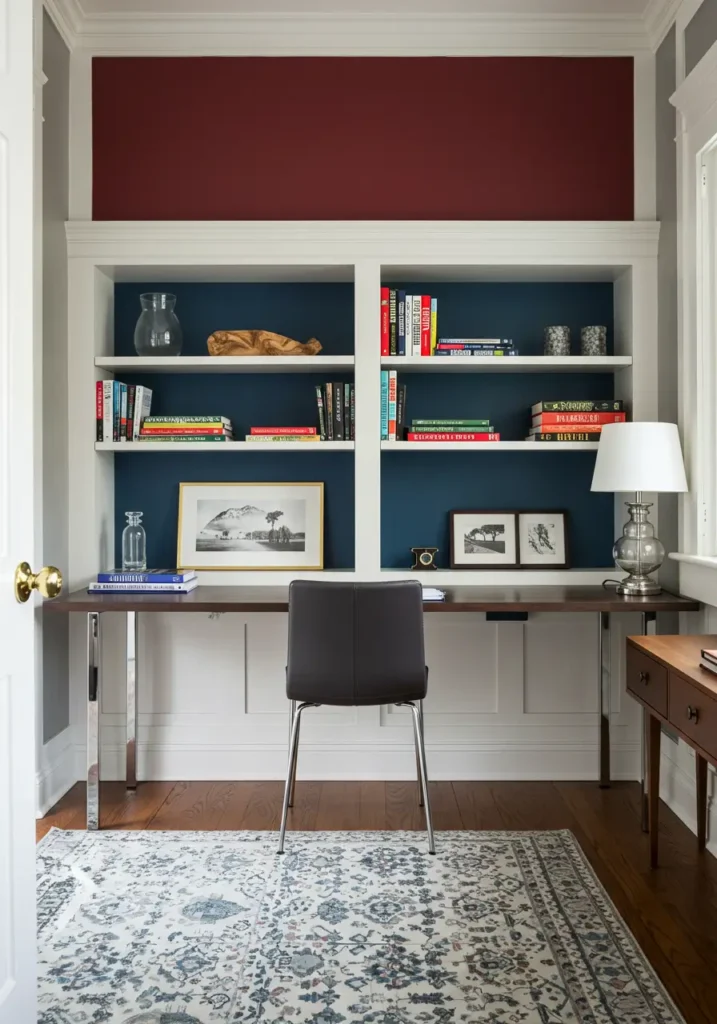
Painting or wallpapering the back of existing shelves offers strong impact with relatively little material. Dark backing makes pale objects stand out, while a light background prevents a heavily filled bookshelf from appearing too dense.
Another Easy Way to Add Three-Dimensional Texture
If wood paneling is outside your budget or does not suit your style, lightweight geometric panels offer another approach. The Art3d Decorative 3D Wall Panels in a matte-white diamond design come in a 33-piece pack with panels measuring approximately 11.8 by 11.8 inches. Calculate the required coverage and check the recommended adhesive, cutting method, surface compatibility, and fire-safety information before installation.
Also read: Wall Decor Ideas: 20 Creative and Cute Designs
Quick Comparison: Which Accent Wall Is Right for You?
| Primary goal | Good options | Important consideration |
|---|---|---|
| Fast visual update | Solid paint or geometric paint | Test the color under your actual lighting |
| Rental-friendly style | Removable wallpaper or framed art | Test removal on a hidden area |
| Better organization | Pegboard, cork, or shelving | Use appropriate anchors and respect weight limits |
| Writable planning space | Chalkboard, whiteboard, or glass board | Consider cleaning, dust, glare, and mounting weight |
| Less room echo | Tested acoustic panels | Sound absorption is different from soundproofing |
| Natural warmth | Wood, cork, botanical wallpaper, or plants | Account for maintenance, moisture, and light |
| Professional video background | Paneling, a restrained gallery wall, or built-ins | Preview the complete camera frame before installation |
How to Budget for an Office Accent Wall
Prices vary significantly by location, wall size, material quality, surface condition, shipping, and labor. Instead of relying on a fixed price range, calculate the project from measurements and current local prices.
- Measure the wall’s width and height, then subtract large openings where appropriate.
- Add the manufacturer’s recommended allowance for cuts, pattern matching, or damaged pieces.
- Include primer, adhesive, trim, anchors, tools, delivery, and waste disposal.
- Determine whether old wallpaper, damaged drywall, or uneven surfaces need repair first.
- For built-ins, stone veneer, heavy glass, electrical work, or complex paneling, compare professional estimates.
Installation Details That Prevent Expensive Mistakes
- Prepare the surface: Clean dust and grease, repair holes, and allow patched areas or fresh paint to cure as directed.
- Locate utilities: Check for wiring, plumbing, and studs before drilling or cutting.
- Order samples: Evaluate paint, wallpaper, wood, and fabric beside the desk and flooring.
- Check scale: Large patterns may overwhelm a narrow wall, while tiny patterns can look busy on camera.
- Plan edges: Decide how the treatment will meet ceilings, baseboards, corners, outlets, and window trim.
- Ventilate the space: Paints, adhesives, coatings, and new materials can release odors or volatile compounds. Follow label precautions and provide fresh air. The EPA’s guidance on volatile organic compounds offers additional precautions.
How to Maintain an Office Accent Wall
- Dust textured surfaces with a soft brush or vacuum attachment.
- Test any cleaner in an inconspicuous area.
- Keep furniture edges from rubbing against the wall.
- Replace loose hooks or overloaded anchors promptly.
- Repair lifting wallpaper seams before they collect dust or worsen.
- Use blinds or curtains if strong sunlight is fading artwork or materials.
- Inspect living-wall systems regularly for leaks, moisture, pests, or damaged containers.
A Simple Way to Make the Final Choice
Choose the solution that addresses the room’s biggest weakness. Paint is ideal when the office lacks character. Pegboard or shelving is more valuable when clutter is the problem. Acoustic panels make sense when reflected sound interferes with calls, while a controlled gallery wall or paneled backdrop can improve the setting for online meetings.
Start with samples and measurements, preview the design from your normal chair and camera position, and make sure the wall supports your work instead of competing for your attention. A successful office accent wall should feel intentional, useful, and comfortable long after the initial makeover.