Vintage Egg Cups Are Back: How to Collect, Style, and Use Them Beyond Breakfast
The humble egg cup is enjoying an unexpected return to the table. Once associated mainly with traditional European breakfasts, vintage egg cups are increasingly being treated as small collectibles, decorative accents, and an easy way to give everyday meals a more thoughtful feel.
Part of their appeal is practical: egg cups take up almost no space, work with many styles of tableware, and can be used for far more than soft-boiled eggs. They also fit neatly into the broader enthusiasm for vintage and collected-over-time table settings, where mismatched pieces and handmade details are welcomed rather than hidden away.
Why are vintage egg cups making a comeback?
Egg cups are benefiting from several decorating trends at once. Vintage tableware is increasingly being mixed with contemporary ceramics, while small decorative objects are being used to make everyday dining feel less standardized. Because egg cups are inexpensive and compact compared with full dinnerware sets, they offer an approachable way to experiment with that look.
A July 2026 Better Homes & Gardens feature on the egg-cup revival highlighted designer Brittny Button of Button Atelier and restaurateur India Irving of The Ivy at Home, both of whom pointed to the combination of nostalgia, usefulness, and playful styling as part of the appeal. :contentReference[oaicite:0]{index=0}
The renewed interest is also part of a larger vintage-tabletop movement. Current design coverage has highlighted growing enthusiasm for decorative china, patterned ceramics, etched glassware, and other pieces that give a table more personality than a perfectly matched set. :contentReference[oaicite:1]{index=1}
What makes an egg cup useful?
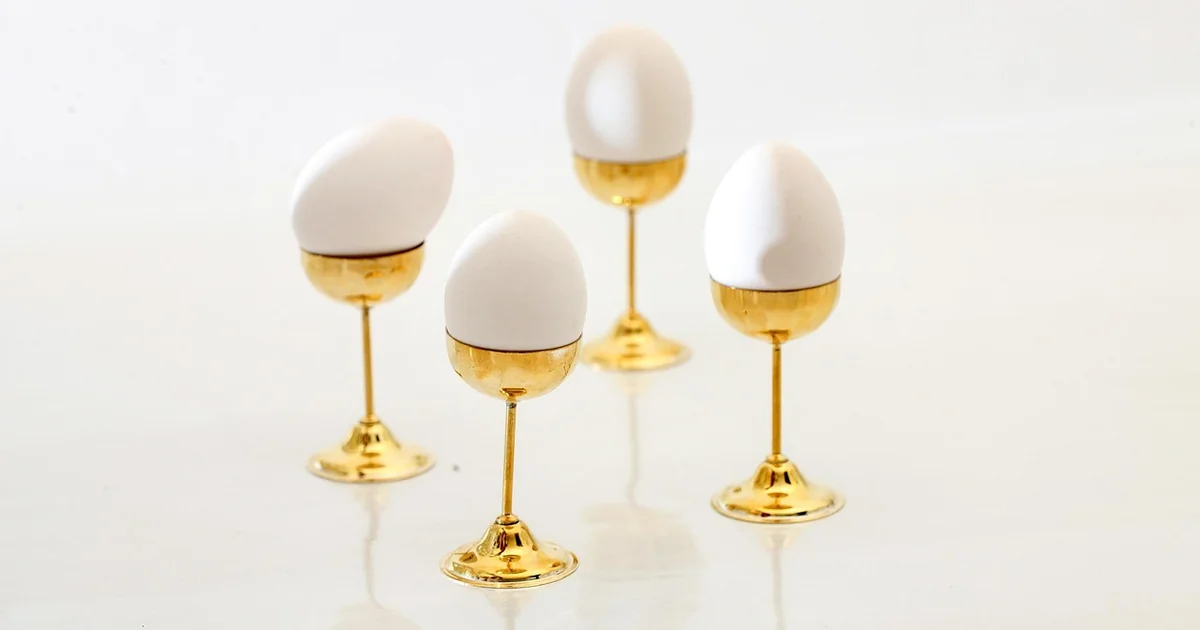
An egg cup has a very specific original purpose: supporting a boiled egg upright while you remove the top of the shell and eat it. For anyone who enjoys soft-boiled eggs with toast, that simple shape remains genuinely useful.
There is also something appealing about giving an ordinary breakfast its own piece of tableware. You do not need an elaborate tablescape. An egg cup, small plate, spoon, napkin, and toast can turn a rushed-looking meal into one that feels deliberately arranged.
That combination of ritual and function helps explain why egg cups have survived even as breakfast habits have changed. Their small scale also makes them easier to collect than plates, serving bowls, or complete china services.
How to choose vintage egg cups worth bringing home
You do not need to become an antiques expert before buying your first egg cup. Start with pieces you genuinely like, then inspect them carefully enough to avoid paying a premium for unnecessary damage.
Check the condition first
Run your eyes around the rim and base looking for chips, cracks, repairs, and areas where the glaze has been badly worn. Fine lines in an old glaze, sometimes called crazing, are common on older ceramics, but a structural crack deserves more attention if you intend to use the cup for food.
Turn the piece over as well. A maker’s mark, country of origin, pattern name, or pottery stamp can help identify it later. A mark can add context, but an unmarked egg cup can still be attractive and useful.
Look at material and decoration
Vintage egg cups were produced in porcelain, earthenware, stoneware, glass, metal, wood, and other materials. You will also encounter everything from restrained white hotel-style cups to floral china, bold mid-century patterns, advertising pieces, novelty animals, and sculptural designs.
If you want to build a collection rather than match an existing dinner service, choosing by color or material can give you enough consistency without forcing every cup to look identical.
Think about how you will use it
A delicate porcelain cup with elaborate gilding may be better suited to display or occasional breakfasts, while a sturdy glazed ceramic cup is more practical for regular use. If food use is important, be especially cautious with damaged, unidentified, or heavily worn vintage ceramics because older glazes and decorative finishes do not necessarily meet modern food-contact standards.
Do egg cups need to match your plates?
No. In fact, one of the easiest ways to make vintage egg cups look intentional is to avoid trying to match them perfectly.
Start with relatively simple plates and let a patterned or colorful egg cup become the accent. A blue-and-white cup can work against plain cream stoneware; a floral porcelain cup can soften modern white dinnerware; and a sculptural mid-century design can provide contrast on a traditional table.
If several patterns are competing for attention, repeat one color somewhere else in the setting. A green detail on the egg cup, for example, might be echoed in a napkin or small plate. That subtle repetition is often enough to make mismatched pieces feel connected.
How should you style egg cups on the breakfast table?
There is no requirement to follow a formal placement rule at home. The most practical position is simply somewhere the diner can comfortably reach without knocking over a glass or coffee cup.
For a more composed breakfast setting, try placing the egg cup above the plate or on a small side plate with a spoon. A folded cloth or cocktail napkin underneath adds color and helps protect delicate surfaces.
Another option is to layer the cup on a contrasting saucer or small dish. This works particularly well when you are combining vintage pieces from different sets because the repeated layers make the arrangement look deliberate rather than accidental.
How to display a collection of vintage egg cups
Because egg cups are small, a collection can disappear visually if the pieces are scattered around a room. Grouping them usually creates a stronger display.
Try arranging them on an open kitchen shelf, inside a glass-front cabinet, or along a narrow dresser ledge. If the cups vary significantly in size, taller pieces can sit toward the back and shorter ones toward the front so every design remains visible.
You can also organize a collection by:
- Color: group similar tones together for a calmer display.
- Material: separate porcelain, glass, metal, or wooden examples.
- Era: create small groups of Art Deco, mid-century, or later designs when you know their approximate dates.
- Theme: floral, animal, advertising, souvenir, and novelty cups can each form their own miniature collection.
Do not feel obliged to display everything simultaneously. Rotating a collection seasonally can keep shelves from becoming crowded and gives individual pieces more attention.
Creative uses for egg cups beyond boiled eggs
The shape that makes an egg cup useful at breakfast also lends itself to other small-scale jobs around the home. Just keep food use and decorative use separate when candles, craft materials, or potentially messy substances are involved.
Use them as miniature flower holders
A few short flower stems can be enough to create a tiny arrangement for a breakfast tray, guest-room table, or place setting. Wider egg cups tend to work best because they are less likely to tip over.
Turn them into place-card holders
For brunch or a dinner party, place a small folded name card inside an empty egg cup. It is an easy way to give each place setting height without covering the table with large decorations.
Keep tiny objects organized
On a desk or craft table, an egg cup can contain paper clips, pushpins, beads, buttons, or other small pieces that otherwise disappear into drawers.
On a dressing table, one can hold rings or earrings. If you use vintage ceramics for jewelry, check the rim first so rough chips do not scratch delicate pieces.
Use suitable cups for small servings
A modern, food-safe egg cup can make a charming individual container for salt or another small condiment. Vintage pieces of unknown composition are better reserved for decoration unless you are confident they are appropriate for food contact.
Use decorative cups with LED tealights
Some egg cups can create an attractive glow when paired with small battery-operated LED tealights. This gives you the candlelit effect without exposing old ceramics to direct flame or heat.
How to clean vintage egg cups safely
The safest cleaning method depends on the material, finish, and condition. Dishwasher claims that apply to new ceramics should not automatically be applied to vintage pieces.
For most old porcelain and glazed ceramic egg cups, gentle hand washing is the cautious approach. Use lukewarm water, mild dish soap, and a soft cloth or sponge. Avoid abrasive powders and harsh scrubbers, particularly around painted decoration, transfers, or metallic trim.
Do not leave cracked or crazed pieces soaking for long periods. Water can enter damaged areas and contribute to staining or deterioration.
Gold, silver, and other metallic decorations deserve particular care. Even when the ceramic body is robust, repeated dishwasher cycles can gradually damage decorative finishes.
Where can you find vintage egg cups?
Flea markets, estate sales, charity shops, thrift stores, antique centers, and secondhand dealers are all worth checking. Egg cups are small enough to be overlooked among larger pieces of tableware, so examine shelves containing espresso cups, small bowls, and miscellaneous china rather than searching only in clearly labeled collections.
Online marketplaces provide a much broader selection when you have a specific maker or pattern in mind. Searches can be narrowed using terms such as:
- vintage porcelain egg cup
- mid-century egg cup
- French vintage egg cup
- English china egg cup
- glass egg cup
- novelty egg cup
- maker or pattern name + egg cup
Specialist vintage marketplace Selency, for example, currently lists hundreds of egg cups spanning porcelain, glass, silver-plated, and studio-ceramic designs, illustrating how broad this collecting category has become. :contentReference[oaicite:2]{index=2}
When shopping online, photographs matter. Look for clear images of the rim, interior, base, maker’s mark, and any damaged areas. Measurements are useful too because egg cups can appear much larger in close-up photographs than they really are.
Are vintage egg cups a good collectible for beginners?
They can be. Unlike a complete dinner service, an egg-cup collection does not require much storage space, and there is no rule saying every piece must belong to the same maker or period.
That flexibility is arguably the biggest advantage. You can start with one cup you love and add another only when something genuinely interesting turns up. A collection might eventually focus on one pottery, one country, advertising designs, animals, particular colors, or simply pieces that make you smile.
However, it is better to approach egg cups as useful decorative collectibles than as automatic investments. Asking prices can vary dramatically with maker, age, rarity, material, and condition, and online listing prices do not necessarily represent completed-sale values.
Why you should not buy vintage egg cups purely because they are “trending”
Reports about their comeback do not mean every old egg cup is about to become rare or valuable. Predictions that examples may become harder to find should be treated as trend commentary rather than a guarantee of future scarcity. Egg cups remain widely available through vintage sellers and marketplaces. :contentReference[oaicite:3]{index=3}
A better reason to buy one is that you like its design and expect to use or display it. That approach prevents a charming collecting hobby from turning into a cupboard full of pieces purchased solely because they seemed fashionable.
If you are deciding between several examples, prioritize condition, craftsmanship, personal appeal, and a price you are comfortable paying rather than trying to predict which cup will appreciate in value.
You may also enjoy reading: Decorating Rules Designers Recommend for More Inspired Home.
Vintage egg cups make small moments feel considered
The renewed appeal of the vintage egg cup is easy to understand. It is small enough to collect without reorganizing your kitchen, distinctive enough to add personality to a table, and functional enough to earn its place rather than becoming another purely decorative object.
You can use one for its traditional purpose, mix several mismatched designs into a breakfast setting, display a collection on open shelving, or repurpose suitable pieces for flowers and tiny household items. The best examples prove that adding character to a home does not always require a major decorating project. Sometimes it takes an object small enough to fit in the palm of your hand.