How do you Draw Faces without getting stuck on uneven eyes, awkward proportions, or flat shading? Many beginners want to Draw Faces that look natural, but the process can feel confusing until you break it into simple steps.
The good news is that you do not need perfect talent to Draw Faces well. You need a clear method, a few reliable guidelines, and enough practice to train your eye to see structure, angles, and light.
In this guide, you will learn how to Draw Faces step by step, place the features with more confidence, and add shading that gives your portraits more life and depth.
Key Takeaways
- Start every portrait with basic geometric foundations before worrying about tiny details like eyelashes or individual hairs.
- The eyes sit exactly in the middle of the overall head length, not near the top of the forehead.
- Leaving your light construction lines visible while you work helps you spot and correct proportional errors early.
- Shading is about understanding the direction of light and the 3D planes of the face, not just smudging pencil everywhere.
- Capturing the natural asymmetry and authentic character in a face is far more engaging than aiming for airbrushed, unnatural perfection.
What’s New in Portrait Art
If you learned art in a traditional classroom years ago, you might remember strict rules about making every face look perfectly smooth, highly polished, and rigidly symmetrical. The current landscape of portrait drawing has shifted significantly away from that mindset. We are seeing a massive move away from the “polished but predictable” aesthetic. With artificial, flawlessly generated imagery everywhere, viewers and artists alike are craving raw, human authenticity.
One major outdated piece of advice is that you must blend all your pencil strokes until the skin looks like smooth, featureless plastic. Today, the most engaging artists celebrate visible pencil marks, bold cross-hatching, and raw paper texture. Rather than trying to draw a flawless, generic face, modern artists focus on capturing the unique, asymmetrical quirks that make a specific person real.
Another fresh approach is embracing the messy process. In the past, artists would meticulously erase every single guideline. Now, leaving those initial structural marks lightly visible is considered an aesthetic strength. It shows the hand of the artist and the architectural thinking behind the portrait.
Trend Watch: Perfectly Imperfect Features
We are moving away from drawing generic, idealized features. Artists today know that capturing genuine emotion, a crooked smile, or natural asymmetry creates a much stronger emotional connection than a stiff, symmetrical pose. What specific facial feature do you find tells the most story when you look at a portrait?
Discussion Question: Have you noticed the shift away from hyper-realism toward more expressive, messy sketches in the art you admire online?
Why Learning to Draw Faces Feels Hard at First
Drawing human faces is uniquely challenging because our brains are hardwired to recognize them. From the moment we are born, we are trained to read micro-expressions, measure the distance between eyes, and identify slight shifts in mouth shapes. Because we are such experts at looking at faces, we instantly know when a drawing of one is even slightly inaccurate.
When you draw a tree branch a little too far to the left, no one notices. It still looks like a tree. But if you draw an eye a quarter-inch too far to the left, the face looks entirely alien. This hyper-sensitivity to facial proportions is what makes beginners feel so frustrated when they try to Draw Faces.
The trick is to stop drawing what you think a face looks like, and start drawing the geometric shapes that are actually there. Your brain has symbols stored for facial features: an almond for an eye, an “L” shape for a nose, and a curved line for a smiling mouth. When you rely on those symbols, your drawings look flat and cartoonish.
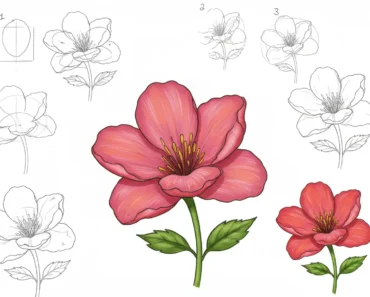
If you are still learning how to break complex subjects into simple shapes, this guide on how to draw a flower is a great warm-up exercise before you Draw Faces. It trains your eye to look for overlapping petals and foundational geometry without the heavy pressure of achieving a human likeness.
Pause and Reflect
Think about the last time you tried to sketch a person. Did you find yourself drawing the eye exactly how you imagine an eye to look in your head, rather than measuring the actual angles of the photograph? How might thinking in abstract shapes change your outcome?
Discussion Question: What feature do you struggle with the most when you sit down to sketch a portrait?
Basic Proportions to Draw Faces More Accurately
Before you draw a single eyelash, you have to build a solid foundation. Think of drawing a face like constructing a building. You cannot start painting the walls or hanging the curtains before the steel frame is securely bolted together. In portrait drawing, that steel frame is your set of basic proportions.
Many beginners start by drawing a highly detailed eye right in the middle of the page, and then they try to attach the rest of the face to it. This almost always leads to a warped final image because you lose track of the overall size of the skull. Instead, you need to work from big shapes down to small details.
The Cranial Sphere and the Jaw
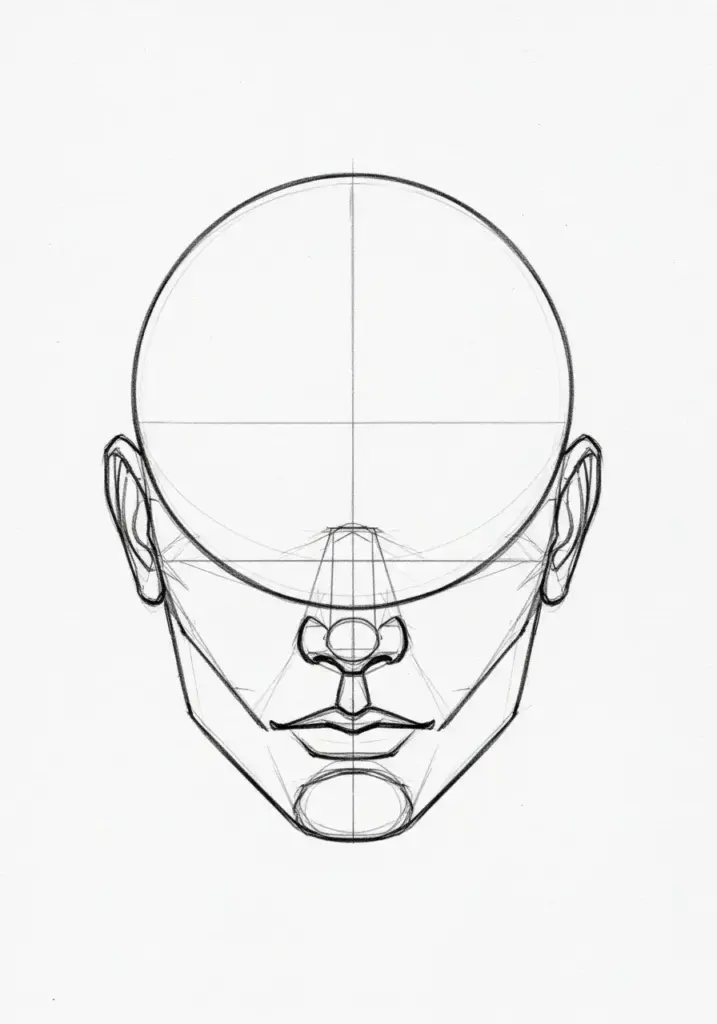
The human head is not a perfect circle, and it certainly is not a flat oval or an egg shape. It is essentially a sphere (the cranium) with a jawbone attached to the front bottom half. To start your drawing, sketch a simple circle. This circle represents the part of the skull that holds the brain. Do not worry about making the circle machine-perfect. Just keep your hand loose, use your shoulder, and sketch lightly.
Next, you will slice off the sides of that circle. The sides of our heads are relatively flat, not completely round like a basketball. If you take your hands and place them flat against the sides of your head above your ears, you will feel those flat temporal planes. Chopping off the sides of your drawn circle helps establish the true width of the face and prepares you for a three-dimensional look.
The Rule of Thirds for Facial Features
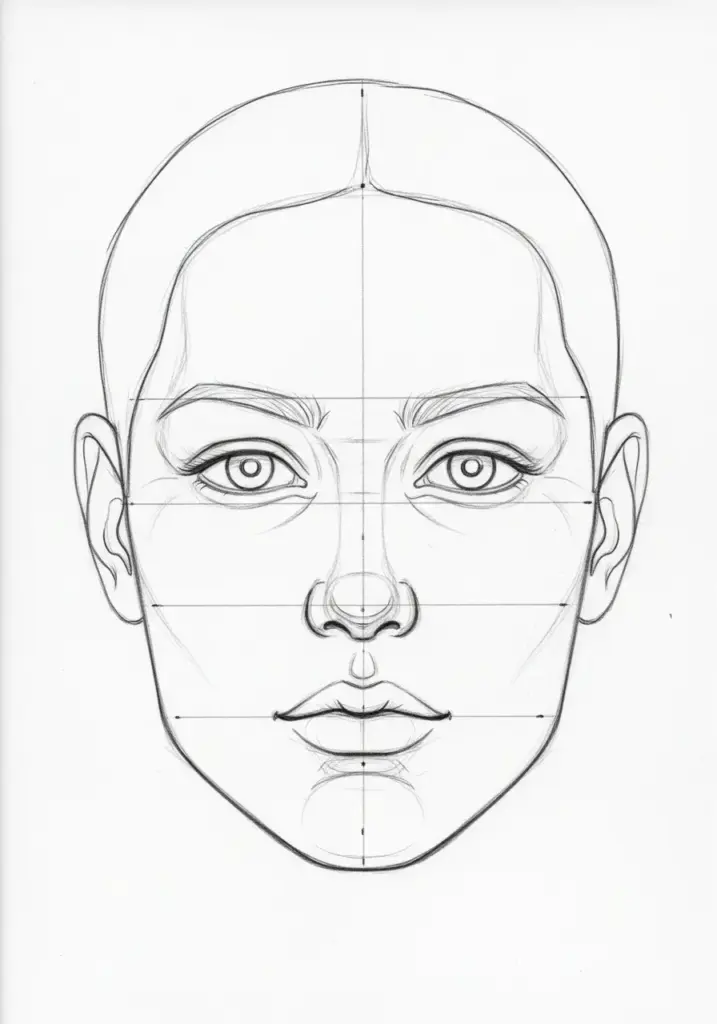
Once you have your basic head mass, you need to divide it. The human face naturally divides into three roughly equal horizontal sections:
- Section 1: From the natural hairline down to the brow line.
- Section 2: From the brow line down to the bottom of the nose.
- Section 3: From the bottom of the nose down to the bottom of the chin.
Memorizing this simple division saves you hours of frustration. When you sketch these horizontal guidelines lightly across your head shape, you create exact resting places for the features. You no longer have to guess where the nose ends or where the eyebrows should sit; you have already mapped it out.
Common Headline Myth: “You Must Use a Grid to Draw Accurately”
While grid methods are highly popular for transferring photos, relying heavily on them can stiffen your artwork and prevent you from understanding actual 3D forms. Learning structural freehand drawing builds much better long-term skills. Have you ever felt restricted by drawing grids?
Discussion Question: Have you ever measured your own face to see if your features fit perfectly into these thirds, or do you have a unique variation?
How to Draw Faces Step by Step
Let us walk through the practical steps of setting up your drawing on the paper. Keep your pencil pressure very light during this phase. You are laying down scaffolding that you will want to erase or blend away later. Using an HB or 2H pencil is ideal here.
Step 1: Draw the Center Line
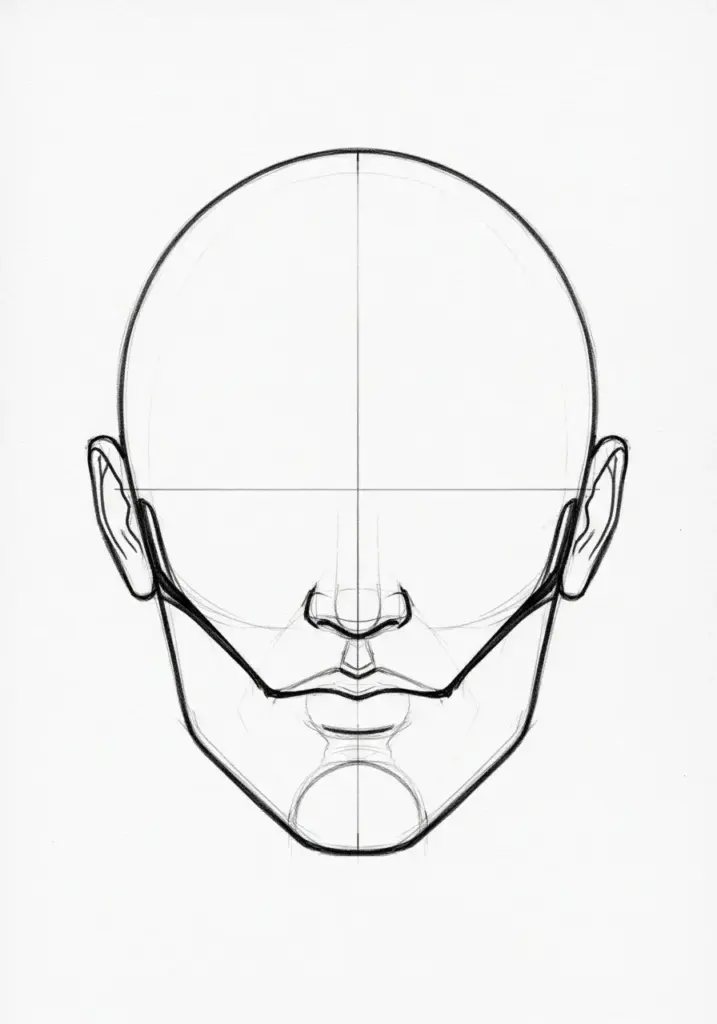
After you have your basic sphere and jaw shape, draw a vertical line straight down the middle of the face. This line determines the direction the head is facing. If the person is looking straight forward, this line goes right down the center. If the head is turned slightly, the line curves along the surface of the sphere, wrapping around the form.
Step 2: Find the Eye Line
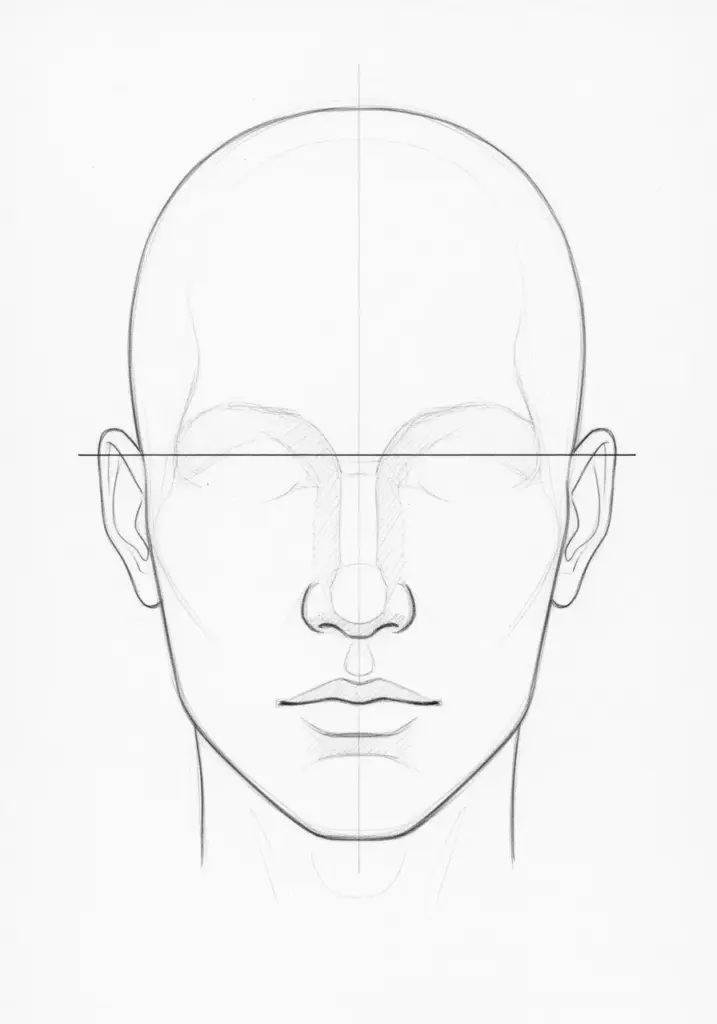
Here is the most common mistake beginners make: they put the eyes way too high up on the head, usually somewhere in the forehead area. The eyes actually sit exactly in the middle of the overall head length. Measure from the very top of the cranial sphere to the very bottom of the chin. Find the exact halfway point, and draw a horizontal line. This is your eye line. If you place the eyes here, you instantly leave enough room for the brain and hair.
Step 3: Mark the Nose and Mouth
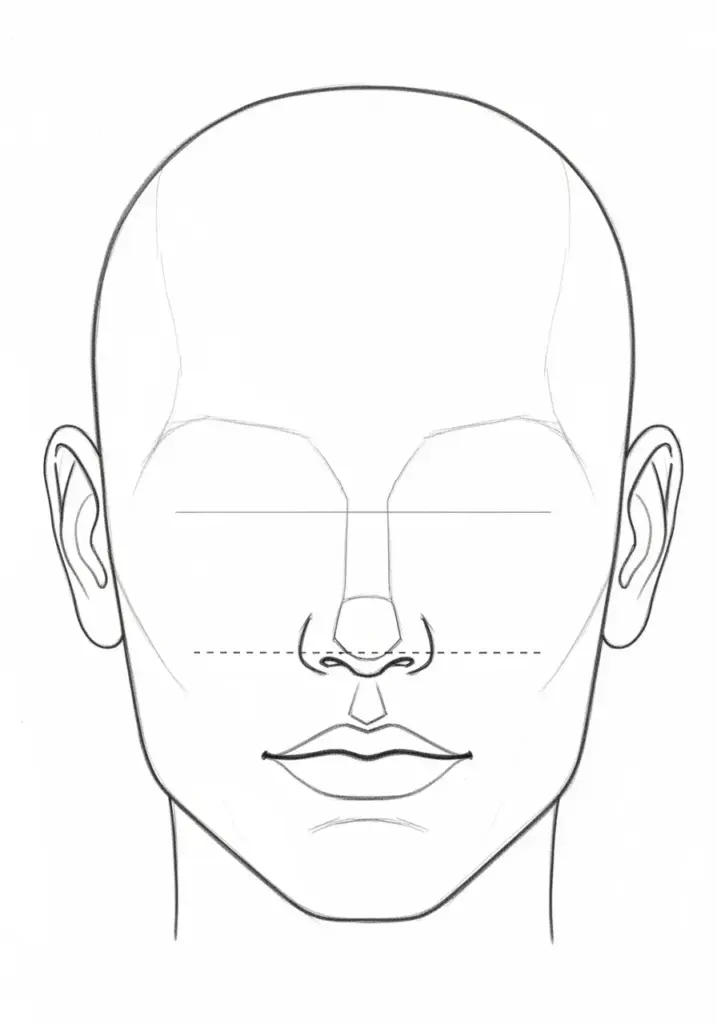
Using the rule of thirds we discussed earlier, find the bottom of the nose. Halfway between the bottom of the nose and the chin is the resting line of the lower lip. Draw faint horizontal dashes at these markers.
Learning structure matters in every sketch, and the same step-by-step thinking used in this simple stairs drawing guide can also help when you Draw Faces with better proportions. Building step by step ensures everything stays grounded in reality.
Discussion Question: Do you tend to draw too darkly in the beginning stages, making it hard to erase mistakes later?
How to Draw Eyes, Noses, and Mouths Without Guessing
With your structural guidelines securely in place, you can start carving out the features. Remember to treat each feature as a three-dimensional object with volume, not a flat sticker placed on the surface of the skin.
Drawing the Eyes
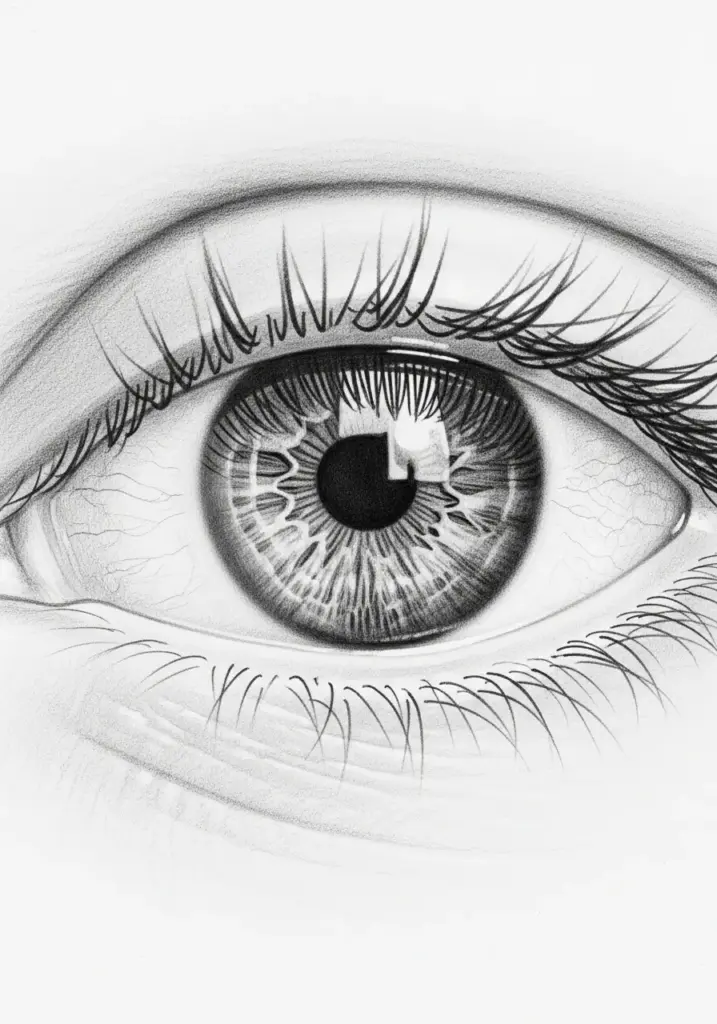
The space between the two eyes is generally the width of one eye. Sketch three light ovals across your eye line to ensure you leave enough space in the middle. The eyeball is a literal sphere sitting inside the bony cavity of the skull. When you draw the eyelids, you must wrap them around that sphere, giving them thickness.
Pay close attention to the tear ducts, as they anchor the eye to the center of the face and angle slightly downward. Do not draw harsh, solid outlines around the entire eye. The lower eyelid catches overhead light and should be drawn with very faint lines or just implied with shading, while the upper eyelid casts a shadow over the eyeball and can be drawn thicker and darker. Additionally, remember that the white part of the eye (the sclera) is never pure white; it curves away into shadow.
Drawing the Nose
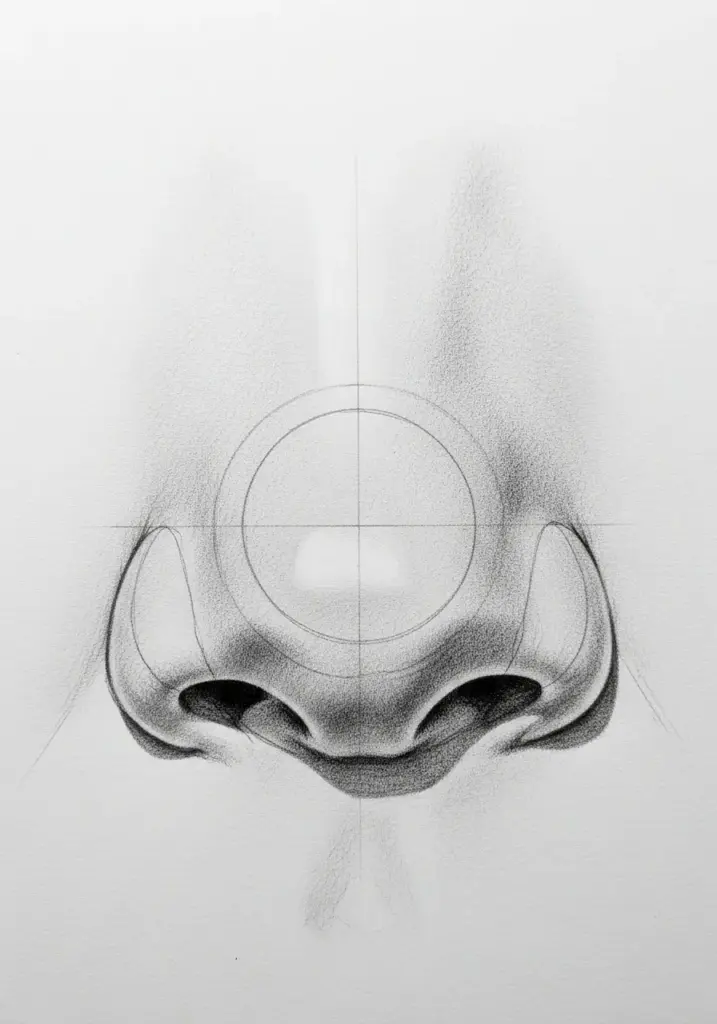
Avoid drawing two hard, parallel lines down the side of the nose. The bridge of the nose is defined by light and shadow rolling over the cartilage and bone, not by strict outlines. Start by identifying the keystone shape right between the eyebrows. From there, draw a circle for the ball of the nose, and two smaller, overlapping ovals on the sides for the nostril wings (alar cartilages).
Keep the nostril holes soft and subtle. If you make them too dark or circle them sharply, they look like deep black holes punched into the paper. Often, the darkest part of the nose is just the deep shadow directly underneath the tip.
Drawing the Mouth
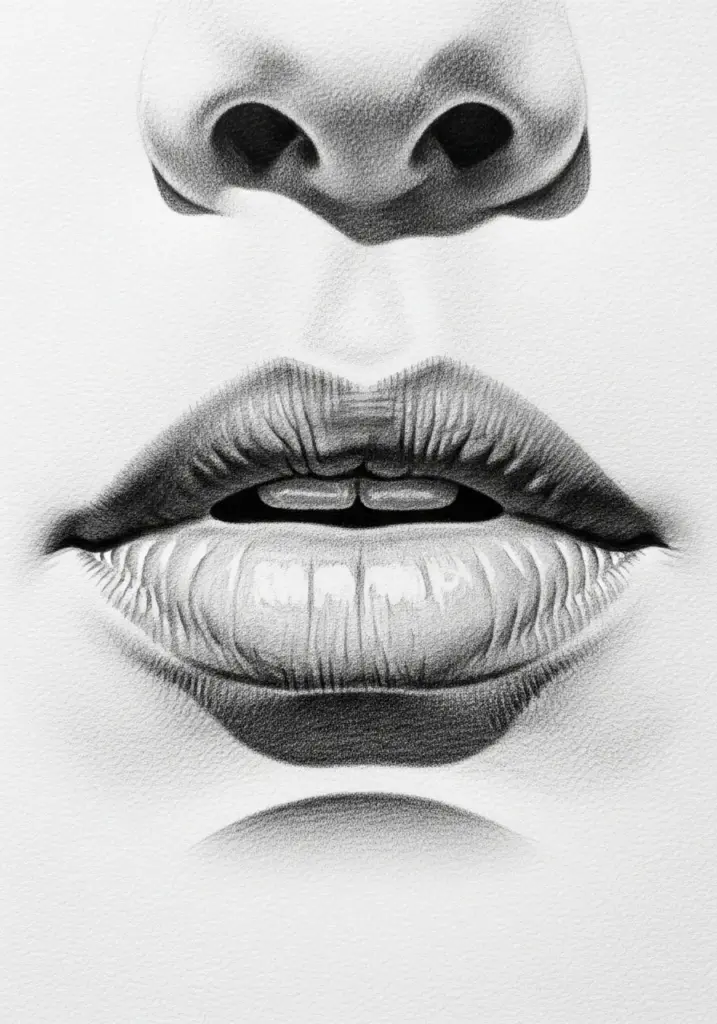
The corners of the mouth usually align with the center of the pupils when a person is looking straight ahead with a neutral expression. Draw the center line where the upper and lower lips meet first. This line is incredibly expressive; it is rarely perfectly straight. It dips in the middle under the cupid’s bow and curves gently outward.
The upper lip generally angles inward toward the teeth, which means it catches less overhead light and is usually shaded darker. The lower lip angles outward, catching the light from above, making it much lighter. You rarely need to draw a hard line at the bottom of the lower lip; a soft cast shadow under the center of the lip is enough to define its fullness.
If you want more practice with soft lines, fur texture, and basic form, try this tutorial on how to draw a cat after you Draw Faces for a while. Shifting subjects helps reset your brain and improves your overall observation skills.
Pause and Reflect
Think about the last portrait you drew. Did the features feel like they were resting flat on the paper, or did they have tangible depth? How can thinking about the skull underneath change your approach to drawing soft tissues?
Discussion Question: Which facial feature do you enjoy drawing the most once you get the hang of the proportions?
How to Draw Faces With Better Shading
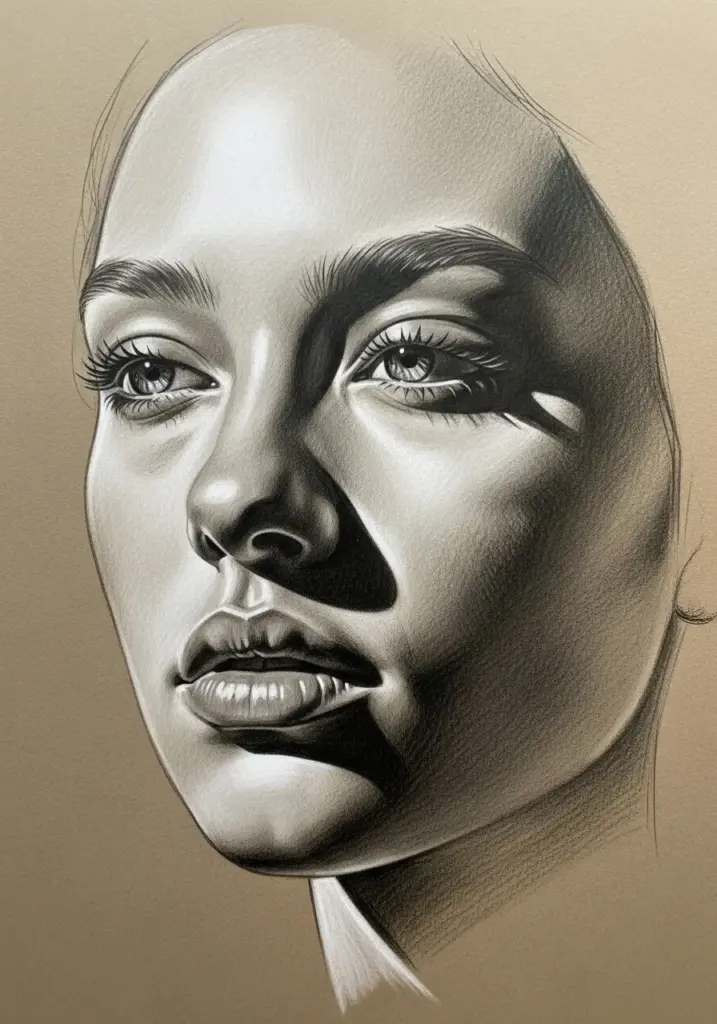
Shading is the magic element that brings your drawing out of the flat paper and into reality. Without it, you just have a topographical map of lines. To shade effectively, you need to deeply understand your light source. Before your pencil even touches the paper to add tone, you must ask yourself: Where is the light coming from?
If the light is coming from the top left, the shadows will consistently fall on the bottom right of the forms. Consistency is critical here. If you shade the nose like the light is on the left, but shade the jaw like the light is on the right, the face will look broken and confusing to the viewer.
Consider a mini case study of a common shading scenario. A beginner named Sarah was frustrated that her portraits always looked flat, dirty, and smudged. Upon reviewing her process, it was clear she was using her fingers to blend graphite evenly across the entire face, destroying all contrast. Skin is not one uniform gray tone. By teaching her to leave the highlighted areas (forehead, tip of nose, top of cheekbones) completely untouched by pencil, and pushing the deep core shadows under the chin and nose darker, her portraits immediately popped with realistic volume.
Use varying pencil grades to build this depth. Start with a harder pencil for your light areas. Move to a softer pencil (like a 4B or 6B) only for the deepest crevices: the pupils, the nostril openings, the line between the lips, and the darkest shadows under the chin and behind the ears.
New vs Old Approach: Blending Tools
The old approach taught beginners to rub their finger over the drawing to make it smooth, which often transferred skin oils and ruined the paper. The new approach relies on controlled cross-hatching or using professional blending stumps (tortillons) to preserve paper texture and keep the drawing crisp. What shading technique feels most natural to your hand?
Discussion Question: Do you prefer highly blended, smooth shading or rough, visible pencil strokes in your portraits?
Common Mistakes Beginners Make When They Draw Faces
Every artist makes the exact same structural errors when they first begin. It is part of the shared human experience of learning to draw. Recognizing these patterns helps you correct them much faster.
Mistake 1: Foreheads are drawn way too small
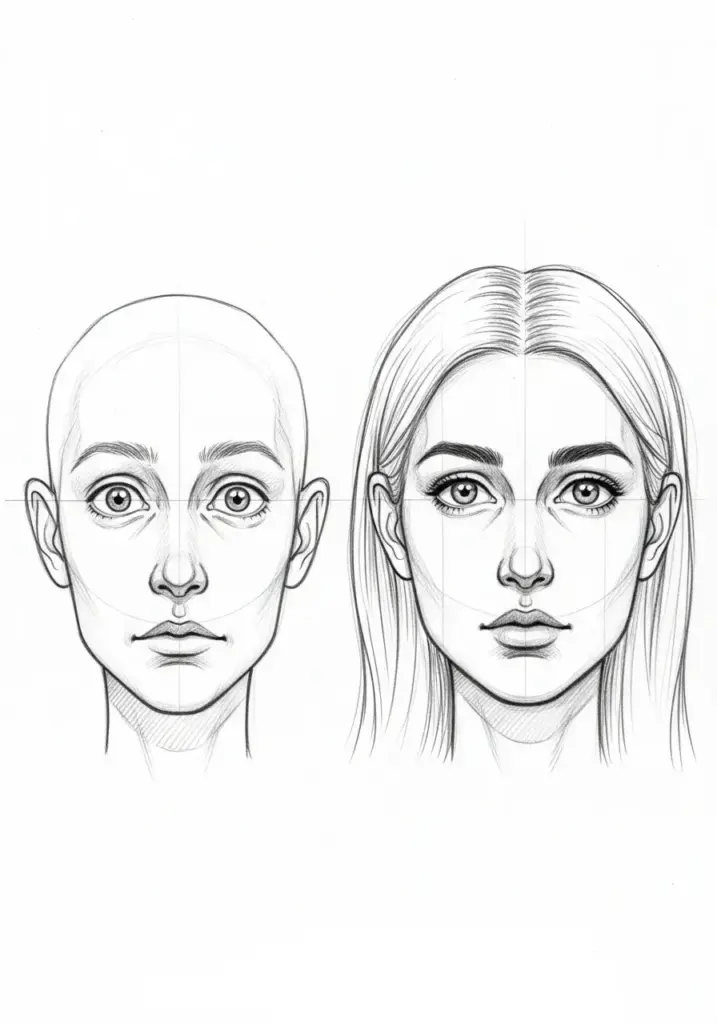
Because all the “interesting” stuff (eyes, nose, mouth) happens in the lower half of the face, beginners tend to shrink the forehead and crop the top of the head. Remember that the distance from the eyebrows to the top of the head is massive. Trust your initial sphere measurement and give the brain room to exist.
Mistake 2: Ears are placed incorrectly
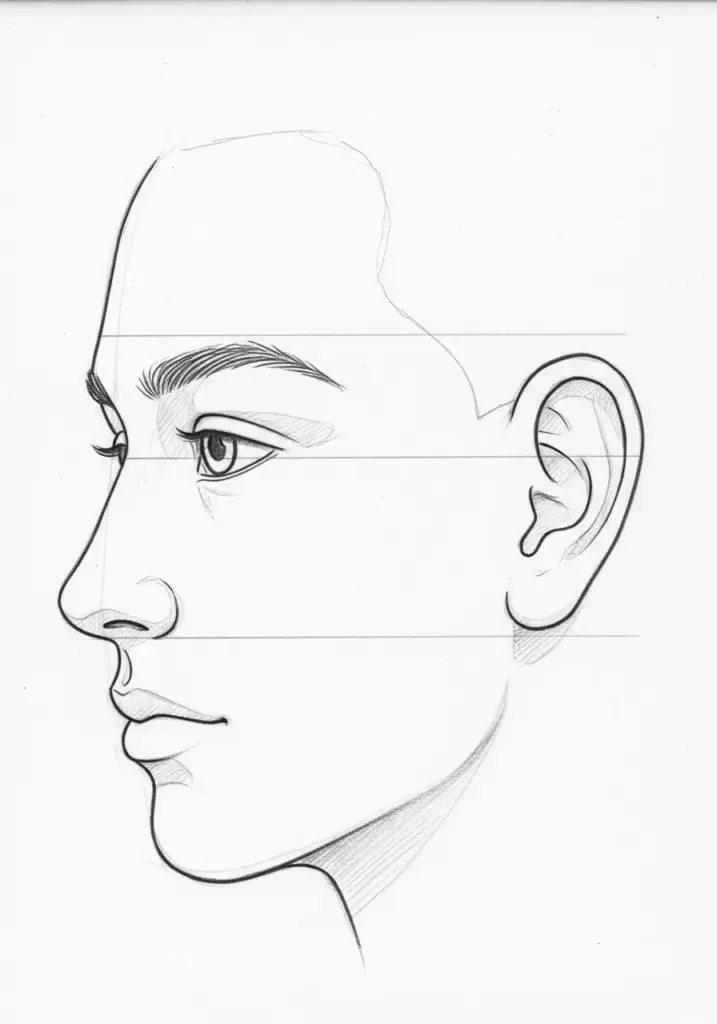
Ears are notoriously tricky. They are often drawn too small or placed too low on the jaw. If the head is facing directly forward and not tilting up or down, the top of the ear aligns with the brow line. The bottom of the ear aligns with the bottom of the nose. Check this alignment on yourself in a mirror right now.
Mistake 3: Hair looks like a solid plastic helmet
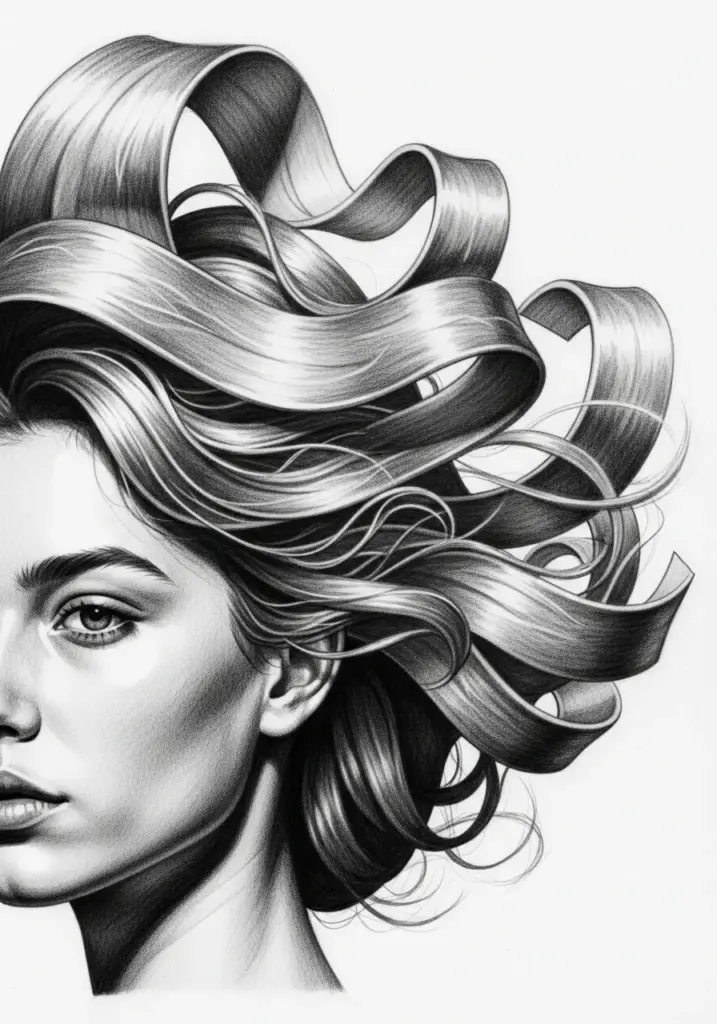
Drawing individual, harsh strands of hair from root to tip makes the hair look like stiff wire. Instead, look at hair as large ribbons or blocks of shape. Shade the dark areas where the hair folds, clumps, or gathers under the neck, and leave the highlighted curves bare. Add a few delicate flyaway strands at the very end to give the illusion of texture.
Mistake 4: Drawing dark outlines around the face
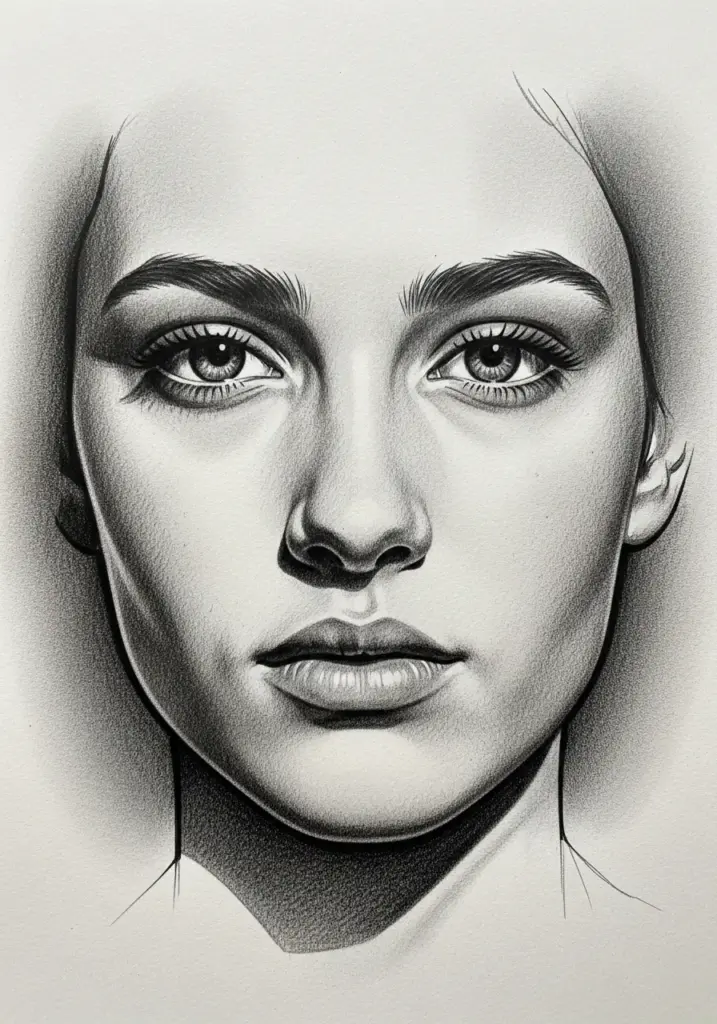
In real life, people do not have black outlines wrapping around their jawlines or cheeks. A dark outline instantly flattens the drawing into a 2D cartoon. Use shadow backgrounds or contrast to define the edge of the face instead of drawing a hard, continuous line.
Quick Update: Flipping the Canvas
Digital artists constantly flip their canvas horizontally to catch proportional errors. Traditional pencil artists are doing the same by holding their sketchbooks up to a mirror or taking a photo with their phone. It instantly resets your brain and reveals wonky eyes or slanted jaws. Do you ever check your traditional art in a mirror?
Discussion Question: Which of these four common mistakes do you catch yourself making the most?
Essential Tools and Pencil Techniques
You do not need an expensive, fully stocked art studio to Draw Faces beautifully, but having a few specific, high-quality tools makes the process significantly easier and more enjoyable. Using standard copy paper and a regular yellow school pencil heavily limits the depth, darkness, and contrast you can achieve.
Here is what you should consider keeping in your toolkit:
- A Range of Graphite Pencils (2H, HB, 2B, 4B, 6B): Having a variety of hardness levels allows you to sketch your guidelines lightly with the 2H or HB, and push deep, velvety shadows with the 4B and 6B. Trying to force a hard pencil to make a dark mark will only dent and ruin your paper.
- A Kneaded Eraser: This gray, putty-like eraser lifts graphite off the paper without leaving dusty crumbs behind. You can mold it into a microscopic point to dab away tiny highlights in the eyes or along the bridge of the nose.
- High-Quality Sketch Paper: Paper with a bit of “tooth” (subtle texture) grabs the graphite particles much better than perfectly smooth paper, allowing for richer, deeper shading layers without looking slippery.
- Blending Stumps: These tightly rolled paper sticks give you precise control over smudging and softening your pencil strokes in small areas, like the folds of the eyelids.
Before you Draw Faces with more confidence, it helps to improve pencil control, hatching methods, and pressure sensitivity with these pencil drawing tips for stunning sketches. Mastering the tool itself frees your brain up to focus entirely on the portrait.
Pause and Reflect
Are you currently using just one type of pencil for your entire drawing? How much easier might shading become if you switched to a softer lead for the shadows and a harder lead for the light areas?
Discussion Question: What is your absolute favorite brand of pencil or paper to use for sketching?
FAQ
What is the easiest way to Draw Faces as a beginner?
The easiest way to Draw Faces is to start with a simple cranial sphere shape, place the eye line exactly in the middle of the head, divide the lower half into thirds for the nose and mouth, and keep your initial construction lines very light so you can easily adjust them as you refine the features.
Why does my drawing look good until I take a photo of it?
Our brains play tricks on us while we work. We get so zoomed in and focused on shading a single eye or nostril that we stop seeing the whole picture. Taking a photo forces your brain to view the image as a flat, novel graphic, instantly revealing proportional mistakes that were hiding in plain sight. Holding your drawing up to a mirror achieves the same reality check.
Should I practice drawing from photographs or from real life?
Both have unique, necessary benefits. Drawing from real life forces you to translate a real 3D object into a 2D drawing, which builds deep spatial awareness and understanding of form. Photographs are already flat, making them easier for beginners to copy. However, photographs can severely distort perspective depending on the camera lens used. Use photos for convenient practice, but try sketching family members or yourself in the mirror whenever possible to build true skill.
How do I accurately capture different ethnicities and ages?
The underlying skull structure remains essentially the same, but the superficial features and bone widths change. Pay close, analytical attention to the specific shape of the nose bridge, the fullness of the lips, the fold of the eyelids, and the width of the cheekbones. Avoid relying on generic feature symbols. Study your reference photo closely and draw exactly what you see, measuring angles and relative distances carefully. For aging faces, focus on the way skin drapes over the bone structure rather than just drawing hard lines for wrinkles.
What is the hardest part of the face to master?
Most artists struggle the most with the mouth and the nose. The eyes have clear, dark outlines (lashes, iris, pupil), making them somewhat easier to map out. The nose and mouth, however, are soft tissues defined almost entirely by subtle rolling shadows and soft highlights. Shifting your mindset from “drawing lines” to “sculpting with shadows” is the key to finally mastering these tricky areas.
Final Thoughts on Your Portrait Journey
Learning to Draw Faces gets easier when you stop chasing instant perfection and start focusing on structure, proportion, and light. The process is a marathon, not a sprint. Do not expect your first few portraits to belong in a gallery. Your early sketches are simply necessary stepping stones. Keep them safe in a sketchbook, date them, and review them a year from now. You will be amazed by the progress you make through simple, stubborn consistency.
The more often you Draw Faces from simple guidelines like the sphere and the rule of thirds, the more confident and accurate your hand will become. Every face tells a different story through its unique geometry, asymmetrical quirks, and shadows.
Keep practicing one feature at a time, then bring everything together in full-face studies. Over time, you will Draw Faces with more control, more likeness, and much less frustration. You have the tools, you have the road map, and now it is time to put pencil to paper.
Share your experience in the comments below! What’s your take? Let’s discuss!