Jacuzzi Outdoor Guide That Actually Works
Plan it right, set it up once, and enjoy it year-round with less stress.
How do you build a jacuzzi outdoor setup that feels relaxing every week, not like another project you keep putting off?
An outdoor jacuzzi can change how your home feels. It can turn a plain patio into a place you want to spend time. It can help you unwind after work, warm up after a cold walk, or create a calm “end of day” routine.
But the truth is simple. The tub matters, yet your plan matters more. Most disappointment comes from a few predictable issues: the wrong location, weak privacy, confusing water care, and surprise energy costs.
This guide breaks the whole process into clear steps. You can use it whether you have a small deck, a large yard, or a compact patio. You will also see what has changed in recent years so you do not follow outdated advice.
Research snapshot before you buy
People want an outdoor spa experience that feels easy. They also want it to look good in daylight and feel safe at night. In real homes, that means the best setup balances comfort, cost, privacy, and upkeep.
Current trends and what they signal
- More buyers look for smart controls and remote scheduling in modern hot tubs.
- Energy efficiency gets more attention, especially insulation and heat retention choices.
- Outdoor integration matters more, meaning the tub sits inside a “zone,” not alone in the yard.
Common problems readers face
- “We bought it, but we barely use it.” This usually ties to privacy, lighting, or comfort issues.
- “The water keeps going cloudy.” This often ties to inconsistent testing and over-correcting.
- “Our bills jumped.” This often ties to heat loss, cover fit, and temperature habits.
Practical solutions that work across climates
- Choose a location based on wind, sightlines, and a safe walking path.
- Plan the “wet zone” with towels, hooks, storage, and traction underfoot.
- Build a small weekly care routine instead of big monthly fixes.
Which part feels hardest right now: choosing the right tub, picking the location, or feeling confident about water care?
What’s new with jacuzzi outdoor setups
Outdoor jacuzzi advice changes in small ways, then people miss it. That is how “perfect on paper” setups become annoying in daily life. Here are the biggest shifts that matter right now.
Shift 1: People expect smart control
More hot tub buyers now expect smart features like remote control and scheduling rather than manual-only control panels. That matters because it supports real routines, like heating when you plan to soak, not all day.
Shift 2: Efficiency is not optional
Energy-saving talk used to sound like a bonus. Now it feels like the difference between “we love it” and “we regret it.” Better insulation and a well-fitted insulated cover help reduce heat loss and keep running costs lower.
Shift 3: Outdated water advice causes more problems than it solves
People still follow old advice like “shock it hard and forget it.” That leads to swings that irritate skin, waste chemicals, and create cloudy water. New best practice focuses on small, steady testing and adjustments.
The #1 outdated mistake
Many people keep the temperature too high because they want “ready anytime.” The CDC says hot tubs should not be hotter than 104°F (40°C). The U.S. Consumer Product Safety Commission also warns that hot tub water temperatures should never exceed 104°F.
What part of “new vs old” advice surprised you most?
Trend watch: Smart controls and scheduling keep showing up as a “must-have” feature in 2025 hot tub trend lists. Do you want full control from your phone, or do you prefer a simple manual setup?
Choose the right outdoor jacuzzi type
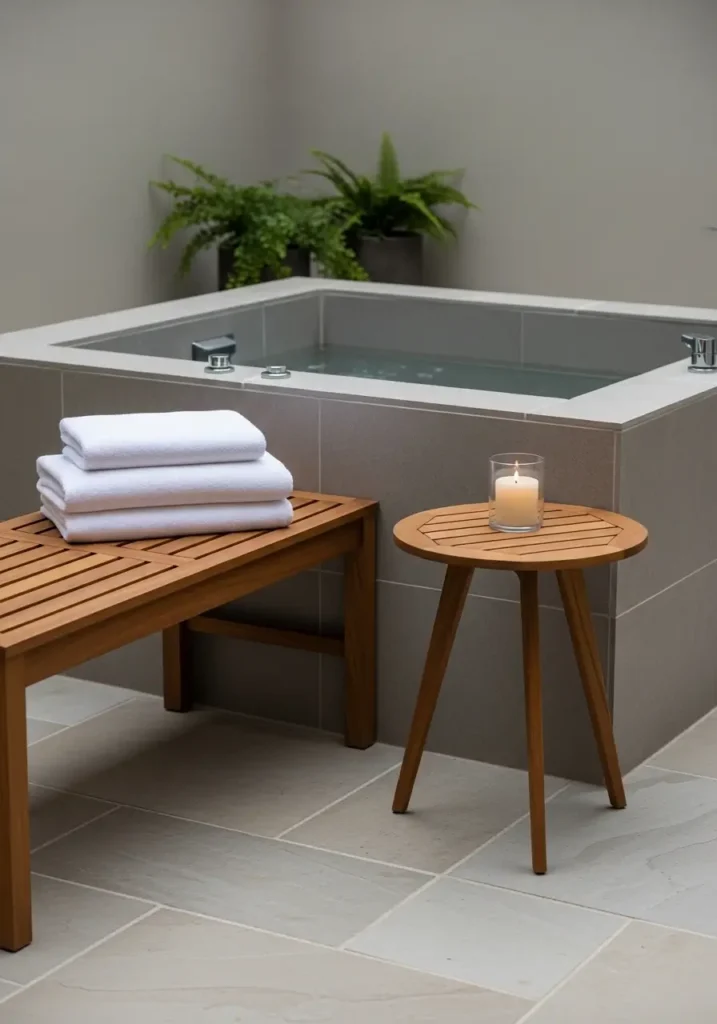
Start with a simple question. Do you want a deep-soak routine, a social hangout space, or both? Your answer changes the size, seating style, and the way you design the area around it.
Common outdoor jacuzzi options
- Hard-shell hot tub: Best for long-term use and steady comfort. It costs more, but it often feels more stable and quiet.
- Inflatable spa: Best for a lower upfront cost and testing the habit first. It may struggle more in cold or windy areas.
- Plunge-style tub with heat: Best for people who want a simple soak. It can work well in small yards.
How to pick the right size
Ignore the marketing seat count. Think about real use. A “six-person” tub may feel best with three or four adults. If you love solo soaks, you may prefer a smaller tub with better jets and deeper seating.
Small space tip that feels like magic
When a patio feels tight, make the jacuzzi zone feel planned. Add one bench, one small table, and one storage piece. Keep the rest open. People need a place to sit, a place to set a drink, and a place to drop towels.
Do you picture your outdoor jacuzzi as a private retreat, a family zone, or a social spot?
Pick the best location in your yard
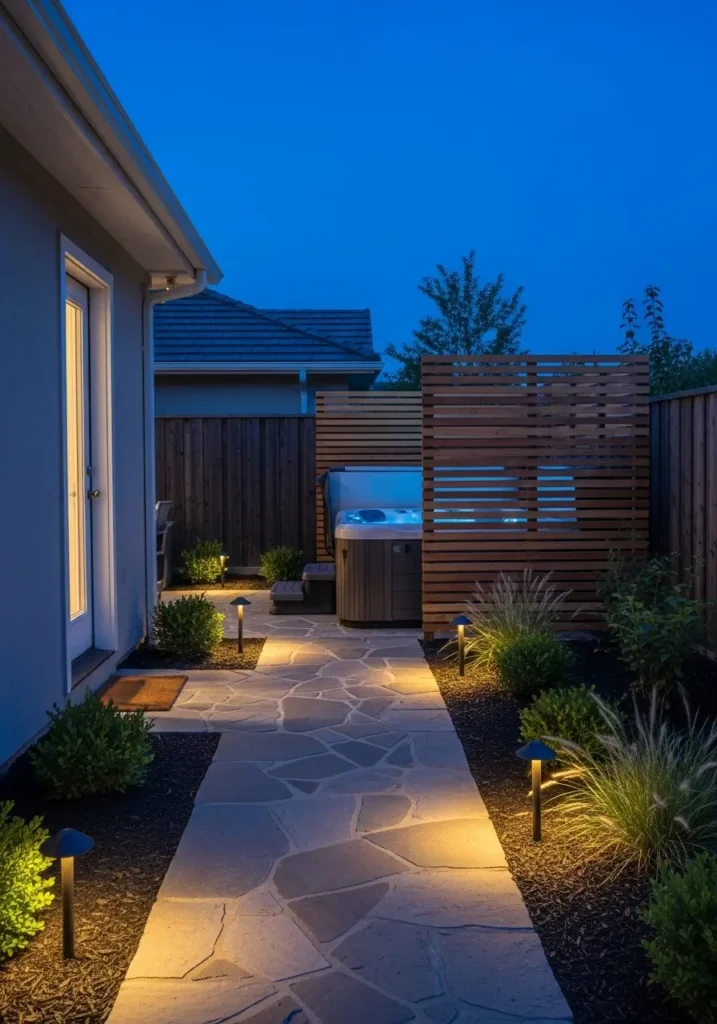
Location can make or break your experience. A great tub in the wrong spot will feel exposed, cold, loud, or annoying to access. A decent tub in the right spot can feel perfect.
Use the “3 paths” rule
Before you commit, walk these paths:
- From your back door to the tub at night.
- From the tub to a towel or robe location.
- From the tub back inside when it is cold and you feel tired.
If any path feels awkward, fix that now. Add lighting. Remove trip hazards. Create a dry spot for shoes.
Wind matters more than you think
Wind steals heat from wet skin. It also makes getting in and out feel rough. Try to place the tub where a fence, wall, hedge, or screen blocks wind. If you cannot, plan for a pergola wall panel or a tall plant barrier.
Privacy is a comfort feature
Most people use their tub more when they feel private. Privacy can come from a simple screen, a pergola, a tall planter wall, or a layered planting bed. You do not need a full fence upgrade to feel hidden.
Quick reflection: When you imagine soaking outside, what makes you relax more—quiet, privacy, warmth, or the view?
What is the biggest challenge in your space right now: wind, privacy, distance from the door, or limited room?
Common headline myth: “Saltwater means no maintenance.” In real life, every hot tub still needs testing and steady care to keep water clear and safe. What water-care claim have you heard that sounds too good to be true?
Plan the base, power, and safety basics
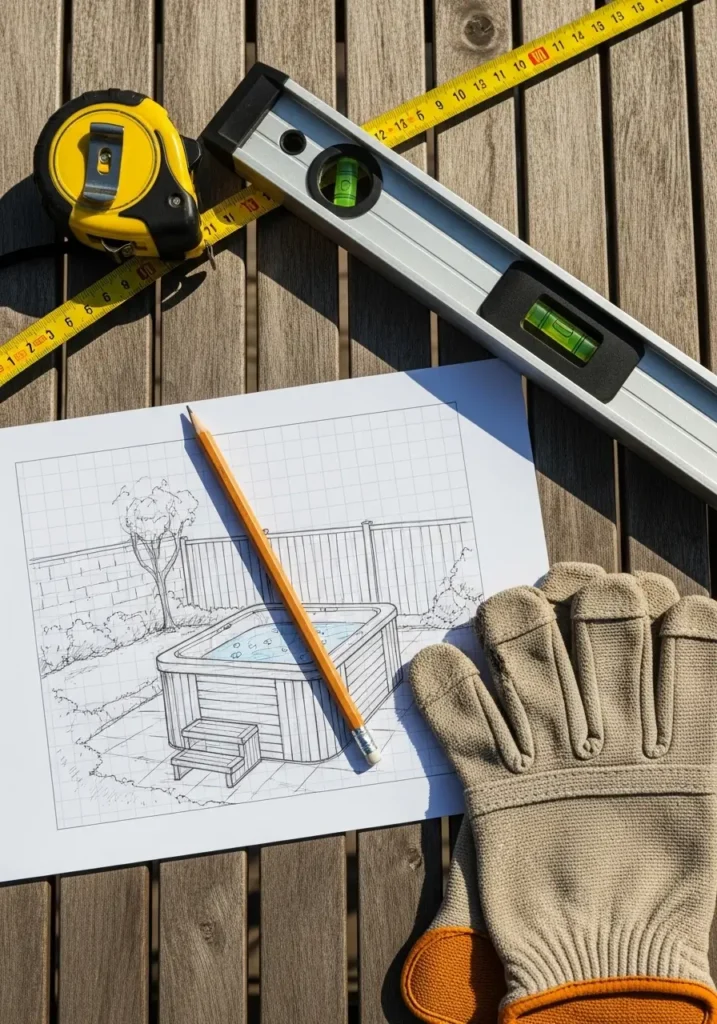
This section prevents expensive mistakes. A jacuzzi outdoor setup needs a stable base, safe electrical planning, and a simple “wet-zone” plan. Do this part with care. Your future self will thank you.
Choose a stable base
Your tub needs level support. Many homeowners use a concrete pad, reinforced deck area, or a properly prepared paver base. The “right” choice depends on your yard and your structure. What matters most is a flat surface and proper support.
Think in zones
- Wet zone: The tub, the step, and a traction surface right around it.
- Dry zone: A bench, hooks, towel storage, and a small table.
- Walk zone: A clear, lit path back to the door.
Lighting and traction
Most slips happen when people feel relaxed and move too fast. Add soft lighting along the path and near the steps. Use a traction mat or a textured surface where feet land.
Noise and neighbor planning
Pumps and jets create sound. Place the tub so the loud side points away from bedroom windows when possible. Add a privacy wall panel that also acts as a sound break.
Which part do you want to plan first: the base, the “wet zone,” or the lighting?
Quick update: Energy-conscious features like stronger insulation and better covers keep getting more attention as people look to control running costs. If you could improve one thing for comfort this season, would you choose privacy, heat retention, or lighting?
Design the experience not just the tub
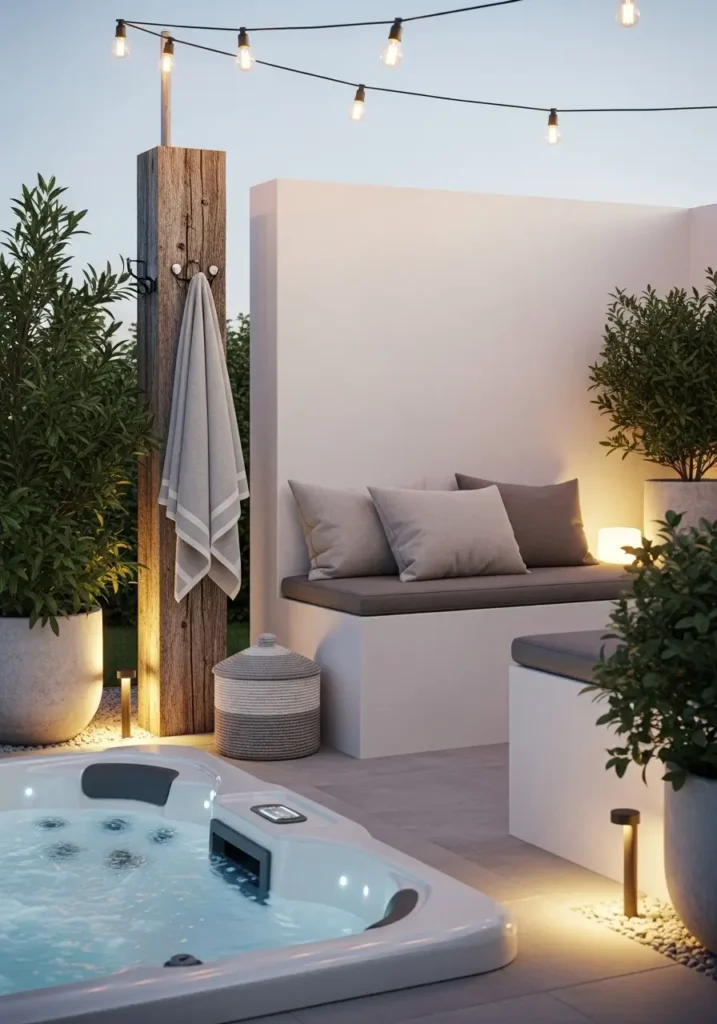
A great outdoor jacuzzi setup feels like a mini destination. The design does not need to be expensive. It just needs to feel intentional.
Start with one vibe
Pick one clear vibe. Then design around it:
- Minimal chic: Clean lines, neutral palette, hidden storage, simple planters.
- Cozy cabin: Warm lighting, wood textures, thick towels, wind protection.
- Modern spa: Black accents, clean stone textures, soft plants, quiet lighting.
- Soft romantic: Gentle lighting, layered textiles, subtle privacy screens, greenery.
- Bold and colorful: One accent color, playful towels, bright planters, simple shapes.
Make privacy look like decor
Privacy walls do not need to feel heavy. You can use a slatted screen, tall planters, or an outdoor curtain panel. Keep it simple. Repeat the same material or color twice to make it feel planned.
Add comfort “anchors”
- Hooks for robes and towels.
- A lidded basket for clean towels.
- A small side table with a wipe-clean surface.
- A step that feels stable and safe.
What vibe fits your home best right now?
Energy and comfort strategies that lower regret
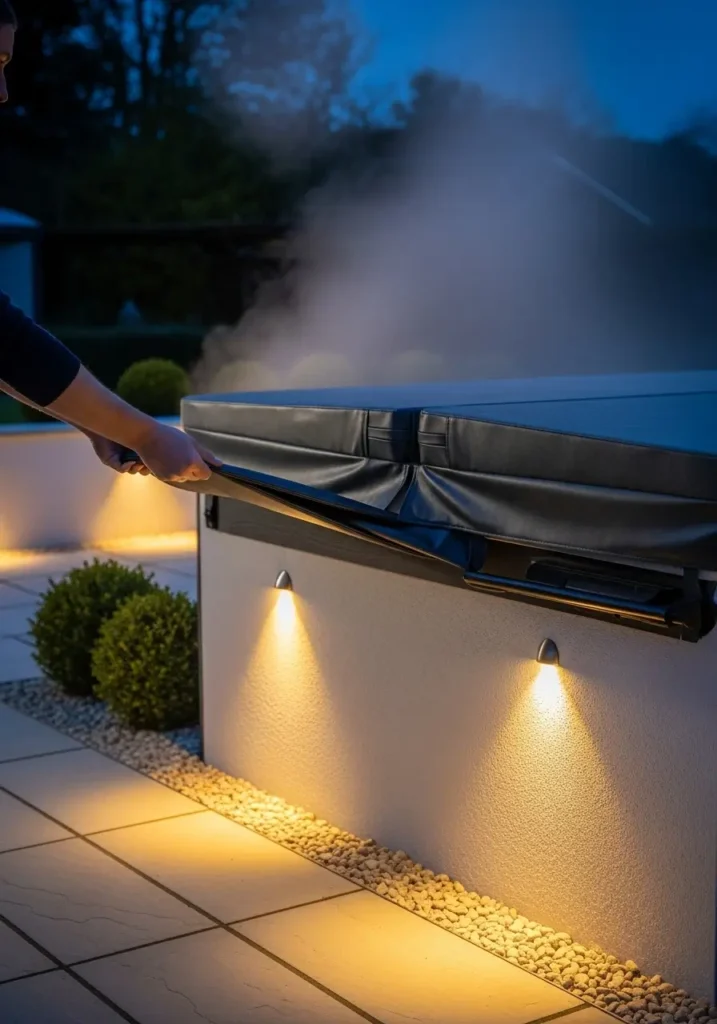
Most people blame “the tub” when bills rise. In many cases, habits and heat loss drive the cost. This is good news because you can fix those issues without replacing the tub.
Use the cover like a tool
A well-fitted insulated cover helps reduce heat loss and overall energy use. Treat it like part of the system, not an accessory. Keep it on any time you are not soaking.
Aim for comfort, not maximum heat
Many adults enjoy a soak at lower temps than they expect. Start lower and move up. If you feel dizzy or too hot, get out and cool down.
Protect against wind
Wind protection makes a big difference in how warm you feel. It also makes your exit faster and less miserable. A simple wind screen can increase how often you use the tub in colder months.
Mini case study: the “we stopped using it” fix
A couple installed a tub in the back corner of the yard because it looked nice in photos. They used it for two weeks, then stopped. The path felt dark. The wind hit hard. They also had nowhere to set towels.
They fixed it with three changes: path lights, a privacy panel that blocked wind, and a small bench with a lidded basket. They started using it again because it felt easy.
Quick reflection: What would make you use your outdoor jacuzzi one extra day per week?
Do you want your setup optimized for daily use, weekend use, or special occasions?
Related Post: Repair of Roofing: A Comprehensive Guide to Roof Repair vs. Replacement
Water care that feels simple and safe
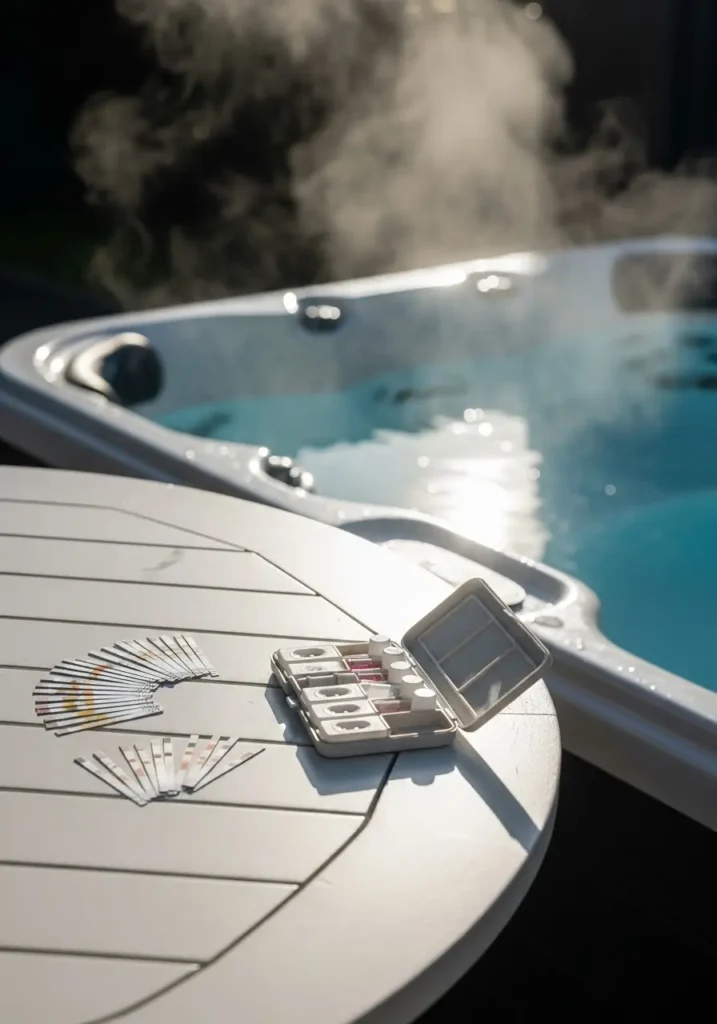
Water care sounds hard until you simplify it. The goal is stable water, not perfect water. A steady routine beats a big “fix day” every time.
Start with safety basics
The CDC says hot tubs should not be hotter than 104°F (40°C). It also recommends checking disinfectant levels (chlorine or bromine) and pH with test strips. The CDC lists a minimum chlorine level of at least 3 ppm for hot tubs.
A simple weekly routine
- Test the water at the same time each week.
- Adjust in small steps, not big swings.
- Clean the waterline and check the filter.
- Wipe the cover and check for a snug fit.
What causes cloudy water most often
- Too many bathers without adjusting care after.
- Inconsistent testing, then over-correcting.
- Dirty filter that cannot keep up.
- Leaving the cover off too long, which changes water balance.
New vs old approach
Old: Wait until the water looks bad, then throw in a lot of chemicals.
New: Test often, adjust small, and keep a simple rhythm you can maintain.
What part of water care worries you most: testing, chemicals, skin comfort, or keeping it clear?
Make it usable in every season
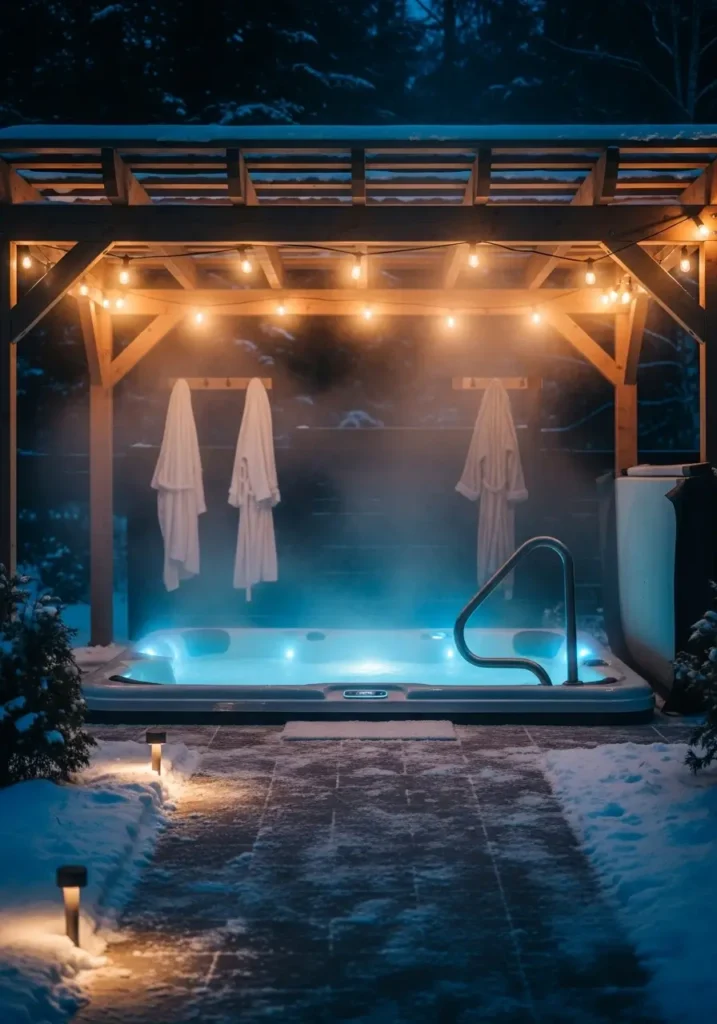
Outdoor tubs work in every season when you design for the season you fear most. If winter feels rough where you live, plan for winter first. If summer bugs annoy you, plan for that first.
Cold weather comfort plan
- Block wind with a screen, hedge, or panel.
- Add path lights so you feel safe at night.
- Keep towels and robes within arm’s reach.
- Use a traction surface where feet land.
Hot weather comfort plan
- Use shade for the tub area when possible.
- Lower your water temperature for summer soaks.
- Add a small rinse option nearby if your yard allows it.
Rain and humidity plan
Moisture can make surfaces slick. Choose outdoor materials that handle water well. Keep your storage sealed. Make sure your path does not turn into mud.
Quick reflection: Which season do you want to enjoy more this year, and what would make that easier?
If you could only upgrade one seasonal comfort feature, would you choose wind blocking, lighting, or better towel storage?
Troubleshooting and long-term upkeep
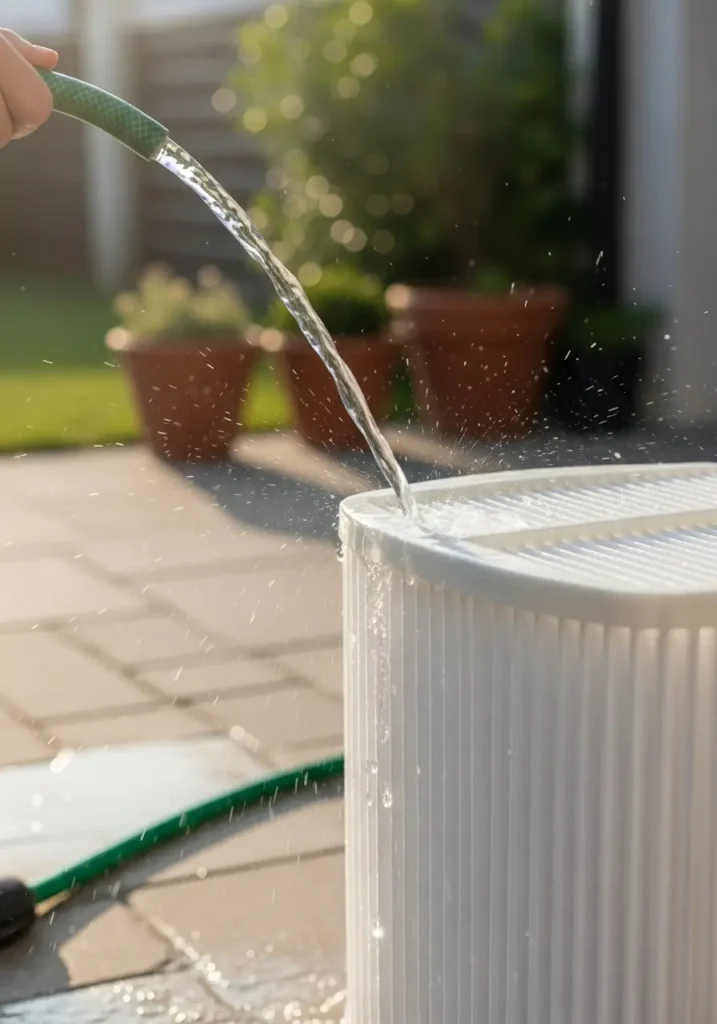
Most issues repeat. When you know the pattern, you fix it fast and move on.
Problem: You do not use it often
Likely cause: The setup feels exposed, cold, or inconvenient.
Fix: Add privacy, wind blocking, lighting, and a “drop zone” for towels and robes.
Problem: Water looks fine, but feels harsh
Likely cause: Big chemical swings from adjusting too much at once.
Fix: Test more often and adjust in smaller steps. Clean the filter on schedule.
Problem: Bills feel high
Likely cause: Heat loss through poor cover fit or too much idle heating.
Fix: Treat the cover as essential and keep it snug and closed between soaks.
A calm maintenance mindset
Think of your outdoor jacuzzi like a small garden. A little care each week keeps it in good shape. Big gaps create big catch-up sessions.
What problem do you want solved first: more usage, clearer water, or lower running costs?
Key Takeaways:
- ✓Plan the location for comfort: wind, privacy, and a safe lit path matter as much as jets.
- ✓Treat the cover and insulation as part of the system to reduce heat loss and cost.
- ✓Keep water care steady with small weekly habits instead of big monthly fixes.
- ✓Design a “spa zone” with storage, seating, and lighting so you use it more often.
Frequently Asked Questions
How much space do I need for a jacuzzi outdoor setup?
You need space for the tub plus safe access. Plan extra room for steps, cover opening, and a dry zone for towels. If you can stand, sit, and walk around it with ease, you picked a usable footprint.
What is the safest water temperature for an outdoor jacuzzi?
The CDC says hot tubs should not be hotter than 104°F (40°C). Many adults feel great at lower settings, so start lower and adjust based on comfort.
How do I keep outdoor jacuzzi running costs down?
Focus on heat retention and habits. Use a well-fitted insulated cover to reduce heat loss. Add wind protection, avoid leaving the cover off, and aim for a realistic temperature that matches your routine.
Why does my hot tub water get cloudy so fast?
Cloudy water often comes from inconsistent testing, a dirty filter, or not adjusting care after heavy use. Keep a simple weekly routine, clean the filter on schedule, and avoid big chemical swings.
What should I add around the tub so I use it more?
Add comfort anchors: safe steps, path lighting, privacy, wind blocking, and towel storage within reach. Those small details remove friction, so soaking becomes part of your week instead of a rare event.
Final Thoughts
A jacuzzi outdoor setup works best when you plan for real life. Start with comfort and access. Add privacy and wind protection. Build a simple water routine you can keep. Then layer in the design touches that make you want to use it more. Pick one improvement this week, and you will feel the difference fast.
What is the one change that would make your outdoor jacuzzi feel more inviting tonight?
Share your thoughts and experiences in the comments below—I’d love to hear your perspective!