

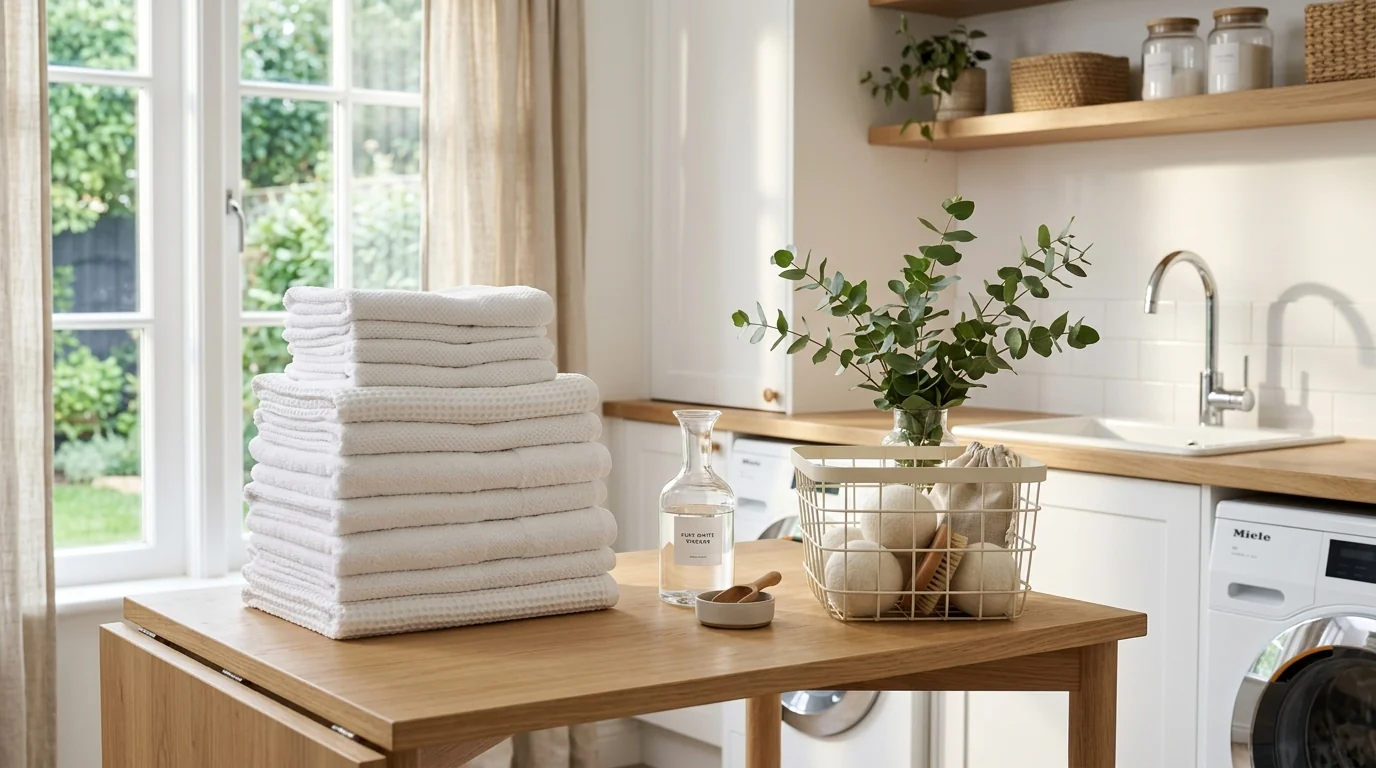
You pull a load of freshly laundered white bath towels from your high-efficiency front-load dryer, expecting the plush, cloud-like softness and clean scent of a luxury hotel suite. Instead, when you run your fingers across the terry cloth, the fabric feels stiff and scratchy—almost like coarse cardboard. You hold a towel up to the morning window light and notice an unmistakable dingy gray cast dulling the once-pristine white weave. Even more infuriating, when you bring the towel to your face, a sour, stale, waxy odor lingers beneath the aggressive synthetic perfume of your detergent.
Your immediate, instinctive reaction is one shared by tens of millions of modern households: “These clothes didn’t get clean enough. Next time, I need to add more soap.” On your next laundry load, you grab the plastic detergent bottle, twist off the massive blue cap, and fill it all the way to Line 5—a generous four-to-six-tablespoon dose—and dump it into the dispenser drawer.
Yet in the physics and chemistry of modern laundry, you have just committed the single most counterproductive error in domestic maintenance: laundry detergent overdosing. Modern washing machines do not leave clothes dingy because they lack soap; they leave clothes dingy because they are drowning in unrinsed surfactant residue.
Overdosing detergent triggers an insidious biochemical trap: excess soap molecules exceed the water’s rinsing capacity, forming a microscopic, waxy hydrophobic film over textile fibers that glues body sebum, dead skin cells, and mineral scale directly into the cloth. By understanding the biophysics of micellar saturation, high-efficiency water ratios, and the 2-tablespoon rule, you can permanently eliminate laundry stiffness, banish mysterious washer odors, and restore clinical softness to your wardrobe.
The High-Efficiency Paradox: 1980s Habits in a 2020s Machine
To understand why modern clothes are suffocating in soap, you must examine the profound technological transformation that washing machines have undergone over the past twenty-five years.
Until the late 1990s, the standard American laundry appliance was a vintage top-loading machine equipped with a center agitator. These mechanical behemoths operated on raw volumetric dilution: a single wash cycle filled the massive tub with 40 to 45 gallons of water. In 40 gallons of hot water, dumping in half a cup of powdered or liquid detergent was chemically balanced. The vast volume of water easily dissolved the surfactants and rinsed them away down the drain.
Enter the era of environmental conservation and high-efficiency (HE) appliances. Today’s front-loading and top-loading HE washers are marvels of electrical and resource engineering. Mandated by Department of Energy regulations, a modern front-loader uses only 4 to 7 gallons of water per wash phase, relying on tumbling gravity rather than a thrashing agitator.
However, while washing machine engineering advanced into the space age, consumer habits remained stubbornly frozen in 1985:
- The Cap Deception: Detergent manufacturers design measuring caps with faint, virtually invisible plastic lines. The “recommended” normal dose (Line 1 or 2) is tucked away at the very bottom of the cap, representing barely two tablespoons. The top of the cap (Line 5) holds a massive six to eight tablespoons—a 300% to 400% overdose. Consumers naturally fill the cup to the brim, causing detergent bottles to empty twice as fast and boosting corporate quarterly profits.
- The Suds Delusion: For decades, commercial television advertising conditioned consumers to believe that thick, billowing mountains of white foam equal cleanliness. In reality, suds are merely trapped air bubbles produced by foaming agents; they contribute almost nothing to mechanical soil suspension. In an HE machine, thick suds act as a shock absorber, cushioning clothes as they drop and preventing the fabric-on-fabric friction required to scrub textiles clean.
“Modern high-efficiency washing machines use 80% less water than vintage top-loaders, but consumers still pour in the same massive 1980s cup of soap. You are pouring a lake’s worth of detergent into a shallow puddle.”
The Micellar Saturation Trap: How Soap Becomes Dirt
To grasp why excess detergent makes fabrics dirtier, you must understand the microscopic chemical mechanism by which soap cleans: micellar action.
Liquid laundry detergents are formulated with synthetic chemical surfactants (such as sodium laureth sulfate and linear alkylbenzene sulfonate). A surfactant molecule is amphiphilic: it possesses a hydrophilic (water-loving) polar head and a lipophilic (oil-loving) non-polar hydrocarbon tail.
When detergent dissolves in water, surfactant molecules seek out greasy human body oils, sebum, and food stains. The lipophilic tails burrow deep into the oil droplet, while the hydrophilic heads face outward toward the surrounding water. Once enough surfactants surround the soil, they pinch off into a spherical microscopic capsule known as a micelle. Suspended in water, the micelle floats away from the fabric and is pumped down the drain during the drain cycle.
However, this chemical mechanism operates strictly up to a thermodynamic ceiling known as the Critical Micelle Concentration (CMC):
- Beyond the Saturation Limit: Once all available soil and oil particles have been encapsulated by surfactant micelles, any additional detergent added to the water has nothing to bind to. The excess surfactant molecules float freely in the limited wash water.
- The Rinse Cycle Failure: An HE washer’s brief rinse cycle uses cold water and minimal volume (often just two to three quick spray-and-spin rinses). Cold water lacks the thermodynamic solvency required to dissolve viscous, concentrated liquid surfactants. The machine cannot rinse the soap out.
- Soil Redeposition: As the rinse water drains, the unrinsed surfactants collapse back onto the textile fibers. But they do not return alone: they drag suspended dirt, microscopic lint, sloughed dead skin cells, and dissolved tap-water minerals (calcium and magnesium carbonates) down with them, cementing a sticky, gummy slurry directly into the core of the yarn.
This redeposited residue is known in textile chemistry as surfactant scum. As your clothes dry in the dryer or on the line, that soap scum hardens into an invisible, waxy, hydrophobic shell.

Amazon US Verified
Precision Laundry Measuring Dispenser & Natural Washing Soda
Calibrated 2-tablespoon silicone dispenser cup paired with Arm & Hammer pure washing soda to strip built-up soap scum, eliminate surfactant stiffness, and restore natural towel absorbency.
The Four Symptoms of Detergent Overdosing
How do you know if your wardrobe is suffering from chronic surfactant intoxication? Watch for these four unmistakable symptoms:
1. Cardboard Towel Stiffness
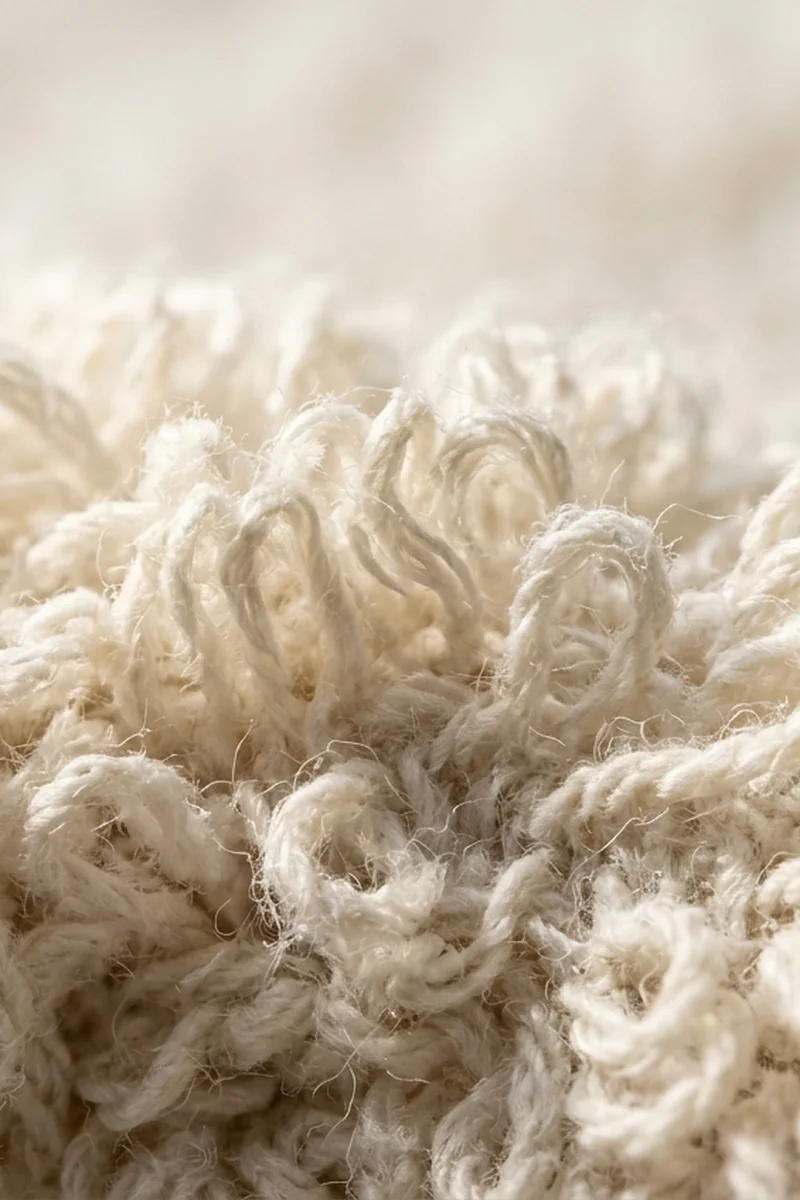
Natural cotton terry cloth consists of millions of microscopic, pliable cellulose loops that absorb water through capillary action. When coated in hardened surfactant scum, the loops become glued together in rigid clusters. The towel loses its natural flexibility, feeling stiff and rough against your skin, while repelling water rather than drinking it up.
2. The Dingy Gray Film on Whites
White t-shirts, sheets, and socks do not turn gray from age; they turn gray because microscopic soil particles suspended in excess detergent suds are redeposited evenly across the cotton matrix during the spin cycle. Bleach cannot fix this grayness because bleach oxidizes organic stains, but cannot dissolve synthetic surfactant plastics.
3. The Re-Emerging Workout Funk
Synthetic athletic apparel (polyester, nylon, and elastane) is woven from hydrophobic petroleum-based polymers. Surfactant scum bonds aggressively to synthetic fibers, forming a nutrient-rich agar medium that traps bacterial microbes (predominantly Corynebacterium). When you put on a clean gym shirt, your body heat warms the fabric, reactivating the trapped bacteria and releasing an immediate, embarrassing surge of stale sweat odor within five minutes.
4. Washing Machine Biofilm Scrud
Where does the rest of that unrinsed soap go? It coats the hidden plastic outer wash tub, the drainage pump impeller, and the rubber door gasket in an unctuous, slimy sludge known in appliance repair as “scrud.” Scrud serves as an all-you-can-eat buffet for black yeasts and fungal biofilms, producing the foul, musty, sewer-gas stench that plagues modern front-loaders.
The 2-Tablespoon Rule: The Golden Ratio of Modern Laundry
The definitive cure for detergent overdosing is simple, shocking, and universally validated by appliance engineers: never use more than 2 tablespoons (1 liquid ounce) of detergent for a full, normal-sized load of laundry in a high-efficiency machine.
If you have soft water or are washing a light load, reduce that dosage to 1 single tablespoon. If washing heavily soiled mechanic coveralls or thick mud-caked sports uniforms, increase to a maximum of 3 tablespoons—never more.
📥 Free Download: Laundry Detergent Dosage & Surfactant Stripping Field Guide
Micellar critical concentration formulas, HE rinse clearance tables, towel stripping protocols, and washer drum maintenance checklists.
The Laundry Detox: How to Strip Built-Up Soap Scum
If your towels and bed sheets are already stiff and waxy from years of detergent overdosing, switching to 2 tablespoons won’t instantly remove the old encrusted residue. You must perform an alkaline saponification strip to reset the textiles:
Step 1: The Zero-Detergent Diagnostic Wash
Take 4 or 5 of your stiffest bath towels and place them into your washing machine. Do not add a single drop of laundry detergent, soap, or pod. Set the water temperature to Hot (130°F–140°F) and press Start. Ten minutes into the cycle, look through the front glass door. In over 80% of households, you will see a thick, churning layer of white suds—proof that your towels contain enough trapped soap to wash themselves completely without adding new detergent!
Step 2: The Hot Washing Soda Saponification Wash
Run a full hot wash cycle with 1/2 cup of washing soda (sodium carbonate) added directly to the drum. The high alkaline pH (11.0) breaks down and saponifies hardened fatty tallow residues and old surfactant glazes, releasing them into the water.
Step 3: The Acetic Acid Neutralization Rinse
Follow immediately with a second hot cycle, adding 1 cup of distilled white vinegar (5% acetic acid) into the fabric softener compartment. The mild acid dissolves mineral crusts, neutralizes the alkalinity of the washing soda, and leaves cotton fibers completely clean, buoyant, and breathable.
By respecting the physical chemistry of modern textiles and honoring the 2-tablespoon limit, your clothes will last twice as long, your towels will dry your skin in a single luxurious pass, and your washing machine will smell as fresh as the day it was installed.
As an Amazon Associate, azuloz.com earns from qualifying purchases.