


It is 9:30 PM on a Tuesday evening. The children are finally asleep upstairs. In the dimly lit kitchen, one partner stands by the sink, scraping hardened marinara sauce off dinner plates, wiping down the quartz countertops, and running the dishwasher. The other partner sits on the living room sofa, feet propped up, scrolling silently through their phone.
Outwardly, the scene is quiet. But inside the mind of the partner scrubbing the sink, a toxic, silent mathematical calculation is churning with ferocious intensity:
“Let’s see: I woke up at 6:00 AM, packed the lunches, drove the morning school carpool, worked eight hours, picked up the dry cleaning, made dinner, and now I’m doing the dishes. They only walked the dog and took out the recycling. I am carrying 85% of this household, and they owe me.”
When the kitchen partner finally walks into the living room, they don’t say: “I’m feeling overwhelmed and need a hug.” Instead, they heave a theatrical, audible sigh, slam the cabinet door a fraction harder than necessary, and mutter with icy sarcasm: “Must be nice to just relax all evening.”
Welcome to the Kitchen Scorekeeping Trap. In clinical psychology and marital therapy, covert scorekeeping is recognized as one of the most toxic, insidious forces that can infect an intimate partnership. Driven by a modern cultural obsession with rigid 50/50 equality, partners construct invisible mental spreadsheets, logging every chore, diaper change, and emotional sacrifice as a transactional debt that must be settled.
Yet social psychological research reveals a devastating truth: the moment a romantic partnership becomes a transactional accounting firm, emotional intimacy and marital trust begin to die. By understanding the revolutionary social science of Exchange vs. Communal Relationships and mastering the 100/100 Operational Ownership framework, you can dismantle the toxic mental ledger, eradicate bitter resentment, and restore profound generosity to your marriage.
Exchange vs. Communal Relationships: The Social Science of Love
To understand why scorekeeping destroys romance, you must examine one of the most celebrated frameworks in modern social psychology: the pioneering research of Dr. Margaret Clark (Yale University) and Dr. Judson Mills (University of Maryland) on Exchange vs. Communal Relationships.
Clark and Mills proved that all human social bonds operate under one of two fundamentally opposing psychological contracts:
1. Exchange Relationships (Transactional Accounting)
Exchange relationships govern the world of business, commerce, and casual acquaintances. In an exchange dynamic, benefits are given with the explicit expectation of receiving a comparable benefit in return. When you buy groceries, you give money, and the clerk gives you food. The transaction is immediate, balanced, and zero-sum. If the clerk takes your money and refuses to give you groceries, you feel cheated.
Crucially, keeping score is healthy and necessary in business: it prevents fraud and ensures economic fairness.
2. Communal Relationships (Needs-Based Generosity)
Communal relationships govern family bonds, deep friendships, and healthy marriages. In a communal dynamic, benefits are given in response to the other person’s needs, or to demonstrate care, with zero expectation of an immediate or reciprocal return.
When you feed your six-month-old baby, you do not keep a mental spreadsheet thinking: “I fed you today, so next Tuesday you owe me a meal.” You give because the baby is hungry. You give because their flourishing is your flourishing.
The tragedy of modern domestic life is that couples unconsciously drag Exchange mechanics into their Communal marriages. They treat their spouse not as an intimate partner, but as an economic subcontractor whose daily chore ledger must balance out to an exact 50.0% parity before affection or grace can be granted.
“When you keep a scorekeeper’s ledger in your marriage, you are treating your spouse like a business vendor. But you cannot make passionate love to an economic vendor you resent.”
The 50/50 Fallacy: Why Perfect Balance Is Mathematically Impossible
Why do couples start keeping score in the first place? Almost always, it begins with an innocent, progressive desire for “fairness.” Modern couples aspire to an egalitarian marriage where domestic duties and parenting responsibilities are shared equally 50/50.
However, marriage researchers and family economists reveal that the 50/50 balance rule is a psychological mirage:
- Availability Heuristic Bias: In cognitive psychology, the availability heuristic dictates that we remember our own actions with vivid, emotional clarity because we physically experienced the effort, sweat, and fatigue. You remember vividly when you scrubbed the toilet or drove in gridlock traffic. However, you do not physically experience your partner paying the auto insurance, scheduling the pediatrician checkup, or coordinating the HVAC repair while you are at work. Consequently, sociological surveys consistently show that when both spouses are asked to estimate what percentage of household labor they perform, the two numbers routinely add up to 130% to 150%! Both partners honestly believe they are doing more than their fair share.
- Life Is Not a Symmetric Vacuum: Real life fluctuates wildly and unpredictably. Illness, career promotions, pregnancy, grief, family crises, and mental burnout mean that on any given week, one partner can only give 20%, requiring the other to carry 80%. If you demand rigid 50/50 symmetry every 24 hours, you guarantee that both of you will spend your entire adult lives feeling cheated, exhausted, and bitter.

Amazon US Verified
Fair Play: A Game-Changing Solution for When You Have Too Much to Do
Eve Rodsky’s New York Times bestselling framework and 100-card household task deck designed to eliminate covert scorekeeping, establish full task ownership, and liberate couples from domestic resentment.
The Covert Contract: The Engine of Resentment
When scorekeeping goes unchecked, it inevitably breeds covert contracts.
A covert contract is an unvoiced, secret agreement you create entirely in your own head: “If I do X for you, you are obligated to do Y for me, but I will never explicitly tell you what Y is.”
For example: a husband washes his wife’s car on Saturday morning, secretly expecting that she will reward him with enthusiastic physical intimacy that evening. He never states his desire. That night, she is exhausted and falls asleep early. The husband lays awake in the dark, simmering with intense fury and rejection. In his mind, she violated the contract. In her mind, she had a peaceful Saturday and went to bed.
Dr. John Gottman’s longitudinal relationship research demonstrates that covert scorekeeping is the single greatest precursor to contempt—the #1 predictor of divorce. When you keep score, every kind act is poisoned by a hidden invoice.
The Communal Shift: The 100/100 Operational Ownership Rule
How do couples break free from the exhausting prison of scorekeeping? By abandoning the 50/50 illusion and adopting the 100/100 Operational Ownership Model:
1. 100% Ownership (Full CPE)
As outlined in Eve Rodsky’s landmark Fair Play system, tasks must not be divided into half-baked steps. True partnership requires CPE: Conception, Planning, and Execution.
If you own dinner, you don’t ask your partner: “What should we eat?” You conceive the meal, plan the ingredients, buy the groceries, cook the food, and wipe down the stove. When one partner holds full operational ownership of a task, the other partner is completely relieved of cognitive overhead, eliminating the nagging and micro-management that fuels scorekeeping.
2. The Weekly 15-Minute Logistics Sync
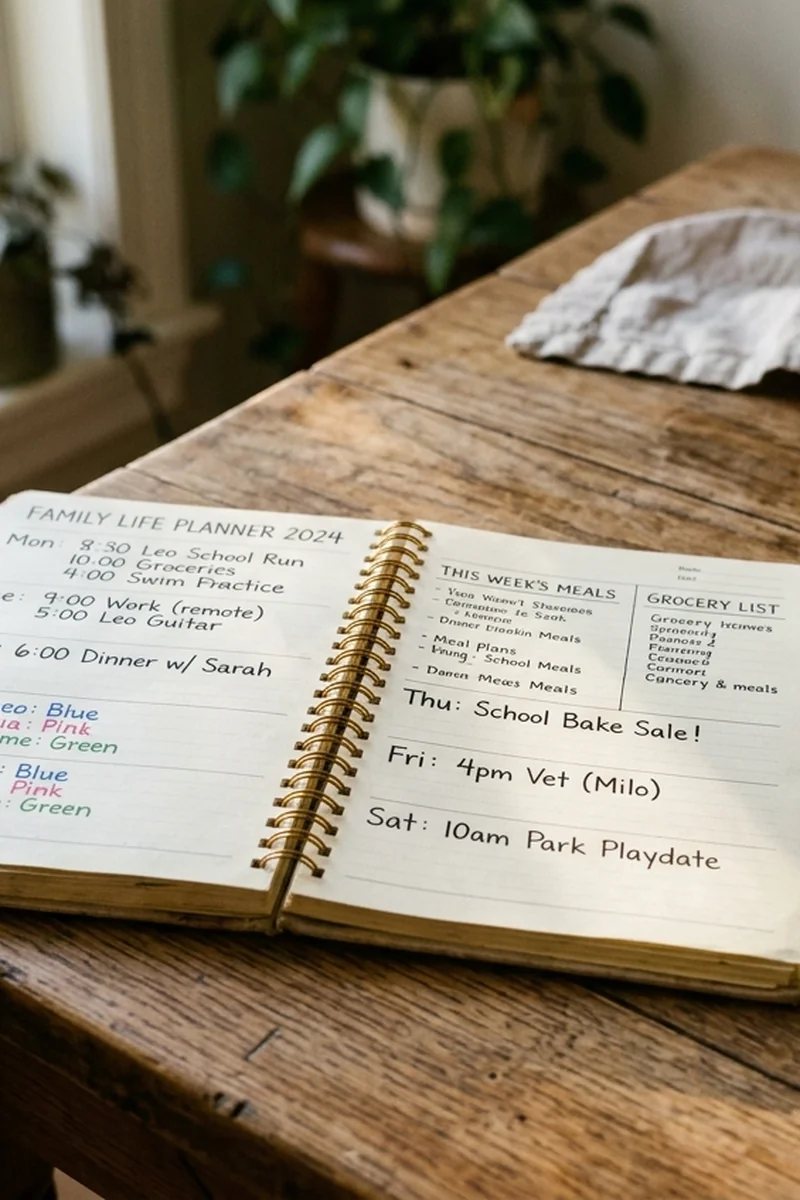
Never discuss chore allocation when you are tired, hungry, or in the middle of a conflict at 9:30 PM. Institute a dedicated 15-minute logistics meeting every Sunday afternoon over coffee. Review the upcoming week’s calendar, assign clear ownership of carpools, meals, and appointments openly, and agree on responsibilities explicitly. Once agreed upon, the scorekeeper’s ledger is locked away.
3. Vulnerable Direct Requests (Kill the Covert Contract)
If you are drowning in exhaustion, stop waiting for your partner to read your mind and stop sighing aggressively. Look them in the eyes and make an explicit, vulnerable request without blame:
- “I am operating at 10% battery tonight and feeling really overwhelmed. Could you please take over the dishes and put the kids to bed tonight so I can take a warm bath?”
- When asked directly and without hostility, a communal partner responds with eager generosity. Vulnerability invites connection; scorekeeping invites defense.
📥 Free Download: Relational Scorekeeping & Communal Partnership Handbook
Exchange vs. communal relationship diagnostic tests, covert contract worksheets, the 15-minute Sunday sync agenda, and 100/100 chore matrices.
The True Meaning of Marital Grace
At the end of your life, you will not look back and cherish the days when you successfully forced your spouse to do exactly 50% of the laundry. You will cherish the times when you carried each other through sickness, grief, and exhaustion with uncalculating grace. Burn your mental spreadsheet, step into communal love, and watch your marriage flourish with renewed passion, safety, and joy.
As an Amazon Associate, azuloz.com earns from qualifying purchases.